
Yoshifuji places suburban Tokyo udon in a serious critical frame: modest in format, recognised by Tabelog 100 Udon EAST 2024, and grounded in the everyday discipline of wheat noodles rather than luxury performance. Its Kodaira setting, house-restaurant format, 32-seat room, and no-reservations rhythm make it a useful counterpoint to central Tokyo dining built around scarcity and spectacle.
Pearl is the En Primeur Club membership app — saves, bookings, and concierge access live there. Same editors, same standards.
- Address
- 東京都小平市大沼町7-6-6
- Phone
- +81423320522
- Website
- tabelog.com
 Saves & bookings on Pearl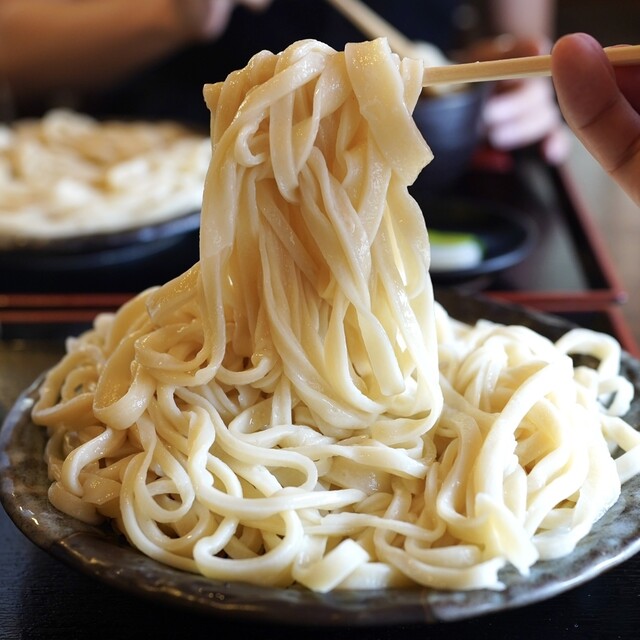
Approaching a house restaurant in Kodaira changes the tempo of eating in Tokyo. The city’s restaurant conversation often runs through Ginza counters, Aoyama dining rooms, and Shinjuku after-dark density, yet udon belongs just as convincingly to quieter streets where lunch service, local regulars, and repeated craft matter. Yoshifuji fits that register: a suburban wheat-noodle address with a tatami room, counter seats, and table seating rather than a theatrical chef’s counter.
That matters because udon is one of Japan’s great arguments for restraint. Built on flour, water, salt, stock, and timing, it makes a different case from premium dining built around imported ingredients or long tasting menus: resource discipline, limited waste by design, and cooking based on repetition rather than excess. Yoshifuji’s selection for Tabelog 100 Udon EAST 2024 places it in a specialist category where execution, consistency, and local confidence count more than decoration.
Kodaira udon shows Tokyo beyond the central dining circuit
Tokyo’s noodle culture is not one scene. Ramen draws much international attention, soba has its own ritual grammar, and udon works closer to daily life: lunch counters, family tables, local queues, and small rooms where the menu need not perform sophistication. Yoshifuji’s suburban location pulls the meal away from the expense-account map and toward a neighbourhood reading of Tokyo food.
The comparison set underlines the point. Kodaira Udon Kodaira honten and Teuchi Udon Fukusuke operate in the same low-price udon bracket, while Goto Udon Bizenya sits a step higher on spend. Iruka Tokyo, although also in Tokyo and listed at a low price point, belongs to another noodle conversation. Together they show how narrow the economic band can be for serious everyday food in Japan: recognition need not mean high tariff, and low spend does not imply low ambition.
Yoshifuji’s Tabelog score of 3.66 is another signal, not a universal verdict but a local-platform measure in a category where small differences matter. Tabelog’s Hyakumeiten lists are especially relevant for genres such as udon because they recognise depth across everyday formats, not only luxury dining. Selection in 2024, after earlier selections in 2022 and 2020, gives Yoshifuji a pattern of attention rather than a single-season spike.
Low-cost craft, lower-waste logic
The sustainability story is not about slogans. Udon’s environmental intelligence comes from its structure: a short ingredient base, tight production cycles, and a cuisine that rewards precise use of stock, noodles, and garnishes. That does not prove sourcing policies or justify claims about organic procurement or zero-waste operations. The stronger point is simpler: some of Tokyo’s more responsible-feeling meals are not branded as ethical dining; they are built into forms that have long valued economy.
This makes Yoshifuji more interesting than a luxury restaurant with a sustainability paragraph on its website. The house-restaurant setting, 32-seat scale, and udon focus point to a compact room, narrow menu category, and a kitchen reputation built on repeatable fundamentals. In food culture, constraint can mean more than abundance. It asks less from the diner’s wallet and the plate’s theatre, while demanding accuracy from the cook.
The room format also places the meal in a social register central Tokyo fine dining rarely reaches. Raised tatami seating sits alongside tables and a small counter, so the audience can include friends, local diners, and small groups rather than only pairs chasing reservation prestige. Non-smoking policy and private-room absence keep the emphasis on shared public dining. Nothing suggests luxury insulation; the appeal is that good udon can remain part of ordinary urban life.
For travellers building a broader Tokyo food itinerary, this stop gives balance. A day might otherwise swing from grilled fish and charcoal cooking at . 鮪と炭火焼き うお炭 秋葉原店 to yakitori at 124. KAGURAZAKA (Yakitori), curry at 3 Chome no Curry Ya San, or a graphic café format at 2D Cafe. Yoshifuji adds a different lesson: Tokyo’s serious food culture is not limited to rarity, chef biography, or long reservation lead times.
How to read Yoshifuji in a Tokyo itinerary
Frame Yoshifuji as a category study, not a trophy meal. It is a udon specialist with public recognition, a suburban address, and a price position close to everyday dining. That makes it valuable for travellers who want to see how Tokyo separates excellence from luxury. The city is full of restaurants where craft is expensive because access, rent, and ceremony are expensive. Udon can break that equation.
There is also a timing lesson. Lunch-led noodle shops in Tokyo reward midday planning, and suburban routing takes more attention than moving between stations inside the Yamanote loop. Kodaira makes Yoshifuji easier to pair with a west-side day than a tightly packed central schedule. For a city that encourages over-scheduling, that is no small virtue: the meal asks the visitor to slow the itinerary and let a less touristed part of Tokyo shape the eating.
Yoshifuji’s lack of an official website changes the traveller’s information hierarchy. In Japan, some serious small restaurants remain more legible through local platforms, station geography, and current operating notices than polished English-language channels. That is not a flaw; it is how neighbourhood food often works. The practical implication is plain: confirm current conditions close to the day rather than treating old menu images or translated listings as fixed.
Readers comparing across Japan can place the experience beside regional and international everyday formats: beef sukiyaki at -Grilled beef Sukiyaki- KAMAKURA TANUKIAN 鎌倉 たぬき庵 in Kamakura, café culture at.cafe in Osaka, contemporary dining at.know in Kumamoto, Vietnamese cooking at (Shoku) Vietnam in Kawasaki, curry in Hokkaido at [Curry Senmon Ten] Maruyama Kyoju. in Sapporo, or Kyoto minimalism at [ki:] in Kyoto. Outside Japan, the everyday-rice and sake-adjacent thread can extend to Jōdo Saké Bar in Los Angeles and Onigiri Time in Pasadena.
Within Tokyo, use Yoshifuji as a corrective to the idea that quality requires centrality. For wider planning, compare it with 12/10 Shinjuku ten and the broader city listings in Our full Tokyo restaurants guide. If the trip is built around more than meals, the same city map can extend into Our full Tokyo hotels guide, Our full Tokyo bars guide, Our full Tokyo wineries guide, and Our full Tokyo experiences guide. The point is not to chase every category, but to see how Tokyo’s quieter food traditions can anchor the trip as firmly as its acclaimed counters.
Peers in This Market
Comparable venues side-by-side for orientation.
| Venue | Cuisine | Price | Notes |
|---|---|---|---|
| YoshifujiThis venue — the venue you are viewing | Musashino-style udon shop | $ | Not listed |
| Buta Daigaku (豚大学) | Grilled Pork Bowl (Butadon) | $ | Shimbashi |
| Ozasa | Traditional Japanese Wagashi (Yokan & Monaka) | $ | Kichijoji |
| Butaya | Tokyo-style hand-made udon | $ | Suginami |
| Takahashi no Saka Manju | Japanese traditional sweets (saka manju specialty) | $ | Suginami |
| Raamen Yama to Ki | Classic Tokyo Ramen Counter | $ | Suginami |
Recognition history
Dated appearances from independent guides and award organizations, with the underlying list record or original source where available.
Tabelog 100 #1 · No. 1
Tabelog · Tabelog 100 - Udon - EAST - 2024
Continue exploring
More in Tokyo
Restaurants in Tokyo
Browse all →




Bars in Tokyo
Browse all →




Hotels in Tokyo
Browse all →




Wineries in Tokyo
Browse all →
At a Glance
- Cozy
- Classic
- Casual Hangout
- Family
- Group Dining
- Solo
- Standalone
Casual, family-friendly neighborhood udon restaurant inside a converted house, with tatami seating and a relaxed lunchtime atmosphere focused on hearty bowls of noodles.