
Takahashi no Saka Manju belongs to Tokyo’s old-school wagashi economy: short hours, takeaway service, cash-only payment, and a price tier far below the city’s destination dining rooms. Its 2023 Tabelog 100 selection for Tokyo Japanese traditional sweets gives the shop a clear credibility signal without changing the essential appeal: a focused stop for traditional sweets in Ogikubo, not a long-format meal.
Pearl is the En Primeur Club membership app — saves, bookings, and concierge access live there. Same editors, same standards.
- Address
- 3 Chome-1-9 Amanuma, Suginami City, Tokyo 167-0032, Japan
- Phone
- +81 3-3220-2103
- Website
- tabelog.com
 Saves & bookings on Pearl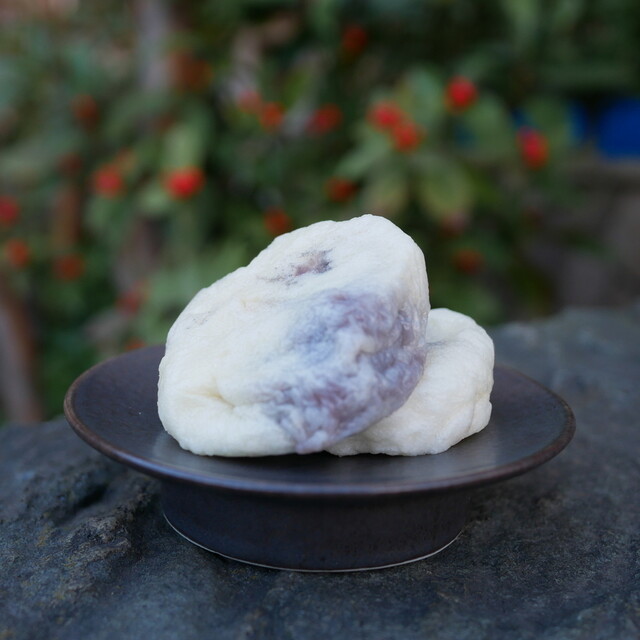
Ogikubo’s north side has a different tempo from Tokyo’s hotel-dining corridors and counter omakase districts. The appeal here is not ceremony or design theatre, but the older rhythm of neighbourhood food businesses: arrive early, buy what the shop is known for, and leave before the day’s supply has run its course. In that context, Takahashi no Saka Manju reads less like a restaurant and more like a small piece of Tokyo’s edible infrastructure, the kind of specialist counter that makes sense only in a city where a single traditional sweet can sustain a loyal audience.
Why a low-priced wagashi counter matters in Tokyo
Tokyo’s premium food culture is often discussed through sushi, kaiseki, French tasting menus, and cocktail rooms, but wagashi sits in a quieter value system. The category rewards repetition, seasonality, and craft discipline without asking the customer to commit to a long meal. Saka manju, broadly, belongs to the steamed-manju family associated with fermentation and sweet bean filling, a format built around restraint rather than abundance. That matters for value: the purchase is small, but the benchmark is exacting.
Takahashi no Saka Manju operates in the lowest listed spend bracket, with takeaway service rather than seats. That puts it in a different decision category from a Tokyo dining reservation. It is closer to a targeted errand: a short stop folded into a day around Suginami, JR and Marunouchi Line movement, or a wider west-side food itinerary. For travellers used to equating value with portion size or long service, wagashi asks for another calculation. The return is specificity, not duration.
The trust signal is concrete. The shop was selected for Tabelog’s 2023 Tokyo list for Japanese traditional sweets and Japanese sweets cafes, and its Tabelog score is listed at 3.72. In Japan’s user-review ecosystem, that is meaningful because small-format specialists do not rely on the same visibility mechanics as hotel restaurants or English-language guide favourites. Recognition in a category list gives readers a way to separate a neighbourhood sweet shop from a casual detour.
Ogikubo gives the stop its logic
Ogikubo has long been one of Tokyo’s more useful food neighbourhoods precisely because it is not arranged around a single visitor-facing strip. The station links central Tokyo to residential west Tokyo, and the surrounding streets support lunch counters, old sweets shops, coffee rooms, and everyday restaurants. A takeaway wagashi stop fits that fabric. It does not need a dining room to justify the trip; it works because Tokyo rewards small, precise stops between larger plans.
The comparison set also clarifies the point. In Tokyo, a venue such as Ginyu Shijin occupies a similarly low spend bracket, while Malai Fuukou Bishoku sits several tiers higher, and places such as Kappo Yuichi, 寿司周辰 SUSHI SHUTATSU, and Valinor belong to fuller restaurant decisions with different expectations around time, service, and spend. Takahashi no Saka Manju is not competing with those rooms. It competes for a smaller slot in the day, when the right choice is a specialist purchase rather than another reservation.
That distinction is useful for travellers building a Tokyo itinerary. A city day can handle one demanding meal; it can also handle several precise food stops if they are chosen with discipline. Wagashi is especially good for this because it compresses craft into a portable format. The better move is to treat the stop as a punctuation mark: pair it with Ogikubo, nearby rail travel, or a west Tokyo walk, rather than forcing it into a cross-city sprint between unrelated bookings.
How to use it in a wider Tokyo food plan
The practical read is simple: this is a short-window, takeaway-only sweet shop with no card or QR payment accepted. That makes timing and cash more relevant than dress or dining etiquette. The shop is also listed as non-smoking, family friendly, wheelchair accessible, and without parking, which places it firmly in the everyday Tokyo category rather than the destination-restaurant category. The smarter plan is to go early in the service window and treat sell-out risk as part of the format.
For readers mapping a broader Tokyo list, this stop should sit beside, not beneath, more formal meals. Use Our full Tokyo restaurants guide for the reservation-led side of the city, then build smaller specialist breaks around it. For contrast within Tokyo’s dining range, see . 鮪と炭火焼き うお炭 秋葉原店, 12/10 Shinjuku ten, 124. KAGURAZAKA (Yakitori), 2D Cafe, and 3 Chome no Curry Ya San. For the rest of the city’s travel context, keep Our full Tokyo hotels guide, Our full Tokyo bars guide, Our full Tokyo wineries guide, and Our full Tokyo experiences guide close at hand.
The wider Japan and diaspora context is useful too. Compare the compact discipline of a Tokyo wagashi stop with -Grilled beef Sukiyaki- KAMAKURA TANUKIAN 鎌倉 たぬき庵 in Kamakura.cafe in Osaka.know in Kumamoto, (Shoku) Vietnam in Kawasaki, [Curry Senmon Ten] Maruyama Kyoju. in Sapporo, [ki:] in Kyoto, Jōdo Saké Bar in Los Angeles, and Onigiri Time in Pasadena. The thread is not sameness; it is format. Some meals ask for a table. Others ask for timing, cash, and attention to a single craft tradition.
The editorial verdict is that restaurant is valuable because it resists inflation of the experience. It does not turn wagashi into a tasting menu or a lifestyle set piece. It keeps the transaction narrow, affordable, and tied to a specific Tokyo neighbourhood. For a traveller who already has the city’s high-spend meals covered, that narrowness is the reason to care.
Snapshot
Comparable venues by category and price.
| Venue | Cuisine | Price | Notes |
|---|---|---|---|
| Takahashi no Saka ManjuThis venue — the venue you are viewing | Japanese traditional sweets (saka manju specialty) | $ | Not listed |
| Gyoza no Fukuho (餃子の福包) | Traditional Japanese Gyoza | $ | Shinjuku |
| CURRY SHOP Kujira Kouenji | Japanese Curry | $ | Suginami |
| Ozasa | Traditional Japanese Wagashi (Yokan & Monaka) | $ | Kichijoji |
| Chonan Hosono Takashi | Tsukemen & ramen | $ | Nerima |
| Toki Ya Shinjuku odakyu haruku ten | Japanese sweets cafe | $ | Shinjuku |
Recognition history
Dated appearances from independent guides and award organizations, with the underlying list record or original source where available.
Tabelog 100 #73 · No. 73
Tabelog · Tabelog 100 - Japanese traditional sweets / Japanese sweets cafe - TOKYO - 2023













At a Glance
- Classic
- Family
- Casual Hangout
- Solo
- After Work
- Standalone
Current opening hours
- Monday
- Closed
- Tuesday
- 10 AM–12 PM
- Wednesday
- 10 AM–12 PM
- Thursday
- 10 AM–12 PM
- Friday
- 10 AM–12 PM
- Saturday
- 10 AM–12 PM
- Sunday
- Closed
Hours can change for holidays and private events. Last verified .
A simple, traditional wagashi takeout counter with no seating, a quiet atmosphere, and a classic neighborhood feel focused entirely on buying freshly made sweets to go.