
Butaya places Suginami’s udon culture in a small-counter, reputation-led register rather than the tourist-route version of Tokyo noodles. Its Tabelog 100 Udon EAST 2024 selection, six-seat counter format, and low-price bracket make it a compact case study in how serious everyday cooking earns critical traction outside central dining districts.
Pearl is the En Primeur Club membership app — saves, bookings, and concierge access live there. Same editors, same standards.
- Address
- 4 Chome-19-19-23 Kamiogi, Suginami City, Tokyo 167-0043, Japan
- Phone
- +81 3-6762-7665
- Website
- butaya.net
 Saves & bookings on Pearl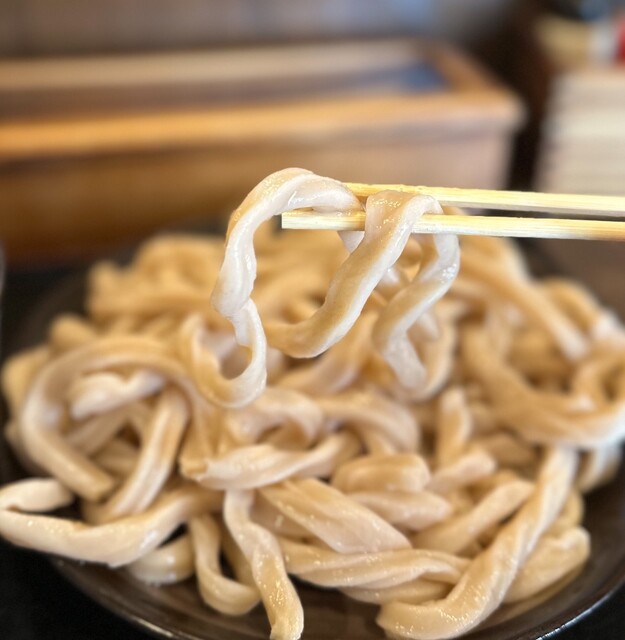
Approaching a serious neighborhood udon counter in western Tokyo has a different rhythm from crossing Ginza for sushi or Aoyama for French. The cues are smaller: short frontage, tight room, counter seating, and a meal built around speed, wheat, broth, and repeat custom rather than ceremony. Butaya belongs to this side of the city’s dining culture, where the room is functional, the audience local, and reputation travels through specialist lists before hotel concierges.
Visitors often flatten Tokyo’s noodle map into ramen, but udon occupies its own lane. Its appeal is less maximal seasoning than texture, temperature, and the balance between everyday price and disciplined preparation. In a crowded category of modest shops that rarely read as destination dining from the street, recognition matters. A Tabelog 100 Udon EAST 2024 selection gives Butaya a sharper signal than décor or chef biography could: a small-format udon address judged within a field where regulars notice incremental differences.
A six-seat udon counter in the Suginami register
Suginami changes expectations. This is not high-rent Tokyo dining, where the bill often carries the cost of theatre. Nishi-Ogikubo and the surrounding west-side neighborhoods reward narrow specialization: curry shops, bakeries, ramen rooms, yakitori counters, and udon houses that survive by serving nearby diners before attracting visitors. Butaya’s six-seat counter puts it closer to a local craft format than a destination-restaurant template.
That scale defines the editorial tension. Udon at this level is not competing with tasting-menu Japan. It competes with other exacting, low-priced specialists: Misokko Fuku and Isshin Niyou sit in a similar JPY 1,000 to JPY 1,999 bracket, while Kitaya and Boulangerie SOO SEE JI occupy an even lower everyday tier. Ooiwa Shokudo reaches higher at dinner but remains casual by Tokyo standards. The point is value density, not luxury: the attention a diner receives while spending modestly.
The award history reinforces that reading. Selection for Tabelog’s udon lists in 2024, 2022, and 2020 places Butaya in a recurring critical conversation rather than a one-year spike. Tabelog’s Hyakumeiten lists tend to reward category specialists with sustained local support, useful for visitors who want to eat beyond obvious circuits. Butaya’s 3.63 score is not a hotel-lobby trophy number; in Japan’s conservative rating culture, where scores cluster tightly, it signals meaningful traction among diners comparing closely within the genre.
Why the award matters more than a chef narrative here
Tokyo has many restaurants where the chef’s curriculum vitae frames the meal. Udon shops require a different lens. Wheat noodles are judged through repetition, not revelation: texture across service, how broth or dipping format supports the noodle, whether pacing suits a counter with limited seats, and whether the experience holds up at a repeatable price. Butaya’s public identity rests on category, scale, and recognition, the right hierarchy for this address.
The absence of a grand dining-room story is a strength, not a gap. Tokyo’s casual specialists often operate with little explanatory apparatus. The room tells diners what to expect: counter seating, no private rooms, non-smoking, take-out available, and a family- and solo-friendly profile. The experience is closer to a working neighborhood noodle shop than a polished restaurant project, making the meal less a scheduled event than a precise detour into daily food culture.
The format rewards decisiveness. With six seats, counter turnover and timing matter more than lingering. Reservations are not part of the model, so the visit belongs to walk-in Tokyo eating: arrive prepared, order simply, and understand that recognition has made a small shop more visible than its footprint suggests. That visibility is the price of awards in casual categories; once a counter this small appears on a specialist list, scarcity enters the experience even when the food remains everyday in cost and idiom.
For readers mapping Tokyo by genre rather than neighborhood, Butaya pairs intellectually with other focused casual addresses. The comparison is not identical food but specialization: a seafood-and-grill address such as . 鮪と炭火焼き うお炭 秋葉原店, a Shinjuku-format stop like 12/10 Shinjuku ten, yakitori at 124. KAGURAZAKA (Yakitori), visual café culture at 2D Cafe, and curry at 3 Chome no Curry Ya San each show a city where narrow categories support serious attention without formal dining signals.
How to place it in a Tokyo itinerary
Butaya is strongest for travelers already spending time west of central Tokyo, or diners building a day around Nishi-Ogikubo, Ogikubo, and Suginami’s independent food culture. It is less suited to a cross-city dash between museum slots and hotel check-ins. The reward is contextual: a compact udon counter with repeated Tabelog recognition, low spend, and a neighborhood setting that shows why Tokyo’s casual dining hierarchy cannot be read only through Michelin, hotel restaurants, or social-media queues.
Planning around the wider city helps. For a broader restaurant map, use Our full Tokyo restaurants guide; for sleep logistics, Our full Tokyo hotels guide gives the accommodation context. Drinking routes sit separately in Our full Tokyo bars guide, while Our full Tokyo wineries guide and Our full Tokyo experiences guide help frame a trip beyond meals. Outside Tokyo, the same specialist logic appears in places as varied as -Grilled beef Sukiyaki- KAMAKURA TANUKIAN 鎌倉 たぬき庵 in Kamakura.cafe in Osaka.know in Kumamoto, (Shoku) Vietnam in Kawasaki, [Curry Senmon Ten] Maruyama Kyoju. in Sapporo, [ki:] in Kyoto, Jōdo Saké Bar in Los Angeles, and Onigiri Time in Pasadena.
The verdict is concise: this is a reputation-led udon counter for diners who understand that Tokyo’s serious food culture is not confined to expensive rooms. The appeal lies in category credibility, small scale, and neighborhood specificity. Treat it as a focused Suginami noodle stop, not a long-form dining occasion, and its place in the city becomes clear.
The Short List
Comparable venues to place this listing in its category.
| Venue | Cuisine | Price | Notes |
|---|---|---|---|
| ButayaThis venue — the venue you are viewing | Suginami, Tokyo-style hand-made udon | $ | Not listed |
| Takahashi no Saka Manju | Not listed | $ | Suginami, Japanese traditional sweets (saka manju specialty) |
| SOBA-Shiro Kuro | Not listed | $ | Suginami, Specialty ramen / soba shop |
| Raamen Yama to Ki | Suginami, Classic Tokyo Ramen Counter | $ | Not listed |
| Gyusuji Curry Chiisana Curry Ya | Not listed | $ | Shinjuku, Japanese Beef Tendon Curry & Curry Udon |
| Tsukemen Gonokami Seisakujo | Shibuya, Shrimp Tsukemen Ramen Shop | $ | Not listed |
Recognition history
Dated appearances from independent guides and award organizations, with the underlying list record or original source where available.
Tabelog 100 #62 · No. 62
Tabelog · Tabelog 100 - Udon - EAST - 2024












At a Glance
- Quiet
- Cozy
- Intimate
- Classic
- Solo
- Casual Hangout
- After Work
- Family
- Chefs Counter
- Standalone
- Street Scene
Current opening hours
- Monday
- 11 AM–2:30 PM
- Tuesday
- Closed
- Wednesday
- Closed
- Thursday
- 11 AM–2:30 PM
- Friday
- Closed
- Saturday
- 11 AM–2:30 PM
- Sunday
- 11 AM–2:30 PM
Hours can change for holidays and private events. Last verified .
A small counter-only neighborhood udon shop with a simple, no-frills interior, calm atmosphere, and a focus on quietly enjoying freshly cooked noodles.