Yakiniku Hasegawa

Yakiniku Hasegawa is a Sagamihara yakiniku house with repeated Tabelog 100 Yakiniku EAST selections, including 2025, and a dinner spend listed at JPY 4,000–4,999. The draw is cultural as much as culinary: a suburban Kanagawa grill room where beef, offal, smoke, rice, and drinks sit closer to everyday Japanese eating than to luxury tasting-menu theatre.
Pearl is the En Primeur Club membership app — saves, bookings, and concierge access live there. Same editors, same standards.
- Address
- 神奈川県相模原市南区相模台4-11-6
- Phone
- +81427655858
- Website
- tabelog.com
 Saves & bookings on Pearl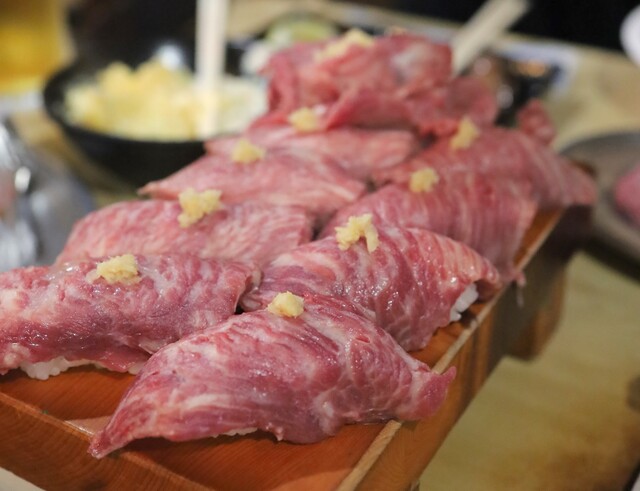
Approach the Sagamidai side of Sagamihara and the dining rhythm changes from station-front turnover to neighborhood grill-room patience. Yakiniku belongs to the table rather than the pass: heat in the center, plates moving between diners, smoke as part of the social contract. Yakiniku Hasegawa sits inside that tradition, not as a polished Tokyo export, but as a Kanagawa room with a Tabelog 100 Yakiniku EAST 2025 selection and a 3.58 Tabelog score anchoring its reputation beyond local habit.
That matters in a city where serious eating is not confined to one category. Sagamihara has a strong everyday-food register, from ramen and curry to small-format specialist restaurants. Readers mapping the city through EP Club can place this grill room alongside Curry no Mise Maboroshi, Ganso Ichijoryu Ganko Sohonke Bunten, Iekei Ramen Kukkura, Jikaseimen Nichome Ramen, and Kaigara Ya: places that explain how suburban Kanagawa eats when the meal is built around repeat custom rather than destination choreography.
Yakiniku as a shared-table language in suburban Kanagawa
Yakiniku’s appeal in Japan rests on control. Diners decide pace, doneness, order, and combination; the restaurant’s job is to provide cuts, seasoning, heat, rice, condiments, and a room that can absorb conversation. The format carries Korean barbecue ancestry, postwar Japanese adaptation, and a modern appetite for beef variety, including offal. Here the listed categories are yakiniku and tripe, a useful signal: this is not merely steak sliced thinner for the grill, but a broader Japanese yakiniku register where texture and variety matter.
The 30-seat scale also shapes the experience. Smaller yakiniku rooms tend to reward diners who know the rhythm: start with lighter cuts or vegetables if listed, move into richer beef and offal, use rice as structure, and let drinks reset the palate. Sake, shochu, and wine are all listed, which places the restaurant inside a familiar Japanese drinking pattern rather than a single beverage ideology. Yakiniku is often treated casually, but the better rooms are disciplined about sequence and heat; the guest’s role is active.
Repeated selection for Tabelog’s Yakiniku EAST list in 2020, 2021, 2022, 2023, and 2025 gives the room a track record rather than a single-year spike. Tabelog’s Hyakumeiten lists function differently from Michelin: they reflect category-specific recognition within Japanese dining culture, especially useful for formats such as ramen, curry, tonkatsu, and yakiniku, where local consensus can be more revealing than international ceremony.
Why Sagamihara's grill rooms read differently from Tokyo counters
Tokyo has pushed many grill formats toward premium sourcing narratives, counter-style control, and higher-spend omakase adjacency. Sagamihara’s value lies elsewhere. The city’s better casual specialists often operate with tighter prices and a stronger neighborhood function. In the local comparison set, Ramen Jiro Sagami oono ten and Sagamihara Keyaki sit in the JPY 1,000–1,999 bracket, while Soi Gapao Soigapao Thai reaches JPY 3,000–3,999 at dinner. Against that backdrop, a JPY 4,000–4,999 yakiniku dinner occupies a clear step up without entering Tokyo luxury territory.
That price position is part of the editorial point. Yakiniku can be a modest weekday meal or a high-spend beef showcase; the Sagamihara version here lands in the middle, where the meal can carry a social occasion without asking diners to treat dinner as a formal event. The listed occasion skews toward friends, which fits the cuisine’s mechanics. Few formats expose table chemistry as clearly: someone manages the grill, someone orders rice, someone watches the offal, someone pours shochu. The meal works when the group does.
The setting also separates it from the city’s quick-service specialists. Ramen is solitary or briskly communal; curry can be deeply individual. Yakiniku slows the table down. For a wider read on how the city’s dining habits connect across categories, use Our full Sagamihara restaurants guide. For trip planning around the meal rather than the restaurant alone, EP Club’s city rails also cover Our full Sagamihara hotels guide, Our full Sagamihara bars guide, Our full Sagamihara wineries guide, and Our full Sagamihara experiences guide.
The verdict for serious eaters
Yakiniku Hasegawa is strongest for travelers who already understand that Japanese food culture is built as much from category depth as from famous chefs. There is no need to force a tasting-menu frame onto it. The reason to go is the intersection of repeated category recognition, neighborhood scale, and a grill format that makes beef and tripe a group conversation.
Its appeal is narrower than a famous Tokyo counter and more culturally specific than a general Japanese restaurant. That is a strength. Sagamihara rewards diners willing to read beyond central-city prestige, and this address belongs in that reading: a suburban yakiniku room with enough recognition to justify attention and enough ordinary structure to explain how the cuisine lives outside luxury circuits.
For readers building a broader Japan itinerary, compare the category shift rather than the cuisine alone: beef-centered formats such as -Grilled beef Sukiyaki- KAMAKURA TANUKIAN 鎌倉 たぬき庵 in Kamakura, charcoal-led city dining such as. 鮪と炭火焼き うお炭 秋葉原店 in Tokyo, and casual urban formats like.cafe in Osaka or.know in Kumamoto show how Japanese dining shifts by city, price, and occasion. The same applies outside Japan-facing categories: (Shoku) Vietnam in Kawasaki, [Curry Senmon Ten] Maruyama Kyoju. in Sapporo, Jōdo Saké Bar in Los Angeles, and Onigiri Time in Pasadena all underline the same point: format tells the truth before adjectives do.
Booking and Cost Snapshot
Comparable venues by cuisine and price in the same metro.
| Venue | Cuisine | Price | Notes |
|---|---|---|---|
| Yakiniku HasegawaThis venue — the venue you are viewing | Not listed | $$ | Not listed |
| Jikaseimen Nichome Ramen | Hashimoto, Homemade Noodle Ramen Shop | $$ | Not listed |
| Curry no Mise Maboroshi | Chuo, Sagamihara, Japanese Curry House | $ | Not listed |
| Kaigara Ya | Fuchinobe, Shellfish-focused ramen shop | $ | Not listed |
| Taisho Ken Fuchinobe ten | Not listed | $ | Chuo Ward, Sagamihara (Fuchinobe), Classic Taishoken-style ramen |
| Sagamihara Keyaki | Not listed | $$ | Minami-ku, Sagamihara, Modern Japanese Ramen |
Recognition history
Dated appearances from independent guides and award organizations, with the underlying list record or original source where available.
Tabelog 100 #78 · No. 78
Tabelog · Tabelog 100 - Yakiniku - EAST - 2025
Continue exploring
More in Sagamihara
Restaurants in Sagamihara
Browse all →


Bars in Sagamihara
Browse all →




Hotels in Sagamihara
Browse all →



Wineries in Sagamihara
Browse all →
At a Glance
- Cozy
- Lively
- Intimate
- Rustic
- Group Dining
- Casual Hangout
- Celebration
- After Work
- Private Event
- Standalone
- Sake Program
A small, house-style yakiniku hideout in a residential area with tatami seating and a casual, cozy feel; the atmosphere is lively and social at dinner but still relaxed, with the vibe described as an "adult family restaurant" rather than a formal grill house.