Wijnhaven
Wijnhaven sits at address 22 on one of Delft's historic canal-side streets, placing it within a city whose dining scene has quietly developed beyond tourist-track Dutch staples. The address alone positions it in a neighbourhood defined by centuries of trade and craft heritage. For context on the broader Delft restaurant picture, see our full city coverage.
Pearl is the En Primeur Club membership app — saves, bookings, and concierge access live there. Same editors, same standards.
- Address
- Wijnhaven 22, 2611 CS Delft, Netherlands
- Phone
- +31152141460
- Website
- wijnhaven.nl
- Directions
- Get directions
 Saves & bookings on Pearl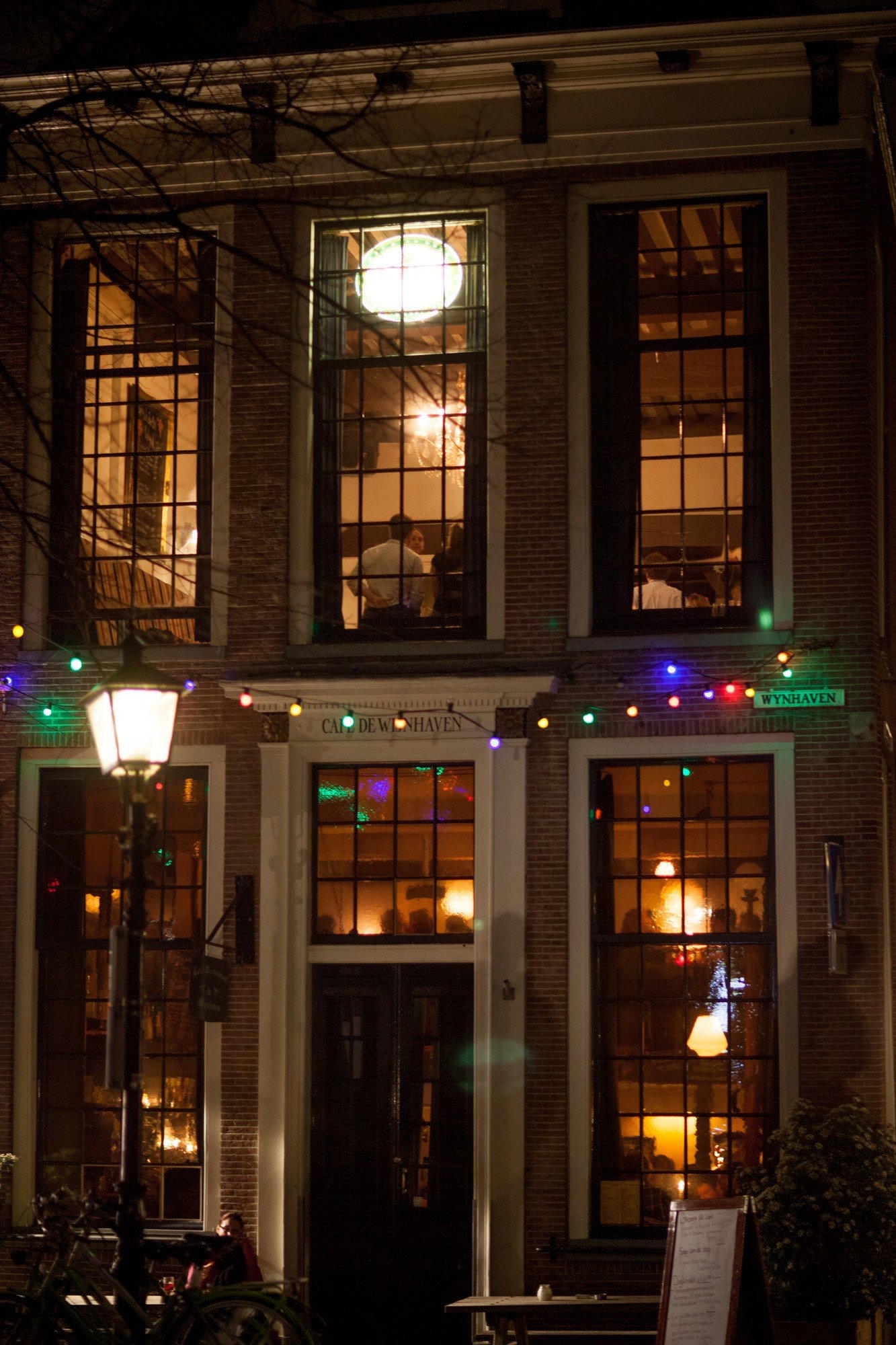
Canal-Side Delft and the Dining Tradition Around It
Wijnhaven is a street name before it is a restaurant name. The canal it runs alongside was, for several centuries, Delft's wine-import artery — the literal translation, Wine Harbour, reflects the route by which Rhenish and French wines entered the city during the Dutch Golden Age. Eating or drinking at an address on Wijnhaven carries that freight whether the establishment acknowledges it or not. The physical environment does the contextualising: narrow brick facades, water at close range, and the particular compressed scale of a Dutch canal street where the building line leaves almost no separation between interior and waterway.
Delft's restaurant scene operates in the shadow of two larger neighbours. Rotterdam, twenty minutes south, has absorbed much of the Dutch dining industry's ambition over the past decade, while The Hague, even closer, carries the institutional dining that comes with government and embassy concentration. Delft, by contrast, has a more measured pace, a university population, and a tourist draw tied more to Vermeer and Delftware ceramics than to gastronomy. That context shapes what the dining scene here tends to offer: mid-range operators serving a mixed local-and-visitor public, with occasional exceptions that price and programme against a more discerning bracket.
Within the Netherlands, the restaurant tier that attracts serious critical attention clusters around a set of addresses that includes De Librije in Zwolle, Ciel Bleu in Amsterdam, and Aan de Poel in Amstelveen, among others. Delft does not currently host an operator in that tier, but the city's restaurant addresses along and near its historic canals attract operators who understand that environment as a differentiating asset. A canal-front address in Delft carries a legibility that works for both locals and visitors, and Wijnhaven 22 sits squarely in that logic.
The Cultural Weight of a Dutch Canal Address
Dutch canal-city dining has a specific character that distinguishes it from, say, the French bistro tradition or the Scandinavian new-Nordic format. The canal cities — Delft, Leiden, Utrecht, the Amsterdam ring, developed a hospitality culture tied to trade rather than court or aristocratic patronage. That origin produces a particular tone: practical generosity over ornamental service, produce that reflects the North Sea and the polders more than the Mediterranean, and interiors that tend toward warmth achieved through material and light rather than decoration.
The Wijnhaven canal specifically has historical associations with wine trade that make it a plausible address for a restaurant that takes its drinks seriously. The Dutch relationship with wine has always been that of an importer and curator rather than a producer, which historically produced a merchant class with sophisticated palates and strong cellars. Contemporary Dutch restaurants at the serious end of the market often reflect that inheritance in their wine programming, even when the food reads more international in influence.
Internationally, the comparison point for canal-side dining at a high level of execution might be somewhere like Le Bernardin in New York City for the idea that physical context and culinary tradition can reinforce each other, or Atomix in New York City for the premise that a tightly controlled environment produces a sharper dining proposition. Neither is a direct peer, but both illustrate what happens when operators treat their address as part of the editorial statement rather than incidental backdrop.
Wijnhaven in the Context of Delft's Current Dining Options
Delft's restaurant addresses worth attention in the current period include a range of formats and price points. Brasserie Monastere works the heritage-building angle within a brasserie format. Il Tartufo represents the Italian-specialist tier. HUmmUS and Kokam address a more casual, ingredient-led bracket. Kruydt operates in a different register again. The spread suggests a dining scene that has diversified beyond the traditional Dutch-and-tourist formula without yet consolidating around a clear fine-dining anchor. See our full Delft restaurants guide for a broader map of the city's current options.
Against that backdrop, a Wijnhaven address positions its operator in a particularly visible and historically resonant slice of the city. The street's canalside setting is one of Delft's most photographed, which brings foot traffic but also sets an expectation: the environment does enough work that the restaurant inside cannot afford to feel generic. Operators at addresses like this tend either to lean into the heritage setting with a format that matches it, or to contrast against it deliberately with something modern and spare.
Comparable Dutch operators who have worked the tension between historic environment and contemporary programme include De Bokkedoorns in Overveen, De Groene Lantaarn in Staphorst, De Lindehof in Nuenen, De Lindenhof in Giethoorn, De Nieuwe Winkel in Nijmegen, Brut172 in Reijmerstok, and 't Nonnetje in Harderwijk. Each has found a way to make the surrounding environment an argument for the food, rather than a distraction from it.
Planning a Visit
Wijnhaven 22 is a central Delft address, walkable from both the central station (roughly ten to fifteen minutes on foot through the historic centre) and the Markt, Delft's main square. The canalside location means the surrounding streets are navigable but narrow, and arriving by car requires using one of the city's ring-road car parks rather than expecting proximity parking. Delft is well-connected by rail from Rotterdam Centraal and Den Haag Centraal, both under thirty minutes, making a day-trip or early-evening visit from either city direct.
For a broader picture of dining options in the city while you confirm logistics, the EP Club Delft guide covers the full current selection.
How Wijnhaven Delft compares with similar nearby venues.
| Venue | Cuisine | Price |
|---|---|---|
| Le Vieux Jean | Classic French | €€ |
Continue exploring
More in Delft
Restaurants in Delft
Browse all →
Bars in Delft
Browse all →
Hotels in Delft
Browse all →
Wineries in Delft
Browse all →
At a Glance
- Cozy
- Lively
- Classic
- Casual Hangout
- Group Dining
- After Work
- Date Night
- Celebration
- Terrace
- Waterfront
- Live Music
- Private Dining
- Beer Program
- Craft Cocktails
- Waterfront
Current opening hours
- Monday
- 11 AM–1 AM
- Tuesday
- 11 AM–1 AM
- Wednesday
- 11 AM–1 AM
- Thursday
- 11 AM–1 AM
- Friday
- 11 AM–2 AM
- Saturday
- 10 AM–2 AM
- Sunday
- 11 AM–1 AM
Hours can change for holidays and private events. Last verified .
Warm and inviting with a classic brown café atmosphere; lively in evenings with occasional live music performances; cozy interior in winter and charming outdoor seating in summer.
Know Before You Go
- Getting there
- Wijnhaven 22, 2611 CS Delft, Netherlands