Brasserie Monastere
On Delft's Beestenmarkt square, Brasserie Monastere occupies a setting where the city's historic character and a relaxed European brasserie format converge. The address places it squarely in the social heart of one of the Netherlands' most architecturally coherent old towns, making it a natural reference point for visitors and residents alike who want something substantive without the formality of a tasting-menu counter.
Pearl is the En Primeur Club membership app — saves, bookings, and concierge access live there. Same editors, same standards.
- Address
- Beestenmarkt 27-33, 2611 GA Delft, Netherlands
- Phone
- +31157370178
- Website
- brasseriemonastere.nl
- Directions
- Get directions
 Saves & bookings on Pearl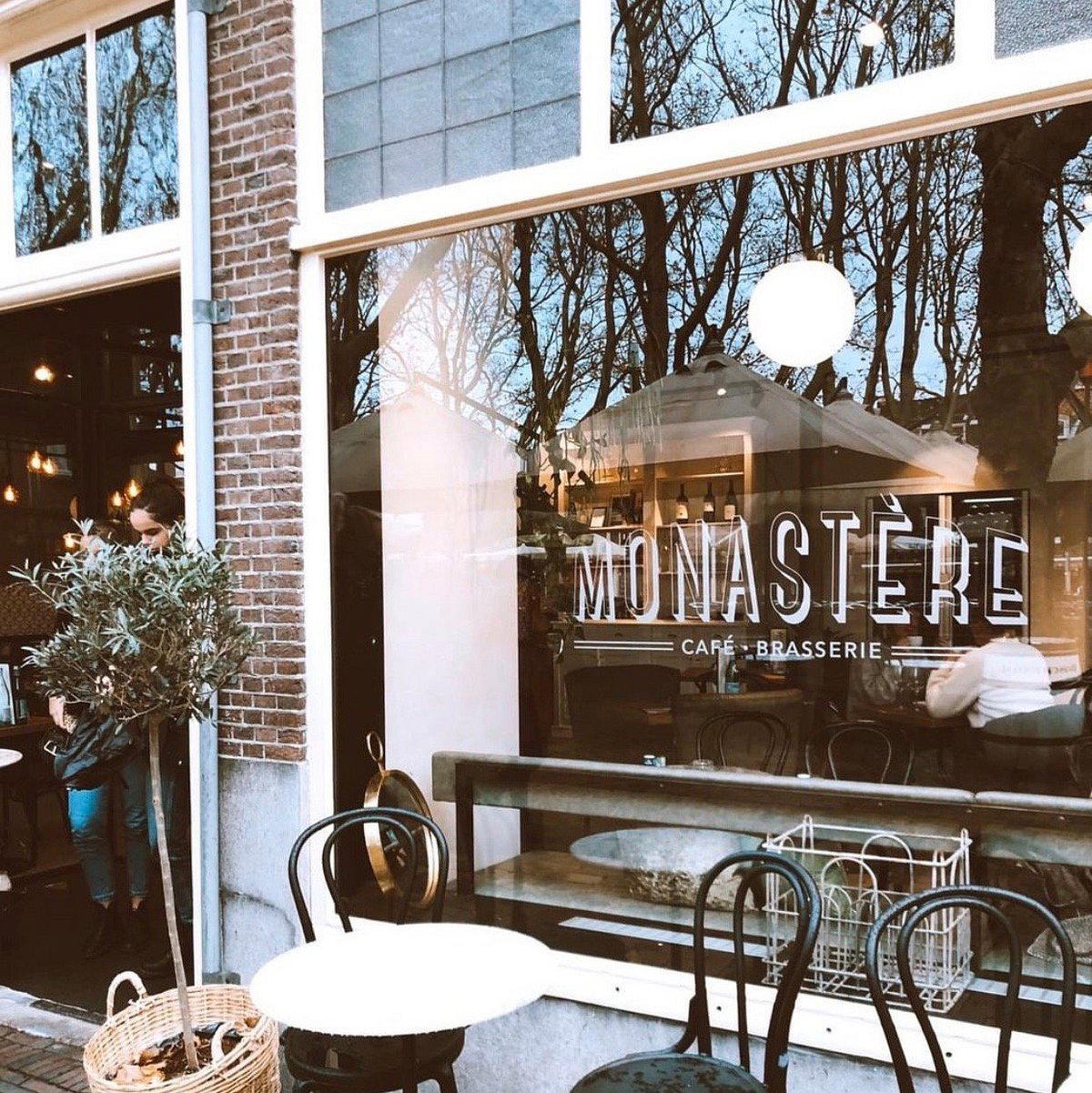
Beestenmarkt and the Brasserie Tradition in Delft
Delft's Beestenmarkt is one of those squares that still functions the way European city squares were always meant to: as a place where locals and visitors occupy the same outdoor tables, where the afternoon bleeds into evening without a hard boundary, and where the buildings themselves provide the theatre. Brasserie Monastere sits at numbers 27 to 33 on that square, a position that immediately signals its role in the city's social life rather than its pretension to fine-dining theatre. In a Dutch city better known internationally for its blue-and-white ceramics and Vermeer than for its restaurant culture, the brasserie format — generous, unhurried, accessible across a wide price range — has found a reliable home.
The brasserie as a format deserves some context. Across northern Europe, the category has fractured over the past decade into two distinct camps: venues that use the label as cover for underdeveloped kitchens, and those that treat it seriously as a platform for ingredient-led cooking without the ceremony of a tasting menu. The latter group is smaller and more interesting. They tend to source with the same rigour as their fine-dining neighbours but present that sourcing through dishes that read as familiar rather than architectural. Brasserie Monastere's Beestenmarkt address places it in a city where that second approach has room to operate.
Ingredient Sourcing as the Central Argument
The Netherlands has quietly built one of Europe's more coherent networks of artisan producers, from the coastal fishing operations of Zeeland and the Wadden Sea region to the vegetable growers of the Westland greenhouse corridor and the dairy cooperatives of Friesland and North Holland. For a brasserie in a city like Delft, positioned between Rotterdam's port logistics and The Hague's administrative wealth, proximity to that supply network is a practical advantage rather than a marketing abstraction. Dutch kitchens at this level of the market are increasingly expected to demonstrate the connection between what arrives on the plate and where in the country it was grown, caught, or raised.
This shift mirrors what has happened at the more decorated end of the Dutch dining scene. Kitchens like De Nieuwe Winkel in Nijmegen have made plant-forward, terroir-conscious sourcing central to their identity, while De Librije in Zwolle has long anchored its menus in hyper-regional Dutch produce. The influence of that sourcing discipline has filtered down through price tiers, which means a brasserie operating in 2024 is implicitly measured against a higher baseline than its equivalent would have been fifteen years ago. Guests at addresses like Monastere are increasingly literate about provenance, and kitchens that ignore that literacy tend to get found out.
Delft itself sits within easy reach of the Westland, the dense greenhouse region south of The Hague that supplies a significant proportion of the Netherlands' fresh vegetable and herb output. It also has access to the North Sea catch that moves through Scheveningen and IJmuiden, and to the artisan dairy and charcuterie producers who operate across South Holland and Zeeland. For a brasserie with the right supplier relationships, this geography is an argument in its own right.
How Brasserie Monastere Sits in the Delft Eating Scene
Delft's restaurant offer has broadened considerably in recent years, moving beyond the tourist-facing pancake houses and canal-side cafes that dominated the visitor economy for decades. The city now has a more layered eating culture, with addresses covering everything from Middle Eastern grain bowls at HUmmUS to South Asian cooking at Kokam, Italian at Il Tartufo, and the herb-forward Dutch kitchen at Kruydt. Lakila adds further range to the scene. Against that backdrop, the brasserie format occupies a specific and useful niche: it is the format that works across the most contexts, from a business lunch to a post-museum dinner to a long Saturday evening with a bottle of wine.
The Beestenmarkt location matters because it draws foot traffic from two directions: visitors arriving on the tourist circuit from Markt Square, and locals who use the square as a neighbourhood anchor in the evenings. That dual audience is harder to serve than it sounds. The menus and pricing that work for one group often fail the other. Brasseries that hold both audiences tend to do so through format discipline: a menu that reads clearly, a room that works at different noise levels, and kitchen output that holds quality at volume. Those are operational qualities, not purely culinary ones, and they are the real test of whether a brasserie concept is genuinely functioning or merely occupying a good postcode.
For readers interested in how the wider Dutch dining scene contextualises addresses like Monastere, the decorated provincial restaurants are instructive. Inter Scaldes in Kruiningen, De Lindehof in Nuenen, De Bokkedoorns in Overveen, Tribeca in Heeze, De Treeswijkhoeve in Waalre, Brut172 in Reijmerstok, De Groene Lantaarn in Staphorst, and De Lindenhof in Giethoorn all represent a Dutch fine-dining tradition built on regional sourcing and classical technique. The brasserie format, at its finest, channels that same sourcing ethic without the tasting-menu structure. The comparison is not about parity of ambition but about shared supply-chain thinking.
Internationally, the conversation about what makes a brasserie worth visiting has shifted toward the same territory. Kitchens like Le Bernardin in New York City have demonstrated that ingredient quality and format discipline are not mutually exclusive, while community-focused formats such as Lazy Bear in San Francisco show how atmosphere and sourcing can drive a dining experience without defaulting to formality. Those are different price tiers and different contexts, but the underlying logic of letting provenance drive the menu rather than decoration is consistent.
Planning a Visit
Brasserie Monastere is located at Beestenmarkt 27-33, 2611 GA Delft, within walking distance of Delft Centraal station, which connects directly to Rotterdam, The Hague, and Schiphol. The Beestenmarkt is a square with outdoor terrace capacity, which means the warmer months from May through September represent peak season for the location's full character to be accessible. Booking ahead is advisable for weekend evenings given the square's popularity as a destination in its own right. For a broader view of what Delft's eating scene offers across formats and price points, see our full Delft restaurants guide.
Continue exploring
More in Delft
Restaurants in Delft
Browse all →
Bars in Delft
Browse all →
Hotels in Delft
Browse all →
Wineries in Delft
Browse all →
At a Glance
- Classic
- Cozy
- Elegant
- Date Night
- Casual Hangout
- Terrace
- Historic Building
- Extensive Wine List
- Street Scene
Current opening hours
- Monday
- 4–11 PM
- Tuesday
- Closed
- Wednesday
- 4–11 PM
- Thursday
- 4–11 PM
- Friday
- 12 PM–1 AM
- Saturday
- 11 AM–1 AM
- Sunday
- 12–11 PM
Hours can change for holidays and private events. Last verified .
Nice atmosphere with a relaxed vibe, especially on the spacious terrace.
Know Before You Go
- Getting there
- Beestenmarkt 27-33, 2611 GA Delft, Netherlands