Waroeng Padang Lapek
A simple, welcoming space with shared bites.
 Discover on Pearl
Pearl is the En Primeur Club membership app — saves, bookings, and concierge access live there. Same editors, same standards.
- Address
- Schoolstraat 35, 2511 AW Den Haag, Netherlands
- Phone
- +31704062928
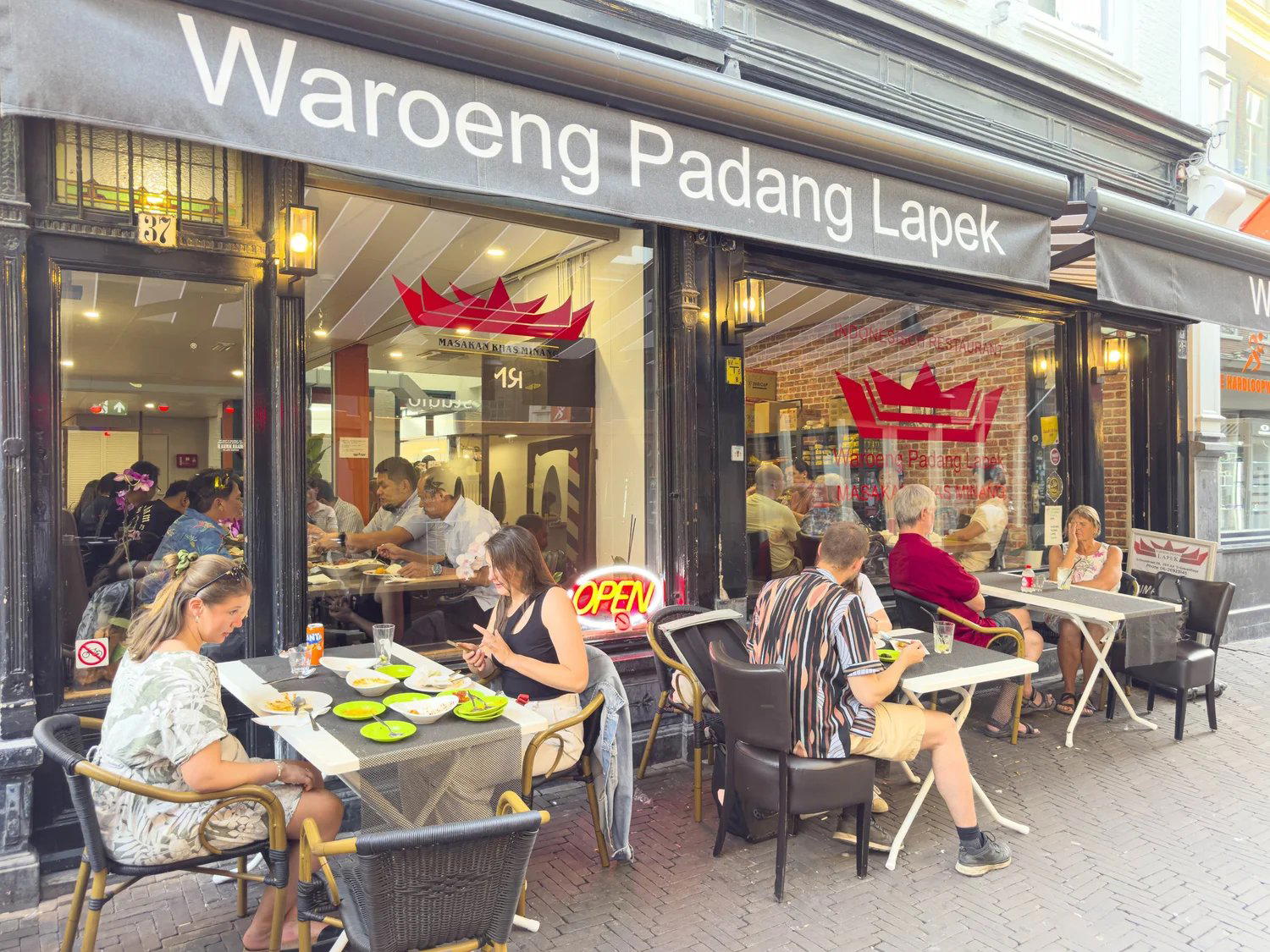
Schoolstraat and the Padang Tradition in The Hague
Schoolstraat cuts through one of the older residential pockets of central Den Haag, a street where the building stock runs to early twentieth-century brick and the foot traffic is local rather than tourist. It is the kind of address where a Padang restaurant makes complete sense. The Hague carries one of the densest concentrations of Indonesian and Surinamese communities in the Netherlands, a demographic reality shaped by colonial history and post-independence migration waves that continued well into the 1970s. That history deposited a food culture across the city that is not a novelty or a niche import but a structural part of how the city eats. Waroeng Padang Lapek at Schoolstraat 35 sits within that tradition rather than performing it for outsiders.
Padang cooking, which originates in the Minangkabau highlands of West Sumatra, is one of the most internally complex regional cuisines in Southeast Asia. The signature service format, where a spread of small dishes arrives at the table simultaneously and diners pay only for what they eat, has been in continuous practice across the Dutch-Indonesian diaspora for decades. It predates the current global wave of interest in communal and sharing formats by a considerable margin. In the context of The Hague's dining scene, where price brackets run from neighbourhood spots around the €€ tier through to creative French at the level of Calla's and seasonal modern cooking at Basaal, Padang restaurants occupy a category of their own: affordable, technically specific, and culturally grounded in ways that most European dining formats are not.
What Padang Service Actually Means
The rijsttafel format that many Dutch diners associate with Indonesian food is largely a colonial construction, a Dutch adaptation of Indonesian hospitality that consolidated dishes from across the archipelago onto a single table. Padang service is something different and more coherent. The dishes on a Padang table belong to a single regional tradition: rendang slow-cooked to a dry, intensely spiced crust; sambal hijau built on green chilli rather than red; gulai, the turmeric-heavy coconut-milk curries that define the Minangkabau pantry; and various preparations of offal, fish, and vegetables that follow the same flavour logic. Everything on the table is connected by the same spice vocabulary, which gives the meal a coherence that broader pan-Indonesian menus rarely achieve.
For diners more familiar with the higher-end end of Dutch dining, or with reference points from places like Le Bernardin in New York City or Atomix in New York City, the Padang format can require a recalibration of expectations. There is no tasting menu, no wine pairing, no printed list of seasonal ingredients. The measure of quality is the depth of flavour in the rendang, the balance of heat and coconut in the gulai, and the freshness of the sambal. These are judgements made over many visits and require a different critical vocabulary than the one applied to places like 6&24 or Bistro Veen.
The Hague's Indonesian Food Geography
The city's Indonesian restaurants are not evenly distributed. They cluster in certain neighbourhoods where community infrastructure, affordable rents, and multi-generational clientele have sustained them across decades. Schoolstraat sits within walking distance of the Centrum district, accessible enough for diners coming from elsewhere in the city but rooted in a local residential context. This matters for understanding what Waroeng Padang Lapek is: a neighbourhood operation serving a community that knows Padang food well, rather than a restaurant calibrated for curious visitors. That audience creates different standards. Regulars who grew up eating this cuisine will notice immediately if the rendang lacks depth or the sambal is underspiced.
The Hague's food identity is broader than its higher-profile dining addresses suggest. Alongside the creative kitchens that appear in Michelin's Netherlands selection, including operations comparable to De Librije in Zwolle, Ciel Bleu in Amsterdam, or De Nieuwe Winkel in Nijmegen, the city sustains a parallel track of diaspora cooking that rarely appears in formal award structures but represents an equally serious culinary tradition. Padang restaurants in Den Haag are part of that track. They are not aspirational in the upward-mobility sense that fine dining is aspirational; they are aspirational in the sense that they maintain a standard for a cuisine that has real expertise at its core.
Placing Waroeng Padang Lapek in the Neighbourhood
For a visitor building an itinerary around The Hague's food offerings, the decision of where to fit a Padang meal is partly a question of what else is on the list. The city's higher-end options, from Botanica to Basaal, operate on reservation timelines and formal dining rhythms. A Padang restaurant like Waroeng Padang Lapek operates on a different logic: you arrive, the dishes come, the meal is immediate and direct. It fits naturally into a midday slot or an early dinner, and the price point, characteristic of neighbourhood Padang operations in the Netherlands, allows it to function as a reference meal rather than an occasion. Visitors who want to understand how The Hague actually eats, beyond the curated fine-dining tier, will find more in an afternoon at a place like this than in reading any amount of editorial about the city's food scene.
For broader context on where Waroeng Padang Lapek sits within the city's full dining range, see our full The Hague restaurants guide, which covers everything from neighbourhood spots to the city's most formally recognised kitchens. Elsewhere in the Netherlands, the standard for regional specialist cooking is set by places like Aan de Poel in Amstelveen, Brut172 in Reijmerstok, De Bokkedoorns in Overveen, De Groene Lantaarn in Staphorst, De Lindehof in Nuenen, De Lindenhof in Giethoorn, and 't Nonnetje in Harderwijk. The Padang tradition sits apart from those reference points in format and heritage, which is precisely what makes it worth understanding on its own terms.
Practical Notes
Waroeng Padang Lapek is located at Schoolstraat 35, 2511 AW Den Haag. As with most neighbourhood Padang operations in the Netherlands, the practical approach is to arrive in person; phone and booking details are not published. Padang meals are self-pacing by nature, and the format does not require advance reservation planning in the way that the city's formal dining addresses do. The Schoolstraat address is reachable from Den Haag Centraal by tram or on foot in a short journey through the Centrum. Given the walk-in character of Padang service, lunchtime visits on weekdays typically encounter less pressure than weekend afternoons, when local family trade tends to be heavier.
- Nasi Padang
- Rendang
- Sate Ayam
- Sate Kambing
- Gado-gado
- Tempeh Mendoan
The Quick Read
Comparable venues nearby, for context on price, style, and recognition.
| Venue | Cuisine | Price | Notes |
|---|---|---|---|
| Waroeng Padang LapekThis venue — the venue you are viewing | $$ | ||
| Bouzy | Voorhout, Wine Bistro with Small Plates | $$ | |
| L'Amour Toujours | $$ | Zeeheldenkwartier, French-Italian Mediterranean Bistro | |
| Curry Gossip | $$ | central Den Haag, Traditional Indian Curry House | |
| Oker | $$ | Voorhout, Asian-inspired Fusion Small Plates | |
| Christian | near center, Dutch in Historic Windmill | $$$ |
Continue exploring
More in The Hague
Restaurants in The Hague
Browse all →
Bars in The Hague
Browse all →
Hotels in The Hague
Browse all →
Wineries in The Hague
Browse all →
At a Glance
- Hidden Gem
- Cozy
- Lively
- Group Dining
- Casual Hangout
- Special Occasion
- Standalone
Busy, welcoming atmosphere with a multicultural neighborhood setting; consistently full with diners, warm and friendly staff interactions despite occasional language barriers.
- Nasi Padang
- Rendang
- Sate Ayam
- Sate Kambing
- Gado-gado
- Tempeh Mendoan