In den Doofpot



In den Doofpot occupies a canal-side address on Turfmarkt in central Leiden, operating in the creative fine-dining tier with a Michelin Plate (2025), a We're Smart Green Guide three-radish rating, and a Star Wine List White Star. Among Leiden's handful of serious dinner destinations, it positions closest to The Bishop and Wielinga in price and ambition, with a stronger sustainability signal than either peer.
Pearl is the En Primeur Club membership app — saves, bookings, and concierge access live there. Same editors, same standards.
- Address
- Turfmarkt 9, 2312 CE Leiden, Netherlands
- Phone
- +31 71 512 2434
- Website
- indendoofpot.nl
- Directions
- Get directions
 Saves & bookings on Pearl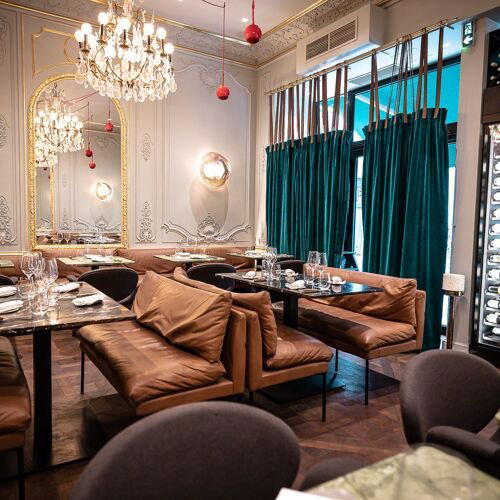
Where Leiden's Canal Grid Shapes What You Eat
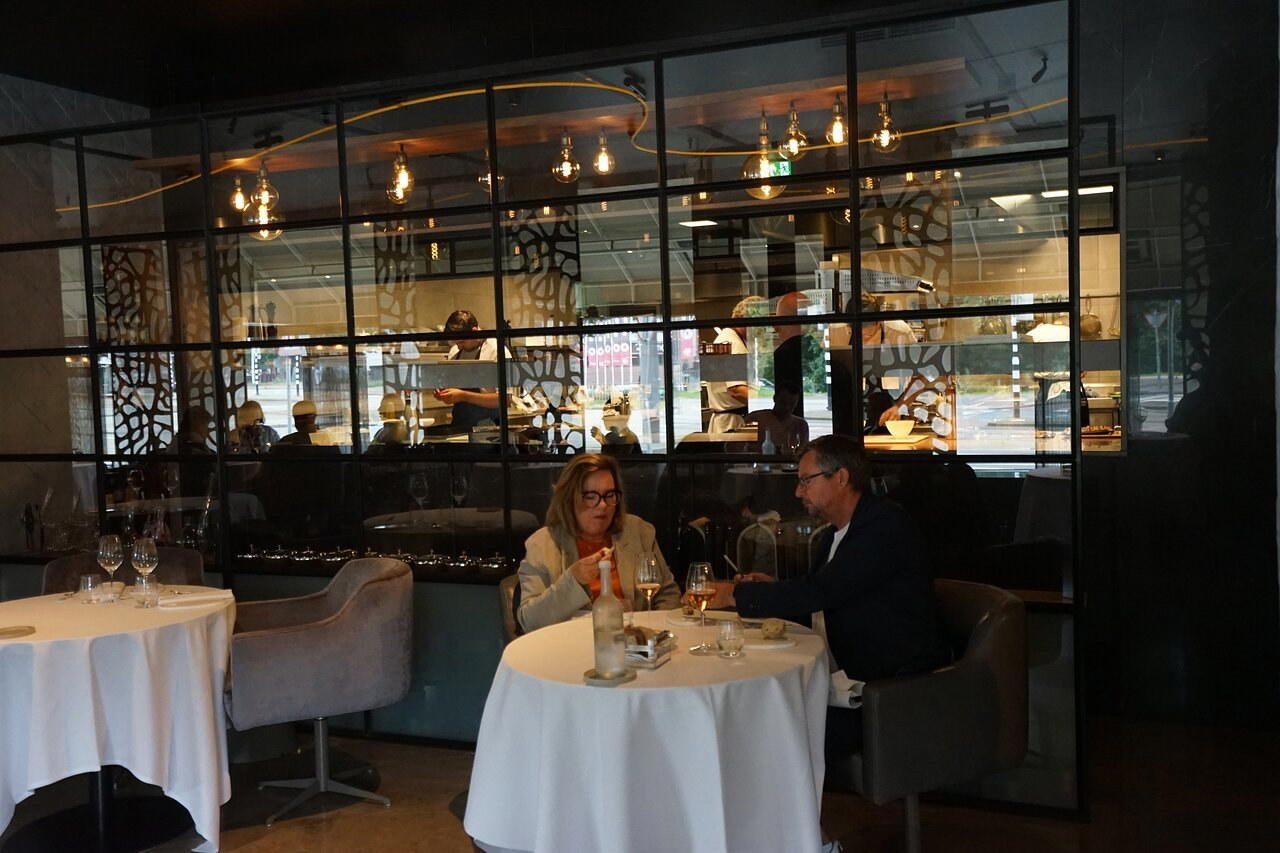
Turfmarkt runs along one of Leiden's oldest working canal arms, and the buildings lining it carry the particular weight of Dutch mercantile history: narrow gabled facades, ground floors that once served trade, upper storeys where the commerce was recorded. In den Doofpot sits at number 9, and the address is not incidental to the experience. Leiden is not Amsterdam, which means the dining room doesn't compete with tourist volume or the performance pressure of a capital-city table. What it does compete with is a concentrated, educated local public that expects food to justify the price, and in the €€€ tier, Leiden's options are few enough that each one carries real weight. In den Doofpot is a restaurant on Turfmarkt 9 in Leiden, known for Modern French Fine Dining.
That scarcity matters for context. The city's serious dinner circuit runs to a handful of addresses: Wielinga, which works in Modern French idiom, The Bishop, which draws on world cuisine references, and In den Doofpot, which the kitchen positions as creative. Step down a tier and you find Bistro Bord'o and Café Visscher handling contemporary and French bistro registers respectively. The restaurant sits above that midpoint, in the bracket where the ambition is higher and the margin for a disappointing evening is thinner.7 across 345 reviews suggests the kitchen holds its position consistently.
The Creative Register and What It Signals
In the Netherlands, the label "creative" applied to fine dining tends to signal a kitchen that moves between traditions rather than anchoring in one. It is the category that covers tasting-menu formats built around produce logic, seasonal pivots, and a willingness to borrow technique without committing to a single national canon. The restaurant's We're Smart Green Guide rating of three radishes is the clearest indication of how the kitchen orients itself. Three radishes places the kitchen in the mid-to-upper range of that framework, alongside properties across Europe that treat vegetable-led menus as a structural choice rather than an optional mode.
That positioning puts the restaurant in an interesting peer conversation. Across the Netherlands, the restaurants that have pushed furthest in the vegetable-forward creative direction include addresses like De Groene Lantaarn in Staphorst, a We're Smart benchmark property, and at the other end of the ambition scale, the Michelin-starred kitchens of De Librije in Zwolle and Aan de Poel in Amstelveen, which have each developed distinct relationships with Dutch produce. The restaurant operates below that star level but with recognizable institutional credentials: a Michelin Plate in both 2024 and 2025 confirms the guide considers the cooking worth attention without yet awarding a star, and the Star Wine List White Star signals a wine program that has been independently assessed and found to meet a quality threshold.
What the Awards Actually Mean for the Guest
A Michelin Plate carries a specific meaning that is easy to misread. It is the guide's notation that the food is good. In practical terms, a consecutive Plate in 2024 and 2025 means the inspector has visited, found the cooking to be consistent and technically sound, and considers it worth the trip. What it does not guarantee is the full-service architecture that surrounds a starred table, the precision of pacing, the depth of the floor team, the cellar investment. The Star Wine List White Star fills part of that gap by confirming the wine side of the program meets a documented standard, which at a €€€ price point matters: a serious dinner at Turfmarkt 9 should be supported by a list worth spending time on, and that credential provides evidence rather than assumption.
For comparison within the Dutch creative tier, properties like 't Amsterdammertje in Loenen aan de Vecht and Codium in Goes operate in similar territory, €€€ creative cooking outside the main urban centres, with credentials that signal seriousness without the full Michelin star apparatus. De Bokkedoorns in Overveen and De Lindehof in Nuenen represent the starred tier that restaurant sits just below. De Lindenhof in Giethoorn demonstrates how a non-metropolitan Dutch address can sustain high-level cooking when the local context supports it. Leiden, as a university city with a historically affluent resident base, provides a better foundation for that than most comparably sized Dutch towns.
Leiden as a Dining Destination
Leiden has been underread as a dining city relative to Amsterdam, Utrecht, and The Hague. Its 2024 designation as a European City of Science brought increased international attention, and the university creates a year-round intellectual culture that supports serious hospitality in ways that purely tourist-driven cities do not. The canal network, concentrated around Rapenburg and Turfmarkt, gives the central dining district a density and a sense of occasion that rewards an evening on foot, arriving along the water, moving between a drink at Café de Gaper and dinner at a Turfmarkt address, then walking back along lit bridges, is an itinerary the city delivers without effort.
For those building a full stay around the table at Turfmarkt 9, the city's hotel options are increasingly matched to the quality of its dining, and Leiden's bar scene has developed enough depth to sustain a proper pre-dinner or post-dinner program. For those interested in the wine dimension specifically, the regional wine context and available experiences in the city round out what has become a more complete hospitality offer than the city's modest scale might suggest.
Planning a Visit
Compact Comparison
Comparable venues nearby, for context on price, style, and recognition.
| Venue | Cuisine | Price | Notes |
|---|---|---|---|
| In den DoofpotThis venue — the venue you are viewing | Creative | $$$ | Not listed |
| Bistro Bord'o | De Camp, French Bistro | $$$ | Not listed |
| The Bishop | Not listed | $$$ | Pancras-West, Modern International Fine Dining |
| La Diva | Not listed | $$$ | Leiden city center, French Contemporary Seasonal Tasting Menu |
| Het Prentenkabinet | Not listed | $$$$ | Pieterswijk, French-International Fine Dining |
| Woods | Not listed | $$$ | Haagweg-Noord, Modern European Fine Dining |
Recognition history
Dated appearances from independent guides and award organizations, with the underlying list record or original source where available.
Star Wine List
Star Wine List
Michelin Plate
Michelin
We're Smart World 3 Radishes
We're Smart World
Michelin Plate
Michelin
Continue exploring
More in Leiden
Restaurants in Leiden
Browse all →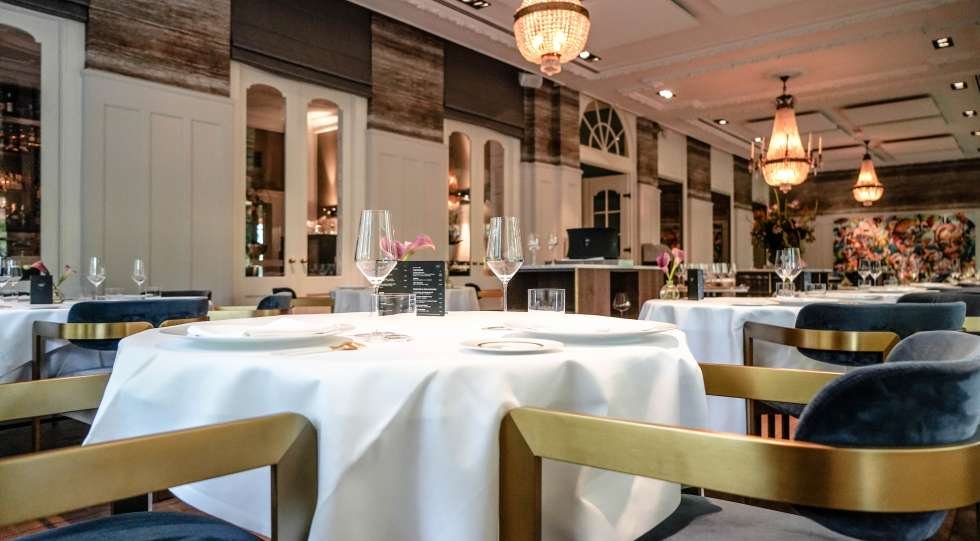
Bars in Leiden
Browse all →
Hotels in Leiden
Browse all →
Wineries in Leiden
Browse all →
At a Glance
- Elegant
- Intimate
- Cozy
- Sophisticated
- Date Night
- Special Occasion
- Celebration
- Open Kitchen
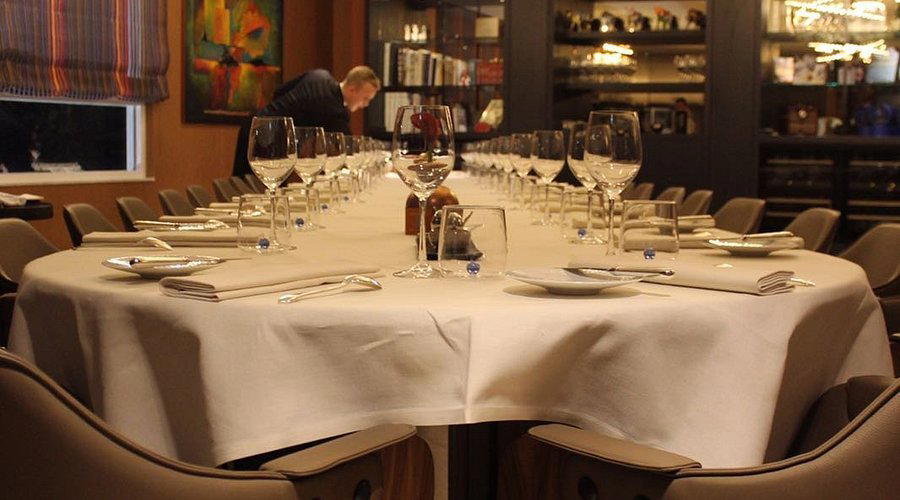
- Private Dining
- Extensive Wine List
- Sommelier Led
- Local Sourcing
- Waterfront
Current opening hours
- Monday
- Closed
- Tuesday
- 5:30–10 PM
- Wednesday
- 5:30–10 PM
- Thursday
- 12:30–10 PM
- Friday
- 12:30–11 PM
- Saturday
- 12:30–11 PM
- Sunday
- Closed
Hours can change for holidays and private events. Last verified .
Fine, relaxed atmosphere with kaarslicht (candlelight) dining, beautifully presented plates, and a beautifully maintained interior.