
Michelin Plate
Our verdict
A counter-style restaurant near Kinkaku-ji serving traditional Japanese cuisine, Wakasugi holds a Michelin Plate (2024, 2025) and occupies a deliberate middle ground between izakaya informality and kappo formality. À la carte ordering puts the customer in control at dinner, while lunch shifts to kaiseki multi-course service.

Pearl is the En Primeur Club membership app, where members save venues, book tables and use the concierge.
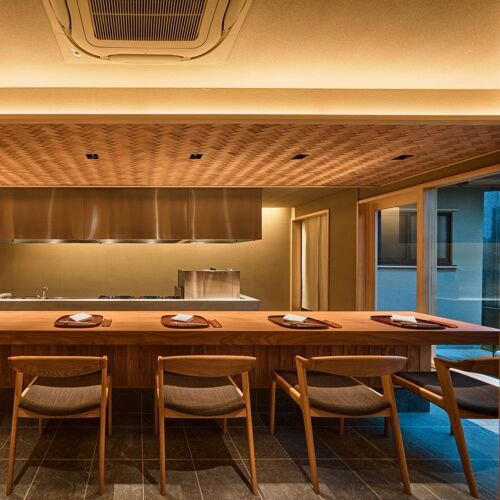
Between the Temple Path and the Table
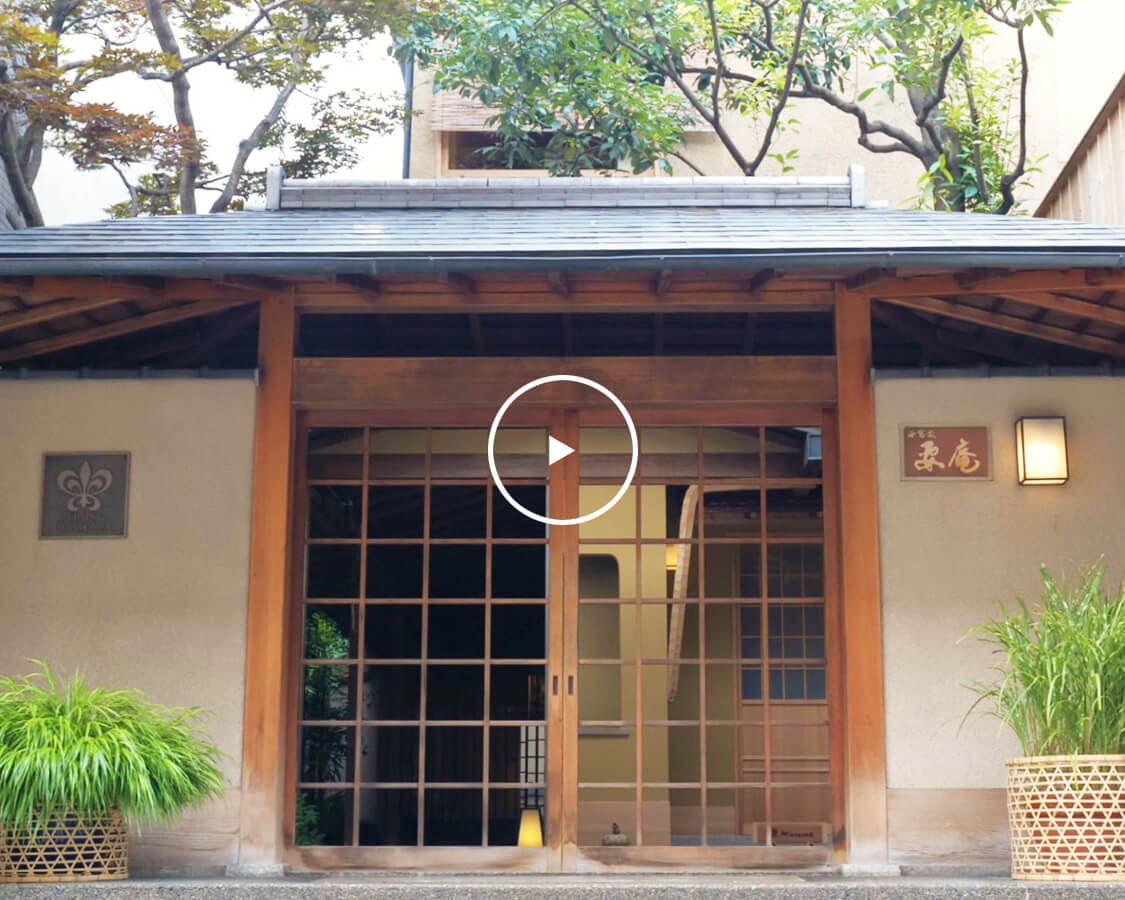
Kita Ward, the northernmost residential pocket of urban Kyoto, sits outside the tourist corridors that connect Gion to Arashiyama. The neighbourhood carries a different register: quieter streets, a local customer base, and the looming presence of Kinkaku-ji, the gold-leaf Zen pavilion whose World Heritage designation draws millions annually but whose surrounding lanes remain largely given over to residents rather than visitors. It is in this context that Wakasugi operates, a counter-style restaurant that trades on proximity to one of Japan's most recognised sites while serving a room that is anything but performative.
The format here is specific and deliberate. Counter seating puts the kitchen directly in conversation with the guest, a configuration common to high-end kappo and omakase restaurants in Kyoto but repurposed here at a more accessible price point. Where places like Isshisoden Nakamura or Gion Matayoshi anchor the upper tier of Kyoto's kaiseki tradition, and neighbourhood izakayas occupy the other extreme, Wakasugi occupies a consciously constructed middle ground. The couple who run it describe the intention plainly: not quite a Japanese-style pub, not quite a high-class kappo. That positioning is harder to maintain than it sounds, requiring the kitchen to hold consistent quality without the structural support of a fixed tasting menu at every service.
The À La Carte Argument
Most serious Japanese restaurants in Kyoto converge on one of two formats: the kaiseki progression, which controls pacing, ingredient selection, and cost from the kitchen's side, or the izakaya model, which disperses control entirely to the customer. À la carte counter dining, the format Wakasugi uses for dinner, is a smaller niche. It asks the kitchen to maintain depth across multiple dishes simultaneously and asks the guest to make decisions rather than surrender to a sequence.
The editorial angle this opens is worth taking seriously. Japan's culinary heritage has always balanced codified form with customer deference. The kaiseki tradition, which runs through restaurants like Kikunoi Roan and Kenninji Gion Maruyama, places the chef in full control of the meal's architecture. What Wakasugi's à la carte dinner format represents is a transfer of that architecture to the guest, which in a Kyoto context carries its own cultural signal: the restaurant trusts the diner to compose their own experience.
The noted signature items, smoked salmon and herring-roe potato salad, illustrate this intersection of local tradition and technique applied across ingredients. Herring roe, or kazunoko, is a Japanese new year staple with dense association to seasonal celebration and preserved seafood culture. Potato salad is, by contrast, a Western import that entered Japanese home cooking during the Meiji-era opening, now so thoroughly absorbed that it appears on izakaya menus from Sapporo to Naha as unremarkable everyday food. Presenting these as recognisable, reliable à la carte items at a Michelin-recognised counter signals that the kitchen is not reaching for novelty. It is cooking the kind of food that regulars return for, which is a different and less flashy ambition than the one driving Kyoto's destination kaiseki houses.
Lunch as a Different Register
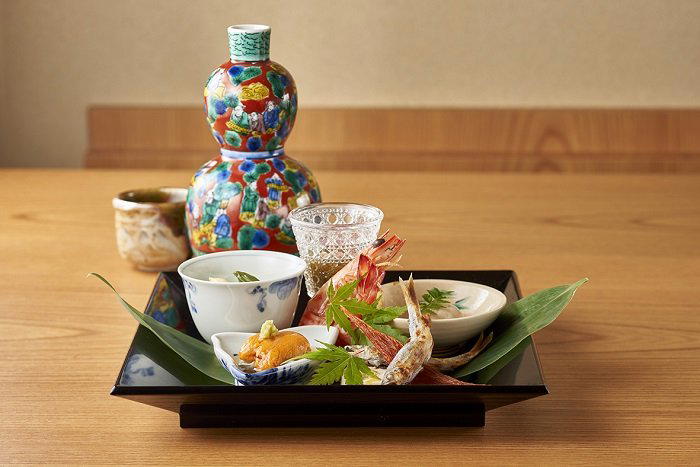
Lunch service at Wakasugi shifts format entirely, moving to kaiseki multi-course structure. The practical reason given is that the counter configuration lets the couple talk with guests as they serve, which is easier to sustain over a scripted progression than across scattered à la carte timing. But the decision also reflects how Kyoto restaurants often use lunch to offer kaiseki to a broader audience, pricing it at a level below the dinner equivalent and shortening the sequence.
Kaiseki has strong Kyoto roots, originating as a meal served between tea ceremony courses and evolving over centuries into the city's dominant fine dining form. At its upper reaches, in restaurants like Kodaiji Jugyuan, the format follows seasonal ingredient logic with strict discipline. Wakasugi's lunch adaptation sits below that register but draws from the same structural tradition. The multi-course format at lunch allows the kitchen to control ingredient presentation and pacing while the à la carte dinner creates the flexibility the restaurant's neighbourhood-gathering ethos requires.
Where Wakasugi Sits in the Kyoto Field
The Plate designation, distinct from the starred tier that includes Gion Sasaki or Kichisen at ¥¥¥¥, is Michelin's acknowledgment of consistent quality cooking without the premium price architecture or ceremonial setting that the Guide associates with star-level recognition. At ¥¥¥, Wakasugi prices below the dominant kaiseki houses in the city, comparable in bracket to venues like Kenninji Gion Maruyama at the same general tier but operating in a quieter, residential ward rather than the central Gion corridor.
For visitors moving through western Kyoto toward Kinkaku-ji, this positioning matters. The restaurants immediately surrounding the temple grounds skew toward tourist-oriented lunch formats. Wakasugi, a short distance away on the Kaidocho, reads instead as a place that serves the neighbourhood first and visiting guests second, which in Kyoto often indicates better cooking and a more considered room than the venues staging themselves for passing traffic.
Across Japan, comparable counter-style informal restaurants operating at this price tier and earning consistent Michelin recognition include Myojaku in Tokyo and Azabu Kadowaki in Tokyo at the higher end of that pattern, while further afield, the approach of pairing technical discipline with local accessibility appears in places like akordu in Nara and Goh in Fukuoka, both of which sit at the intersection of tradition and informal hospitality in their respective cities.
Planning Your Visit
Reservations: Booking in advance is advisable given the counter format and limited seating. Budget: ¥¥¥ places this in Kyoto's mid-range, above casual dining but below the kaiseki-specialist tier at ¥¥¥¥. Lunch vs. Dinner: Lunch operates as a kaiseki multi-course service only; dinner shifts to à la carte. Both formats are served at the counter. Getting there: The restaurant is in Kita Ward near Kinkaku-ji; public bus lines connect central Kyoto to the area, and the address at 5 Kinugasa Kaidocho is walkable from the temple grounds. Context: For a broader view of the city's restaurant options across price tiers and styles, see our full Kyoto restaurants guide, as well as our Kyoto hotels guide, bars guide, wineries guide, and experiences guide.
Frequently asked questions
What dish should I order at Wakasugi?
Start with the herring-roe potato salad, which the venue itself identifies as standard fare. It operates as a reliable signal of the kitchen's approach: a dish with roots in both Japanese preserved-food tradition (kazunoko) and the Western-influenced home cooking that entered Japan during the Meiji era, executed here as an everyday counter staple rather than a studied reimagining. At dinner, the à la carte format means you are composing the meal yourself, so the smoked salmon is a second anchor worth ordering alongside it. If you visit at lunch, the kaiseki multi-course service removes the decision entirely and lets the kitchen build the progression. For comparable Japanese counter experiences across the country, Harutaka in Tokyo, HAJIME in Osaka, 1000 in Yokohama, and 6 in Okinawa each represent distinct regional takes on formal Japanese dining.
Fast Comparison
| Venue | Cuisine | Price | Awards | Notes |
|---|---|---|---|---|
| WakasugiThis venue (the venue you are viewing) | Traditional Japanese Kaiseki & Omakase | $100–150 | Michelin Plate | Not listed |
| Gion Sasaki | Modern Kaiseki | $300–500 | 3 Michelin Stars · La Liste Top Restaurants | Kaiseki, Japanese |
| cenci | Innovative Italian-Japanese Fusion | $100–150 | 1 Michelin Star · World's 50 Best #76 | Italian |
| Ifuki | Sumibi Kappo Kaiseki | $200–300 | 2 Michelin Stars · La Liste Top Restaurants | Kaiseki |
| Kyokaiseki Kichisen | Kyoto Kaiseki | $200–300 | 2 Michelin Stars · La Liste Top Restaurants | Japanese |
| Kyo Seika | Modern Chinese Fine Dining | $150–200 | 1 Michelin Star · Tabelog Bronze #216 | Chinese |
Recognition history
Dated appearances from independent guides and award organizations, with the underlying list record or original source where available.
Michelin Plate
Michelin
Full recognition history (3 entries)
Michelin Plate
Michelin
Michelin Plate
Michelin
Continue exploring
More in Kyoto
Restaurants in Kyoto
All restaurants in Kyoto →

Bars in Kyoto
All bars in Kyoto →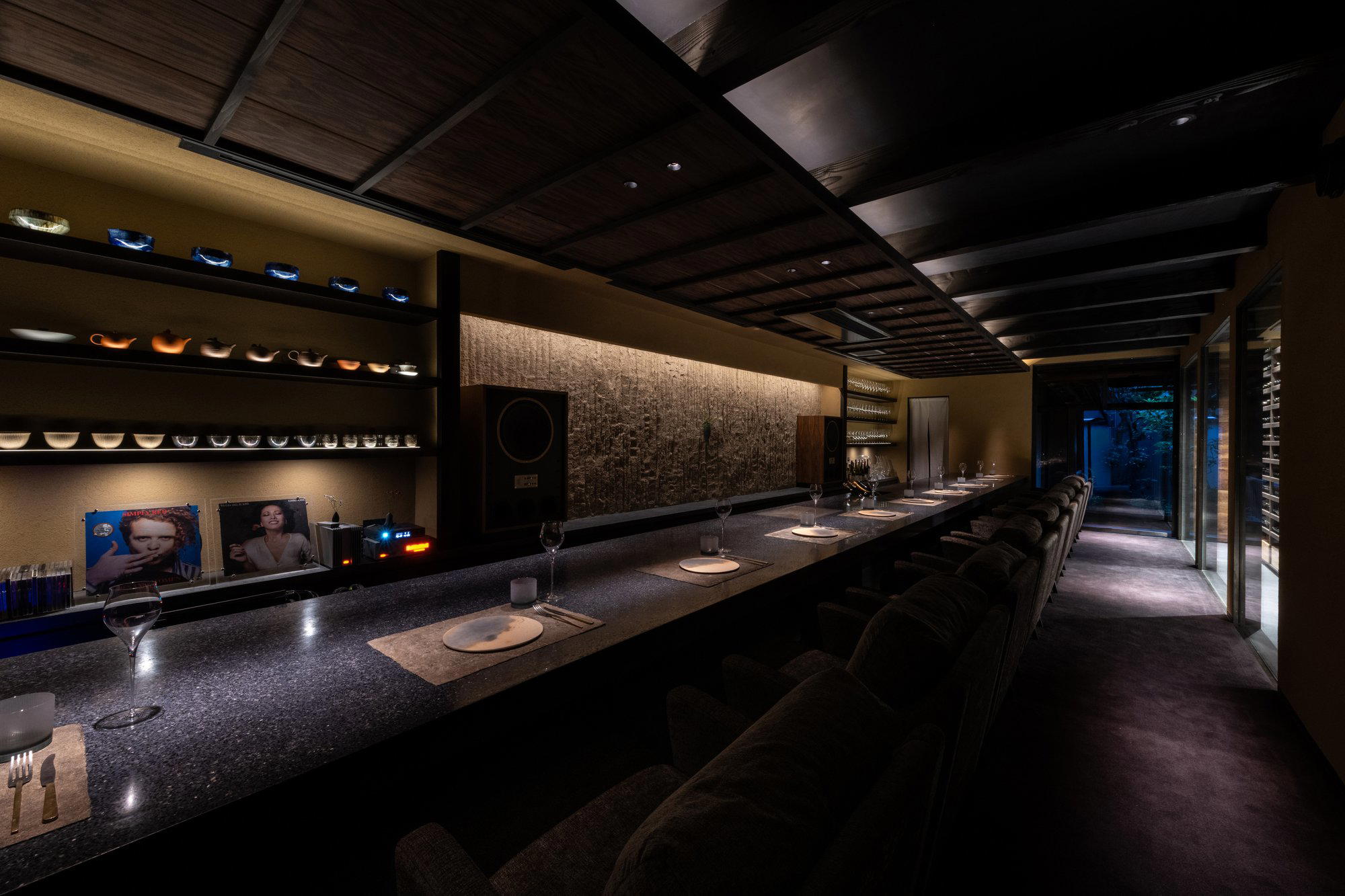

Hotels in Kyoto
All hotels in Kyoto →
Wineries in Kyoto
Browse all →
Details
- Intimate
- Elegant
- Classic
- Special Occasion
- Date Night
- Chefs Counter
- Standalone
- Sake Program
- Omakase
- A La Carte
- Counter Dining
- Set Menu
- Sake
Current opening hours
- Monday
- Closed
- Tuesday
- 5:30–10 PM
- Wednesday
- 11:30 AM–3 PM, 5:30–10 PM
- Thursday
- 11:30 AM–3 PM, 5:30–10 PM
- Friday
- 11:30 AM–3 PM, 5:30–10 PM
- Saturday
- 11:30 AM–3 PM, 5:30–10 PM
- Sunday
- 11:30 AM–3 PM, 5:30–10 PM
Hours can change for holidays and private events. Hours as of .
Intimate counter setting with warm, welcoming atmosphere; soulful service from the couple-run operation creates a personal dining experience.