
Tabelog Bronze #105
Our verdict
Wayōshusai Hide occupies a address in Osaka's Shinsaibashisuji corridor, where the name itself signals intent: wayō, the Japanese shorthand for the meeting of Japanese and Western traditions. The kitchen works at the intersection of imported technique and seasonal domestic produce, placing it inside a growing Osaka cohort that treats classical European method as a lens through which to read Japanese ingredients.

Pearl is the En Primeur Club membership app — saves, bookings, and concierge access live there. Same editors, same standards.
- Address
- 2 Chome-1-3 Shinsaibashisuji, Chuo Ward, Osaka, 542-0085, Japan
- Phone
- +81662113391
- Hours
- Mon–Sat 5–11 PMSun 5–9 PM
- Website
- omakase.in
- Directions
- Get directions
- Booking
- Book on Omakase
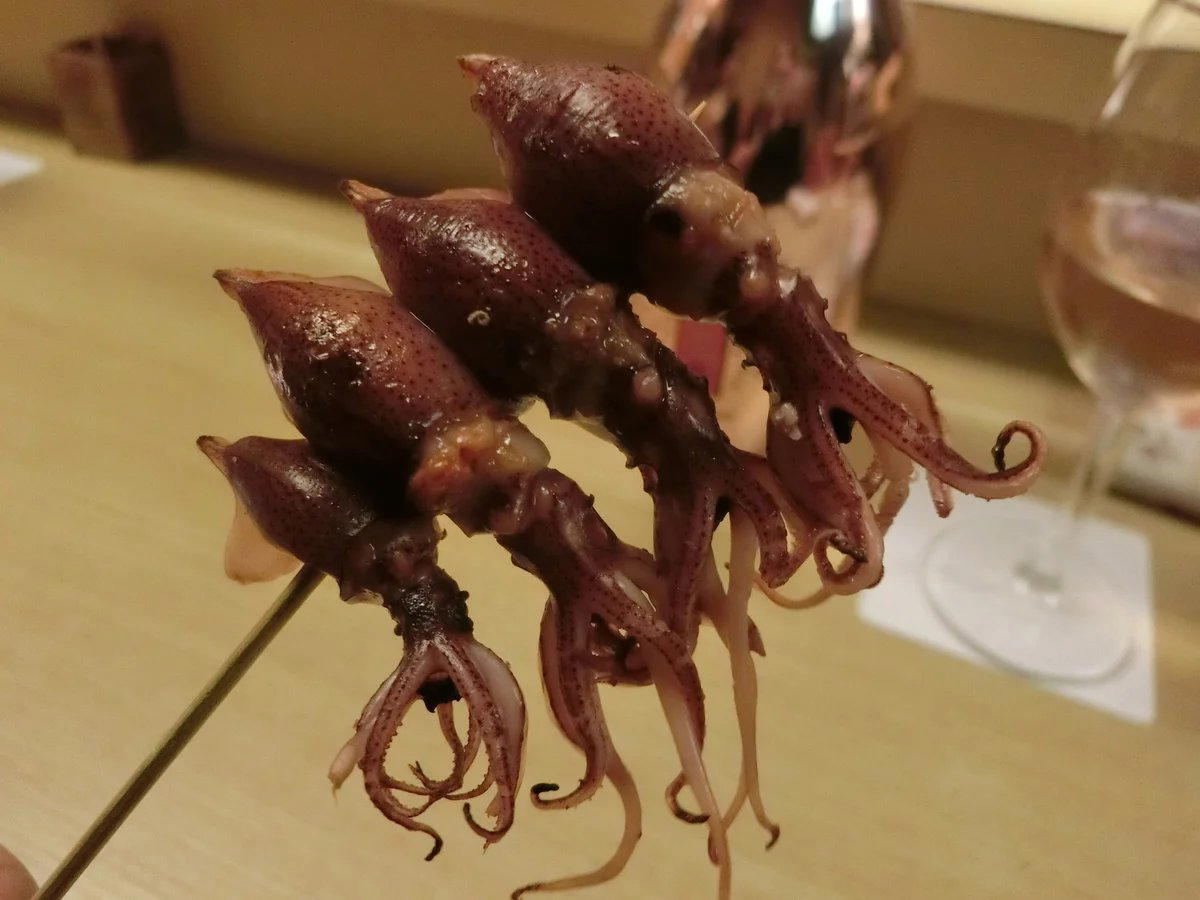
Where Shinsaibashisuji Meets the Hybrid Table
Shinsaibashisuji is one of Osaka's most commercially layered corridors: covered arcades give way to side streets dense with small restaurants, and the address at 2 Chome-1-3 places Wayōshusai Hide inside that compressed, competitive dining block in Chuo Ward. The name is the first signal. Wayō (和洋) is the Japanese compound for the blending of Japanese and Western forms — a culinary category with a long, specific history in Japan's port cities, and one that Osaka has consistently interpreted with more pragmatism than ceremony. Shusai (酒菜) points to food designed alongside drink. The compound name frames the kitchen's intent before you sit down.
This part of Osaka has always rewarded attention to the smaller rooms. The grand omakase counters and the Michelin-flagged kaiseki houses draw the reservation lists, but Chuo Ward's side-street restaurants — the kind that seat a dozen people and change the menu by season and by what arrived at market, have long been where the city's dining character is most honestly expressed. Wayōshusai Hide sits within that tradition, at the point where it has started absorbing technique from outside Japan.
The Wayō Tradition in Context
Japan's engagement with Western cooking technique is not recent. The Meiji-era opening of the country introduced French and later Spanish and Italian methods into professional kitchens, and by the late twentieth century, a generation of Japanese chefs had trained formally in Europe before returning home. What emerged was not fusion in the blunt commercial sense, but a series of precise negotiations: which techniques transplant usefully, which domestic ingredients benefit from them, and where the seam between the two traditions produces something that neither could achieve alone.
Osaka's version of this has tended toward the practical. Where Tokyo's hybrid kitchens sometimes foreground the intellectual project, and Kyoto's approach remains anchored by kaiseki's seasonal formalism, Osaka's wayō tables are more likely to ask a simpler question: does this make the ingredient taste better? For comparison, HAJIME in Osaka operates at the far end of this spectrum, where French technique is applied with formalist precision, while the mid-tier of Osaka's hybrid dining moves with considerably less ceremony and considerably more flexibility.
The same intersection of method and local material appears elsewhere in Japan, but with distinct regional inflections. Gion Sasaki in Kyoto holds kaiseki as the structural frame while admitting selective Western influence; Harutaka in Tokyo stays within the sushi tradition; akordu in Nara takes a more explicitly European approach to Yamato ingredients. Each city's answer to the local-ingredients, imported-technique question differs in emphasis. Osaka's answer, characteristically, keeps the ratio flexible.
Seasonal Produce as the Kitchen's Reference Point
The shusai dimension of Wayōshusai Hide's identity matters here. Kitchens structured around food-and-drink pairing, rather than cuisine category alone, tend to sequence dishes differently. Smaller portions, more lateral movement between flavour registers, and a menu that shifts with the market rather than with a fixed format are all common features of the shusai approach. In Osaka's autumn and winter months, this means engagement with the Kansai region's cold-season produce: burdock root, turnips, yuzu from the surrounding mountains, and the fatty fish that peak in colder water. Spring brings takenoko bamboo shoots and the lighter, more acidic register that follows. A kitchen committed to seasonal domestic sourcing in this city is working with a genuinely varied palette across the year.
That seasonal specificity is also what differentiates this tier of Osaka dining from international comparisons. Le Bernardin in New York City and Atomix in New York City both operate at the intersection of precision technique and premium sourcing, but within supply chains and seasonal calendars that produce different results. In Osaka, proximity to Kyoto's vegetable farms, the Pacific coastline, and the mountain prefectures of Nara and Wakayama creates a sourcing radius that is both compressed and varied, a structural advantage for any kitchen that treats local produce as its primary reference.
For readers building a broader Osaka itinerary, Ajihei Sonezaki, Ajikitcho Bunbuan, and Calendrier represent different positions within the city's dining spread, from traditional kaiseki to contemporary French. Aka to Shiro and Az offer further points of comparison within the hybrid and contemporary register. The full picture of what the city does across categories is in our full Osaka Shi restaurants guide.
Beyond Osaka, the Japan-wide pattern of local-technique negotiation appears at very different scales. Goh in Fukuoka works with Kyushu's ingredient base; 一本木 糀川製 in Nanao and 古代山乃 in Sapporo each operate within regional supply chains that produce distinct results; 湖畔荘 in Takashima and 羽根屋 in Nishikawa Machi sit in rural contexts where the sourcing radius is even shorter. Birdland in Sakai occupies a different category altogether, focused on yakitori with the kind of single-ingredient discipline that mirrors the best of the small Osaka rooms.
Planning a Visit
Wayōshusai Hide is located at 2 Chome-1-3 Shinsaibashisuji, Chuo Ward, Osaka 542-0085, the Shinsaibashi station on the Midosuji Line places you within a short walk of the address. Chuo Ward's dining options are dense in this stretch, and the Shinsaibashisuji arcade and its surrounding blocks reward unhurried exploration before or after a meal. For smaller rooms in this part of Osaka, reservation lead times of several days to a few weeks are standard depending on season; autumn and the new year period tend to compress availability across the neighbourhood. Direct contact through the venue or a local concierge service is the advisable route given that English-language booking infrastructure at this tier of Osaka dining is not always available online.
Frequently asked questions
How do I find Wayōshusai Hide?
Wayōshusai Hide is located at 2 Chome-1-3 Shinsaibashisuji, Chuo Ward, Osaka, 542-0085, Japan, Osaka Shi.
How does Wayōshusai Hide's location near Shinsaibashi station affect the dining experience?
Shinsaibashi station on the Osaka Metro Midosuji Line puts guests within walking distance of the restaurant at 2 Chome-1-3 Shinsaibashisuji, Chuo Ward. The surrounding corridor is commercially layered — covered arcades, side-street izakayas, and small specialty restaurants — which means the approach to Wayōshusai Hide is part of a broader Osaka neighbourhood context rather than an isolated destination. Arriving with time to explore the immediate area before or after a meal adds dimension to an evening in this part of Osaka.
What do people recommend at Wayōshusai Hide?
Wayōshusai Hide is structured around seasonal produce and food-and-drink pairing rather than a fixed menu category, so what guests highlight tends to shift with the season. The kitchen's wayō framework — combining Japanese technique with Western culinary influence — means the most discussed dishes typically reflect whichever local ingredients are at their peak. Visiting with an appetite for the kitchen's current direction, rather than a specific dish in mind, is the approach that aligns best with the restaurant's identity.
Do I need a reservation for Wayōshusai Hide?
Given its location on Shinsaibashisuji — one of Osaka's densest restaurant corridors — demand for small, concept-driven tables in this area moves quickly. Booking ahead is advisable, particularly for weekend evenings. Contact details are not publicly listed, so reaching out through the venue directly or via a hotel concierge in the Chuo Ward area is the most reliable route.
What is Wayōshusai Hide known for?
Wayōshusai Hide takes its name from the wayō tradition — Japan's long-running dialogue between native cooking and Western technique, rooted in the Meiji era — and applies that framework through a shusai lens, meaning food-and-drink pairing is central to the experience. The restaurant sits at 2 Chome-1-3 Shinsaibashisuji in Osaka's Chuo Ward, a location that places it among some of the city's most concentrated dining options. Seasonal produce drives the kitchen's reference points rather than a fixed cuisine category.
Comparable Spots
Comparable venues nearby, for context on price, style, and recognition.
| Venue | Cuisine | Price | Awards | Notes |
|---|---|---|---|---|
| Wayōshusai HideThis venue — the venue you are viewing | Japanese Izakaya | $500+ | Tabelog Bronze #105 | Not listed |
| 食堂うちの | Modern Japanese Omakase | $100–150 | Michelin Plate | Kita |
| Mugen | Michelin-Recognized Chuka Soba | Not listed | Not listed | Fukushima |
| Ajihei Sonezaki | Live Fugu & Crab Kaiseki | $150–200 | Not listed | Kita |
| 澤田 | Traditional Japanese Kaiseki | Not listed | Not listed | Fukushima |
| Shōwaji | Japanese Wagyu Yakiniku & Shabu-Shabu | $50–100 | Not listed | Chūō |
Recognition history
Dated appearances from independent guides and award organizations, with the underlying list record or original source where available.
Tabelog Bronze #105
Tabelog
Full recognition history (3 entries)
Tabelog 100 #34 · No. 34
Tabelog · Tabelog 100 - Izakaya - WEST - 2025
Tabelog Bronze
Tabelog
Continue exploring
More in Osaka
Restaurants in Osaka
Browse all →




Bars in Osaka
Browse all →


Hotels in Osaka
Browse all →




Wineries in Osaka
Browse all →
Details
- Intimate
- Elegant
- Special Occasion
- Sake Program
- Counter Dining
- Sake
Current opening hours
- Monday
- 5–11 PM
- Tuesday
- 5–11 PM
- Wednesday
- 5–11 PM
- Thursday
- 5–11 PM
- Friday
- 5–11 PM
- Saturday
- 5–11 PM
- Sunday
- 5–9 PM
Hours can change for holidays and private events. Last verified .
Intimate counter seating in a non-smoking environment focused on sake and fresh fish, creating an elegant and sophisticated atmosphere.