Versátil



1 Michelin Star · Guía Repsol 1 Sol · Macarfi 7.9 Food Rating
Our verdict
A Michelin-starred restaurant in one of Extremadura's smaller rural villages, Versátil earns its place on any serious food itinerary through two tasting menus anchored in seasonal Extremaduran produce. Chef Alejandro Hernández, trained under Martín Berasategui, reframes regional tradition without abandoning it. Advance booking is strongly advised, and the adjacent Bodega offers a more informal alternative within the same project.

Pearl is the En Primeur Club membership app — saves, bookings, and concierge access live there. Same editors, same standards.
- Address
- C. el Lagar, 6, 10710 Zarza de Granadilla, Cáceres, Spain
- Phone
- +34 927 48 62 36
- Hours
- Mon–Wed ClosedThu–Sat 2–4 PM, 9–11 PMSun 2–4 PM
- Website
- versatilrural.com
- Directions
- Get directions
Fine Dining at the Edge of Extremadura
There is a particular kind of attention required to cook seriously in a village of a few hundred people. No urban dining scene to benchmark against, no passing footfall from office workers or hotel guests, no critical mass of restaurants to generate ambient culinary ambition. In the north of Cáceres province, where the dehesa stretches toward the Sierra de Gredos and the towns thin out along the Via de la Plata, that kind of isolation makes destination dining both harder to sustain and, when it works, considerably more compelling to experience. Versátil, on Calle el Lagar in Zarza de Granadilla, operates in precisely that condition and holds a Michelin star as of 2024.
The broader Spanish fine dining scene has long concentrated its energy in the north — in the Basque Country, Catalonia, and Valencia — where Arzak in San Sebastián, Disfrutar in Barcelona, and Ricard Camarena in València represent a deep infrastructure of suppliers, training pipelines, and institutional support. Extremadura sits outside that infrastructure almost entirely. The region's gastronomic credentials are genuine, ibérico pigs, pimentón de la Vera, torta del Casar, freshwater fish from the Tajo and Alagón river systems, but the fine dining architecture around those ingredients has historically been thin. A Michelin star in this corner of Spain signals something different from the same award in San Sebastián or Girona: it represents a case made from scratch, against the grain of where the industry concentrates its attention.
What the Land Puts on the Plate
The editorial angle here is not just technique, it is provenance. Extremadura's pantry is specific in ways that reward attention. The dehesa ecosystem, where cork oak and holm oak shade free-ranging pigs, produces ibérico products with a fat profile shaped by acorns rather than grain. The region's paprika, dried and smoked in La Vera, carries a depth that industrial versions do not replicate. Seasonal wild mushrooms, game from the open countryside, and lamb from the high pastures add further layers to what is, in aggregate, a larder that has rarely been worked at tasting-menu level.
At Versátil, the two tasting menus, Paseo Extremeño and Gran Paseo Extremeño, are built around this produce in its seasonal state, updating traditional dishes rather than replacing them. The framing matters: this is not a kitchen that treats local ingredients as raw material for abstract creativity, but one that treats regional tradition as the actual subject, with technique as the means of articulating it more precisely. That approach places Versátil in a different register from the more deconstructive work at, say, DiverXO in Madrid or Mugaritz in Errenteria, and closer to the territory-first ethos that distinguishes houses like El Celler de Can Roca in Girona, where the sourcing argument is inseparable from the cooking argument.
The kitchen's training lineage reinforces this reading. Chef Alejandro Hernández worked under Martín Berasategui, whose restaurant in Lasarte-Oria represents one of the most technically rigorous programs in Spanish cooking. That training provides the scaffolding, precision, discipline, an understanding of how to extract and concentrate flavour, but the raw material at Versátil is distinctly Extremaduran. The combination is what gives the project its coherence: craft imported from the Basque tradition, applied to a pantry that belongs entirely to this stretch of western Spain.
Format and Space
The restaurant operates a contemporary tasting menu format, which in this rural context functions as a destination proposition rather than a casual option. Diners who make the drive to Zarza de Granadilla are, by definition, coming specifically for this meal, and the two-menu structure allows for different degrees of commitment depending on appetite and time. The Paseo Extremeño offers a shorter route through the kitchen's thinking; the Gran Paseo Extremeño extends it.
A parallel offer exists in the Bodega, which serves a more informal menu and doubles as an art gallery. This kind of dual-register operation is increasingly common among destination restaurants in rural Spain, it allows the kitchen to serve a broader range of guests, from those making a full food-trip pilgrimage to locals seeking something less ceremonial. The Bodega format also creates a social space that a strict tasting-menu-only model would exclude, which matters in a village setting where the restaurant is part of the community fabric as much as it is a destination object.
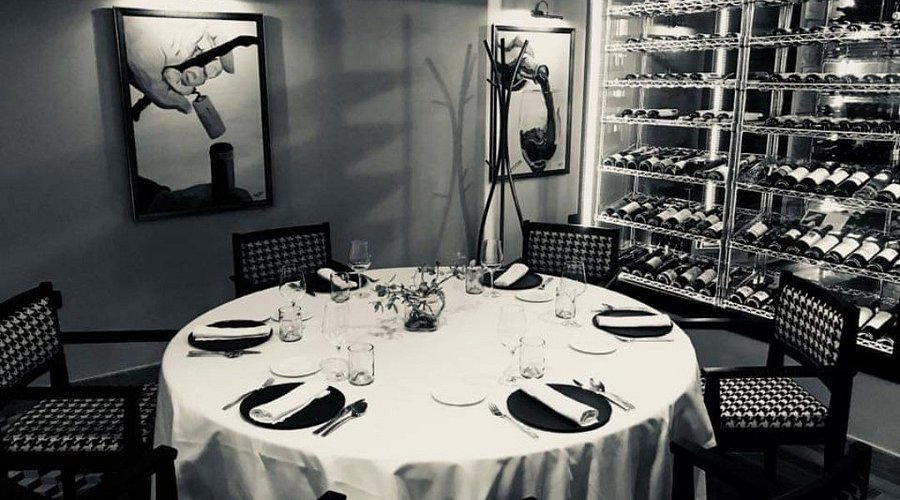
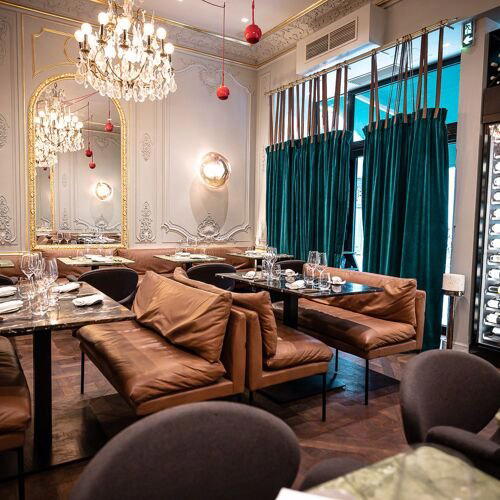
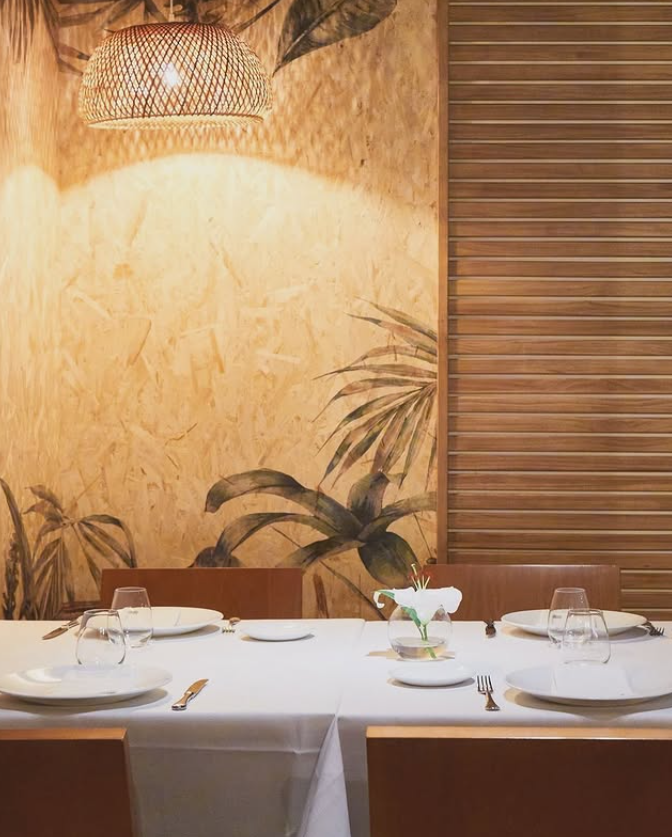
The dining room is described as eclectic but welcoming, a combination that distinguishes it from the more austere aesthetic of some Michelin-starred rural rooms. The dining room is looked after by Alejandro's brothers, Jesús David and José Luis, giving the front-of-house a family character that sits naturally with the sourcing philosophy: the same attachment to place that defines the pantry is reflected in who runs the room.
Where This Sits in the Extremaduran Picture
Extremadura has one other significant reference point in fine dining: Atrio in Cáceres, which operates at the higher end of the regional scale with a wine cellar that has become a story in its own right. The two restaurants occupy different tiers and different settings, Atrio in the medieval walled city, Versátil in a small village forty kilometres to the north, but together they make a case for Extremadura as a region worth building a food-focused trip around, rather than passing through en route to Portugal or Andalusia.
For a broader sense of what the international contemporary fine dining conversation looks like beyond Spain, the approach at Versátil has parallels with territory-anchored kitchens elsewhere: Jungsik in Seoul applies European fine dining technique to Korean ingredients in a way that carries a similar logic of translated craft applied to local produce. Aponiente in El Puerto de Santa María and Azurmendi in Larrabetzu represent further points on the Spanish spectrum where sourcing ideology drives the creative direction. Quique Dacosta in Dénia is another reference for how a regional identity can anchor an international-level kitchen. César in New York City offers a contrasting model of contemporary cooking shaped by urban ingredient access rather than a defined territory.
Planning a Visit
The restaurant operates Wednesday through Saturday for both lunch (from 2 PM) and dinner (from 9 PM), with Sunday lunch service only and the kitchen closed Monday and Tuesday. Given the location, arriving at lunch on a weekend and combining the visit with wider exploration of northern Cáceres province, the Jerte Valley, the medieval town of Plasencia, the reservoir landscape created by the Gabriel y Galán dam, makes practical sense. Zarza de Granadilla itself is a small village, so the restaurant is the primary reason to be there rather than one attraction among many.
Advance booking is strongly advised. A Michelin star in a rural setting with limited covers creates demand that outpaces capacity quickly, and the drive from the nearest city makes arriving without a reservation an unreliable strategy. The price tier sits at €€€, which positions Versátil below the €€€€ bracket occupied by Spain's most decorated kitchens but within the range expected for a starred tasting menu in the current market.
For those building a longer stay, see our full Zarza de Granadilla hotels guide, our full Zarza de Granadilla bars guide, our full Zarza de Granadilla restaurants guide, our full Zarza de Granadilla wineries guide, and our full Zarza de Granadilla experiences guide for the full picture of what the area offers around the meal.
Frequently asked questions
Does Versátil work for a family meal?
The €€€ price point and tasting menu format make this a considered occasion rather than a casual family lunch. Families with older children or adults who eat broadly will find the Bodega's more informal menu a practical entry point, while the full tasting menus suit those treating the visit as a dedicated food-focused excursion to northern Cáceres province.
Is Versátil formal or casual?
The Michelin star and tasting menu structure set a serious culinary register, but the village setting in Zarza de Granadilla keeps the atmosphere from tipping into stiff formality. Front-of-house is run by Alejandro Hernández's brothers, which contributes to a family-operated feel. Expect a considered occasion, not a white-tablecloth performance.
Is Versátil Michelin-listed?
Versátil has received recognition including: If the prospect of a short food-themed country break appeals to you, this restaurant in the north of Cáceres province is the perfect destination. It is rare to find refined cuisine of this level in such a small rural village, so Versátil wi….
What should I eat at Versátil?
The kitchen's Michelin-starred work is expressed through the two tasting menus: the Paseo Extremeño and the longer Gran Paseo Extremeño, both built around seasonal Extremaduran produce. The liquid summer salad and the espresso and oak-infused dessert have drawn specific editorial notice. For a shorter visit, the Bodega offers a more informal menu in a space that also functions as an art gallery.
Comparable Spots, Quickly
| Venue | Cuisine | Awards |
|---|---|---|
| VersátilThis venue — the venue you are viewing | Modern Spanish Fine Dining | 1 Michelin Star · Guía Repsol 1 Sol |
| Aponiente | Progressive - Seafood, Creative | Michelin 3 Star |
| Arzak | Modern Basque, Creative | Michelin 3 Star |
| DiverXO | Progressive - Asian, Creative | Michelin 3 Star |
| El Celler de Can Roca | Progressive Spanish, Creative | Michelin 3 Star |
| Quique Dacosta | Creative | Michelin 3 Star |
Recognition history
Dated appearances from independent guides and award organizations, with the underlying list record or original source where available.
Michelin 1 Star
Michelin
Guía Repsol 1 Sol
Guía Repsol
Macarfi 7.9 Food Rating
Macarfi
Full recognition history (5 entries)
Michelin 1 Star
Michelin
Michelin 1 Star
Michelin
Continue exploring
More in Zarza de Granadilla
Restaurants in Zarza de Granadilla
Browse all →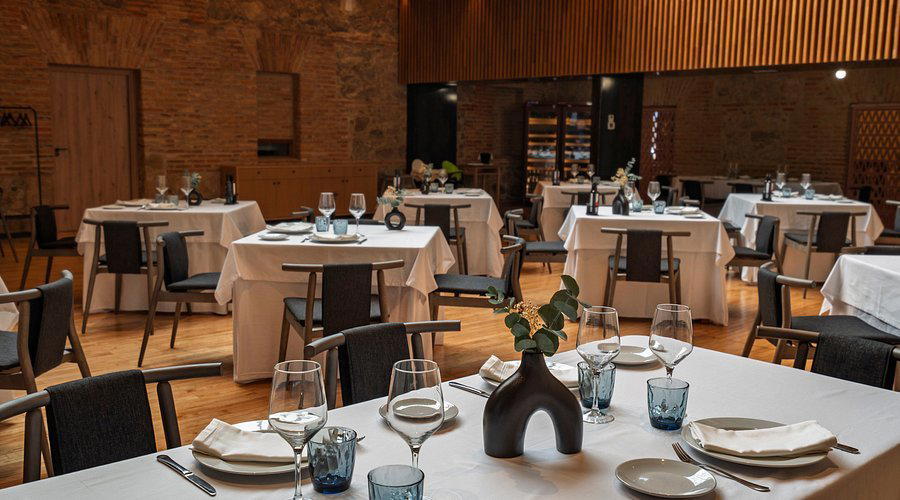
Wineries in Zarza de Granadilla
Browse all →
Versátil
The wine
- Wine program
- Curated wine list
- Extensive wine list
Details
- Elegant
- Cozy
- Sophisticated
- Rustic
- Date Night
- Special Occasion
- Celebration
- Wine Cellar
- Extensive Wine List
- Local Sourcing
- Tasting Menu
- A La Carte
- Vegetarian Friendly
- Vegan Options
Current opening hours
- Monday
- Closed
- Tuesday
- Closed
- Wednesday
- Closed
- Thursday
- 2–4 PM, 9–11 PM
- Friday
- 2–4 PM, 9–11 PM
- Saturday
- 2–4 PM, 9–11 PM
- Sunday
- 2–4 PM
Hours can change for holidays and private events. Last verified .
Acogedor eclectic atmosphere with elegant modern space, original decoration, and welcoming hospitality as per guest reviews.