

A 16th-century Dominican convent turned luxury hotel in the heart of Salamanca's UNESCO-listed old city, Hospes Palacio de San Esteban occupies one of the most architecturally significant addresses in Castile. The property blends preserved Renaissance stonework with a contemporary interior approach that positions it within Spain's small tier of serious heritage conversions.
Pearl is the En Primeur Club membership app — saves, bookings, and concierge access live there. Same editors, same standards.
- Address
- Arroyo de Santo Domingo, 3, Salamanca 37008, Spain
- Phone
- +34 923 26 22 96
- Website
- marriott.com
- Directions
- Get directions
 Saves & bookings on Pearl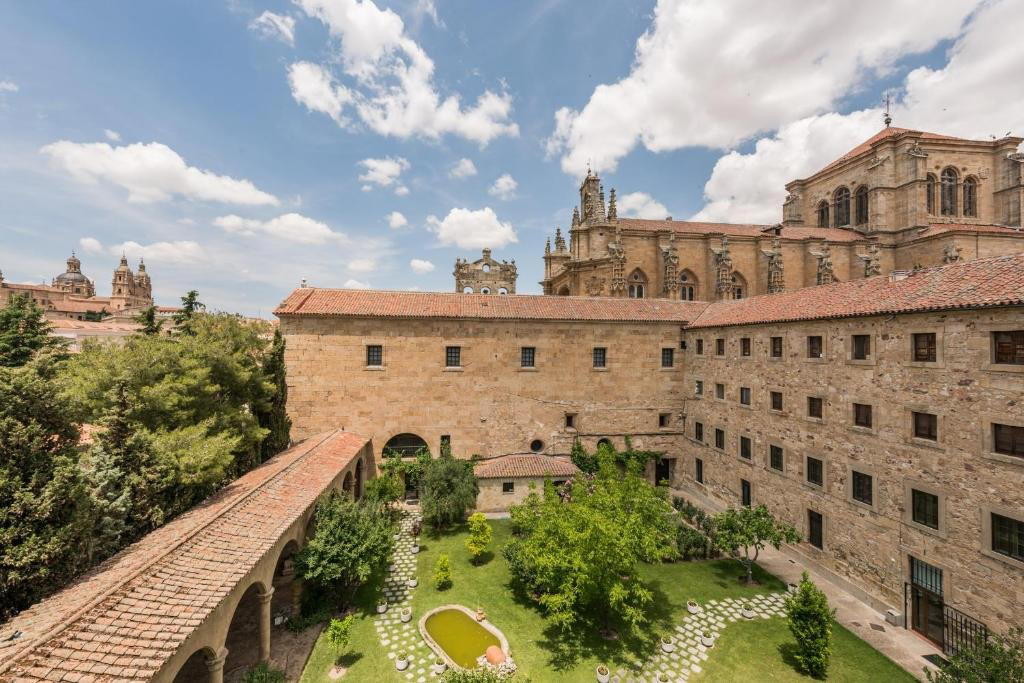
Arriving at Arroyo de Santo Domingo
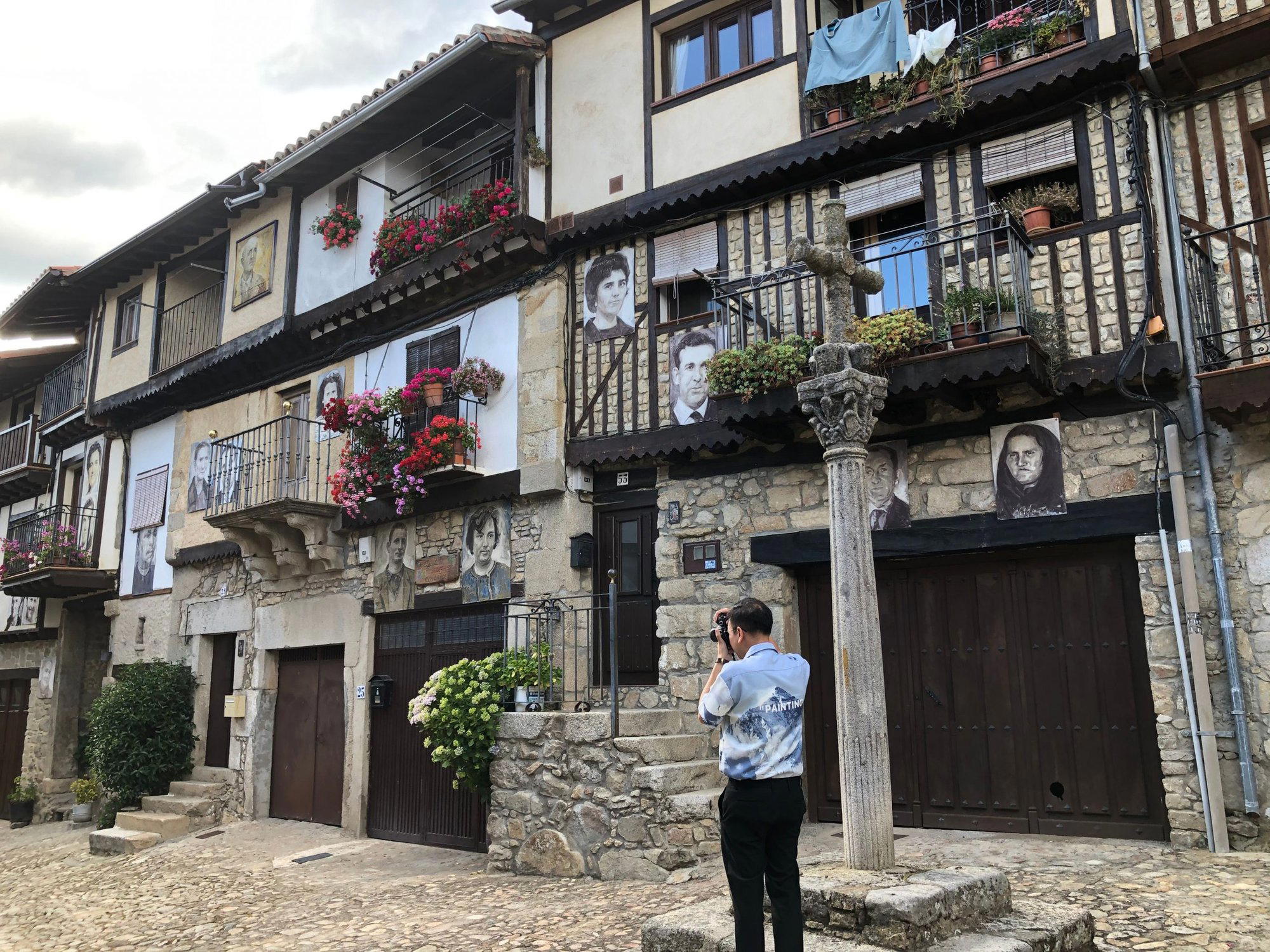
Salamanca's sandstone buildings shift colour through the day, moving from pale gold at noon to a deep amber at dusk that has given the city its unofficial nickname, La Ciudad Dorada. Walking toward Hospes Palacio de San Esteban along Arroyo de Santo Domingo, the transition from street to threshold is less like entering a hotel and more like crossing into a preserved civic monument. The 16th-century convent facade carries the weight of that history without apology: unembellished carved stone, austere proportions, and an entrance that opens not into a reception lobby in any conventional sense, but into a cloister whose architectural grammar is wholly Castilian Renaissance. Spain's heritage conversion sector has produced a number of impressive properties in this vein, from Atrio Restaurante Hotel in Cáceres to Terra Dominicata in Escaladei, and what the strongest among them share is a discipline about letting the original architecture do the work rather than overwhelming it with contemporary decoration.
The Logic of the Conversion
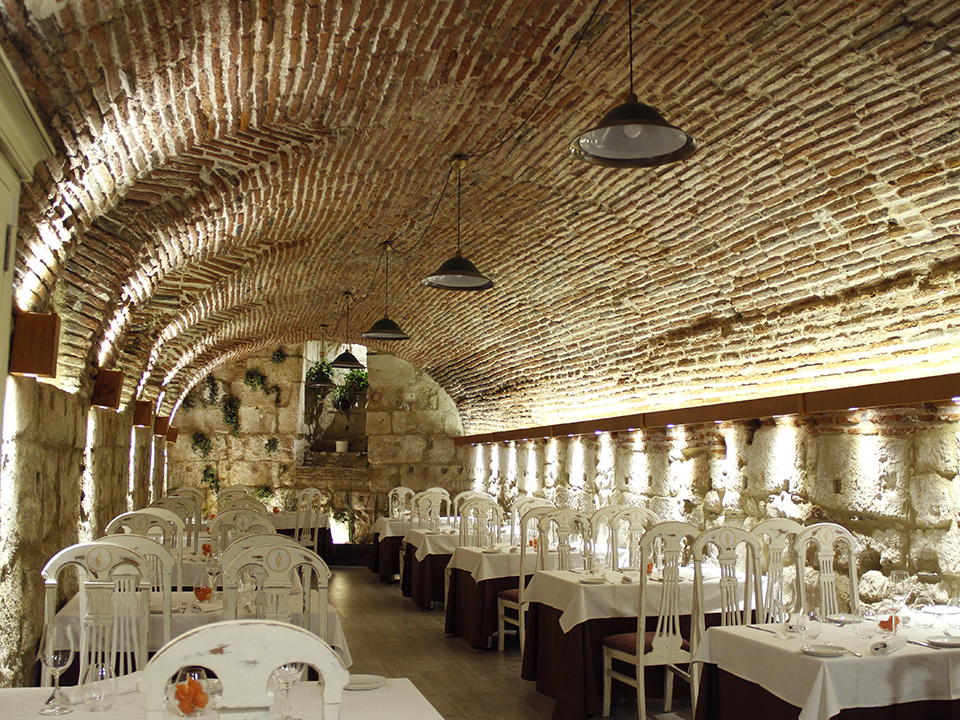
Heritage conversions in Spain occupy a clear hierarchy. At the leading sit properties where the original structure remains legible, the contemporary additions are restrained, and the programming responds to the building rather than ignoring it. Hospes Palacio de San Esteban belongs to this tier. The Hospes group has applied a consistent methodology across its portfolio: source properties with significant architectural provenance, restore rather than reconstruct, and layer in modern amenity without disrupting spatial sequence. In Salamanca, that means the cloister walkways, vaulted ceilings, and stone archways function as the hotel's defining aesthetic, with rooms and public spaces fitted inside the existing volume rather than imposed upon it.
Location reinforces this positioning. The property sits in Salamanca's historic centre, which holds UNESCO World Heritage status, placing it within immediate walking distance of the Plaza Mayor, the two cathedrals, and the University of Salamanca, one of the oldest in Europe. For guests whose primary interest is the city itself, this address removes every logistical friction: the university quarter, the Dominican Convent of San Esteban directly opposite, and the Roman bridge are all accessible on foot. Visitors arriving by train from Madrid (roughly 1.5 hours on the high-speed Alvia service) will find the hotel reachable by taxi in under ten minutes from Salamanca station.
Service Architecture in a Historic Shell
The service model at heritage properties in Spain's upper tier tends to resolve one of two ways: staff trained primarily in traditional luxury protocol, or a more calibrated approach where the building's own character informs the guest experience. The latter is more difficult to execute and, when done well, more rewarding. At Hospes Palacio de San Esteban, the Hospes group's broader service philosophy leans toward anticipatory attention rather than formal ceremony, an approach that suits the convent setting. Stone corridors and vaulted ceilings carry sound differently than a modern hotel; the service rhythm adjusts accordingly, quieter in register, more attentive in proximity. This is not the white-glove formality of a grande dame property like Marbella Club Hotel, nor the design-forward minimalism of Cap Rocat in Cala Blava. It occupies a middle register: historically grounded, professionally attentive, unhurried.
Personalisation in this context manifests through local knowledge as much as in-room detail. Salamanca is a university city with a cultural calendar that shifts significantly between term time and summer, and between Spanish national holidays and quieter mid-week periods. A service team that understands this rhythm, who can orient guests toward the Cathedral's evening illuminations, the leading time to see the Plaza Mayor without crowds, or how to approach the Convento de San Esteban's interior, adds more practical value than standard luxury amenity. That layer of local expertise is where the Hospes model earns its position in a market where Castillo del Buen Amor and Hacienda Zorita Wine Hotel and Spa offer quite different entry points to the region.
Salamanca's Position Within Spain's Heritage Hotel Circuit
Travellers building a slower itinerary through Castile and León will find Salamanca sits naturally between Madrid and the Portuguese border, making it a logical stop on a broader circuit. The city's own hotel market is small relative to its architectural significance: there is no chain-hotel saturation here, and the upper tier is genuinely limited in supply. That scarcity works in favour of properties like Hospes Palacio de San Esteban, which faces no direct competition from international luxury brands in the same postcode. Comparable architectural ambition in the region exists at Abadía Retuerta LeDomaine, though that property operates at a different scale and with a wine-estate programming model. For dining context in Salamanca itself, our full Salamanca restaurants guide maps the city's current food scene.
Spain's broader luxury hotel circuit, from Akelarre in San Sebastián to Pepe Vieira Restaurant and Hotel in Poio, shows the range of formats available to serious travellers. Hospes Palacio de San Esteban fits within the heritage-conversion subset of that circuit, a category where architectural provenance and location centrality drive the decision more than F&B programming or spa scale. Guests who select it are typically prioritising the building and the city over amenity breadth, which is a reasonable trade given what Salamanca's old quarter offers within walking distance.
Planning a Stay
Salamanca receives fewer international visitors than Spain's coastal and capital destinations, which keeps the experience of the historic centre genuinely accessible outside August and Semana Santa, when Spanish domestic tourism peaks sharply. The shoulder months of March through May and September through November offer the most comfortable conditions for exploring the city on foot, with the university in session and the Plaza Mayor in its most lived-in state. Booking for high summer or major religious festival periods warrants advance planning, as the city's upper-tier inventory is limited. The hotel's position on Arroyo de Santo Domingo places guests at the quieter, monastic edge of the old city rather than on the noisier main pedestrian axis, a practical detail worth noting for light sleepers. For those assembling a broader Iberian itinerary, the property pairs logically with A Quinta da Auga Hotel and Spa in Santiago de Compostela or Casa Beatnik Hotel in A Coruña as part of a route that traces the pilgrimage roads and Atlantic northwest.
Recognition history
Dated appearances from independent guides and award organizations, with the underlying list record or original source where available.
Design Hotels Member
Design Hotels
Michelin Selected
Michelin
Continue exploring
More in Salamanca
Hotels in Salamanca
Browse all →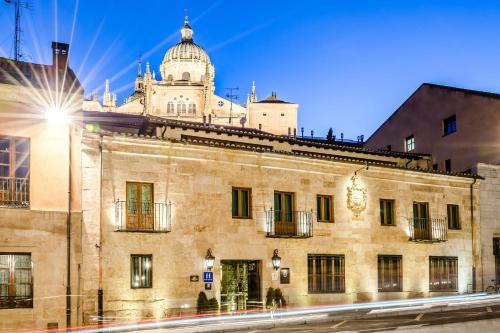

Bars in Salamanca
Browse all →
Restaurants in Salamanca
Browse all →


At a Glance
- Elegant
- Sophisticated
- Classic
- Quiet
- Intimate
- Romantic Getaway
- Anniversary
- Weekend Escape
- Historic Building
- Terrace
- Garden
- Wi Fi
- Pool
- Spa
- Room Service
- Concierge
- Restaurant
- Valet Parking
- EV Charging
- Street Scene
- Garden
- Wi Fi
- Pool
- Spa
- Room Service
- Concierge
- Restaurant
- Valet Parking
- EV Charging
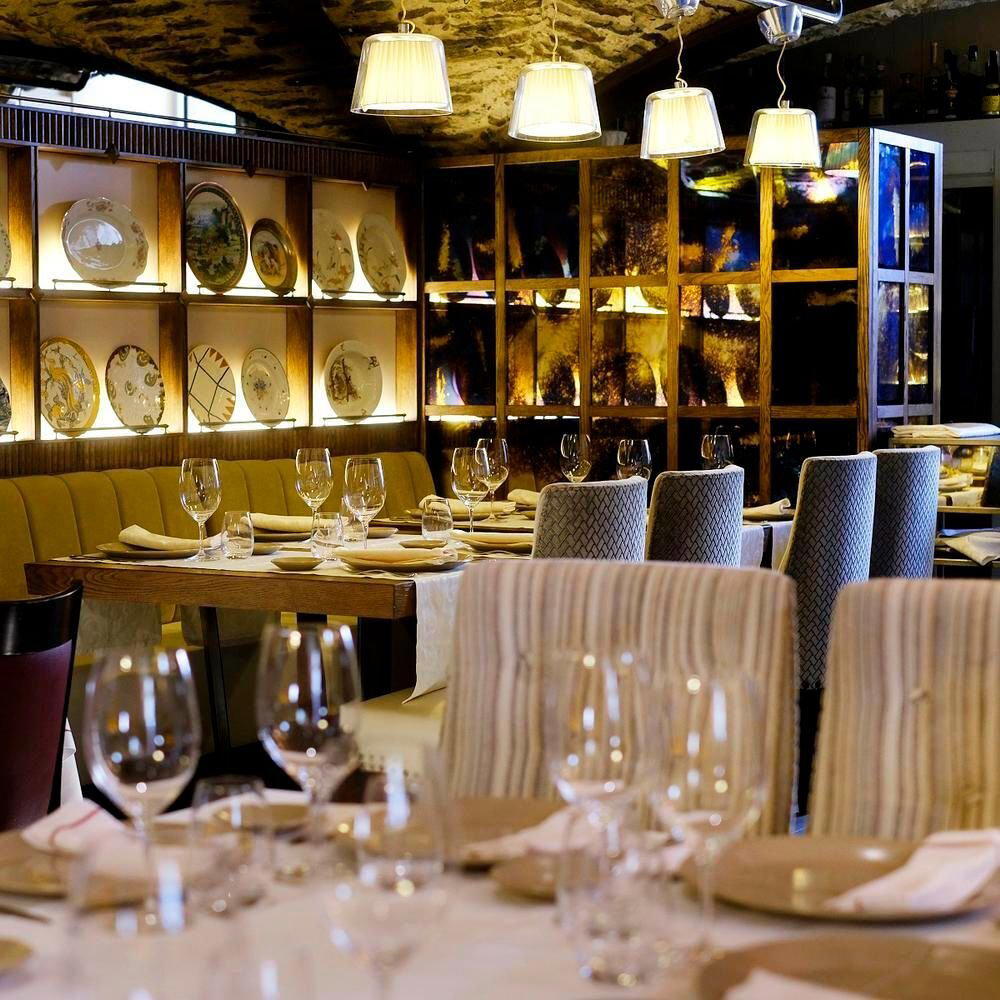
Serene and elegant with warm golden stone lighting, historic monastic elements, and a peaceful retreat atmosphere.
Know Before You Go
- Getting there
- Arroyo de Santo Domingo, 3, Salamanca 37008, Spain