


Set within a medieval stone building in Cáceres' UNESCO-listed old city, Atrio Restaurante Hotel holds three Michelin stars (2025) and Michelin 3 Keys (2024), making it one of Spain's most decorated restaurant-hotel combinations. The 25 rooms pair clean-lined contemporary design with original works by Andy Warhol and Georg Baselitz, while the wine cellar, spanning decades of Pétrus and Latour, draws serious collectors as much as the food does. Rates from US$644 per night.
Pearl is the En Primeur Club membership app — saves, bookings, and concierge access live there. Same editors, same standards.
- Address
- Pl. San Mateo, 1, Centro-Casco Antiguo, 10003 Cáceres
- Phone
- +34 927 24 29 28
- Website
- atriocaceres.com
- Directions
- Get directions
 Saves & bookings on Pearl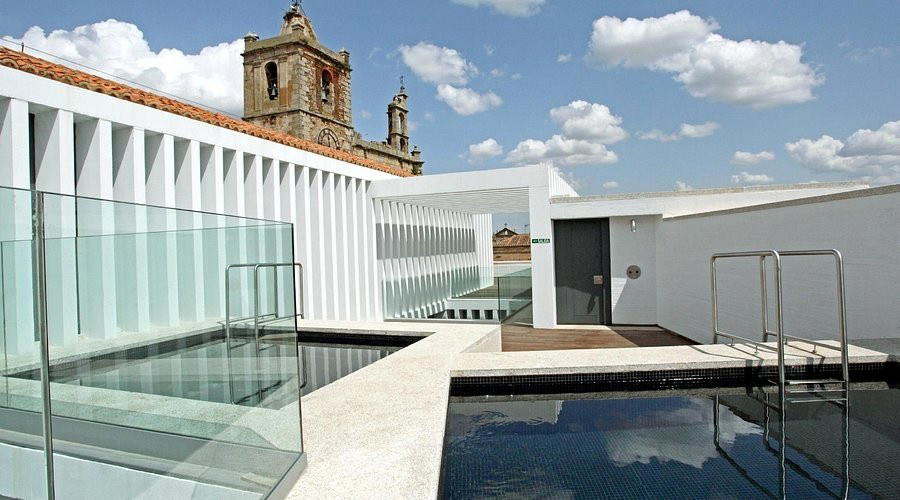
Where Medieval Stone Meets Deliberate Minimalism
Approaching Pl. San Mateo in Cáceres' walled old city, the building reads like the rest of the neighbourhood: dense stone facade, medieval geometry, a streetscape that has barely shifted since the city was founded in the first century B.C. The surprise comes inside. Where the exterior is all Roman arches and layered centuries, the interior pivots sharply into a vocabulary of vivid white, painted wood-panel walls, crisp bedding, rounded tubs in generous bathrooms, with almost no ornament except, pointedly, the art. Original works by Andy Warhol and Georg Baselitz are positioned not as decoration but as anchors for rooms that would otherwise read as exercises in restraint. It is a deliberate compositional choice, and it works: the historic shell and the contemporary interior create a productive tension rather than a conflict.
That architectural logic, old structure, new interior language, characterises a particular approach to heritage properties that has become more common across Spain, from converted Valencian palaces to Mallorcan farmhouses. Among that cohort, Atrio occupies a specific position: a property where the design ambition is matched by a 3-Key hotel designation and a wine program serious enough to attract collectors. For comparable experiments in integrating contemporary design into historical Spanish fabric, Caro Hotel in València and Can Alberti 1740 Hotel Boutique in Mahón operate on a similar premise, though neither carries the same dining credentials.
The Restaurant as the Primary Argument
Spain's stock of three-Michelin-star restaurants is not large, and the ones that also function as destination hotels form a still smaller subset. Atrio's restaurant has held three stars as of 2025, a credential that places it in a peer group that includes properties like Akelarre in San Sebastián, the other prominent example in Spain of a three-star kitchen operating alongside hotel accommodation. The Michelin 3 Keys designation adds a further signal: Michelin's hotel-specific recognition system, separate from its restaurant stars, rates the lodging on its own terms rather than bundling it with the dining reputation.
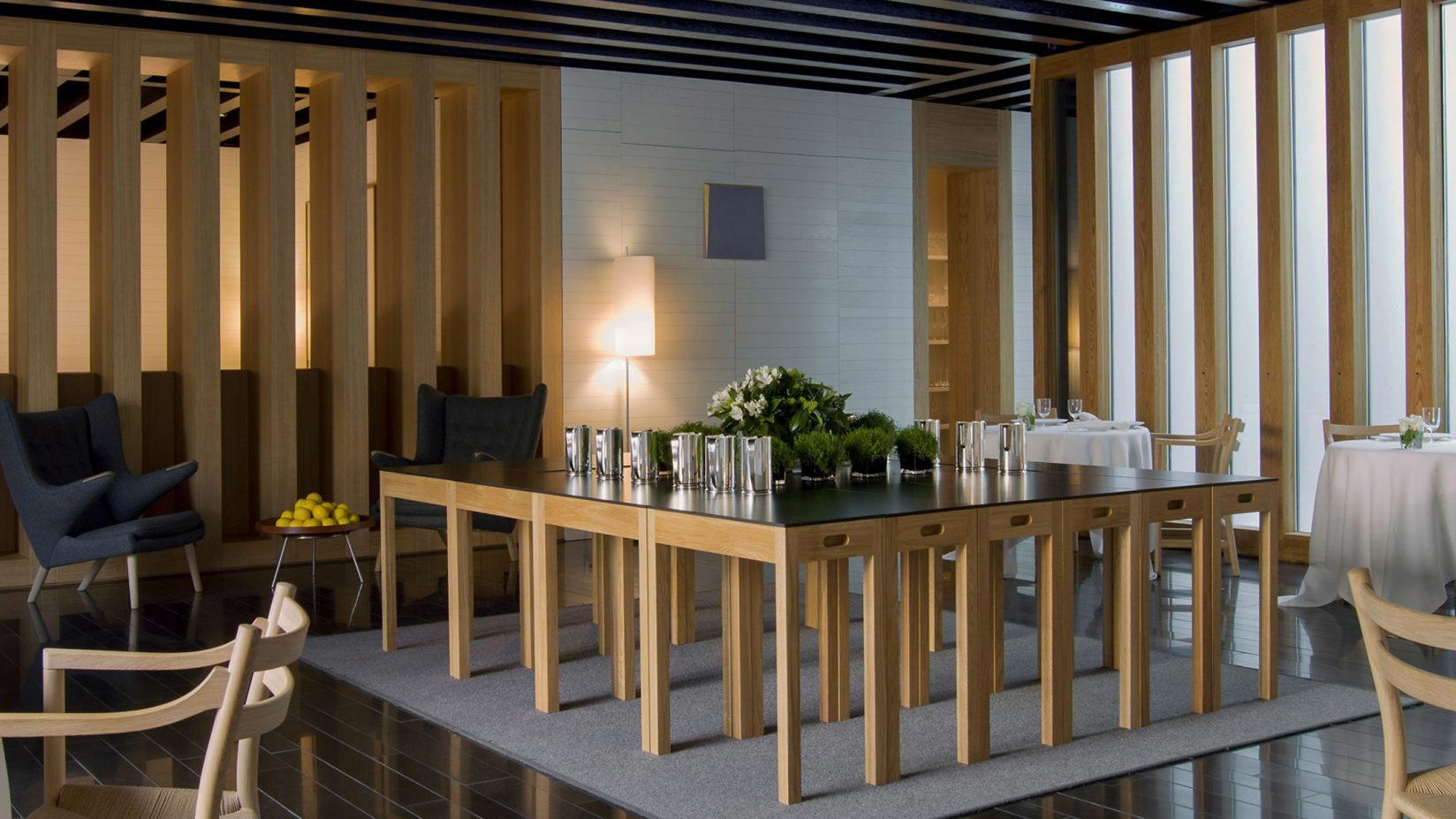
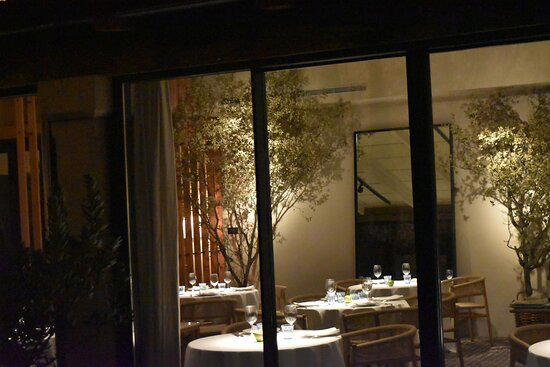
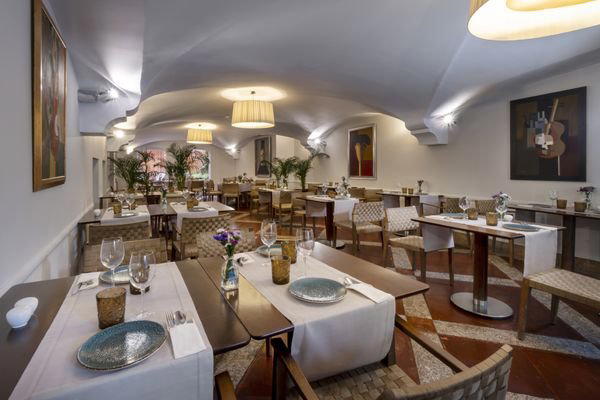
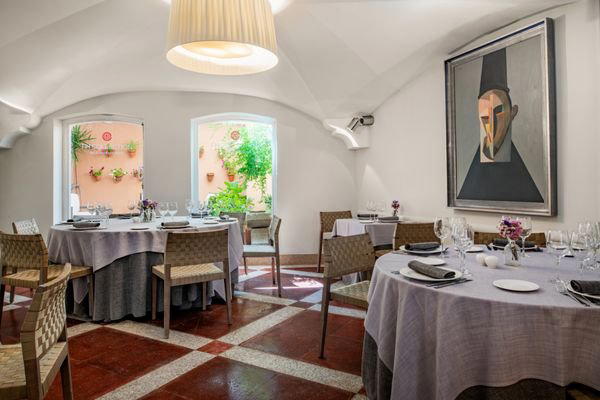
The restaurant atmosphere is formal without being cold: white tablecloths, suited service staff, a room calibrated for concentration rather than conviviality. The wine cellar is the operational centrepiece for many visitors. Decades-spanning vintages of Pétrus and Latour appear alongside broad representation from European producers of comparable stature, a collection that functions as a serious financial and curatorial commitment, not an amenity assembled for atmosphere. The Star Wine List recognition awarded in 2026 reflects that seriousness. For the committed wine traveller, the cellar alone is sufficient justification for the visit; the food is not incidental, but neither is it the only reason serious drinkers make the trip to Extremadura.
The broader region provides the culinary raw material. Extremadura's agricultural identity is grounded in jamón Ibérico production, the black-footed pigs that range across oak forest eating acorns represent one of Spain's most closely managed food traditions, and in a general culture of high-quality animal husbandry and ingredient stewardship that gives any serious kitchen in the region access to notable produce. That context matters when assessing what a three-star kitchen in Cáceres is working with, and it partly explains why the restaurant can operate at that level outside a major metropolitan centre.
Rooms Designed for Stillness
14 rooms divide between standard rooms and suites, with the suite tier adding views across the historic town and modest additional square footage. The design logic is consistent throughout: almost everything reads white, surfaces are kept clear, and the furniture is contemporary and spare. The round tubs in the bathrooms are a practical indulgence within an otherwise minimal scheme, a single element of softness in rooms that are otherwise built for mental decompression. The art is the one sustained exception to that discipline: original pieces by Warhol and Baselitz require a level of attention and engagement that the rest of the interior deliberately avoids demanding.
At rates from US$330 per night, Atrio prices in a tier consistent with other Spanish boutique properties carrying significant dining credentials. That figure is broadly comparable to what Mas de Torrent Hotel & Spa in Torrent or Pepe Vieira Restaurant & Hotel in Poio charge, and below the entry point for larger urban flagships like Mandarin Oriental Ritz, Madrid or Mandarin Oriental Barcelona.
Cáceres as a Destination
The city itself warrants separate attention. Cáceres' old city is a UNESCO World Heritage Site with among the more intact medieval urban cores in Spain, Roman foundations, Moorish towers, and a palacio-dense streetscape that rewards slow exploration on foot. The combination of all of that history in a single compact area, along with Extremadura's culinary reputation, makes Cáceres a stronger destination argument than its position outside the main Spanish tourist circuit might suggest. The city is approximately 300 km from Madrid Barajas Airport, accessible by car via the A-5 motorway (exit 248, then the A-58) or the A-66. A direct train from Cáceres station, two kilometres from the hotel, connects to Madrid, though travel times vary by service.
For those building a wider Extremadura itinerary, the region offers little in the way of competing luxury hotel options at this level, which makes Atrio the default anchor for any serious visit. Neighbouring Portugal's Alentejo region sits within comfortable driving range, and the surrounding range of dehesa, the oak forest terrain central to Iberian pig production, is worth understanding as an agricultural system rather than simply a backdrop.
Planning the Visit
Atrio is located at Pl. San Mateo, 1, in the Centro-Casco Antiguo district, within the walled old city.
Comparable Spain hotel-restaurant combinations worth considering in the planning context include Abadía Retuerta LeDomaine in Teruel and Terra Dominicata in Escaladei, both of which pair serious wine programs with design-led accommodation in historically significant Spanish buildings. Neither operates at the same Michelin level, but the structural parallels in what they offer, architecture, wine, food, remoteness, make them useful benchmarks for the type of traveller Atrio attracts.
Other hotel-restaurants in Spain that have built a comparable reputation for combining serious kitchens with considered accommodation include Torre del Marqués Hotel Spa & Winery in Sardoncillo and Cap Rocat in Cala Blava, though both operate in a different register, the former wine-estate focused, the latter Mallorcan coastal. For a fuller picture of how Spain's design-led hotel market is structured, properties like Hotel Can Ferrereta in Santanyí, Casa Beatnik Hotel in A Coruña, and Can Mascort Eco Hotel in Palafrugell illustrate the range of approaches within the boutique category.
At-a-Glance Comparison
Comparable venues nearby, for context on price, style, and recognition.
| Venue | Cuisine | Price | Awards | Notes |
|---|---|---|---|---|
| Atrio Restaurante HotelThis venue — the venue you are viewing | Contemporary design seamlessly blended with historic stone architecture in the walled old town. | $$$$ | Michelin 3 Key | Not listed |
| Atrio Cáceres | Contemporary architectural refurbishment in historic building | $$$$ | 5-Star | Historic Center |
| Abadía Retuerta LeDomaine | Historic abbey with contemporary luxury furnishings | $$$$ | Michelin 3 Key | Sardón de Duero |
| Terra Dominicata | Converted historic farmhouse with medieval architecture in wine country | $$$$ | Michelin 3 Key | Escaladei |
| Marbella Club Hotel | Village-like luxury resort with lush gardens and private villas | $$$$ | Michelin 2 Key | Golden Mile |
| Torre del Marqués Hotel Spa & Winery | rustic luxury wine estate | $$$$ | Michelin 3 Key | Monroyo |
Recognition history
Dated appearances from independent guides and award organizations, with the underlying list record or original source where available.
Star Wine List
Star Wine List
Michelin 3 Keys
Michelin
Relais Chateaux Award
Relais Chateaux
Michelin 3 Keys
Michelin
Continue exploring
More in Cáceres
Hotels in Cáceres
Browse all →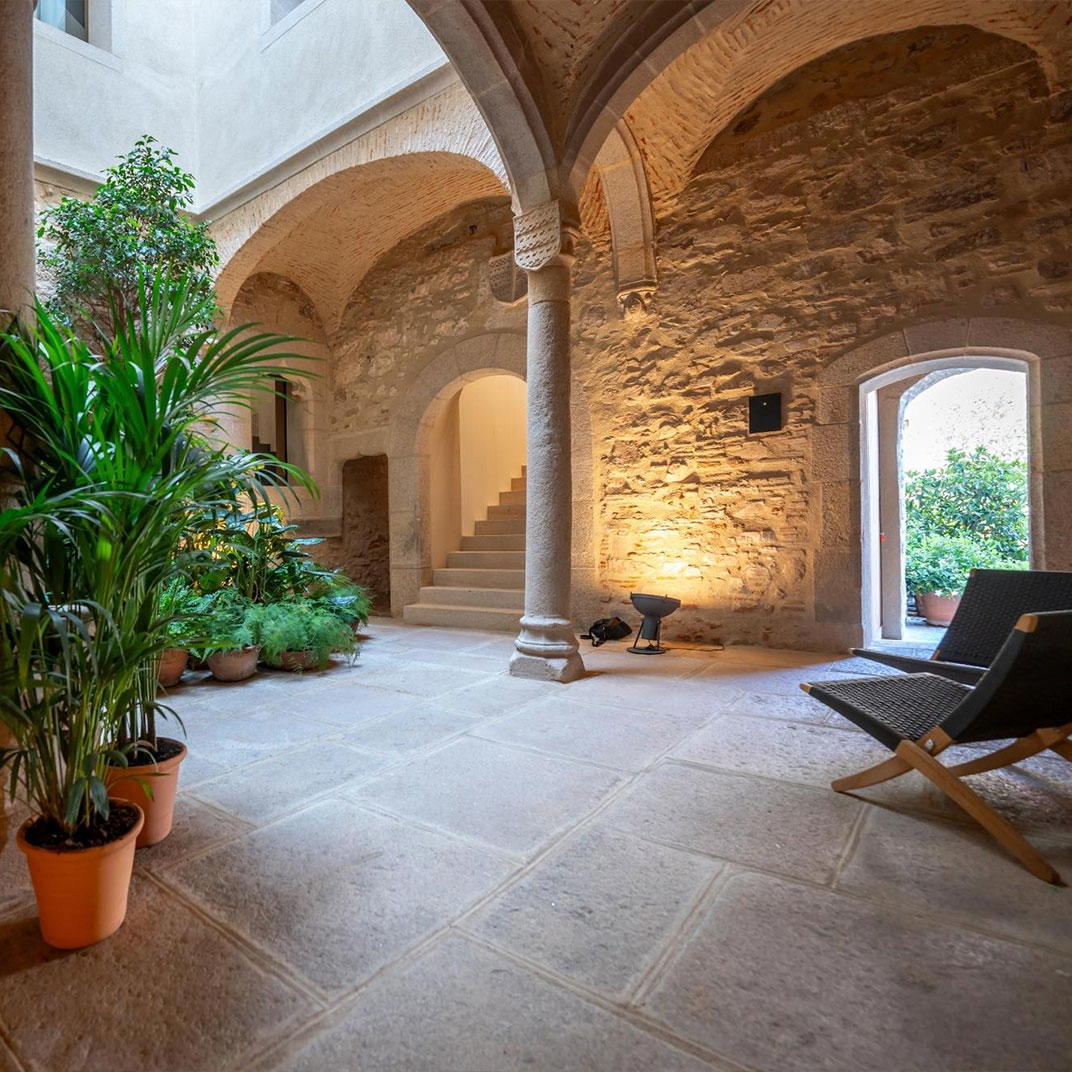
At a Glance
- Elegant
- Sophisticated
- Intimate
- Modern
- Romantic Getaway
- Anniversary
- Historic Building
- Rooftop Pool
- Panoramic View
- Private Dining
- Wi Fi
- Pool
- Spa
- Fitness Center
- Room Service
- Concierge
- Restaurant
- Bar
- Valet Parking
- Street Scene
- Wi Fi
- Pool
- Spa
- Fitness Center
- Room Service
- Concierge
- Restaurant
- Bar
- Valet Parking
Chic and calming with abundant natural light, minimalist modern design integrated into historic architecture, and a relaxing rooftop terrace atmosphere.