Seoseo Myeongdong Galbi
Seoseo Myeongdong Galbi sits in Seoul's Myeongdong district, where the city's galbi tradition meets a dining room that draws both locals and visitors. The restaurant occupies a category defined by slow-cooked short ribs and table-side grilling, a format that has shaped Korean communal dining for generations. For those mapping Seoul's grilled meat scene, it represents a Myeongdong address worth understanding.
Pearl is the En Primeur Club membership app — saves, bookings, and concierge access live there. Same editors, same standards.
- Address
- Seoul, South Korea
- Directions
- Get directions
 Saves & bookings on Pearl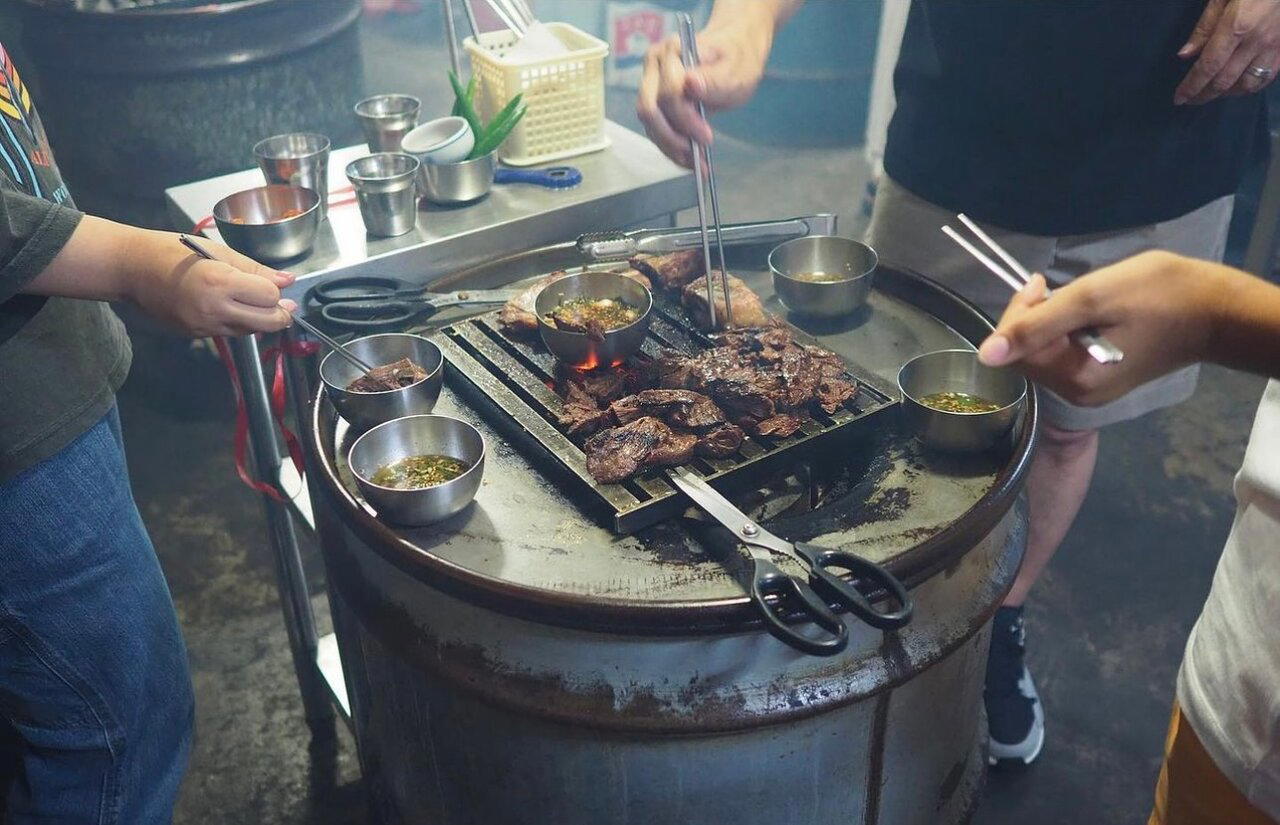
Myeongdong and the Galbi Tradition
Seoul's galbi culture operates on a deceptively simple premise: short ribs, fire, and time. The technique, built around marinated beef ribs grilled at the table, has defined communal dining in this city for well over a century. Myeongdong, the district where Seoseo Myeongdong Galbi sits, is one of Seoul's densest commercial corridors, a place where the foot traffic is relentless and the competition between restaurants is correspondingly sharp. To hold a position in this neighbourhood over any sustained period requires a kitchen that can deliver consistent product to a high-volume, discerning crowd. The galbi format does not hide behind complexity. Every plate is a direct referendum on the quality of the cut, the depth of the marinade, and the management of heat.
Within the broader Korean grilled meat category, galbi occupies a specific register. It sits above the everyday samgyeopsal tier in perceived formality, traditionally associated with celebratory meals and family gatherings rather than late-night sessions. Restaurants across Seoul that specialise in galbi tend to position accordingly, with table settings, service pace, and ingredient sourcing that reflect that social weight. The Myeongdong location of Seoseo places it at the intersection of local ritual and high tourist footfall, a combination that shapes both the room's atmosphere and its operational demands. For context on how Seoul's Korean dining scene is structured across price tiers and cooking traditions, our full Seoul restaurants guide maps the relevant competitive sets.
The Room and What It Signals
Approaching a galbi specialist in Myeongdong, the first sensory cue is almost always smoke, a drift of charcoal or gas grill heat that reaches the entrance before any visual signal. Inside, the format is built around embedded grills at each table, ventilation hoods overhead, and the particular kind of organised choreography that comes with a kitchen managing dozens of simultaneous fires. The staff rotation around grill management, the timing of banchan replenishment, and the sequencing of cuts as they come off the flame are the operational details that separate a galbi house that knows what it is doing from one that does not. In the better Seoul galbi rooms, those logistics run quietly enough that a first-time visitor barely registers the coordination involved.
The beverage component at a galbi specialist deserves attention in its own right. Korean dining conventions pair grilled meat most naturally with soju and makgeolli, but Seoul's mid-to-upper galbi tier has expanded those options in recent years. The broader trend across Seoul's serious Korean restaurants, including venues like Mingles and Kwonsooksoo, has been toward deeper engagement with Korean traditional liquors alongside curated wine selections. For a galbi specialist, the wine question is a real one: the fat content and char profile of grilled short ribs align reasonably well with medium-bodied reds that carry enough acidity to cut through the marinade's sweetness. Whether a Myeongdong galbi address maintains a formal wine list or curates its Korean spirit selection with the same attention given to the protein is a meaningful differentiator in this neighbourhood's competitive set.
How Seoseo Myeongdong Galbi Fits the Seoul Grilled Meat Scene
Seoul's grilled meat restaurants separate into several recognisable tiers. At the leading end, venues invest heavily in premium domestic beef grades, particularly 1++ Hanwoo, and price accordingly. In the middle range, a mix of quality cuts and accessible pricing defines the bulk of the market. Myeongdong skews toward the middle-to-upper band of this range, given the district's real estate costs and the spending capacity of its visitor mix. Seoseo Myeongdong Galbi operates within this context, where the comparison set is determined as much by geography as by format. Nearby competition in Myeongdong is dense enough that reputation and consistency carry more weight than novelty.
For those building a broader understanding of Seoul's Korean dining spectrum, the galbi tradition sits in a different register from the innovation-led tasting menu format now associated with addresses like Jungsik, Soigné, or alla prima. Those venues frame Korean ingredients through a fine dining lens. Galbi specialists make no such case. The proposition is direct: good meat, proper fire, and the social format of shared eating. It is a more honest transaction in some ways, and one that Seoul's own residents return to repeatedly regardless of what the city's fine dining scene is doing. Beyond Seoul, Korea's grilled meat culture extends to regional addresses worth tracking, including Mori in Busan, Black Pork BBQ in Seogwipo, and Gobojeong Galbi in Suwon, the latter city having its own long-standing galbi identity built around Suwon galbi, a particularly thick-cut short rib style. Doosoogobang in Suwon is another reference point in that regional tradition.
Practical Considerations for a Visit
Myeongdong is accessible from multiple subway lines and sits within easy walking distance of central Seoul accommodations, which makes logistics direct. The neighbourhood is most heavily trafficked on weekend evenings and during peak tourist seasons, when queues at popular addresses can extend significantly. For a galbi restaurant operating in this environment, the question of reservations versus walk-in policy is a practical one that affects visit planning meaningfully. Given the district's density, arriving early in the evening service window typically offers better odds of immediate seating than arriving mid-evening. Korean restaurant conventions do not always map directly to Western reservation systems, and some Myeongdong addresses operate on a first-come basis even when they carry significant local reputation. Visitors who are organising dining across multiple days in Seoul may also find value in comparing the Myeongdong galbi format against Jeju Island's distinct grilled meat tradition, where 88돼지 and venues like Badang Lounge represent a parallel but distinct dining culture built around Jeju black pork rather than beef galbi.
For visitors spending time in other Korean cities, the dining contexts at Dining Room in Busan, Hwangnam Bread and Busan Steamed Bun in Gyeongju, Gyeongju Wonjo Kongguk, and Hinode in Seogwipo round out a picture of Korean regional dining that extends well beyond Seoul's commercial centre. For those mapping Korean dining against global Korean restaurant culture, the progression from Seoul's grilled meat tradition to the way Korean cuisine is reinterpreted at New York addresses like Atomix or the French-inflected precision of Le Bernardin illustrates how far a single culinary tradition can travel while remaining legible.
Awards and Standing
Comparable venues nearby, for context on price, style, and recognition.
| Venue | Cuisine | Price | Notes |
|---|---|---|---|
| Seoseo Myeongdong GalbiThis venue — the venue you are viewing | Standing Korean Galbi BBQ | $$ | Not listed |
| Baekje Samgyetang (백제삼계탕) | Traditional Korean Ginseng Chicken Soup | $$ | Myeongdong |
| 영동설렁탕 | Traditional Korean Seolleongtang | $$ | Jamwon-dong, Seocho-gu |
| 할머니의 레시피 | Refined Korean Home-Style Cuisine | $$ | Seongsu-dong |
| ë§í 르 | korean | Not listed | 압구정동 |
| 오근내 닭갈비 | Chuncheon-style Iron Plate Dakgalbi | $$ | Yongsan |
Continue exploring
More in Seoul
Restaurants in Seoul
Browse all →
At a Glance
- Lively
- Energetic
- Casual Hangout
- Group Dining
- Open Kitchen
- Beer Program
Current opening hours
- Monday
- 11 AM–11 PM
- Tuesday
- 11 AM–11 PM
- Wednesday
- 11 AM–11 PM
- Thursday
- 11 AM–11 PM
- Friday
- 11 AM–11 PM
- Saturday
- 11 AM–11 PM
- Sunday
- 11 AM–11 PM
Hours can change for holidays and private events. Last verified .
Casual, bustling atmosphere with standing diners crowded around grills in a no-frills, energetic setting.