Our verdict
Tokyo Khao Man Gai (東京カオマンガイ) brings one of Southeast Asia's most precisely calibrated street dishes to Uchikanda, a working quarter of Chiyoda that rewards diners willing to step away from the tourist-facing dining corridors. The format is focused: poached chicken, seasoned rice, and broth, executed with the kind of repetition that Tokyo's specialist dining culture demands. For a low-key occasion meal that sidesteps ceremony without sacrificing craft, this is worth tracking down.

Pearl is the En Primeur Club membership app — saves, bookings, and concierge access live there. Same editors, same standards.
- Address
- 内神田3-7-8, 千代田区, 東京都, 101-0047
- Directions
- Get directions
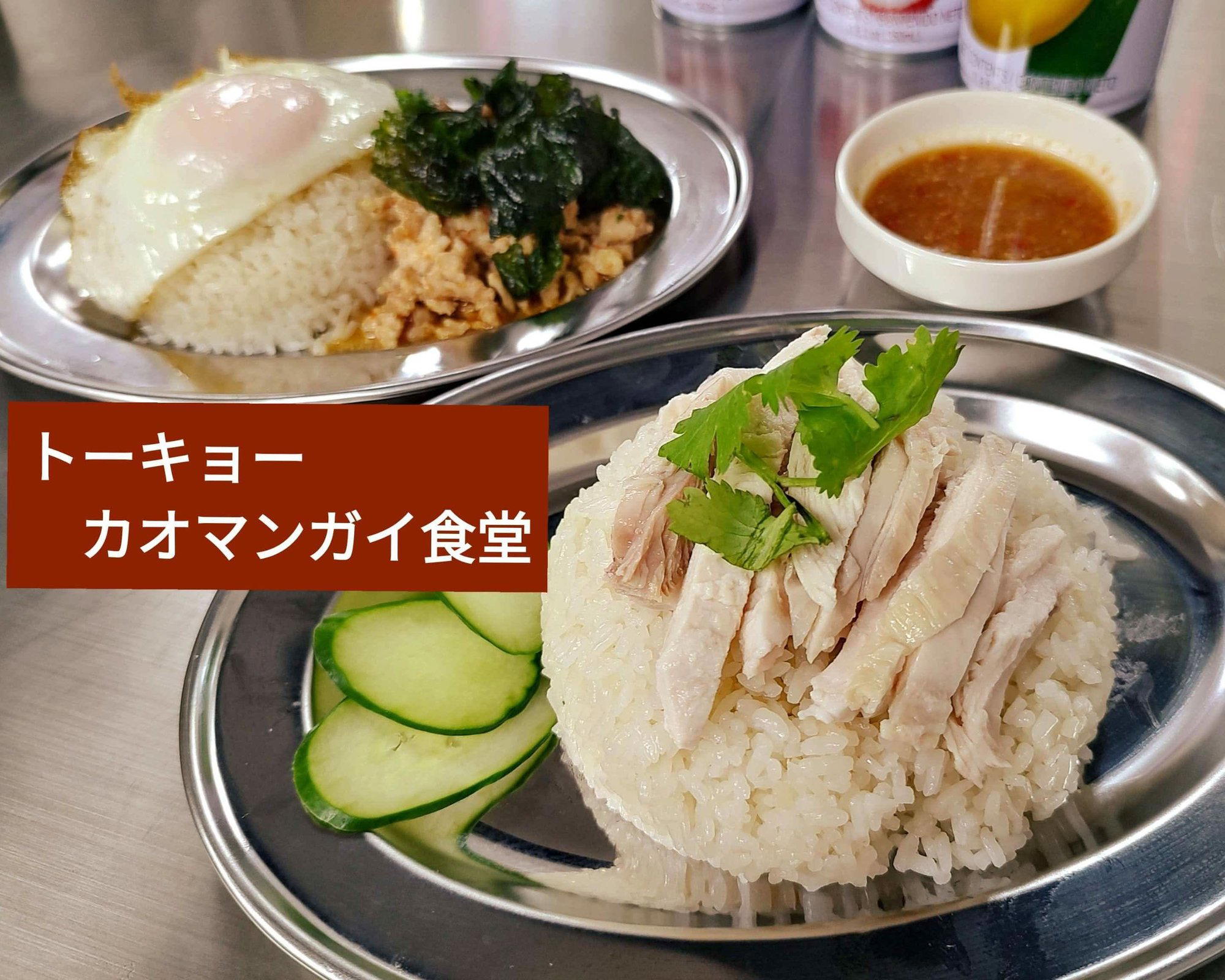
The menu
What to order
- Khao Man Gai
- Fresh Spring Rolls
A Single Dish, Taken Seriously
Tokyo has long been a city where culinary specialisation reaches its logical conclusion. The same culture that produced tempura counters dedicated to a handful of seasonal ingredients and soba shops that close once the day's noodles run out also makes room for a restaurant built entirely around khao man gai, the Thai-Chinese poached chicken and rice dish that is, in its home context, morning street food. In Uchikanda, a neighbourhood of office towers and narrow side streets in Chiyoda-ku, Tokyo Khao Man Gai (東京カオマンガイ) operates within that tradition of radical focus.
Khao man gai itself is a dish with a deceptively short ingredient list. Chicken is poached in a seasoned broth, the cooking liquid is then used to cook the rice, and the whole thing is served with a fermented soybean and ginger dipping sauce alongside a bowl of clear soup. The apparent simplicity is what makes execution so exposed. There is nowhere to hide a poorly sourced bird or imprecise poaching temperature. Tokyo's dining culture understands this dynamic well: the city's most respected specialists in any format tend to be those who have narrowed their focus until there is nothing left to distract from the core act of cooking.
Uchikanda as Context
Chiyoda-ku's dining identity is less visible to foreign visitors than Shinjuku or Ginza, but the ward contains some of Tokyo's most tightly run neighbourhood restaurants. Uchikanda in particular, around the 内神田3-chome address, sits between the Ochanomizu and Kanda train hubs, drawing a working lunch crowd during the week and a more deliberate evening diner at weekends. This is not a neighbourhood that leans on atmosphere through design; the restaurants here tend to earn their regulars through consistency and value density rather than room aesthetics or celebrity associations.
That context matters when thinking about occasion dining. Not every milestone meal calls for the formal omakase format of Harutaka or the Franco-Japanese precision of L'Effervescence. There is a category of celebration that is better served by a restaurant with a strong point of view and a low barrier to entry: a birthday lunch eaten without a dress code, an anniversary dinner that prioritises flavour over theatre, or a first visit to Tokyo with a friend who wants to understand what the city actually eats on a Tuesday.
The Case for Single-Dish Restaurants as Occasion Dining
Tokyo's specialist single-dish restaurants occupy a distinct position in the city's dining hierarchy. At the high end of that spectrum sit counters like RyuGin for kaiseki or Sézanne for French technique applied to Japanese produce. At the lower end, neighbourhood specialists deliver a version of the same discipline: one format, executed daily, refined through repetition. Tokyo Khao Man Gai sits in this latter register, where the occasion is shaped by the clarity of the meal rather than by the weight of the setting.
There is an argument, held by a segment of Tokyo's serious dining community, that a bowl of rice and poached chicken done correctly is as worthy a reason to mark a date as a twelve-course tasting menu. The Thai and Singaporean equivalents of khao man gai have devoted followings in their home cities for the same reason. The dish rewards attention: the fragrance of the ginger in the broth, the texture differential between skin and meat, the way the rice absorbs the poaching liquid. These are details that reveal themselves when a kitchen has been cooking nothing else for years.
Innovative restaurants like Crony represent one strand of Tokyo's current dining energy. Focused neighbourhood specialists like Tokyo Khao Man Gai represent another, equally legitimate strand, one that prizes depth over breadth and repetition over novelty.
Placing This in Japan's Wider Specialist Dining Map
The concentration of single-dish specialists in Tokyo is unusual even by Japanese standards. Outside the capital, restaurants tend toward broader menus, though there are exceptions: HAJIME in Osaka operates with its own form of radical focus within the kaiseki format, and Gion Sasaki in Kyoto represents what seasonal discipline looks like when applied to Kyoto's traditional ingredient calendar. Further afield, akordu in Nara and Goh in Fukuoka take regional ingredients as their organising principle rather than a single dish, but the underlying logic is similar: constraint as a form of quality control.
What makes Tokyo Khao Man Gai notable within this map is the foreign origin of its subject dish. Japanese interpretations of Southeast Asian street food have proliferated across the city in the past decade, but few have applied the same level of format discipline that Tokyo's domestic specialists bring to ramen, yakitori, or soba. If this restaurant brings that discipline to khao man gai, it occupies a specific and sparsely populated niche.
For those building a trip around Japan's broader dining circuit, resources on regional specialists include 一本木 名川製 in Nanao, 古仁屋山乃 in Sapporo, 湖畔荘 in Takashima, 庄羽屋 in Nishikawa Machi, Birdland in Sakai, and Bistro Ange in Toyohashi. Our full Tokyo restaurants guide covers the city's full price and format range.
For international comparison, the discipline of single-subject specialisation appears in different forms at Le Bernardin in New York City, where the menu is structured entirely around fish, and at Atomix in New York City, where a Korean tasting format is applied with a comparable level of focus.
Planning Your Visit
The restaurant is located at 内神田3-7-8, Chiyoda-ku, Tokyo (101-0047), within walking distance of Kanda and Awajicho stations. Uchikanda's restaurant strip is most active at lunch on weekdays, when office workers fill the neighbourhood's smaller rooms quickly. An early arrival or a deliberate off-peak timing will ease access. Given the focused format, this works as a casual occasion meal: a lunch to mark something without the formality of an evening omakase, or an early dinner that leaves time for a walk through the surrounding streets of Chiyoda.
Contact details, current hours, and booking information were not available at time of publication.
Frequently asked questions
Is Tokyo Khao Man Gai (東京カオマンガイ) a family-friendly restaurant?What should I expect atmosphere-wise at Tokyo Khao Man Gai (東京カオマンガイ)?
What should I order at Tokyo Khao Man Gai (東京カオマンガイ)?
Do they take walk-ins at Tokyo Khao Man Gai (東京カオマンガイ)?
What do critics highlight about Tokyo Khao Man Gai (東京カオマンガイ)?
Why does a Tokyo restaurant specialise exclusively in a Thai street dish?
Peers You’d Cross-Shop
| Venue | Cuisine | Price | Awards | Notes |
|---|---|---|---|---|
| Tokyo Khao Man Gai (東京カオマンガイ)This venue — the venue you are viewing | Authentic Thai Khao Man Gai | $10–20 | Not listed | Not listed |
| Harutaka | Edo-Style Omakase Sushi | $200–300 | 3 Michelin Stars · World's 50 Best #76 | Sushi |
| L'Effervescence | Modern French with Japanese Influences | $200–300 | 3 Michelin Stars · World's 50 Best #69 | French |
| RyuGin | Modern Kaiseki | $500+ | 3 Michelin Stars · World's 50 Best #41 | Kaiseki, Japanese |
| Crony | Modern French with Japanese Influences | $150–200 | 2 Michelin Stars · World's 50 Best #34 | Innovative, French |
| Florilège | Modern French-Japanese Plant-Based Fine Dining | $50–100 | 2 Michelin Stars · World's 50 Best #31 | French |






Details
- Cozy
- Casual Hangout
- A La Carte
- Vegetarian Friendly
Cozy with authentic Thai decor and music.