
Tabelog 100 #54
Our verdict
A small Fushimi soba counter with sushi in the frame, Teuchi Soba Sushi Imafuku belongs to Kyoto’s quieter craft-noodle tier rather than the city’s temple-adjacent dining circuit. Its Tabelog 100 Soba WEST selections in 2024 and 2025, 10-seat scale, and aroma-conscious house rules point to a room built around precision, restraint, and close attention.

Pearl is the En Primeur Club membership app, where members save venues, book tables and use the concierge.
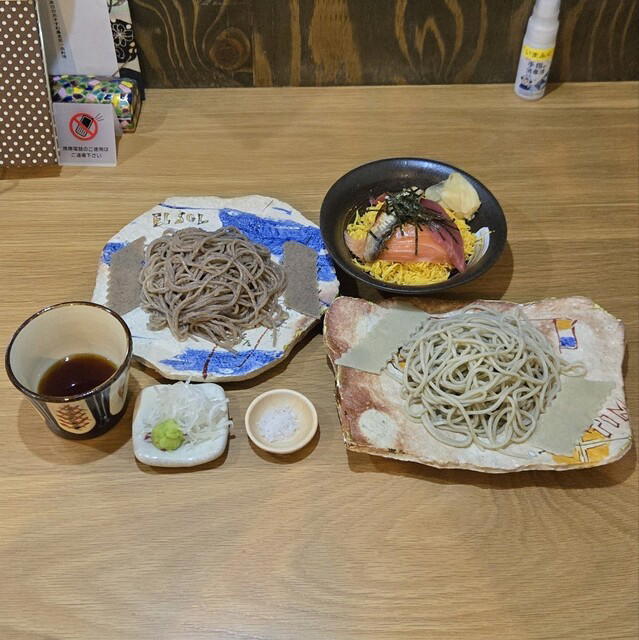
Kyoto changes the tempo before the meal begins. Away from the city’s most heavily photographed dining rituals, a focused soba room asks for a quieter kind of attention. The cuisine rewards a setting where the buckwheat can lead, rather than being crowded by spectacle or itinerary pressure. Teuchi Soba Sushi Imafuku operates in that register: a Kyoto restaurant whose appeal is tied to the discipline of noodles and the small details that make soba feel exacting.
Kyoto’s luxury dining reputation often leans toward kaiseki, counter sushi, and temple-adjacent vegetarian cooking, but soba has a different grammar. It is less about procession than calibration: flour, water, cut, boil, rinse, broth, aroma. Recognition in Tabelog’s 2025 Hyakumeiten selection places Teuchi Soba Sushi Imafuku in a serious noodle conversation, where the craft is judged against specialists rather than against general fine dining rooms.
A soba room where aroma sets the rules
The defining idea is not excess; it is control. Soba asks diners to pay attention to fragrance and texture before richness, which is why the best experiences in the category often feel spare rather than theatrical. That restraint reads severe only if soba is treated as another noodle lunch. In a serious soba setting, aroma is part of the architecture.
The format narrows the focus. Teuchi Soba Sushi Imafuku is best understood first through its public category: soba, or buckwheat noodles. That changes the way the meal is read. The experience becomes less about spectacle and more about timing, pace, and the short window between cooking and eating. The presence of sushi in the name adds another layer of curiosity, but the public recognition here is tied to noodles. That distinction matters for travelers deciding whether this belongs in a sushi itinerary or a noodle one; it belongs first in the latter.
Price signals a split personality in how the restaurant may be used. The listed budget places dinner at JPY 20,000 - JPY 29,999 and lunch at JPY 2,000 - JPY 2,999. That gap is not cosmetic. It marks two different levels of commitment: a daytime expression in a more accessible soba bracket, and an evening spend that moves into a much higher Kyoto dining register. The sharper editorial choice is lunch for soba purists, dinner for diners who want the restaurant at its most ambitious.
Kyoto gives noodle culture room to breathe
Kyoto is often reduced to a few famous dining images, but its restaurant map is more useful when read as a set of local rhythms. Not every serious meal needs to sit beside a landmark or perform as a destination ritual. A craft-noodle address can be strongest when the meal is allowed to stand on its own, with fewer distractions and a clearer sense of purpose.
For comparison within Kyoto, casual noodle and snack culture occupies a much lower spend band: Honkaku Teuchi-Udon Taiga sits in the JPY 1,000 to JPY 1,999 range, while Inari Futaba and eight are listed below JPY 999. That makes Teuchi Soba Sushi Imafuku a different proposition, especially at dinner. It is not competing with quick refueling; it is working in a more specialist tier, where recognition, format discipline, and the seriousness of the category carry more weight than turnover.
The Japanese frame is clearest when the meal is read through soba itself. In soba culture, the sequence can be as important as any single bowl: small choices before the noodles, the aroma of the buckwheat, and the final texture all shape the impression. Nothing in the public information requires a diner to approach the meal in a prescribed way, but the category alignment is clear. This is a place to think about noodles as craft, not as a casual afterthought.
Kyoto travelers building a wider food map can use this address as a counterweight to more central or more familiar dining plans. Abbesses sits in a different urban rhythm, while other Kyoto dining rooms show how broad the city’s restaurant register can be. For the wider plan, use Our full Kyoto restaurants guide, then layer in Our full Kyoto hotels guide, Our full Kyoto bars guide, Our full Kyoto wineries guide, and Our full Kyoto experiences guide for the rest of the itinerary.
The decision: craft noodle lunch or higher-spend dinner
The central question is not whether Kyoto has more famous dining rituals. It does. The question is whether the trip has space for a quieter Japanese discipline that depends on restraint. Teuchi Soba Sushi Imafuku makes sense for diners who care about soba as craft, not as a side category beneath sushi or kaiseki.
The constraints are part of the appeal even when the public facts are spare. The restaurant’s Tabelog score is listed at 3.66, and its 2025 Hyakumeiten recognition gives it a clear signal within the soba category. International diners should still treat it like a focused Kyoto specialist: check current booking details, confirm the day’s format, and arrive ready for a compact, aroma-sensitive meal where the details are small and the margin for distraction is smaller.
Beyond this address, EP Club’s restaurant coverage ranges across regional Japanese dining and Japanese-leaning dining abroad, but Kyoto’s soba specialists are valuable because they resist spectacle. Teuchi Soba Sushi Imafuku belongs in that quieter field. Its pleasure lies in proportion: the noodle, the broth, the timing, and the decision to let a restrained meal carry the weight of the experience.
Frequently asked questions
When is Teuchi Soba Sushi Imafuku open?
Current opening hours for Teuchi Soba Sushi Imafuku should be confirmed directly with the restaurant before visiting.
What does dinner at Teuchi Soba Sushi Imafuku typically cost?
Pricing at Teuchi Soba Sushi Imafuku is listed as Dinner: JPY 20,000 - JPY 29,999; Lunch: JPY 2,000 - JPY 2,999.
What's Teuchi Soba Sushi Imafuku's location?
Kyoto.
What's the defining dish or idea at Teuchi Soba Sushi Imafuku?
The defining idea is soba, or buckwheat noodles, served at a Kyoto restaurant recognized in the 2025 Tabelog Hyakumeiten selection. Its listed categories are Soba and Noodles, and its lunch and dinner budgets suggest two different levels of commitment to the experience.
In Context: Similar Options
Nearby venues at a similar price tier for orientation.
| Venue | Cuisine | Price | Awards | Notes |
|---|---|---|---|---|
| Teuchi Soba Sushi ImafukuThis venue (the venue you are viewing) | Japanese Soba and Sushi | $30–50 | Tabelog 100 #54 | Not listed |
| Yakiniku Yamachan | Premium Wagyu Yakiniku with Japanese Fusion | $100–150 | Tabelog 100 #17 | Nakagyo-ku |
| Kara Semi Tei (空蝉亭) | Specialty Tonkatsu with Aged Pork | $30–50 | Tabelog 100 #50 | Kamigyo-ku |
| 今 | Traditional Japanese Seasonal Cuisine | Not listed | Not listed | Nakagyo-ku |
| Tempura Tokoro Kyorynsen | Kyoto-style Tempura by Kyoyamato | $50–100 | Tabelog 100 #59 | Shimogyō |
| GYUKATSU Kyoto Katsugyu Teramachi Kyogoku | Gyukatsu (Breaded Beef Cutlet) | $20–30 | Not listed | Nakagyō |
Recognition history
Dated appearances from independent guides and award organizations, with the underlying list record or original source where available.
Tabelog 100 #54 · No. 54
Tabelog · Tabelog 100 - Soba - WEST - 2025
Continue exploring
More in Kyoto
Restaurants in Kyoto
All restaurants in Kyoto →
Bars in Kyoto
All bars in Kyoto →
Hotels in Kyoto
All hotels in Kyoto →
Wineries in Kyoto
Browse all →
Details
- Intimate
- Quiet
- Sophisticated
- Classic
- Special Occasion
- Group Dining
- Solo
- Business Dinner
- Standalone
- Open Kitchen
- Sake Program
- Street Scene
- A La Carte
- Set Menu
- Omakase
- Sake
- Shochu
- Gluten Free Options
Current opening hours
- Monday
- Closed
- Tuesday
- Closed
- Wednesday
- 11:30 AM–1:30 PM
- Thursday
- 11:30 AM–1:30 PM
- Friday
- 11:30 AM–1:30 PM
- Saturday
- 11:30 AM–1:30 PM
- Sunday
- 11:30 AM–1:30 PM
Hours can change for holidays and private events. Hours as of .
Small, reserved, and focused on the aroma and presentation of soba, with a house-restaurant feel and a quiet, intimate dining room.