
In Kyoto's Higashiyama Ward, Abbesses translates a French culinary education through the lens of local produce, with chef Norifumi Tanaka building every plate around a minimum 50% plant-based ratio sourced from Kyoto's celebrated vegetable tradition. The result is a Franco-Japanese register that owes more to what grows in the surrounding region than to either national cuisine in isolation.
 Discover on Pearl
Pearl is the En Primeur Club membership app — saves, bookings, and concierge access live there. Same editors, same standards.
- Address
- 21 Chome-462-17 Honmachi, Higashiyama Ward, Kyoto, 605-0981, Japan
- Phone
- +81 75-606-5645
- Website
- abbesses.happytry.info

Where Kyoto's Soil Meets the French Kitchen
Higashiyama Ward holds more culinary history per cobblestone than almost any neighbourhood in Japan. The temples, the machiya townhouses, the stone-paved lanes feeding into Ninenzaka and Sannenzaka: all of it establishes a setting in which food feels embedded in place rather than imported from elsewhere. Abbesses is a restaurant in Kyoto's Higashiyama Ward serving French-Japanese Fusion food at about $65 per person. Its address is 21 Chome-462-17 Honmachi, Higashiyama Ward, Kyoto, Japan.
Abbesses occupies a particular niche inside Kyoto's broader dining structure. The city's dominant fine-dining tradition is kaiseki, codified over centuries and practised at counters like Gion Sasaki, Hyotei, Kikunoi Honten, and Mizai. Outside that tradition, a smaller group of restaurants work through a Franco-Japanese synthesis, using French technique as the structural frame while filling it with local ingredients and Japanese seasonal logic. Abbesses belongs to that second cohort, and its ingredient sourcing is where its editorial story actually begins.
The Argument for Kyoto Vegetables
Kyoto-yasai, the collective term for the city's heritage vegetables, represents one of Japan's most carefully documented regional produce traditions. Kyo ninjin, Kamo eggplant, Shogoin turnip, Manganji pepper: these cultivars carry centuries of selection pressure, shaped by the particular soils of the Kyoto basin and the demands of kaiseki chefs who required ingredients with visual precision as well as flavour depth. The tradition survived partly because Kyoto's fine-dining establishment created consistent demand for produce that supermarket supply chains had no reason to carry.
Chef Norifumi Tanaka received a French culinary education but has, by his own account, found his primary creative focus in these local vegetables. Every dish at Abbesses contains at least 50% plant-based ingredients, a structural commitment that places Kyoto produce at the centre of the plate rather than in a supporting role. In the wider context of Franco-Japanese cooking in Japan, this is a meaningful editorial position. Restaurants like HAJIME in Osaka have built reputations around ingredient-led precision within a French framework, and akordu in Nara draws on the produce traditions of a neighbouring ancient capital. Abbesses makes a case that Kyoto's specific agricultural identity is sufficient to anchor a full tasting format in French technical language.
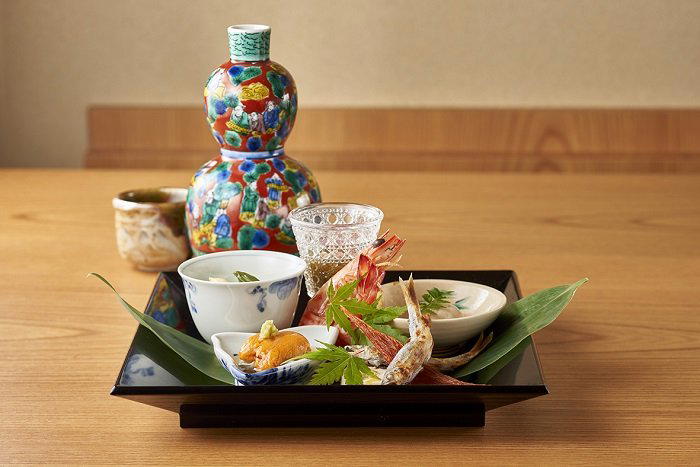
The 50% plant-based threshold across every dish is a sourcing argument: that what Kyoto's growing region produces can hold the majority of the plate. Given the chromatic range of heritage vegetables across the annual cycle in this region, the result is reportedly a palette that shifts substantially from early spring through late autumn.
Franco-Japanese Synthesis at This Price Tier
Kyoto's French-inflected restaurants operate in a different competitive register from the kaiseki houses. At the top of the kaiseki tier, venues such as Isshisoden Nakamura price against centuries of institutional reputation. The Franco-Japanese format prices against a comparable set that includes SEN, which operates at the ¥¥¥¥ level in the same city, and extends nationally to restaurants like Harutaka in Tokyo and Bleston Court Yukawatan in Nagano, both of which work across similar Franco-Japanese registers in different regional contexts. Internationally, the Franco-Japanese conversation connects to kitchens as far removed as Le Bernardin in New York City, where French discipline meets specific product obsession.
What distinguishes the Kyoto version of this synthesis is the availability of the produce itself. A chef working with Kamo eggplant or Kujo negi in this city has access to supply chains and grower relationships that simply do not exist at the same depth in Tokyo or Osaka, let alone abroad. The ingredient sourcing advantage is geographical, and Abbesses is positioned directly inside it.
Reading Abbesses Against the Wider Kyoto Scene
Kyoto's dining scene in 2024 and 2025 has continued to attract international attention, partly because the city sits at an unusual intersection: deep culinary tradition on one side, a growing cohort of younger or internationally trained chefs on the other. Restaurants in the latter category, including those covered in our full Kyoto restaurants guide, are generally working through a productive tension between Kyoto's local ingredient culture and techniques acquired elsewhere. Abbesses represents one resolution of that tension: French training applied to a Kyoto sourcing commitment with plant-based ratios that would be unusual in Paris or Lyon but feel coherent in a city where vegetable cookery has had centuries of refinement inside the kaiseki tradition.
For visitors extending a food-focused itinerary beyond Kyoto, the regional comparisons are instructive. Goh in Fukuoka and giueme in Akita each work within regionally specific produce contexts with French or hybrid technical frameworks, suggesting a broader national pattern in which French-trained Japanese chefs are anchoring their cooking to what their specific prefecture grows rather than to imported product. Emeril's in New Orleans provides a useful transatlantic reference point for how regional ingredient identity can become the defining axis of a restaurant's creative position. Abbesses fits that pattern with particular clarity.
Planning a Visit
Abbesses sits at 21 Chome-462-17 Honmachi in Higashiyama Ward, a district more easily reached on foot from Gion or by taxi than by subway. The neighbourhood is one of Kyoto's most visited tourist corridors during cherry blossom and autumn foliage seasons (late March to early April and mid-November respectively), and demand for restaurant reservations across Higashiyama tightens significantly during those periods. Booking well in advance of any autumn visit is particularly advisable given that the local vegetable calendar also peaks in late autumn, when Kyoto's heritage cultivars reach the market in full variety. Reservations are recommended.
Fast Comparison
Comparable venues nearby, for context on price, style, and recognition.
| Venue | Cuisine | Price | Awards | Notes |
|---|---|---|---|---|
| AbbessesThis venue — the venue you are viewing | French-Japanese Fusion | $$$ | 1 recognition | |
| Muni | French-Japanese Fusion | $$$ | 1 recognition | Ukyō |
| Les champs d'or | Classic French Fine Dining | $$$$ | 1 recognition | Nakagyō |
| Ito | Seasonal French Counter Dining in Higashiyama | $$$$ | , | Higashiyama |
| Briant Kitayama honten | Bakery café and casual French bistro | $$ | , | Kita |
| ラ ブッシュ | 薪焼き自然派フレンチ | $$$ | , | Ohara |
Continue exploring
More in Kyoto
Restaurants in Kyoto
Browse all →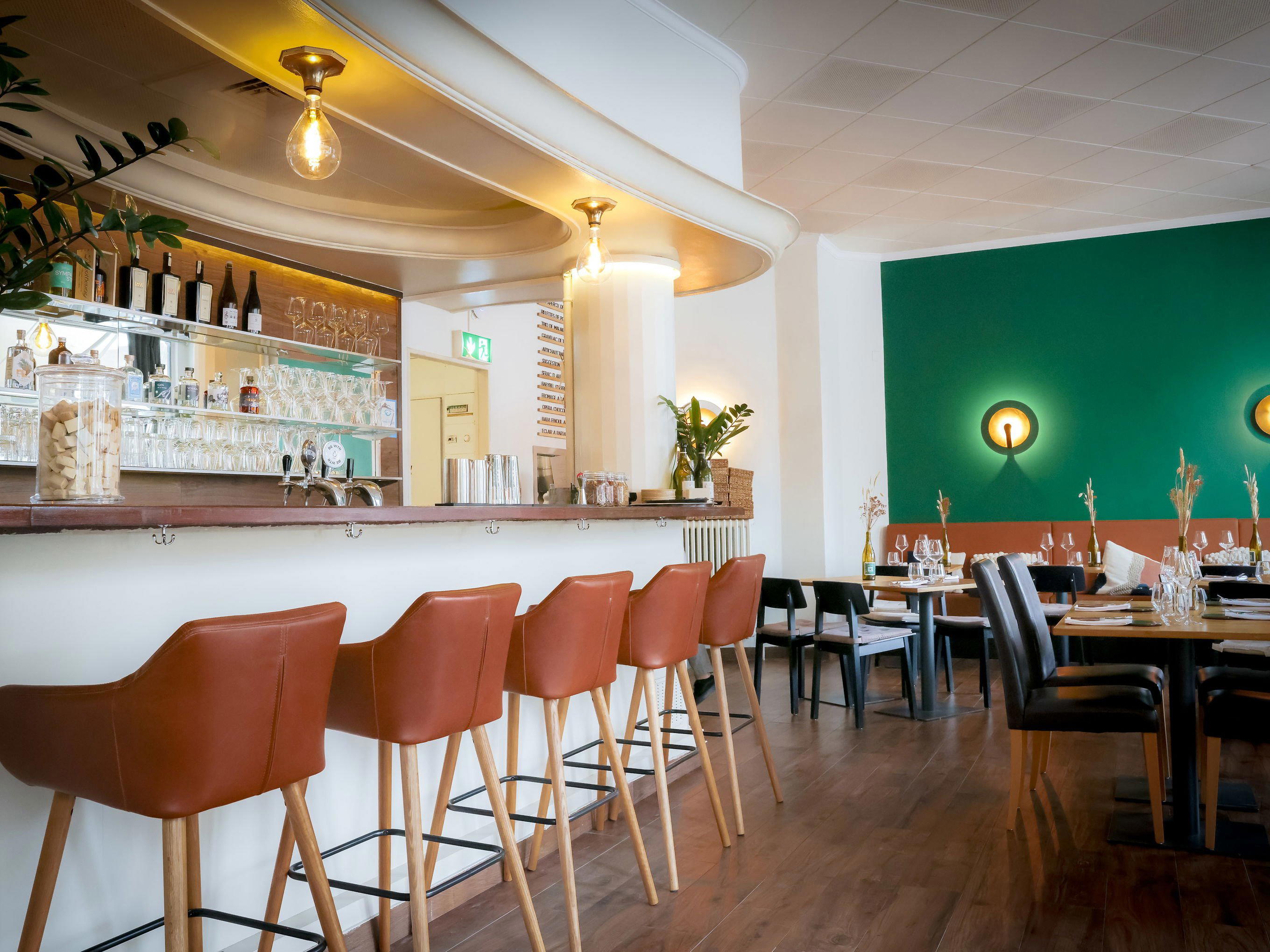
Bars in Kyoto
Browse all →
Hotels in Kyoto
Browse all →

Wineries in Kyoto
Browse all →
At a Glance
- Intimate
- Cozy
- Elegant
- Hidden Gem
- Date Night
- Special Occasion
- Business Dinner
- Natural Wine
- Local Sourcing
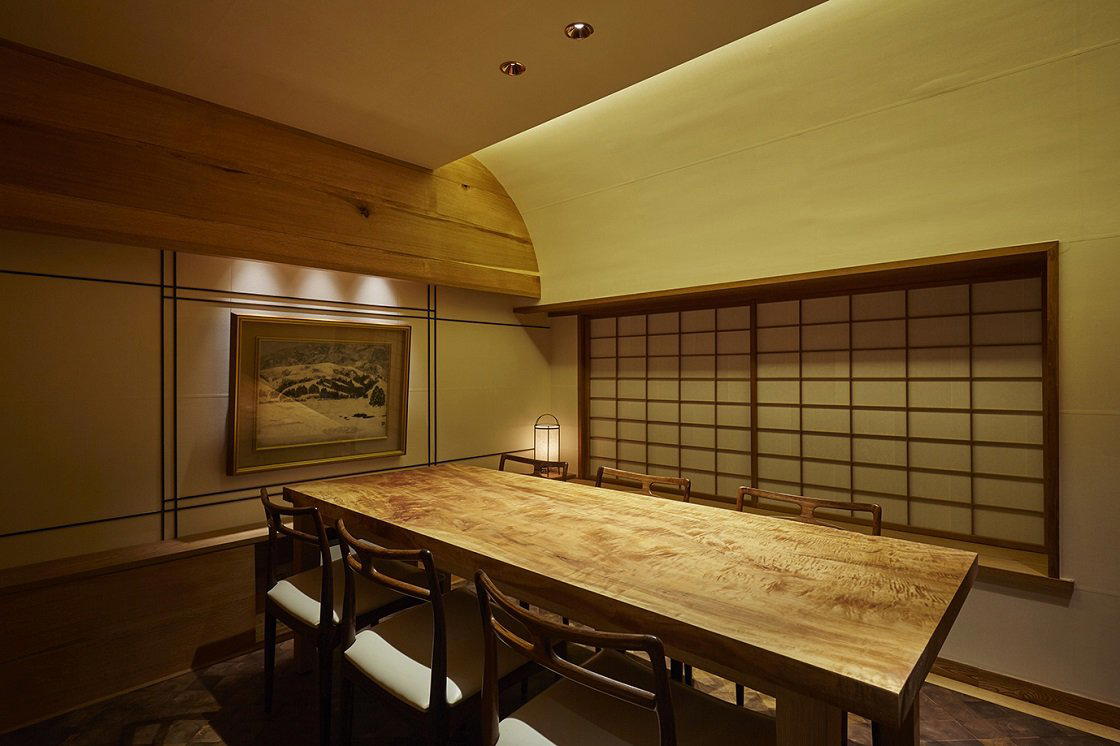
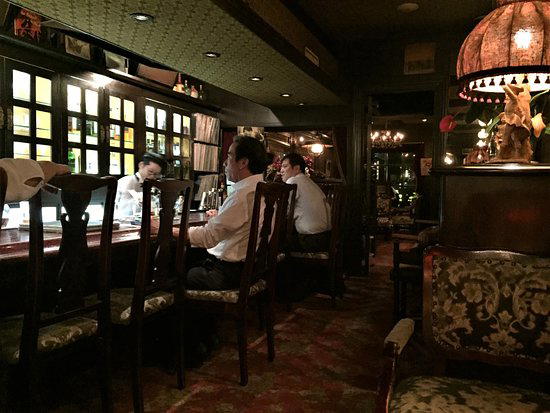
Cozy and elegant Parisian bistro-style with warm, welcoming atmosphere and calming decor.