

Among Osaka's mid-tier kaiseki counters, Terada in Tennoji Ward operates at the point where seasonal Japanese tradition and personal craft intersect. Chef Shigeru Terada holds a 2024 Michelin star and builds each hassun around festival calendars and locally sourced produce from his family's farm in Mie Prefecture. The result is a tightly edited omakase that reads as genuine rather than ceremonial.
Pearl is the En Primeur Club membership app — saves, bookings, and concierge access live there. Same editors, same standards.
- Address
- Japan, 〒543-0014 Osaka, Tennoji Ward, Tamatsukuri Motomachi, 2−35 玉造末広ビル 2F
- Phone
- +81 6-6191-3237
- Website
- nihonryori-terada.com
- Directions
- Get directions
 Saves & bookings on Pearl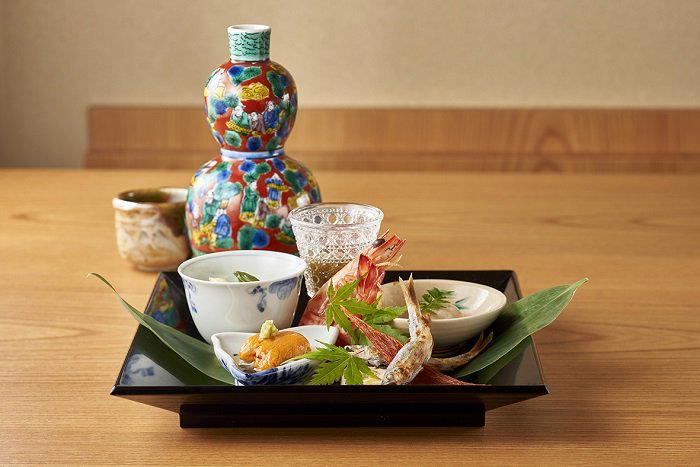
Where Tennoji's Dining Scene Positions Terada
Osaka's kaiseki and omakase market has stratified sharply in recent years. At the leading, multi-star French-inflected houses such as Hajime and La Cime operate at ¥¥¥¥ pricing with elaborate tasting architectures. One tier below, a cluster of single-star Japanese counters including Kashiwaya Osaka Senriyama, Tenjimbashi Aoki, and Miyamoto competes for a guest who wants rigorous seasonal cooking without the ceremony-heavy format of kaiseki's most formal registers. Terada, on the second floor of a modest building in Tamatsukuri Motomachi, sits inside that middle bracket, a ¥¥¥ counter where a Michelin star (awarded in 2024) signals technical competence, and where the tone leans warm and participatory rather than austere.
Tennoji Ward is not where most visitors begin their Osaka dining research, which partly explains why counters here operate with less advance noise than those in Namba or Shinsaibashi. The area's residential character makes the dining room feel less like a destination stage and more like a neighbourhood secret that happens to carry a Michelin citation. That combination, accessible geography, earned recognition, and a format closer to izakaya conviviality than to high kaiseki formality, gives Terada a distinct place in the city's scene.
The Hassun as Social Object
Japanese dining culture has long used the hassun course as a way to communicate the season in compressed form: a tray or arrangement that gathers several small preparations, often tied to a lunar calendar event, a regional festival, or an agricultural moment. At many kaiseki counters this becomes a set piece delivered in silence. At Terada, it functions more like a conversation starter.
The stated credo, good old traditions and colourful, fun Japanese cuisine, is a useful frame for understanding how the hassun operates here. Chef Shigeru Terada connects each arrangement to a specific festival or seasonal event, and delivers it with commentary that invites the table into the reference rather than expecting them to decode it alone. This is closer to the izakaya register, where food and drink arrive alongside explanation and exchange, than to the stripped-back solemnity of a formal multi-Michelin kaiseki counter. Compare this approach to the more restrained cadence at Oimatsu Hisano or Yugen, where the seasonal message is embedded in technique and presentation rather than spoken aloud. Neither approach is superior; they address different guest expectations. Terada's version prioritises inclusion over theatre.
The communal, convivial spirit that defines izakaya culture across Japan, food ordered to share, drinks poured between friends, conversation as part of the meal itself, finds a refined expression in this format. The counter setting means every guest shares the same sightline to the kitchen, and the chef's visible engagement with each course reinforces the sense that dinner here is a shared act rather than a private performance. For context on how this social model travels across Japan's fine dining registers, Gion Sasaki in Kyoto and Harutaka in Tokyo each represent different points on the spectrum from intimate warmth to precise formality.
Provenance, Craft Objects, and the Family Network
Ingredient sourcing at Terada follows a model that has become a credibility marker at small Japanese counters: direct relationships with producers, often family-linked. Fresh vegetables arrive from Chef Terada's parents' farm in Mie Prefecture, a region historically associated with quality agricultural produce and, of course, proximity to Ise's seafood traditions. The farm-to-counter pipeline is short, which means the seasonal calendar at Terada responds to what's actually ready rather than what a supplier catalogue offers.
What makes this sourcing story slightly different from the standard producer-chef narrative is its extension into the physical objects of the dining room. The coaster images are painted by the chef's mother; the interior was designed by his elder brother. This is not decoration detail offered as folksy warmth. It matters because it reflects a coherent approach to the meal as a total sensory environment, where the vessels, the art, and the food share the same creative network. The deliberate choice of contemporary plates and bowls, made by living artists, adds another layer to this: the tableware is framed as a way to place the diner in a conversation with present-day craft rather than historical replica.
This attitude toward objects distinguishes Terada from counters that source distinguished ceramics for prestige signalling. The parallel impulse is visible at places like akordu in Nara, where the relationship between food and regional craft objects forms part of the dining identity, though in a Western culinary frame. Across Japan's serious small counters, from Goh in Fukuoka to 1000 in Yokohama, the question of what sits beneath the food has become as considered as the food itself.
Seasons as the Structural Logic
At Terada, the seasons are not a theme or a marketing position; they are the operational logic behind every ingredient decision. The menu works from what fish, meat, and vegetables are appropriate to the calendar moment, without the option of a plant-only format (a position the chef holds as a personal decision rather than a philosophical statement). This places the kitchen firmly in the mainstream of Japanese seasonal cooking, where the cook's role is to read and respond to the natural cycle rather than impose a fixed creative system on it.
The seasonal discipline also explains why the festival and event references embedded in the hassun carry weight. When a hassun references a specific agricultural festival or regional celebration, it is both a cultural act and a literal calendar alignment, the ingredients themselves are at the seasonal moment being referenced. This internal coherence between narrative and material is harder to achieve than it sounds, and it is part of what the Michelin inspectors are likely registering when they award a star to a counter of this size and price positioning.
Terada in the Broader Kansai and Japanese Context
Terada's Michelin star places it in a competitive set that now extends well beyond Osaka. Single-star Japanese counters in Kansai operate in a market where guests increasingly compare across cities before booking, particularly international visitors who will travel between Osaka, Kyoto, and Nara in a single trip. In that context, Terada's Tennoji address and ¥¥¥ price point position it as a counter that rewards the guest willing to look slightly outside the central tourist corridor.
For comparison, Myojaku in Tokyo and Azabu Kadowaki in Tokyo represent the Tokyo equivalents of this tier, small, precise, traditional Japanese cooking with Michelin recognition and counter-format intimacy. The difference in Osaka is the relative absence of the international dining crowd that saturates Tokyo's equivalent counters, which affects both booking difficulty and the ambient dynamic at the table. 6 in Okinawa offers another regional variation on the small-counter model, operating in an entirely different ingredient environment.
Planning Your Visit
Location: 2F, Tamatsukuri Suehiro Building, 2-35 Tamatsukuri Motomachi, Tennoji Ward, Osaka. Price range: ¥¥¥, mid-tier within the Osaka Michelin set, positioned below the ¥¥¥¥ French-inflected houses. Reservations: Advance booking is essential. Dress: Smart casual.6 from 71 reviews. Awards: Michelin 1 Star, 2024.
The Short List
Comparable venues nearby, for context on price, style, and recognition.
| Venue | Cuisine | Price | Notes |
|---|---|---|---|
| TeradaThis venue — the venue you are viewing | Tennōji, Modern Kaiseki | $$$ | Not listed |
| Ichiju Nisai Ueno Minoten | Nishi, Seasonal Japanese Kaiseki | $$$ | Not listed |
| Yunagibashi Takoyasu | Not listed | $$$ | Minato, Traditional Fugu (Pufferfish) |
| Iwaki | Kita, Kappo Kaiseki | $$$$ | Not listed |
| Oimatsu Kitagawa | Kita, Traditional Kaiseki Omakase | $$$$ | Not listed |
| Fushimimachi Kakoiyama | Chūō, Traditional Japanese Kaiseki | $$$$ | Not listed |
Recognition history
Dated appearances from independent guides and award organizations, with the underlying list record or original source where available.
Michelin 1 Star
Michelin
We're Smart World 2 Radishes
We're Smart World
Michelin 1 Star
Michelin
Continue exploring
More in Osaka
Restaurants in Osaka
Browse all →




Bars in Osaka
Browse all →

Hotels in Osaka
Browse all →




Wineries in Osaka
Browse all →
At a Glance
- Elegant
- Intimate
- Cozy
- Sophisticated
- Special Occasion
- Date Night
- Business Dinner
- Chefs Counter
- Open Kitchen
- Private Dining
- Sake Program
- Local Sourcing
Current opening hours
- Monday
- Closed
- Tuesday
- 11:30 AM–2 PM, 6–10 PM
- Wednesday
- 11:30 AM–2 PM, 6–10 PM
- Thursday
- 11:30 AM–2 PM, 6–10 PM
- Friday
- 11:30 AM–2 PM, 6–10 PM
- Saturday
- 11:30 AM–2 PM, 6–10 PM
- Sunday
- 11:30 AM–2 PM, 6–10 PM
Hours can change for holidays and private events. Last verified .
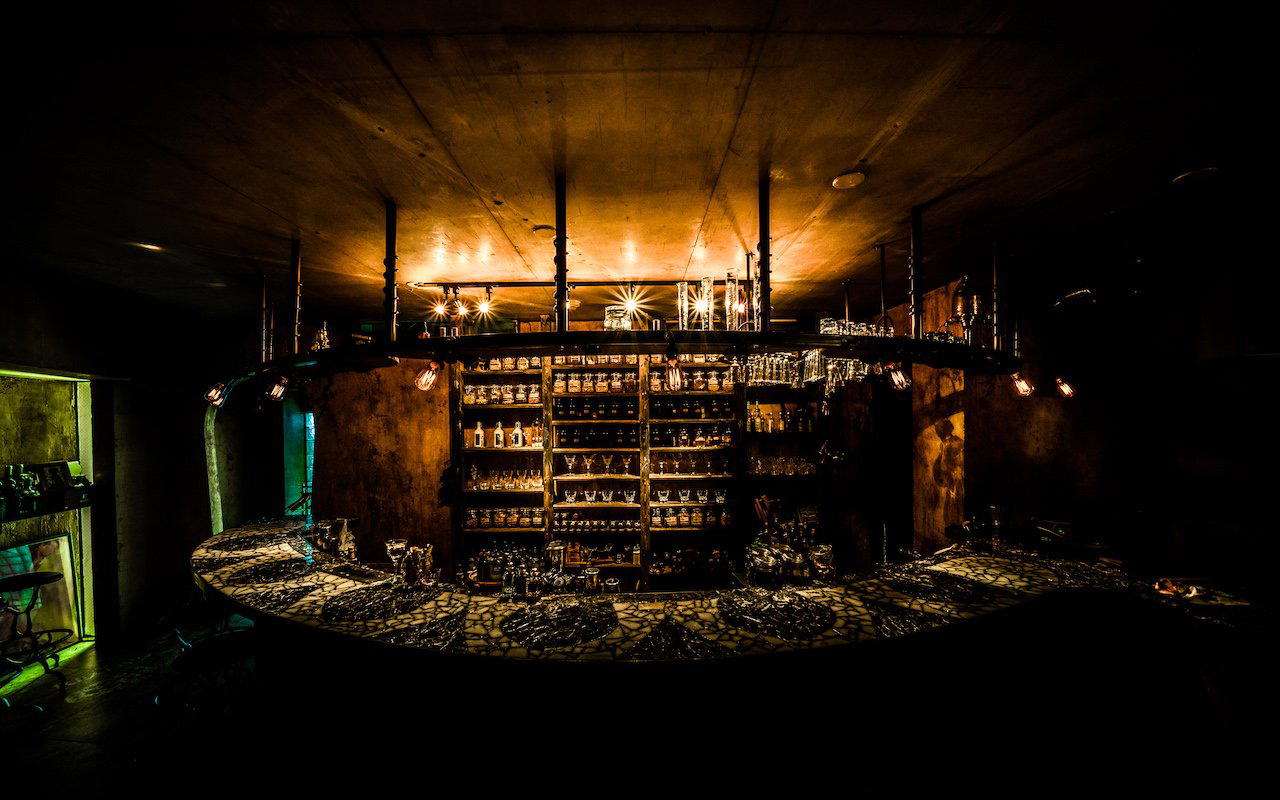
Cozy and intimate with counter seating for watching the chef and contemporary tableware creating a journey through modern artistry.