
Our verdict
Tenko Honten operates in Hiroshima's Yoshijima district, a residential pocket that shapes its identity as a neighbourhood-anchored Japanese restaurant rather than a destination-driven dining event. Recognised by Opinionated About Dining's Top Restaurants in Japan list in 2023 and holding, it draws a local-weighted clientele under chef Ryousuke Ito, with split lunch and dinner sittings Tuesday through Sunday.

Pearl is the En Primeur Club membership app, where members save venues, book tables and use the concierge.
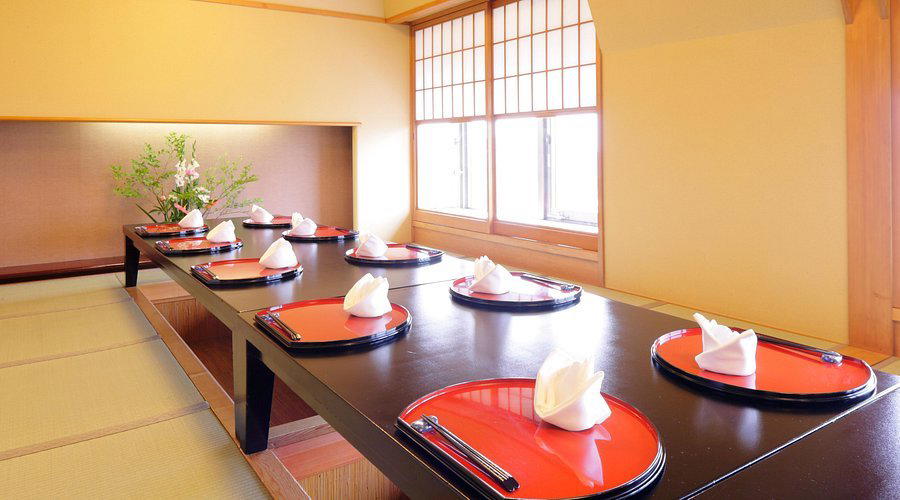
The menu
What to order
- Tempura prawns
- Shiitake mushroom tempura
- Anago with curry powder
- Tendon
- Oyster tempura
Yoshijima's Grain, Tenko Honten's Address
The Yoshijima district of Naka Ward sits west of Hiroshima's commercial core, where the city's rebuilt grid gives way to quieter residential blocks: small workshops, neighbourhood grocers, streets narrow enough that a delivery truck forces parked bicycles onto the kerb. It is not a dining district by design. Restaurants here survive on local loyalty rather than tourist foot traffic, which means that when a kitchen earns recognition beyond the neighbourhood, it tends to be because the food has earned it rather than the location. Tenko Honten sits on Yoshijimanishi, in exactly that kind of block, and the gap between its address and its 2023 Opinionated About Dining recognition tells you something about how Japanese regional dining works at its quietest and most honest.
OAD's Leading Restaurants in Japan list is a peer-and-expert survey that carries weight precisely because it is not a tyre-company guide operating on inspection cycles. Appearing on it in 2023 places Tenko Honten in a national conversation about Japanese cuisine that includes far more prominent postcodes. That the restaurant holds a 4.6 on Google from 81 reviews, a count consistent with a neighbourhood restaurant rather than a destination operation drawing international reservations, suggests the OAD recognition has not fundamentally altered its character.
The Neighbourhood Table, in Practice
Hiroshima's restaurant culture has always distributed quality more evenly across its wards than cities like Tokyo or Osaka, where premium dining concentrates in a handful of specific districts. In Kyoto, kaiseki pulls diners toward Gion and the canal streets. In Tokyo, the density of recognised addresses in Ginza, Minami-Aoyama, and Azabu skews the map heavily toward certain neighbourhoods. Hiroshima operates differently. The city's compact scale and its distinct post-war rebuilding history produced a dining culture that integrates into residential life rather than separating into a dedicated restaurant quarter.
Tenko Honten, in this context, functions less as a destination you travel to than as a table you belong to. Its hours reflect this: Tuesday through Sunday, split sittings at lunch from 11:30 am to 2 pm and dinner from 5 pm to 10 pm, Monday closed. That structure is the standard rhythm of a serious Japanese restaurant that respects both kitchen preparation time and the working schedules of its regular clientele. There is no weekend-only omakase theatre, no single long evening service pitched at out-of-town visitors. The rhythm is neighbourhood rhythm.
Within Hiroshima's recognised Japanese dining tier, the reference points are instructive. Nakashima (Kaiseki) represents the formal kaiseki tradition, operating at a different price register and ceremony level. Chiso Sottakuito and Eizan each stake their own positions in the city's Japanese dining field. MASUKI and NAKADO extend the city's range into different registers. Tenko Honten, among these, occupies the position that requires the least performance from the diner: come without ceremony, eat well, leave with the sense that you have encountered a kitchen operating at full attention for its immediate community.
Chef Ryousuke Ito and the Kitchen's Register
Japan's regional Japanese restaurant scene has produced a generation of chefs who trained in major city kitchens and returned to, or settled in, secondary cities with a different set of priorities than those driving the capital's attention economy. The national dining press notices them eventually, as OAD's 2023 listing of Tenko Honten confirms, but the kitchen itself tends to remain oriented toward the street it occupies rather than toward the recognition it has received.
Chef Ryousuke Ito leads the kitchen at Tenko Honten. Beyond that biographical anchor, the restaurant's record does not extend to detailed public documentation of training lineage or culinary philosophy in the way that Tokyo's higher-profile addresses are packaged for international media. What the OAD listing and the sustained local review score suggest is a kitchen that has earned the confidence of people who eat there repeatedly, which is a harder audience to sustain than critics visiting once. For comparison at the national level, OAD-recognised Japanese kitchens in other cities include Harutaka in Tokyo, HAJIME in Osaka, and Gion Sasaki in Kyoto, each of which operates at a considerably higher profile and price point. Tenko Honten sits in the same recognised tier without the infrastructure of a multi-year waiting list or a branded omakase identity.
Hiroshima's Wider Dining Range
Placing Tenko Honten correctly requires some sense of where Hiroshima sits in Japan's regional dining hierarchy. The city is not a secondary market for serious food. Its okonomiyaki culture alone carries genuine regional authority, distinct from Osaka's and defended with the seriousness that food traditions deserve when they have evolved in isolation and circumstance. Beyond that, the city's fishing and agricultural access, combined with its position on the Seto Inland Sea, gives its leading kitchens material that Tokyo chefs source from exactly this region. Oysters in particular are a Hiroshima claim that the rest of Japan acknowledges without argument.
For travellers building a broader Japan itinerary around food, the comparison cities each carry their own recognised addresses. akordu in Nara and Goh in Fukuoka represent how regional cities outside the Tokyo-Kyoto-Osaka axis are producing dining worth deliberate routing. 1000 in Yokohama operates within the greater Tokyo region but in a similarly non-central posture. Myojaku and Azabu Kadowaki in Tokyo define the capital's Japanese dining register at its most considered.
For the full picture of where to eat, drink, and stay in Hiroshima, see our full Hiroshima restaurants guide, hotels guide, bars guide, wineries guide, and experiences guide.
Planning Your Visit
Tenko Honten is at 1 Chome-21-25 Yoshijimanishi, Naka Ward, Hiroshima, 730-0823. The Yoshijima address puts it west of the city centre, reachable by tram on Hiroshima's surface network, which remains one of the most practical ways to move across the city's flat post-war grid. The restaurant opens Tuesday through Sunday, with lunch sittings from 11:30 am to 2 pm and dinner from 5 pm to 10 pm. Monday is the weekly close. Booking ahead is advisable, particularly for dinner; the OAD recognition in 2023 will have introduced the restaurant to a readership that plans meals months in advance, even if the room itself has not expanded to absorb that interest.
Frequently asked questions
How do I find Tenko Honten?
Tenko Honten is located at 1 Chome-21-25 Yoshijimanishi, Naka Ward, Hiroshima, 730-0823, Japan, Hiroshima.
Is Tenko Honten award-winning?
Tenko Honten has received recognition including: Opinionated About Dining Top Restaurants in Japan Recommended (2023).
What dish is Tenko Honten famous for?
No specific signature dish is on public record for Tenko Honten. The kitchen operates as a Japanese restaurant in Hiroshima's Yoshijima district under chef Ryousuke Ito, and its 2023 Opinionated About Dining recommendation places it among Japan's noted regional Japanese tables rather than a single-dish destination. For specifics, contacting the restaurant directly before visiting is the practical approach.
What are Tenko Honten's hours?
Hours at Tenko Honten: Hours: Monday Closed Tuesday 11:30 am–2 pm, 5–10 pm Wednesday 11:30 am–2 pm, 5–10 pm Thursday 11:30 am–2 pm, 5–10 pm Friday 11:30 am–2 pm, 5–10 pm Saturday 11:30 am–2 pm, 5–10 pm Sunday 11:30 am–2 pm, 5–10 pm.
The Minimal Set
Comparable venues nearby, for context on price, style, and recognition.
| Venue | Cuisine | Price | Awards | Notes |
|---|---|---|---|---|
| Tenko HontenThis venue (the venue you are viewing) | Traditional Edomae Tempura | $50–100 | Not listed | Not listed |
| Wagyu lab K | Sakakiyama Beef Yakiniku | $50–100 | Tabelog Bronze #509 | Nishi, Sakakiyama Beef Yakiniku |
| Teppan Ryori Kaeru | High‑end Teppanyaki in Hiroshima | $100–150 | Tabelog 100 #23 | Naka, High‑end Teppanyaki in Hiroshima |
| 桃花庵 | Seasonal Kaiseki Omakase | $200–300 | Not listed | Asakita, Seasonal Kaiseki Omakase |
| Soshi | Setouchi-Style Edomae Sushi | $150–200 | Tabelog Bronze #419 | Naka, Setouchi-Style Edomae Sushi |
| Bishu Bikou Hamai | Traditional Japanese Izakaya | $30–50 | Tabelog 100 #31 | Naka, Traditional Japanese Izakaya |
Recognition history
Dated appearances from independent guides and award organizations, with the underlying list record or original source where available.
Opinionated About Dining Top Restaurants in Japan Recommended
Opinionated About Dining
Full recognition history (2 entries)
Opinionated About Dining Top Restaurants in Japan Recommended
Opinionated About Dining
Continue exploring
More in Hiroshima
Restaurants in Hiroshima
All restaurants in Hiroshima →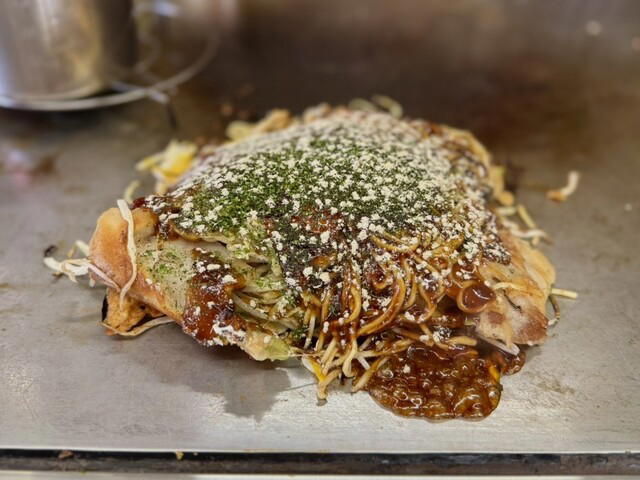
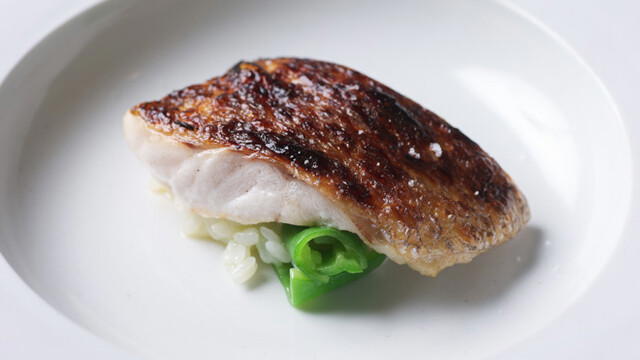
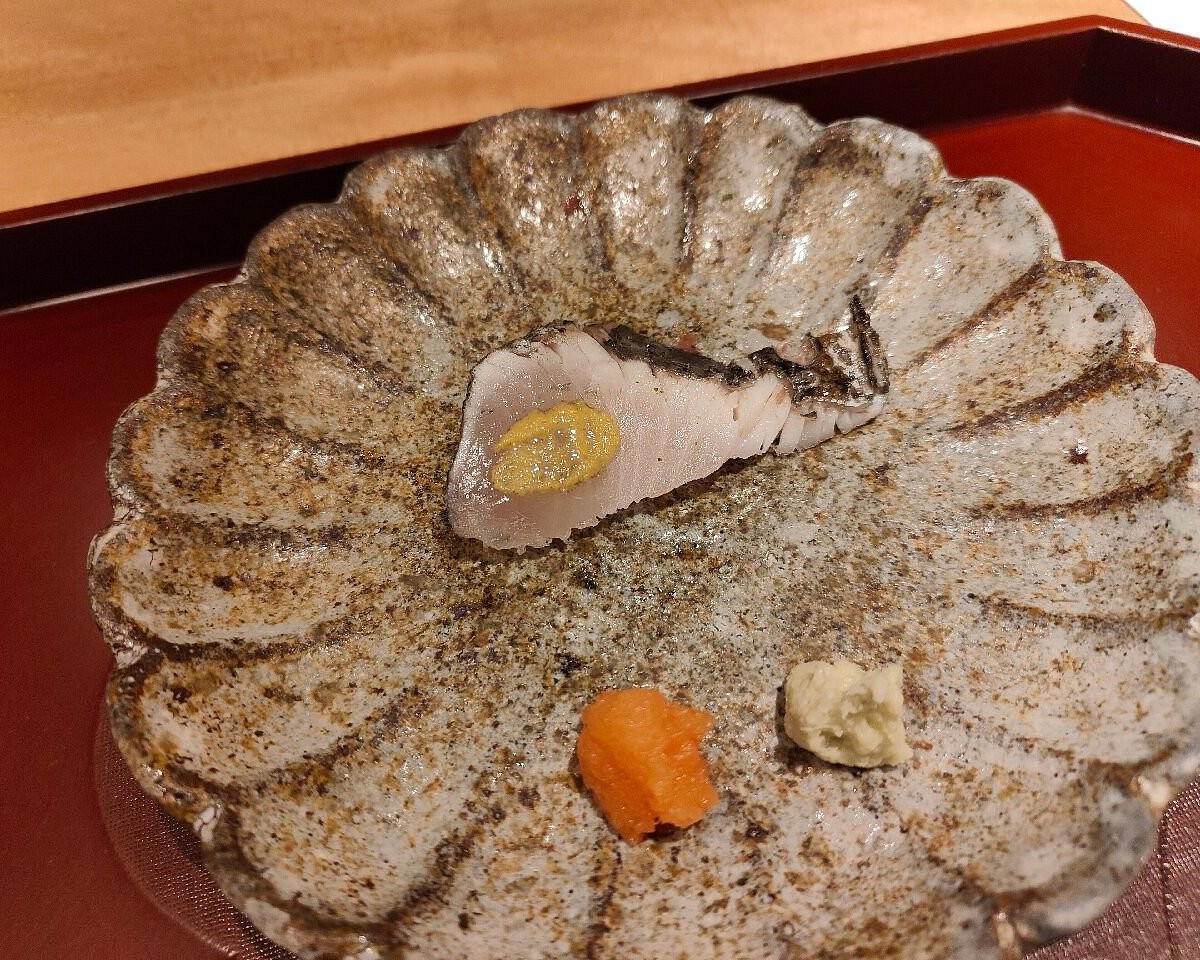
Bars in Hiroshima
All bars in Hiroshima →
Details
- Intimate
- Elegant
- Sophisticated
- Classic
- Special Occasion
- Date Night
- Chefs Counter
- Open Kitchen
- Sake Program
- Beer Program
- Local Sourcing
- Counter Dining
- Omakase
- Set Menu
- Sake
- Beer
- Allergy Accommodating
Current opening hours
- Monday
- 7–10 PM
- Tuesday
- 7–10 PM
- Wednesday
- 7–10 PM
- Thursday
- 12–2 PM, 7–10 PM
- Friday
- 12–2 PM, 7–10 PM
- Saturday
- 12–2 PM, 7–10 PM
- Sunday
- Closed
Hours can change for holidays and private events. Hours as of .
Intimate 8-seat counter with sleek, modern Japanese aesthetic; the aroma of frying oil and sound of tempura preparation create an immersive, concentrated dining atmosphere with warm lighting from the open kitchen.