Google: 4.1 · 71 reviews

A reservation-only, eight-seat Chinese restaurant on the second floor of an unassuming Minami Ward building, MASUKI has held Tabelog Bronze recognition and consecutive Tabelog Chinese WEST 100 selections since 2021. The format is small-plates, dinner-only, and priced at JPY 20,000–29,999 per person. For Hiroshima, it sits at a price point and recognition tier that has no close local parallel in Chinese cuisine.
 Discover on Pearl
Pearl is the En Primeur Club membership app — saves, bookings, and concierge access live there. Same editors, same standards.
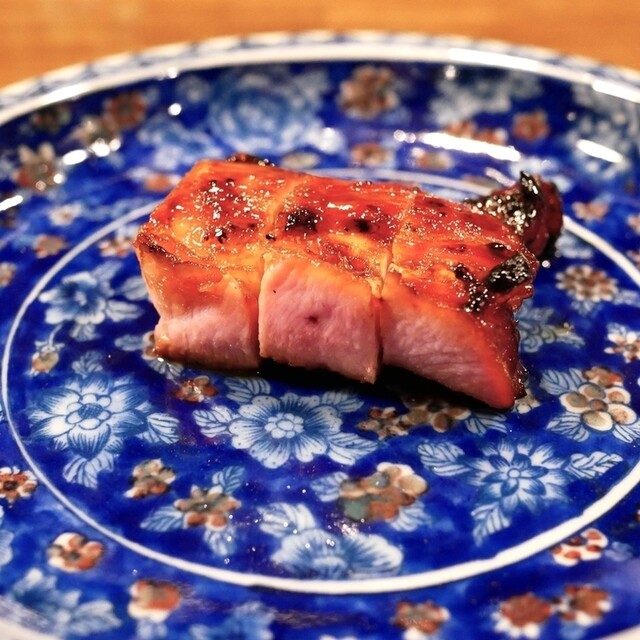
Eight Seats, One Seating: The Format That Defines MASUKI
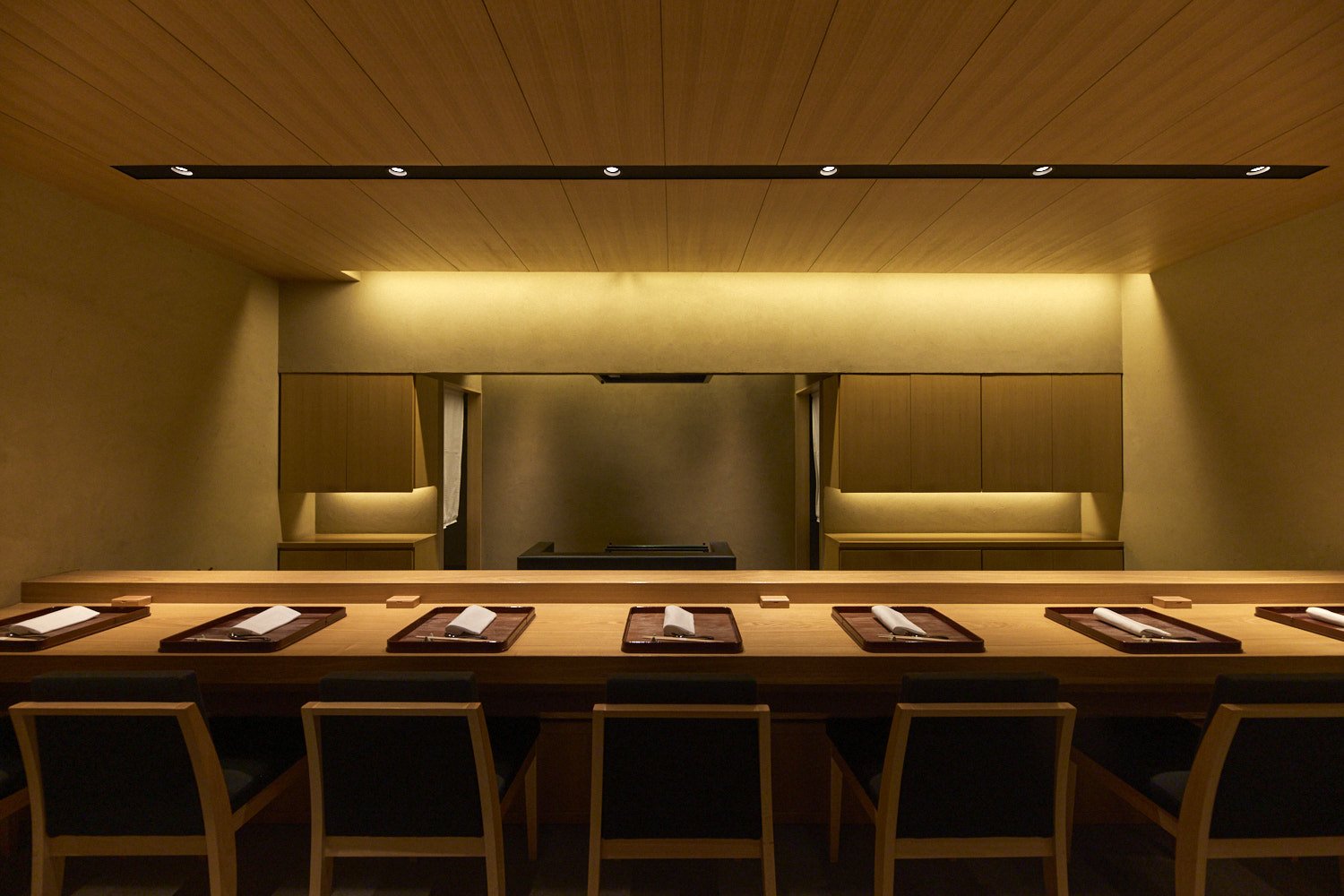
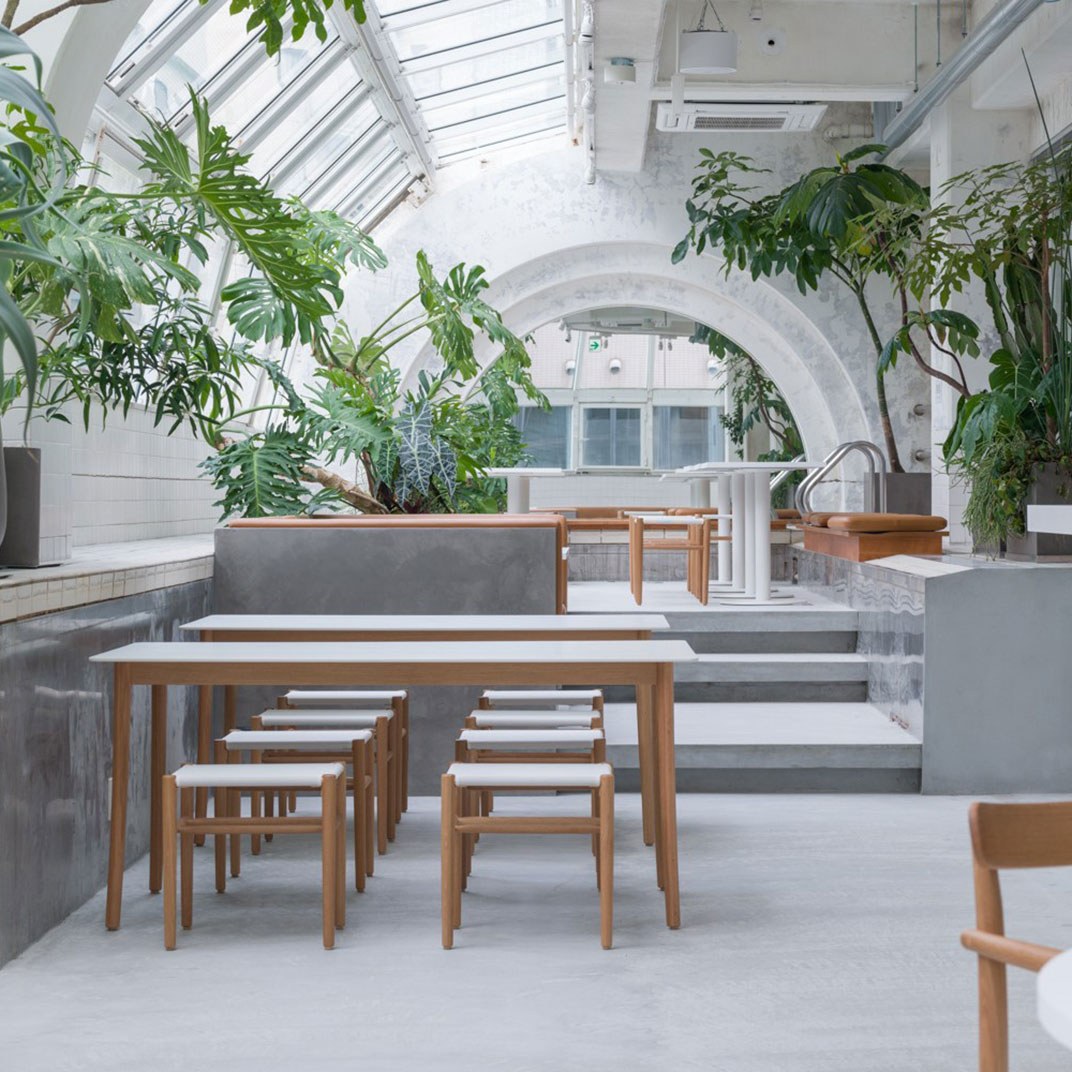
The building on Kyobashicho gives nothing away. A second-floor address in a low-rise Minami Ward block, a short walk from the Hiroden Inaricho tram stop, tells you nothing about what awaits at the leading of the stairs. This is a common feature of Japan's most considered small restaurants: the exterior communicates deliberately little, and the interior — eight seats, an oval table for four and a counter for four — does the talking instead. At MASUKI, the physical scale is the editorial statement. With a maximum party size of six and no private rooms, the room functions as a single shared space where all dishes are served simultaneously across the table. Timing is therefore not just a preference but a structural rule: arrive more than twenty minutes late without notice, and the reservation is cancelled.
Chinese Cuisine at Hiroshima's Western Japan Recognition Tier
Chinese restaurants in Japan operate across a wide spectrum, from the ramen and gyoza joints that anchor every neighbourhood to the rarefied kaiseki-influenced Chinese counters that have earned serious critical attention. MASUKI sits at that upper register. A Tabelog score of 3.99 and the 2026 Tabelog Award Bronze place it inside a nationally recognised peer group, while three consecutive selections for the Tabelog Chinese WEST 100 , in 2021, 2023, and 2024 , confirm its position within the competitive Western Japan Chinese category specifically. In a city where the dining conversation is more often framed around Nakashima (Kaiseki) or Chiso Sottakuito for Japanese fine dining, MASUKI represents something rarer: a Chinese restaurant operating at a price point and recognition level that draws direct comparison to the city's most decorated Japanese counters.
That positioning matters when you consider what the Tabelog Chinese WEST 100 is actually measuring. Western Japan's Chinese restaurant scene is anchored by Osaka and Kobe, where Cantonese and regional Chinese traditions have deep institutional roots going back to port-era trade. For a Hiroshima restaurant to place inside that list three times puts it in competition with rooms in significantly larger cities with larger Chinese communities and deeper culinary infrastructures. The award is not a local prize calibrated for Hiroshima's scale , it is a regional ranking across a demanding field.
The Small-Plates Register and Its Regional Chinese Context
The format at MASUKI , small plates, aromatic, dinner-only , positions it within a specific tradition of Chinese restaurant dining that has gained critical momentum in Japan over the past decade. This is not the banquet model of traditional Chinese fine dining, where courses arrive sequentially for the table. Nor is it the high-volume Cantonese dim sum format where dishes circulate continuously. The small-plates approach, when executed at this price tier (JPY 20,000–29,999 per person by the official listing, with review-based averages suggesting JPY 15,000–19,999 in practice), tends to reflect a tasting-menu sensibility applied to Chinese culinary technique: precise portioning, aromatic layering, and courses calibrated to the pace of a two-hour dinner window.
This places MASUKI in an interesting comparative position relative to how premium Chinese cuisine is being served elsewhere. In Berlin, Restaurant Tim Raue applies Central European technique to Chinese flavour architecture at a Michelin two-star level. In San Francisco, Mister Jiu's has made the case for Cantonese-American cuisine as a serious critical category. In Hiroshima, MASUKI's eight-seat format suggests a different but parallel ambition: Chinese cuisine stripped of the banquet scale and reframed as an intimate, precision-driven experience. The dress code of smart casual, with a specific request to avoid strong perfume in order to preserve the integrity of aromas, reinforces that the kitchen is building around scent as a deliberate component of the meal.
Hiroshima's Fine Dining Context
Hiroshima's upper tier of restaurants is dominated by Japanese formats. Eizan and NAKADO represent the kind of Japanese counter dining that the city's most serious diners return to repeatedly. NICON occupies the innovative Italian space. Against this backdrop, a Chinese restaurant at the JPY 20,000-plus price tier is operating without a local peer group for direct comparison , which is both the challenge and the opportunity of MASUKI's positioning. Diners choosing between a kaiseki evening and a Chinese small-plates counter are not making a cuisine trade-off so much as choosing between two distinct approaches to the same level of culinary attention.
For visitors exploring the city more broadly, Hiroshima has a well-documented tradition of regional Japanese dining that extends across formats. The full picture is available in our Hiroshima restaurants guide, alongside companion guides covering hotels, bars, wineries, and experiences.
Placing MASUKI in the broader Western Japan fine dining picture means looking at what the rest of the region offers at equivalent recognition levels. HAJIME in Osaka and Gion Sasaki in Kyoto represent the dominant kaiseki and French-Japanese tradition. Goh in Fukuoka and akordu in Nara show the range of serious dining formats operating outside Osaka. In Tokyo, Harutaka and 1000 in Yokohama illustrate how a single-category expertise can anchor a counter at the highest recognition levels. MASUKI operates in that same logic , a focused format, a small room, and a sustained record of critical recognition , applied to Chinese cuisine in a city where that combination is genuinely scarce.
Planning a Visit
MASUKI has operated since February 2015 and is open Tuesday through Saturday from 18:30, with Sunday and public holiday service beginning at 18:00. Monday is the regular closing day. The restaurant is dinner-only, reservation-only, and will not accept provisional bookings: the reservation policy requires confirmation of a definite visit, with cancellation fees applying from three days prior. Given the eight-seat capacity, any no-show or late cancellation has a proportionally larger impact than it would at a larger room, which explains the relatively firm policy. The phone number on file is +81-82-261-0608.
The room does not accommodate guests under 18. Maximum party size for a seated booking is six. Credit cards are accepted (Visa, Mastercard, JCB, Amex, Diners), though electronic money and QR code payments are not. The address is 広島県広島市南区京橋町6-8 藤多ビル 2F, accessible by a five-minute walk from the Hiroden Inaricho tram stop or a ten-minute walk from JR Hiroshima Station. Coin parking is available in the surrounding area. Private room hire is not available within the regular format, but the entire space can be booked for private use for parties of up to twenty people.
Where It Fits
A quick look at comparable venues, using the data we have on file.
| Venue | Cuisine | Awards | Notes |
|---|---|---|---|
| MASUKI | Chinese | {"Year":"2026","Award Source":"Tabelog",… | This venue |
| Nakashima | Kaiseki | Kaiseki | |
| Tenko Honten | Japanese | Japanese | |
| Chiso Sottakuito | |||
| Eizan | |||
| NAKADO |
Continue exploring
More in Hiroshima
Restaurants in Hiroshima
Browse all →
Bars in Hiroshima
Browse all →
At a Glance
- Cozy
- Intimate
- Elegant
- Date Night
- Special Occasion
Cozy space with traditional decor, warm and inviting atmosphere, calm and relaxing.