
Hiroshima’s izakaya culture is at its sharpest when small counters treat sourcing as the point, not decoration. Hatsu Chan sits in that category: a 13-seat, counter-only tavern recognized in Tabelog 100 Izakaya WEST 2025, with steak, ramen, sake, and shochu placing it closer to a serious drinking kitchen than a casual snack stop.
Pearl is the En Primeur Club membership app — saves, bookings, and concierge access live there. Same editors, same standards.
- Address
- 9-12 Higashihiratsukacho, Naka Ward, Hiroshima, 730-0025, Japan
- Phone
- +81 82-243-2036
- Website
- tabelog.com
 Saves & bookings on Pearl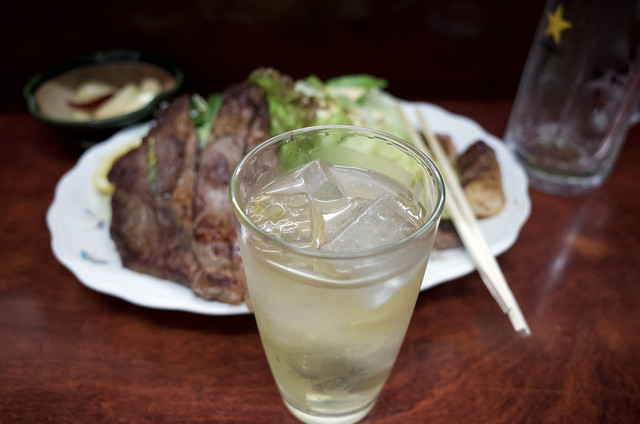
Approach Hiroshima’s small counter restaurants after dark and the city feels less like a dining capital chasing spectacle than a working food town of heat, smoke, broth, and regulars. The strongest izakaya rooms do not separate drinking from eating; sake, shochu, beef, skewers, noodles, and simmered dishes share one rhythm. Hatsu Chan belongs to that compact tradition, a counter-only address in Higashihiratsukacho where proximity to the grill and pot makes ingredient handling the evening’s main argument.
Hiroshima visitors often arrive with okonomiyaki as the default plan, understandable but narrow. The city’s food culture is broader than griddle cooking, with taverns carrying much of the local after-work appetite. Compared with lower-spend Hiroshima fixtures such as Horumon Ryori Senmonjo Toneya, Seichan, Yagenbori Hassho, and Okonomiyaki Koshida Honten, this room occupies a more deliberate izakaya bracket. Hiroshima Marukajiri Naka-chan prices slightly higher, but the comparison is less about cost than intent: the draw here is a tight counter meal built around beef, ramen, and alcohol rather than a single-dish specialty.
Beef, broth, and the Hiroshima izakaya habit of eating seriously while drinking
Ingredient sourcing separates a tavern that feeds a neighborhood from one that pulls diners across town. In Japan’s izakaya hierarchy, the category can mean fried snacks or seasonal small plates; in Hiroshima, the sharper end often leans into ingredients that can carry both alcohol and a full dinner. Hatsu Chan is listed across izakaya, steak, and ramen, which says much about its center of gravity. This is not a tasting-menu restaurant adopting tavern gestures, but a drinking kitchen where protein, broth, and noodles structure the night.
The beef matters because steak in an izakaya changes pacing. Rather than a Western-style main course, meat can fold into shared pours and small plates. Ramen brings closure and salt at the end. Sake and shochu complete the grammar: fermented rice for texture and lift, distilled spirit for stronger, cleaner edges. The result fits a Japanese tradition that values sequence as much as any individual plate.
Tabelog’s selection of Hatsu Chan for Tabelog 100 Izakaya WEST 2025 gives the room a useful public marker. The list is not a substitute for judgment, but it signals more than a neighborhood standby below serious diners’ radar. A 3.75 Tabelog score, in Japan’s conservative user-rating culture, also places it above the casual noise around many drinking addresses. For travelers, that combination matters more than decorative claims: it identifies a small, specific tavern in a competitive regional category.
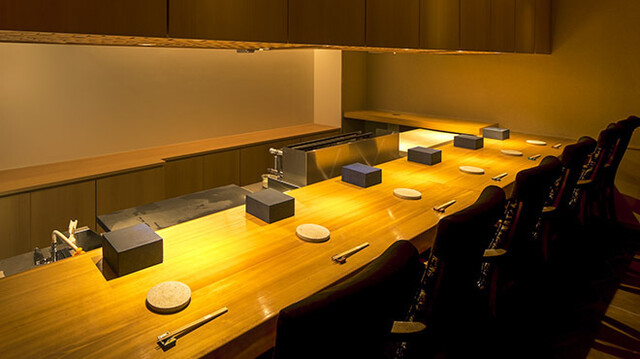
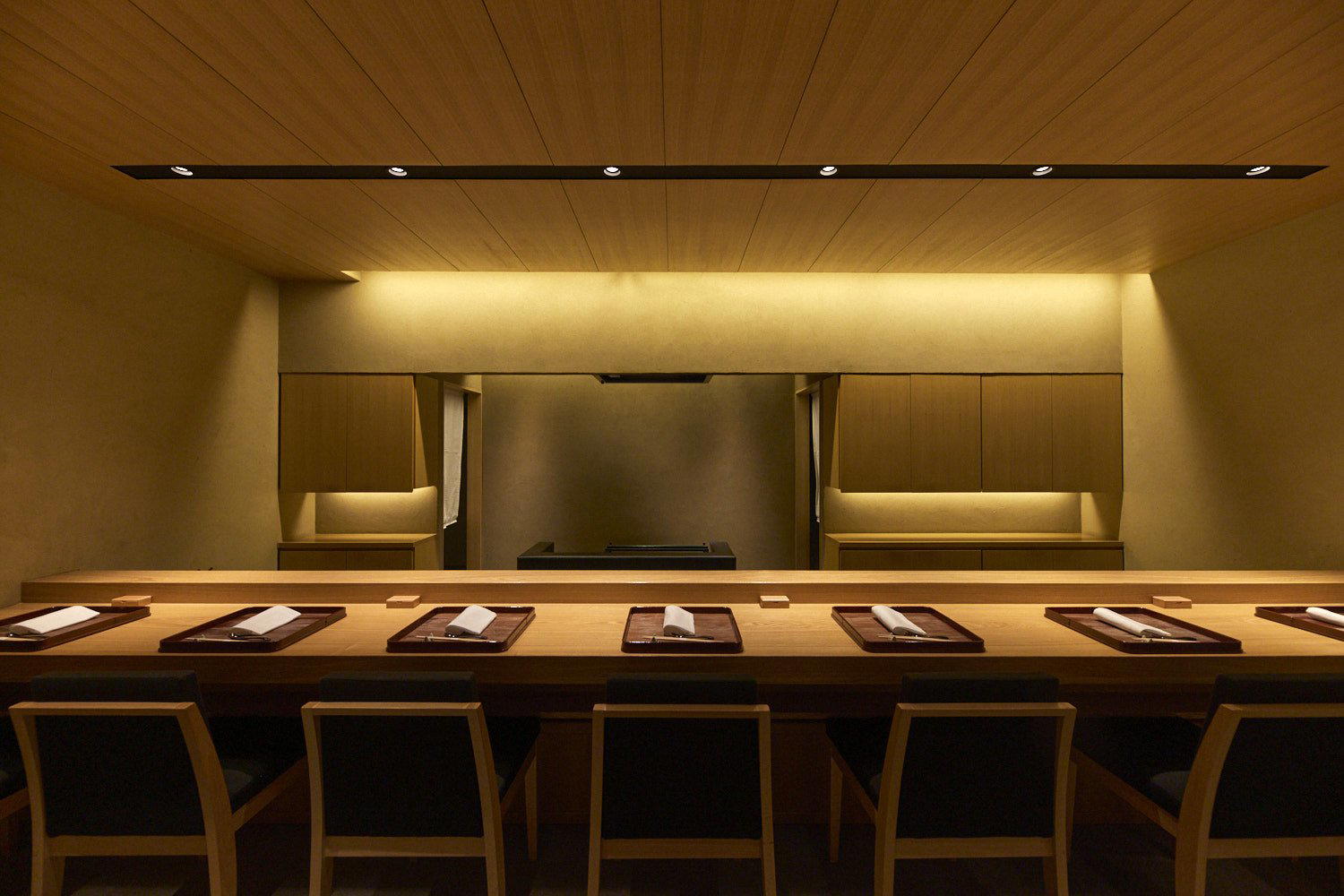
A 13-seat counter changes the contract between kitchen and guest
The counter-only arrangement is not incidental. Thirteen seats leave little room for drift, and the format rewards diners who understand izakaya as an active, paced exchange rather than a long, private table booking. Counter restaurants in Japan compress the distance between prep, cooking, pouring, and payment; that compression is part of the pleasure, but it sets expectations. Groups should arrive complete, decisions happen in view of the room, and lingering affects everyone waiting for a seat.
Hiroshima’s smaller taverns also ask visitors to rethink hospitality. The strongest meals are often not those with the longest translation or broadest choice, but those where a limited room, clear category, and focused drink program push the evening into a lane. Here, the lane is clear: beef and tavern food with sake and shochu, in a room built for close-range eating rather than table-service sprawl.
That makes Hatsu Chan a useful counterpoint to the city’s visible restaurant spectrum. Akai (Creative Cuisine) speaks to Hiroshima’s contemporary dining ambitions, while ANDERSEN reflects its long-running café and bakery culture. Bishu Bikou Hamai and CHILAN belong to different moods again, and Butter Cake no Nagasaki Do shows how specific Hiroshima’s sweet-shop loyalties can be. The izakaya counter sits among these not as a lesser form, but as the city’s most direct expression of everyday appetite meeting serious sourcing.
How to place it within a Hiroshima itinerary
Read this address as an evening anchor, not a pre-dinner warm-up. Small-capacity izakaya rooms work poorly as flexible drop-ins, especially when the kitchen handles steak, ramen, and drinks rather than a single quick-turnover item. It suits solo diners or a small group that wants the tavern itself to be the night’s focus. Smoking is permitted, a detail that will matter for some travelers; it also places the room within an older izakaya atmosphere not fully sanded down for international comfort.
For a broader Hiroshima stay, the contrast is useful. Start with Our full Hiroshima restaurants guide for the city’s dining range, then use Our full Hiroshima bars guide when the night should continue beyond food. Our full Hiroshima hotels guide helps with neighborhood positioning, while Our full Hiroshima wineries guide and Our full Hiroshima experiences guide widen the trip beyond restaurant reservations.
Japan’s broader casual-dining map also defines what this room is not. It is not a regional specialty stop like -Grilled beef Sukiyaki- KAMAKURA TANUKIAN 鎌倉 たぬき庵 in Kamakura, nor a Tokyo charcoal-and-tuna address like. 鮪と炭火焼き うお炭 秋葉原店 in Tokyo. It is far from the café register of.cafe in Osaka, the contemporary styling suggested by.know in Kumamoto, the Vietnamese lane of (Shoku) Vietnam in Kawasaki, or the curry focus of [Curry Senmon Ten] Maruyama Kyoju. in Sapporo. Even overseas Japanese formats such as Jōdo Saké Bar in Los Angeles and Onigiri Time in Pasadena underline the point: outside Japan, categories often become cleaner and easier to explain. In Hiroshima, the izakaya remains messier, narrower, and more rewarding for diners who accept the room on its own terms.
Side-by-Side Snapshot
Comparable venues by cuisine and price in the same metro.
| Venue | Cuisine | Price | Awards | Notes |
|---|---|---|---|---|
| Hatsu ChanThis venue — the venue you are viewing | Izakaya, Steak & Ramen | $$ | , | |
| Horumon Ryori Senmonjo Toneya | Traditional Hiroshima horumon & yakiniku | $$ | , | Naka |
| Denko Sekka (電光石火) | Hiroshima-style Okonomiyaki | $$ | , | Hiroshima Station area |
| Soba Kiri Gin | Traditional Japanese Soba | $ | , | Minami |
| Ganso Hassho | Hiroshima-style okonomiyaki counter | $ | , | Naka |
| Okonomiyaki Junior | Hiroshima-style okonomiyaki & teppanyaki counter | $ | , | Naka |
Continue exploring
More in Hiroshima
Restaurants in Hiroshima
Browse all →
Bars in Hiroshima
Browse all →
At a Glance
- Cozy
- Classic
- Hidden Gem
- Intimate
- Solo
- Casual Hangout
- Late Night
- Standalone
- Sake Program
- Beer Program
A small, tightly run counter dining space with a no-frills izakaya atmosphere that feels lively and close-quarters rather than relaxed.