
1 Michelin Star
Our verdict
A Michelin-starred omakase counter in Ginza's upper tier, Sushi Kojima works with aged rice and a red-vinegar blend to anchor a menu that moves from steamed abalone and salt-grilled blackthroat seaperch through precisely prepared nigirizushi. The format is unhurried, the sake-pairing logic deliberate, and the counter experience oriented around watching a single craftsman work through the full sequence of a classical Edomae service.

Pearl is the En Primeur Club membership app, where members save venues, book tables and use the concierge.
The menu
What to order
- Horsehair crab with vinegar sauce
- Steamed abalone
- Tender-boiled octopus
- Salt-grilled blackthroat seaperch
- Choshi tuna
- Gizzard shad
Ginza's Omakase Tier and Where Kojima Sits
Ginza has functioned as the geographic centre of Tokyo's premium sushi market for decades. The neighbourhood's concentration of counter seats, from two-star rooms booking six months out to quieter one-star counters with shorter lead times, has made it the easiest place in the city to benchmark what Edomae sushi looks like across price points and philosophies. The mid-2000s and early 2010s saw a rapid expansion of high-end omakase options; the years since have been a process of consolidation, with the Michelin Guide functioning as the primary sorting mechanism for international visitors trying to distinguish one ¥¥¥¥ counter from another.
Sushi Kojima holds a single Michelin star (2024), placing it in a tier that includes technically accomplished counters where the craft is serious but the atmosphere is less ceremonially austere than the two- and three-star rooms. Counters at this level, compare Edomae Sushi Hanabusa or Hiroo Ishizaka, tend to attract both serious Japanese diners and internationally aware visitors who have already worked through the higher-profile names and want more specificity in their choices. The address is on the fifth floor of a building in Ginza 7-chome, a block that sits comfortably within the core sushi geography without the street-level visibility of some of the district's better-known rooms.
The Logic of the Menu
Classical Edomae omakase follows a recognisable arc: tsumami (snacks with sake), then nigiri in sequence, then a closing course. What distinguishes counters from one another within that structure is the selection of tsumami, the rice treatment, the vinegar blend, and the approach to prepared toppings, the items that require extended kitchen labour rather than knife skill alone.
At Sushi Kojima, the tsumami sequence is notably generous. Steamed abalone, tender-boiled octopus, and salt-grilled blackthroat seaperch (nodoguro) all appear before the nigiri arrives. Blackthroat seaperch has become one of the more discussed fish in premium Japanese omakase over the past decade, its high fat content and delicate skin make it a useful indicator of a kitchen's grilling precision. The extended snack course has a practical effect beyond flavour: sake consumption is encouraged across a wider window, which changes the pacing of the meal and the mood at the counter by the time nigiri begins.
The rice choice here is specific and worth understanding. Large-grained rice from the previous year's harvest is selected deliberately. Older rice has lower moisture content than new-harvest rice, which produces a firmer, more present grain structure in the hand-formed nigiri. The intention, according to the Michelin citation, is to create a sense of presence, a nigiri that holds its form and registers as a substantial unit rather than dissolving immediately. The vinegar blend combines red vinegar (akasu, derived from sake lees) and standard rice vinegar. Red vinegar produces a darker, more assertive shari with deeper umami and a slightly rough texture that anchors fatty toppings; rice vinegar lightens and brightens. Blending them allows the rice to pair across a wider range of fish without the shari either overwhelming lighter white fish or being neutralised by richer cuts.
Among the prepared items, pickled tuna (zuke maguro), steamed conger eel (anago), and kanpyo (simmered dried gourd) represent the traditional core of Edomae preparation, techniques developed in the Edo period to extend the usable life of ingredients without refrigeration, now retained as a philosophical commitment to the tradition's origins. At a counter like Sushi Kanesaka, or the more architecturally formal Harutaka, the same prepared items appear as evidence of lineage. Here, they carry the same weight.
Watching the Counter
The sensory register of a high-end sushi counter is different from almost any other restaurant format. The room is quiet by design, conversation happens in measured tones, and the dominant sound is the chef's work: the scrape of a knife on a cutting board, the brief contact of rice with palm, the placement of a piece directly in front of the diner. There is no theatrical plating, no brigade-style coordination visible to the guest. The attention concentrates entirely on one person and a narrow strip of counter.
In this format, observation is part of the experience in a way that differs from most tasting-menu contexts. A skilled Edomae chef's hand movements are efficient to the point of appearing slow, there is no excess motion, and the forming of a nigiri takes only a few seconds, but every second is structured. The Michelin text for Sushi Kojima specifically frames this as something to watch: "witness the single-minded devotion of a sushi artisan." That framing is not ornamental. The counter format at this level is partly a performance of mastery, and the guest's proximity to it is a deliberate design choice, not incidental.
Counter seating also changes the relationship between diner and drink. Sake service at a sushi counter is typically informal, the chef or a single attendant manages pours, and the pace is keyed to the snack course rather than the nigiri. This is the reason the large tsumami selection at Sushi Kojima functions as it does: it creates a longer, more relaxed opening phase where the diner settles, drinks, and watches before the more concentrated focus of the nigiri sequence begins.
Placing Kojima in Tokyo's Broader Dining Map
Tokyo's starred sushi scene is concentrated but not monolithic. The two- and three-star counters, including Sukiyabashi Jiro Roppongiten in Roppongi, operate on booking windows and price points that require significant advance planning and, in some cases, introductions. One-star counters like Sushi Kojima occupy a different operational position: more accessible in booking terms, still technically serious, and often more representative of the daily working rhythm of Ginza's sushi culture than the internationally famous flagship rooms.
Visitors constructing a multi-city Japan itinerary might pair a Ginza counter meal with kaiseki or contemporary Japanese cooking elsewhere. Gion Sasaki in Kyoto represents the kaiseki tradition at high level; HAJIME in Osaka operates in a more contemporary European-influenced idiom. For sushi specifically, the tradition travels, Sushi Shikon in Hong Kong and Shoukouwa in Singapore are the reference points for Edomae craft outside Japan, but the density of serious counters within a few blocks of Ginza 7-chome remains something no other city replicates. Our full Tokyo restaurants guide maps the broader context, and for visitors planning around accommodation and evening programming, the Tokyo hotels guide, bars guide, and experiences guide cover the surrounding categories. Elsewhere in the region, Goh in Fukuoka, akordu in Nara, 1000 in Yokohama, and 6 in Okinawa offer reference points across different formats and price tiers. The Tokyo wineries guide covers the domestic wine and sake dimension for those extending their research in that direction.
Planning Your Visit
Sushi Kojima is located on the fifth floor of Ginza Nana-chome Place, at 7-3-8 Ginza, Chuo City, Tokyo. The price range sits at ¥¥¥¥, consistent with the one-star Ginza omakase tier.
Quick reference:
Frequently asked questions
What does dinner at Sushi Kojima typically cost?
Pricing at Sushi Kojima is listed as ¥¥¥¥.
Where is Sushi Kojima in Tokyo?
Sushi Kojima is located at Japan, 〒104-0061 Tokyo, Chuo City, Ginza, 7 Chome−3−8 銀座七丁目プレイス 五階, Tokyo.
Is Sushi Kojima Michelin-listed?
Sushi Kojima has received recognition including: The omakase set menu begins with snacks such as steamed abalone, tender-boiled octopus and salt-grilled blackthroat seaperch. The large number of items keeps the sake flowing before the nigirizushi arrives. For the sushi, large-grained rice….
What do people recommend at Sushi Kojima?
The Michelin citation calls out the snack course as the opening act: steamed abalone, tender-boiled octopus, and salt-grilled blackthroat seaperch arrive before the nigirizushi. For the nigiri itself, the kitchen uses large-grained rice from the previous year's harvest, blended with red vinegar and rice vinegar, producing a base that holds across a wide range of toppings. Pickled tuna, steamed conger eel, and kanpyo are prepared in-house.
How hard is it to get a table at Sushi Kojima?
At the one-star level in Ginza, demand varies by how visible a counter is to international booking platforms. Sushi Kojima is located on the fifth floor of Ginza Nana-chome Place at 7-3-8 Ginza, a building that keeps the counter relatively low-profile relative to street-level flagships. No reservations platform or phone number is publicly listed, which typically means bookings run through personal introduction or direct contact, the standard pattern for counters at this tier in Tokyo.
Budget Reality Check
A quick peer reference to anchor this venue in its category.
| Venue | Cuisine | Price | Awards | Notes |
|---|---|---|---|---|
| Sushi KojimaThis venue (the venue you are viewing) | Edomae Omakase | $200–300 | 1 Michelin Star | Not listed |
| Harutaka | Edo-Style Omakase Sushi | $200–300 | 3 Michelin Stars · World's 50 Best #76 | Sushi |
| RyuGin | Modern Kaiseki | $500+ | 3 Michelin Stars · World's 50 Best #41 | Kaiseki, Japanese |
| L'Effervescence | Modern French with Japanese Influences | $200–300 | 3 Michelin Stars · World's 50 Best #69 | French |
| HOMMAGE | Modern French with Japanese Influences | $150–200 | 2 Michelin Stars · World's 50 Best #78 | Innovtive French, French |
| MAZ | Innovative Peruvian-Japanese Fusion | $150–200 | 2 Michelin Stars · World's 50 Best #28 | Innovative |
Recognition history
Dated appearances from independent guides and award organizations, with the underlying list record or original source where available.
Michelin 1 Star
Michelin
Full recognition history (2 entries)
Michelin 1 Star
Michelin
Continue exploring
More in Tokyo
Restaurants in Tokyo
All restaurants in Tokyo →



Bars in Tokyo
All bars in Tokyo →





Details
- Intimate
- Elegant
- Classic
- Sophisticated
- Special Occasion
- Date Night
- Business Dinner
- Chefs Counter
- Open Kitchen
- Sake Program
- Sommelier Led
- Local Sourcing
- Sustainable Seafood
- Omakase
- Counter Dining
- Tasting Menu
- Sake
- Champagne
- Pescatarian Friendly
Current opening hours
- Monday
- 5–11 PM
- Tuesday
- 5–11 PM
- Wednesday
- 5–11 PM
- Thursday
- 5–11 PM
- Friday
- 5–11 PM
- Saturday
- 5–11 PM
- Sunday
- Closed
Hours can change for holidays and private events. Hours as of .
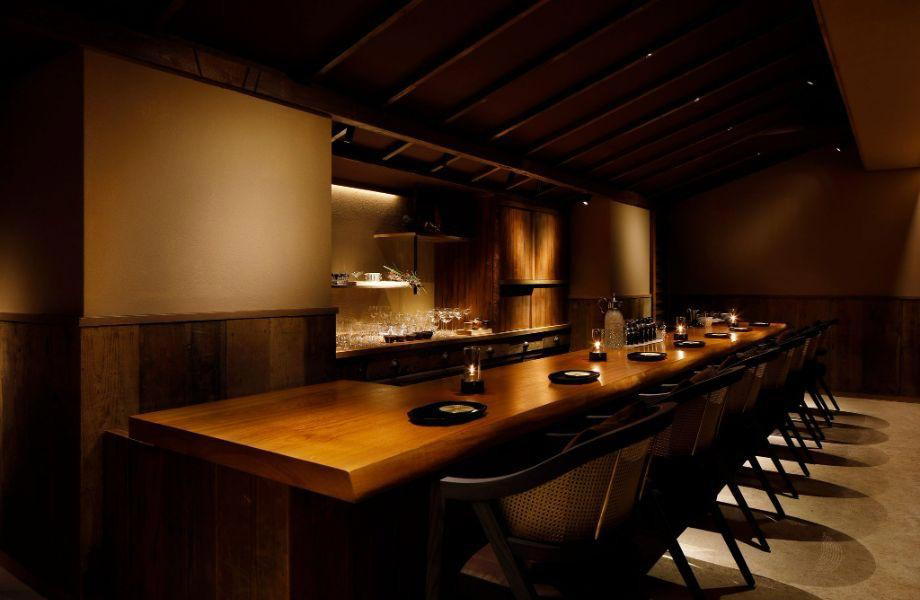
Intimate counter seating with traditional bamboo-motif walls and crosshatched ceiling, accessed through a dark side street lit by a single lantern; warm, well-lit interior creating a peaceful and sophisticated setting.