Our verdict
Sukesama (ぎょうざ処 亮昌) occupies the ground floor of Kyoto's Shinfukan complex on Karasuma-dori, bringing gyoza to a neighbourhood better known for kaiseki and temple cuisine. The format is focused and deliberate, sitting at a different price tier from the city's high-end Japanese dining scene. For a city where culinary traditions run deep, a well-executed gyoza counter carries its own kind of conviction.

Pearl is the En Primeur Club membership app — saves, bookings, and concierge access live there. Same editors, same standards.
- Address
- 中京区場之町586-2 (新風館 1F/烏丸通姉小路下ル), 京都市, 京都府, 604-8172
- Website
- sukemasa.kyoto
- Directions
- Get directions
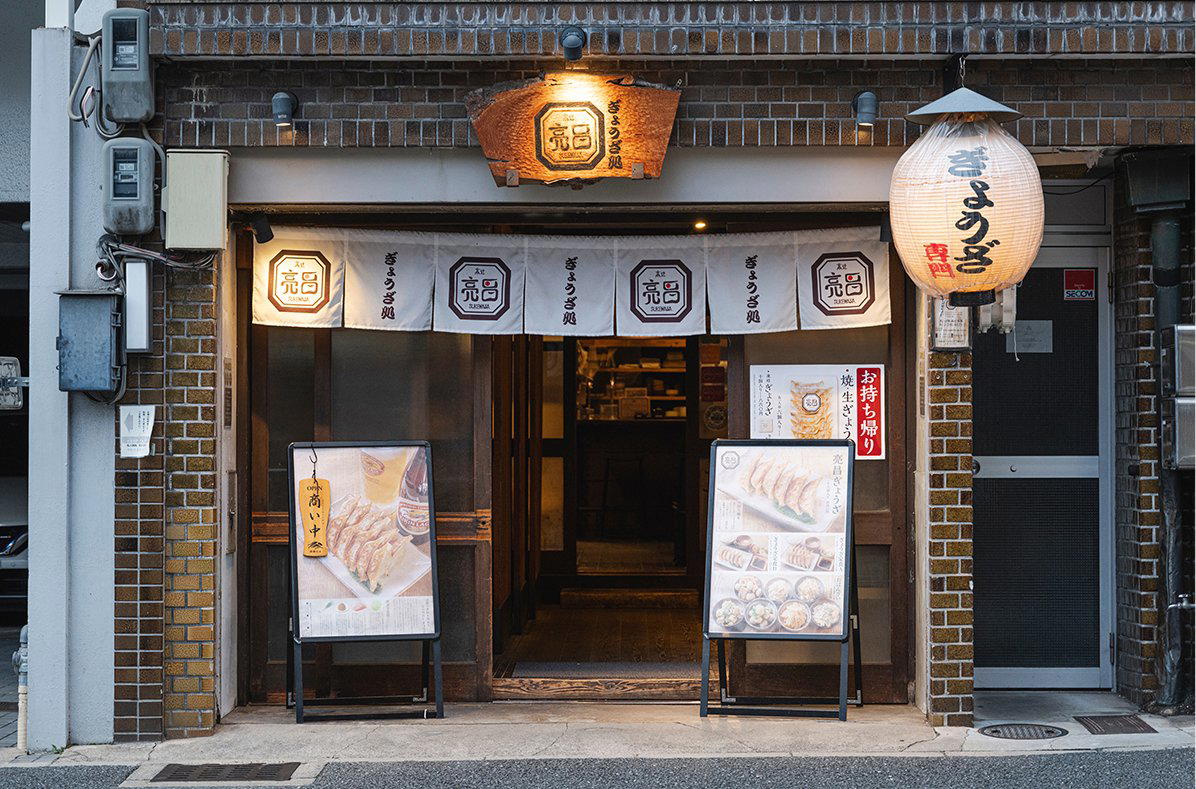
A Dumpling Counter on Karasuma-dori
Kyoto's central dining corridor along Karasuma-dori is not where you expect to find a gyoza specialist. The address places Sukesama (ぎょうざ処 亮昌) inside Shinfukan, a redeveloped cultural complex in Nakagyo-ku that houses design offices, a boutique hotel, and a handful of food-and-drink tenants. The building itself was once the headquarters of Kyoto Central Telephone Company, and its adaptive reuse into a mixed-use cultural anchor represents a broader pattern in Japanese cities: heritage structures converted to carry contemporary programming rather than demolished for replacement builds. Sukesama operates on the ground floor of that redevelopment, at 中京区場之町586-2 on Karasuma-dori below Aneyakoji.
The context matters for how to read the restaurant. Gyoza in Japan operates across a wide spectrum, from the industrially produced frozen variety found in convenience stores to the hand-wrapped, pork-and-cabbage versions served in regional specialist houses that attract serious attention. Kyoto's own gyoza tradition is less dominant than that of Utsunomiya or Hamamatsu, the two cities that have historically competed for national gyoza identity, which means a gyoza counter in Kyoto positions itself against the city's broader food culture rather than a local gyoza legacy. The surrounding dining scene skews heavily toward kaiseki and traditional Japanese formats: venues like Gion Sasaki, Hyotei, Kikunoi Honten, and Mizai define the upper tier, while a gyoza specialist occupies an entirely separate register.
The Setting Inside Shinfukan
Shinfukan's design language is a deliberate exercise in material restraint: exposed concrete, retained steel, and original brickwork from the Taisho-era structure sit alongside contemporary interventions without erasure. That approach to physical space reflects something relevant to the sustainability argument around adaptive reuse: retaining an existing building's embodied carbon, its material history, is categorically different from a ground-up build, however energy-efficient the new construction might be. Tenants operating inside Shinfukan inherit that ethic by proximity, though the degree to which any given restaurant translates the building's ethos into its kitchen sourcing or waste practices varies considerably.
Gyoza as a Category in Modern Japanese Dining
The gyoza format has undergone meaningful repositioning in Japan's urban dining scene over the past decade. What was once treated as a casual accompaniment to ramen or beer at an izakaya now appears in dedicated specialist formats that approach the dumpling with the same ingredient-level seriousness applied to soba, tonkatsu, or yakitori. Across Japan, single-focus restaurant models have become a structural feature of the market: venues like Goh in Fukuoka demonstrate how a concentrated format, applied rigorously, can attract significant critical and public attention. The logic extends to gyoza: a counter that does one thing, done with care for the wrapper, the filling ratio, the cook, and the accompanying condiments, occupies a different tier from the gyoza served as a side dish at a chain restaurant.
In the sustainability frame, the single-protein, single-dish format has an argument in its favour. Tight menus generate less food waste than broad à la carte offerings, allow more predictable ordering from suppliers, and reduce the complexity of cold-chain management. Specialist restaurants in Japan have historically operated lean kitchens by design, and that structural economy aligns with the kind of waste-reduction logic that larger, more diverse operations struggle to achieve. HAJIME in Osaka represents the high end of ecological commitment in Japanese fine dining, with its documented focus on environmental sourcing principles, but the argument that simplicity itself is a form of restraint applies further down the price spectrum too.
Locating Sukesama in Kyoto's Dining Map
For visitors working through Kyoto's dining options, the city's food culture splits along recognisable lines. The kaiseki tier, represented by Isshisoden Nakamura and the venues already mentioned, requires advance booking, formal dress consideration, and budgets that reflect multi-course tasting menus at ¥¥¥¥ price points. Below that, Kyoto supports a range of specialist counters, street-adjacent formats, and neighbourhood restaurants that operate on shorter booking windows and lower per-head spend. Sukesama, as a gyoza specialist inside a central Karasuma-dori building, falls into that more accessible register.
The Nakagyo-ku location is practical for visitors moving between Kyoto Station and the northern cultural districts. The Karasuma subway line runs directly below the street, and the Karasuma-Oike interchange provides access to the Tozai line as well. For travellers also exploring wider Kansai dining, akordu in Nara represents a very different proposition, a European-trained approach to local Yamato ingredients, but sits within a day-trip radius of central Kyoto. Kyoto's own broader restaurant scene is mapped in our full Kyoto restaurants guide.
For those benchmarking across Japan's regional dining scenes, the contrast between Kyoto's tradition-weighted food culture and cities like Fukuoka, Sapporo, or Nanao is instructive. restaurants in Nanao or Sapporo operate with different local produce priorities and hospitality formats; Takashima and Nishikawa Machi represent rural Honshu and Tohoku perspectives on Japanese food that sit well outside Kyoto's urban framework.
Frequently asked questions
How do I find Sukesama (ぎょうざ処 亮昌)?
Sukesama (ぎょうざ処 亮昌) is located at 中京区場之町586-2 (新風館 1F/烏丸通姉小路下ル), 京都市, 京都府, 604-8172, Kyoto.
Where exactly is Sukesama located, and is it easy to reach by public transport?
Sukesama (ぎょうざ処 亮昌) is on the ground floor of Shinfukan at 中京区場之町586-2, on Karasuma-dori below Aneyakoji in central Kyoto. Shinfukan sits directly on the Karasuma subway line corridor, making it one of the more accessible dining stops in the city for visitors moving between Kyoto Station and the Oike area.
What should I eat at Sukesama (ぎょうざ処 亮昌)?
Sukesama is a gyoza specialist, which means the dumpling is the menu's entire point of gravity. In a dedicated counter format, the focus typically falls on the cook's technique — crust formation, wrapper thickness, and filling ratio — rather than on breadth of choice. Order the gyoza, pay attention to the execution, and let that be the meal.
Can I walk in to Sukesama (ぎょうざ処 亮昌)?
A gyoza counter inside a mixed-use complex like Shinfukan on Karasuma-dori typically runs on a walk-in basis, but counter seating is usually limited. Arriving early or during off-peak hours is the practical approach until official reservation details are published.
What do critics highlight about Sukesama (ぎょうざ処 亮昌)?
What defines the venue's position is contextual rather than credential-based: operating as a gyoza specialist in Kyoto, a city whose food culture is built almost entirely around kaiseki and tofu, is itself a statement of intent that observers of the city's dining scene tend to notice.
How does Sukesama (ぎょうざ処 亮昌) handle allergies?
As a baseline, gyoza wrappers contain gluten and pork is the standard protein in Japanese gyoza filling. Anyone with dietary restrictions should attempt contact through Shinfukan's building management or visit in person to ask before ordering.
Is a meal at Sukesama (ぎょうざ処 亮昌) worth the investment?
The value proposition at Sukesama sits in the specificity: a focused single-dish counter on Karasuma-dori in a city where casual specialists of this kind are genuinely scarce.
How It Stacks Up
Comparable venues nearby, for context on price, style, and recognition.
| Venue | Cuisine | Price | Awards | Notes |
|---|---|---|---|---|
| Sukesama (ぎょうざ処 亮昌)This venue — the venue you are viewing | Kyoto Gyoza Specialist | $10–20 | Not listed | Not listed |
| Menya Yuko | Japanese Ramen | $10–20 | Tabelog 100 #53 | Nakagyō |
| Okashi Tsukasa Nakamura Ken | Traditional Kyoto Wagashi & Cafe | $10–20 | Tabelog 100 #61 | Nishikyō |
| Kameya Yoshinaga | Traditional Kyoto Wagashi (Japanese Sweets) | $10–20 | Tabelog 100 #15 | Nakagyō |
| YUMMY | Izakaya | Not listed | Tabelog 100 #56 | Nakagyō |
| Hashiri Imochi Roho | Traditional Japanese Wagashi & Sweets Cafe | $1–10 | Tabelog 100 #11 | Yawata |
Continue exploring
More in Kyoto
Restaurants in Kyoto
Browse all →
Bars in Kyoto
Browse all →
Hotels in Kyoto
Browse all →
Wineries in Kyoto
Browse all →
Details
- Cozy
- Intimate
- Casual Hangout
- Solo
- After Work
- Sake Program
- A La Carte
- Counter Dining
- Sake
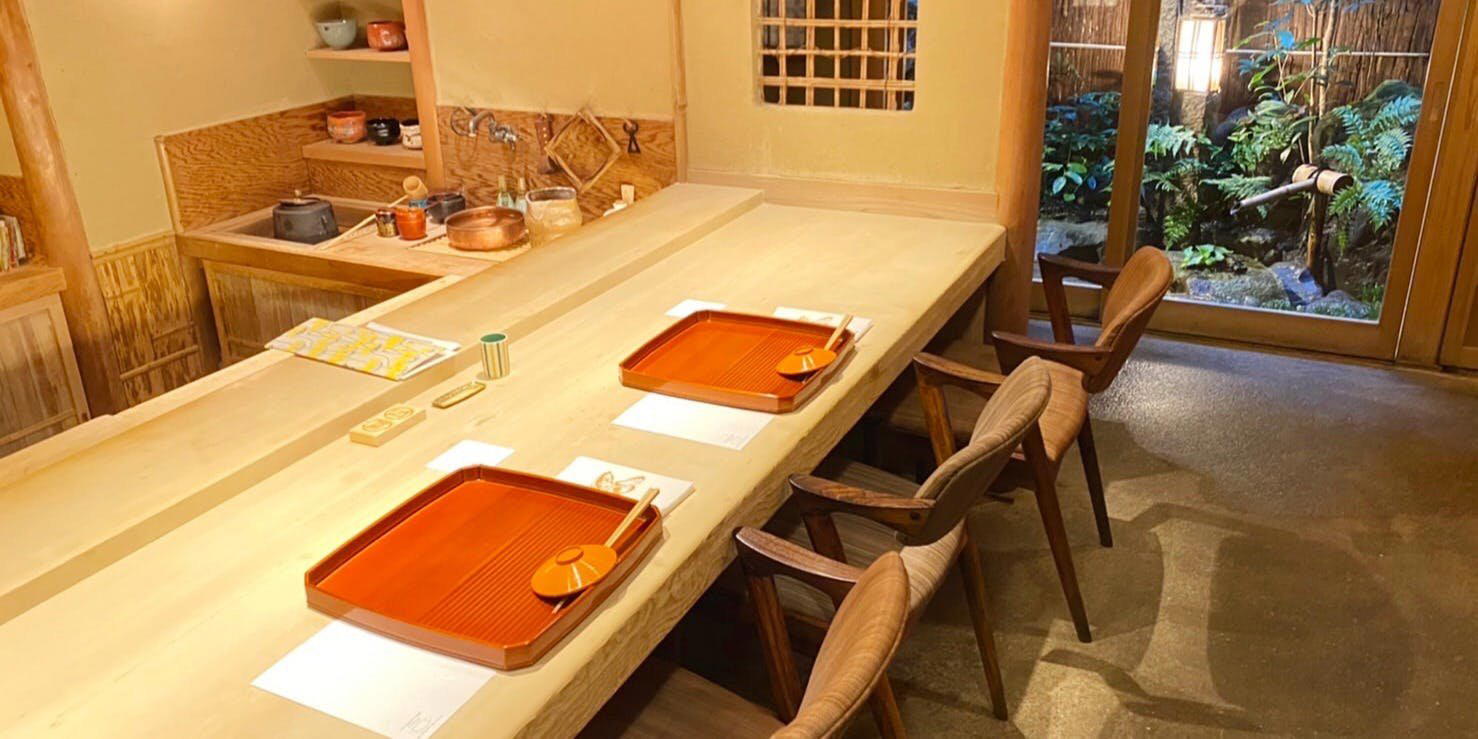
Cozy and unpretentious with warm lighting, simple wooden decor, and a bustling counter atmosphere focused on the craft of dumpling making.