

Tabelog 100 #17
Our verdict
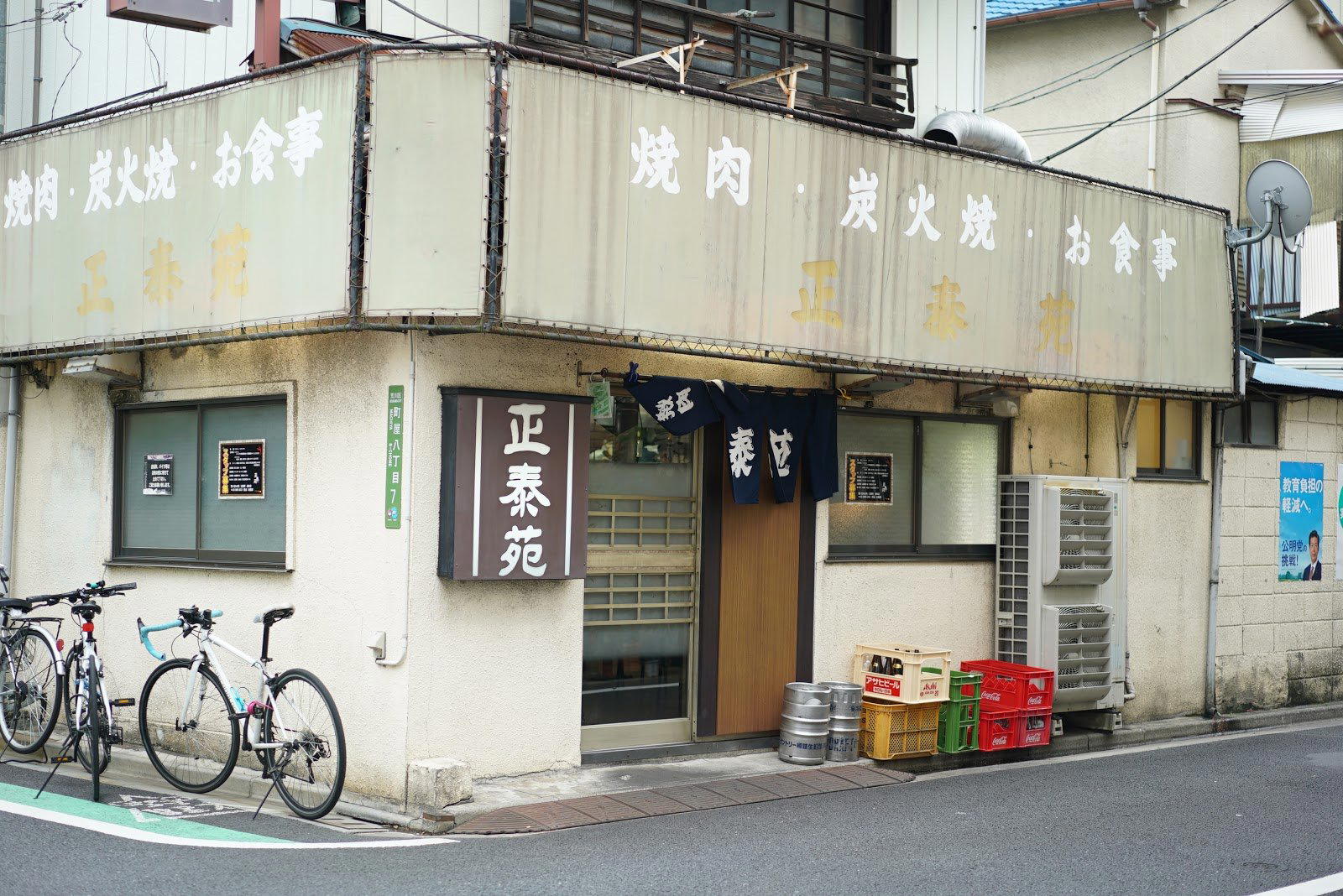
Shōtai-en occupies a quieter residential pocket of Arakawa, a ward that sits well outside Tokyo's central dining circuit. Where the city's most-discussed restaurants cluster around Ginza, Nishi-Azabu, and Minami-Aoyama, this address asks something different of the visitor: a deliberate journey north, into a neighbourhood defined by daily life rather than dining destination logic.

Pearl is the En Primeur Club membership app, where members save venues, book tables and use the concierge.
Arakawa's Dining Character and What It Signals
Tokyo's restaurant geography is rarely accidental. The wards that attract serious dining investment tend to share a profile: high foot traffic from office workers and tourists, proximity to luxury retail, and the kind of real estate that supports premium cover charges. Arakawa City breaks from that pattern. Machiya, the sub-district where Shōtai-en is addressed, is a low-rise, residential quarter where the dominant commercial rhythm is grocers, family-run izakayas, and neighbourhood sento rather than omakase counters or wine bars. That context matters when considering what kind of restaurant chooses to operate here, and what kind of guest the address implies.
The broader Tokyo dining scene has bifurcated sharply over the past decade. On one side sit the high-visibility corridors: the Ginza sushi counters competing in the same price bracket as Harutaka, the French kitchens in Nishi-Azabu such as L'Effervescence, the kaiseki formats that draw international reservation lists like RyuGin. On the other side, a smaller and less-documented category: restaurants in outer wards where rent economics allow for a different relationship between price, space, and the surrounding community. Shōtai-en's address in Arakawa places it in that second category, which is neither a disadvantage nor a mark of distinction on its own, but it is a meaningful variable for any visitor deciding whether to make the trip.
The Physical Approach and Environment
Reaching Shōtai-en from central Tokyo involves a journey that most dining-focused visitors would not take by accident. Machiya is served by the Chiyoda Line and the Toden Arakawa Line, the latter one of only two remaining tram routes in the city, running at street level through dense low-rise blocks. Arriving via tram through Arakawa's residential grid is its own form of context-setting: the contrast with arriving at, say, a Ginza basement counter via polished underground concourse is total. What you see approaching the address is the texture of a neighbourhood that has not been repositioned for visitor consumption, which shapes expectations before you have entered.
Arakawa's built environment tends toward the compact and the un-curated. Streets in Machiya carry the functional density of a working residential ward: utility poles, small-format retail, older wooden structures alongside postwar concrete. For guests accustomed to the design-conscious approach of Tokyo's central dining corridors, the kind of spare, considered entry sequence that venues like Crony or Sézanne deploy as part of the experience, Machiya offers a deliberate absence of that staging. Whether that registers as refreshing or disorienting depends on what you bring to it.
Place as Editorial Argument
Restaurants in outer Tokyo wards occupy an interesting critical position. The city's major award frameworks tend to concentrate recognition in central districts, partly because inspectors follow the same traffic patterns as diners. That concentration means that credible restaurants operating in areas like Arakawa, Adachi, or Katsushika can go unrecognised for longer than equivalents in Minato or Chuo, not because the cooking is weaker but because the address is outside the inspection circuit's usual gravity. The same pattern appears in Japan's broader regional dining context: serious cooking exists well outside the cities that dominate conversation, from Gion Sasaki in Kyoto to akordu in Nara to Goh in Fukuoka, each operating in a city or neighbourhood context that shapes both the experience and the guest profile.
The argument for seeking out restaurants in less-trafficked parts of a major city is not romantic. What the address alone confirms is that the restaurant has chosen to operate outside the usual competitive geography, which is itself a decision worth noting.
Situating Shōtai-en Within Wider Japan
Japan's dining geography rewards visitors willing to move beyond the well-documented corridors. The restaurants that tend to define national conversations about fine dining cluster in Tokyo, Osaka, and Kyoto, and within those cities, in specific neighbourhoods. HAJIME in Osaka operates from a quieter Minami address that, like Arakawa, sits apart from the city's most trafficked dining zones. Further afield, places like a restaurant in Nanao, one in Sapporo, one in Takashima, and another in Nishikawa Machi represent the logic of seeking out serious dining in non-obvious locations, a logic that requires more planning but often produces a different quality of experience. Birdland in Sakai and Bistro Ange in Toyohashi occupy similar positions in their respective markets. The common thread is that geography, when chosen deliberately, becomes part of the restaurant's identity rather than incidental to it.
For visitors building a Tokyo itinerary that extends beyond the consensus list, Arakawa represents the kind of ward that repays a deliberate excursion. The neighbourhood lacks the editorial infrastructure of Minami-Aoyama or the international dining recognition of Ginza, but it carries the more durable value of being a place where residents actually live, which has its own form of credibility. For broader context on how Tokyo's dining scene is structured across districts, see our full Tokyo restaurants guide. International reference points for what serious cooking outside expected addresses can look like include Le Bernardin in New York City and Atomix, both of which have built their own forms of authority from addresses that define rather than follow existing dining corridors.
Planning Your Visit
Shōtai-en is located at 8 Chome-7-6 Machiya, Arakawa City, Tokyo 116-0001. Access from central Tokyo is most practical via the Chiyoda Line to Machiya Station or via the Toden Arakawa Line tram, which connects through Higashi-Ikebukuro to Minowabashi. Journey times from Shinjuku or Ginza run to approximately 30-45 minutes depending on connections. Given the address's position well outside the central dining circuit, confirming the visit is feasible before travelling from central Tokyo is advisable.
Quick reference: Arakawa City, Machiya, Chiyoda Line or Toden Arakawa tram; verify hours and booking directly before visiting.
Frequently asked questions
What should I expect atmosphere-wise at Shōtai-en?
Shōtai-en sits in Machiya, a residential pocket of Arakawa City well outside Tokyo's central dining districts. The setting signals a neighbourhood room built for locals rather than tourists, which shapes the atmosphere considerably, lower ambient noise, less foot-traffic energy, and a pace that reflects the surrounding ward. Visitors arriving from central Tokyo will notice the shift immediately.
What part of town is Shōtai-en in?
Shōtai-en is located at 8 Chome-7-6 Machiya, Arakawa City, Tokyo 116-0001, Japan, Tokyo.
Is Shōtai-en worth visiting if I'm staying in central Tokyo?
The journey from central Tokyo to Machiya via the Chiyoda Line is a deliberate one, this is not a venue you arrive at by accident. Restaurants that sustain a presence in Arakawa City's residential wards do so on the strength of repeat local custom rather than visitor traffic.
What do people recommend at Shōtai-en?
The address, 8 Chome-7-6 Machiya, Arakawa City, points to a venue operating within a local rather than internationally profiled context, where house specialities are best confirmed directly on arrival or through current local sources.
How far ahead should I plan for Shōtai-en?
Restaurants in Arakawa's residential wards typically operate with more accessible reservation timelines than central Tokyo counters, but that varies by format and local demand. Contacting the venue directly before your Tokyo travel dates is the practical approach.
What's Shōtai-en best at?
Shōtai-en's address in Machiya, Arakawa City positions it within the category of outer-Tokyo neighbourhood restaurants that operate largely outside the international award and review circuit. That positioning tends to favour consistency for a local clientele over the kind of theatrical presentation common to central Tokyo's profiled venues. Without cuisine or award data currently on file, the most honest answer is that the specifics require direct investigation.
The Minimal Set
Comparable venues nearby, for context on price, style, and recognition.
| Venue | Cuisine | Price | Awards | Notes |
|---|---|---|---|---|
| Shōtai-enThis venue (the venue you are viewing) | Japanese Yakiniku | $50–100 | Tabelog 100 #17 | Not listed |
| HIGASHIYA GINZA | Modern Japanese Tea Salon & Wagashi | $50–100 | Not listed | Chūō, Modern Japanese Tea Salon & Wagashi |
| Unagi Akimoto | Traditional Japanese Unagi | $50–100 | Tabelog 100 #37 | Chiyoda, Traditional Japanese Unagi |
| Nodoguro Senmon Ginza Nakamata | Nodoguro-focused Japanese set-course dining | $50–100 | Tabelog 100 #25 | Chūō, Nodoguro-focused Japanese set-course dining |
| YAKITORI燃es | Premium Yakitori | $50–100 | Not listed | Minato, Premium Yakitori |
| Teppanyaki Takami | Teppanyaki | Not listed | Tabelog 100 #94 | Shibuya, Traditional Japanese Teppanyaki |
Recognition history
Dated appearances from independent guides and award organizations, with the underlying list record or original source where available.
Opinionated About Dining Casual in Japan Ranked #34
Opinionated About Dining
Tabelog 100 #17 · No. 17
Tabelog · Tabelog 100 - Yakiniku - TOKYO - 2025
Continue exploring
More in Tokyo
Restaurants in Tokyo
All restaurants in Tokyo →

Bars in Tokyo
All bars in Tokyo →

Details
- Classic
- Group Dining
- Casual Hangout
- Open Kitchen
- Sake Program
- A La Carte
- Small Plates
- Sake Program
Current opening hours
- Monday
- 5–11:15 PM
- Tuesday
- 5–11:15 PM
- Wednesday
- 5–11:15 PM
- Thursday
- 5–11:15 PM
- Friday
- 5–11:15 PM
- Saturday
- 3–11:15 PM
- Sunday
- 3–10:15 PM
Hours can change for holidays and private events. Hours as of .
Casual yakiniku atmosphere focused on high-quality grilled meats.