Our verdict
In Fukuoka's Minami Ward, Shokudo Saison d'Or occupies a quieter register than the city's well-documented ramen counters and sushi rooms. The restaurant's name, borrowing the French word for season, signals an orientation toward cyclical, ingredient-driven cooking that places it closer to the sustainability-conscious dining movement reshaping Japan's mid-tier restaurant scene than to any single cuisine category.

Pearl is the En Primeur Club membership app, where members save venues, book tables and use the concierge.
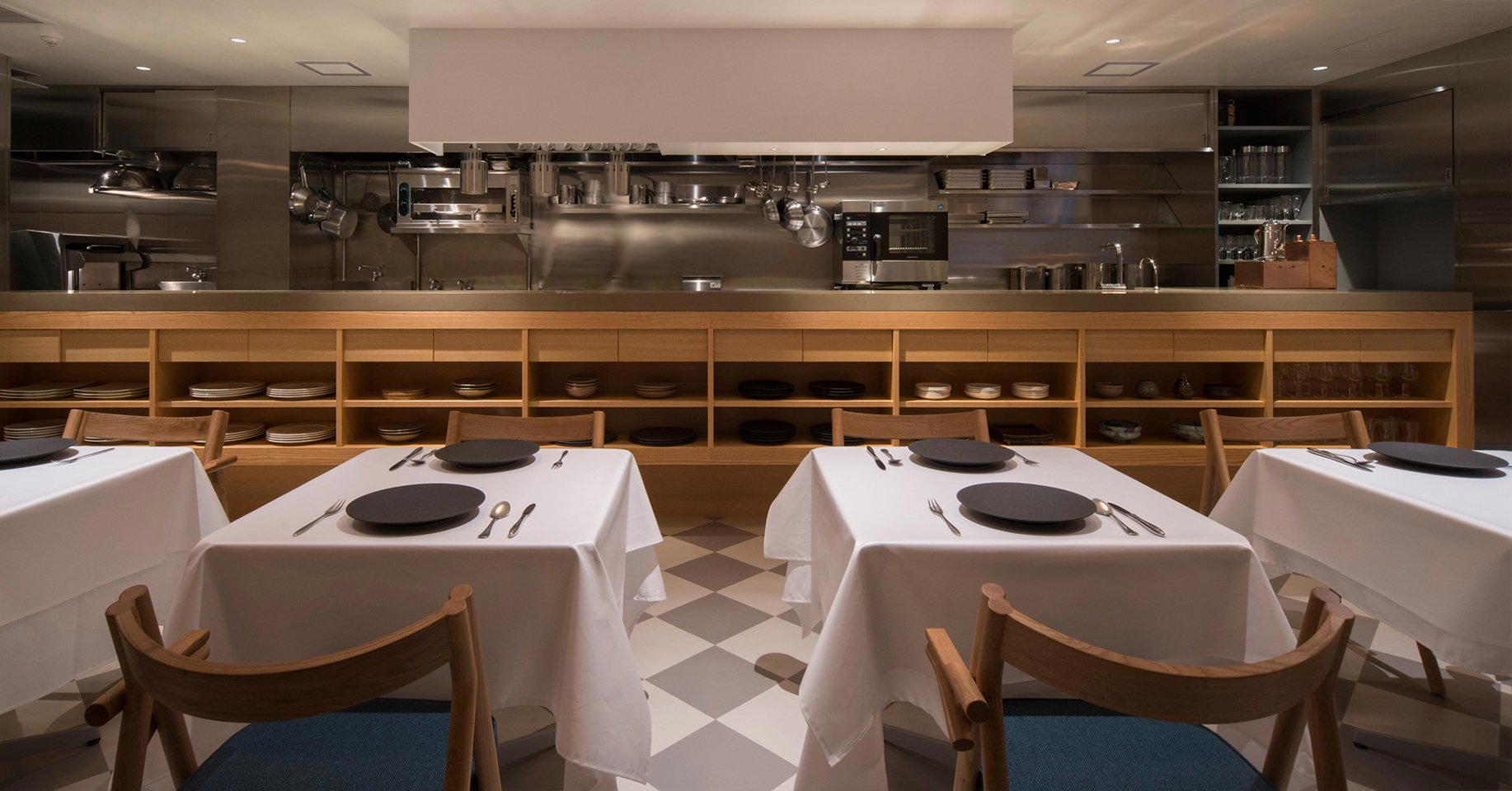
Minami Ward's Quieter Frequency
Fukuoka's dining reputation travels on a narrow set of exports: Hakata ramen, the yakitori lanes of Nakasu, and the handful of high-end kaiseki and sushi counters that position the city against Osaka and Kyoto in the national conversation. Minami Ward, where Shokudo Saison d'Or sits at Takamiya 1-chome, operates on a different frequency. This is a residential quarter, not a dining destination in the tourist-map sense, and restaurants that establish themselves here do so by building local loyalty rather than footnote recognition in foreign travel guides. That positioning matters when reading the room at Shokudo Saison d'Or, it is a neighbourhood restaurant in the precise sense, accountable to the rhythms of the people who live around it rather than to the expectations of visitors passing through. For a fuller sense of how Fukuoka's dining scene is structured across its wards and price tiers, see our full Fukuoka restaurants guide.
The Season as Framework
The name Saison d'Or, golden season, is not decorative French. In Japanese restaurant culture, the commitment to seasonal ingredients is so foundational it can function as mere background assumption, the way French cooking assumes butter. What separates restaurants that genuinely organise around the calendar from those that gesture at it is procurement discipline: who the suppliers are, how frequently the menu turns, and whether the kitchen is willing to retire a dish when the ingredient quality drops rather than substitute a lesser version. Shokudo Saison d'Or's name makes a public claim about that discipline. The word shokudo itself, typically translated as dining hall or canteen, keeps the register grounded. It is a studied counterpoint to the French saison d'or, signalling that whatever seasonal ambition the kitchen holds, it is expressed through everyday cooking rather than ceremony.
This tension between the democratic and the considered is where much of Japan's most interesting mid-range dining now operates. Restaurants like Goh (French) in Fukuoka and, further afield, akordu in Nara have demonstrated that the formal-casual divide in Japanese dining is becoming more porous, with technically serious kitchens choosing accessible formats over elaborate service architecture. Shokudo Saison d'Or's naming logic places it in that conversation.
Sustainability as Structural Commitment
Across Japan's dining scene, sustainability language has arrived in two broad waves. The first was largely imported and aspirational, chefs citing European precedents, menus noting the prefecture of origin for a handful of headline ingredients. The second wave, more recent and more substantive, is about structure: restaurants that build supply chains rather than cherry-pick premium items, that approach waste reduction as a kitchen discipline rather than a marketing bullet, and that frame seasonal cooking not as a style choice but as a constraint that reduces the carbon cost of procurement.
A restaurant in Minami Ward, residential, locally anchored, operating under a name that explicitly foregrounds the season, is positioned to participate in the second wave rather than the first. The comparison set for this kind of operation is not the white-tablecloth kaiseki rooms that charge for theatrical ingredient provenance, but the steady neighbourhood houses that build menus around what is genuinely available and genuinely good at any given moment. In Fukuoka specifically, that means engaging with Kyushu's agricultural output: the vegetables of Itoshima, the seafood pulled through Hakata Bay and the surrounding waters, the livestock traditions of a region that takes its food supply seriously at every tier. For perspective on how Fukuoka's more formal restaurants handle seasonal sourcing at the leading end, the approach at Chikamatsu (Sushi) and Asago offer useful reference points.
Beyond Fukuoka, the ethic shows up across Japan's regional restaurant tier. Gion Sasaki in Kyoto and HAJIME in Osaka both operate seasonal frameworks at the formal end of the spectrum. Restaurants at lower price points in secondary neighbourhoods are doing equivalent work with less fanfare, and arguably with more structural honesty, because there is no premium markup to absorb the cost of principled sourcing.
Fukuoka's Mid-Tier Dining Context
Fukuoka's restaurant ecosystem is more varied than its international profile suggests. The city's ramen identity (Bekk represents one end of that serious counter culture) coexists with a Western-influenced dining strand, a credible yakiniku tier represented by places like Beef Taigen, and a growing number of kitchens that operate between categories, not quite casual, not quite formal, built around the kind of considered everyday cooking that rewards regular visits over special-occasion pilgrimages.
Shokudo Saison d'Or sits in that middle register. Across Japan, comparable operations can be found in similar residential pockets: Bistro Ange in Toyohashi, Birdland in Sakai, and neighbourhood-oriented restaurants like 羽根屋 in Nishikawa Machi all demonstrate how Japan's most interesting cooking increasingly happens outside the ranked and rated formal tier. Internationally, the comparison to restaurants like Atomix in New York City, a venue that uses a formal structure to communicate seasonal and cultural intention, shows how different price tiers can share a common philosophical orientation, even when the execution and price differ dramatically.
Planning Your Visit
Shokudo Saison d'Or is located at Takamiya 1-chome-3-32, 1F, in Minami Ward, a ward served by the Nanakuma subway line, with Takamiya Station providing the most practical access point. The restaurant's residential address means it reads more naturally as a dinner destination than a daytime stop, though the shokudo framing suggests it may operate across meal periods. Phone and online booking details were not available at time of writing.
For visitors structuring a broader Fukuoka itinerary, Minami Ward sits south of the city centre and is leading paired with exploration of the ward's quieter residential character rather than combined with the central Nakasu or Tenjin dining circuits in a single evening. Restaurants like Harutaka in Tokyo and 一本木 名川製 in Nanao offer reference points for how Japan's regionally rooted dining culture rewards itineraries built around neighbourhood specificity rather than landmark aggregation.
Frequently asked questions
Where exactly is Shokudo Saison d'Or?
Shokudo Saison d'Or is located at Japan, 〒815-0083 Fukuoka, Minami Ward, Takamiya, 1 Chome−3−32 1F, Fukuoka.
Is Shokudo Saison d'Or a good option for dining away from Fukuoka's ramen and yakitori circuit?
Yes, Shokudo Saison d'Or sits in Minami Ward's Takamiya neighbourhood, well outside the ramen and yakitori lanes that define Fukuoka's international dining profile. The restaurant's name signals a Japanese-French conceptual frame built around seasonal ingredients rather than any single genre, making it a practical choice for diners who want to move beyond the city's most-exported formats. Takamiya Station on the Nanakuma subway line provides direct access from the city centre.
What's the must-try dish at Shokudo Saison d'Or?
The menu at Shokudo Saison d'Or follows the seasonal framework implied by the name itself, Saison d'Or, or golden season, meaning the strongest dishes shift with what Kyushu's producers are delivering at any given time. Rather than anchoring to a single signature item, the kitchen builds around a rotating seasonal core. Visiting in autumn or winter will yield a different emphasis than a spring or summer table, which is precisely the point.
Should I book Shokudo Saison d'Or in advance?
Shokudo Saison d'Or is located at Takamiya 1-chome-3-32 in Fukuoka's Minami Ward, outside the main tourist circuits where walk-in competition tends to be lower than in Nakasu or Tenjin. That said, a restaurant operating a tight seasonal format in a residential ward typically runs limited covers by design. Checking ahead by phone or through a local concierge is the safer approach, particularly for weekend evenings.
The Quick Read
Comparable venues nearby, for context on price, style, and recognition.
| Venue | Cuisine | Price | Awards | Notes |
|---|---|---|---|---|
| Shokudo Saison d'OrThis venue (the venue you are viewing) | French-Japanese Fusion | $150–200 | Not listed | Not listed |
| Restaurant SNOW | French-New Nordic Innovative | $100–150 | Tabelog Bronze #365 | Chūō, French-New Nordic Innovative |
| ローブランシュ | Modern French Gastronomy | $150–200 | Tabelog 100 #17 | Hakata, Modern French Gastronomy |
| Restaurant Hana no Ki | Classic French Fine Dining | $50–100 | Tabelog 100 #66 | Chūō, Classic French Fine Dining |
| 一本木 石橋 | Japanese Kaiseki-Sushi Omakase | $100–150 | Not listed | Chūō, Kappo-Style Kaiseki |
| 嗣味 | Modern Japanese Omakase | $200–300 | Not listed | Chūō, Modern Japanese Omakase |
Continue exploring
More in Fukuoka
Details
- Elegant
- Intimate
- Sophisticated
- Date Night
- Special Occasion
- Private Dining
- Sake Program
- Local Sourcing
- A La Carte
Current opening hours
- Monday
- 12–3 PM, 6–10 PM
- Tuesday
- Closed
- Wednesday
- Closed
- Thursday
- 12–3 PM, 6–10 PM
- Friday
- 12–3 PM, 6–10 PM
- Saturday
- 12–3 PM, 6–10 PM
- Sunday
- 12–3 PM, 6–10 PM
Hours can change for holidays and private events. Hours as of .
Intimate and relaxed atmosphere with thoughtful presentation of refined dishes.