

Tabelog Bronze #133
Our verdict
A ten-seat kaiseki counter in Fukuoka's Yakuin district, Imoto has held the Tabelog Bronze Award every year from 2019 through 2026 and earned selection to the Tabelog Japanese Cuisine WEST 100 in 2021, 2023, and 2025. The fixed course runs JPY 40,000 per person at both lunch and dinner, with English menus, vegetarian alternatives, and reservations through Pocket Concierge or OMAKASE.

Pearl is the En Primeur Club membership app — saves, bookings, and concierge access live there. Same editors, same standards.
- Address
- 4 Chome-15-29 Yakuin, Chuo Ward, Fukuoka, 810-0022, Japan
- Phone
- +81 92-753-7125
- Hours
- Daily 12–11 PM
- Website
- pocket-concierge.jp
- Directions
- Get directions
A Kyoto Sensibility, Practiced in Fukuoka
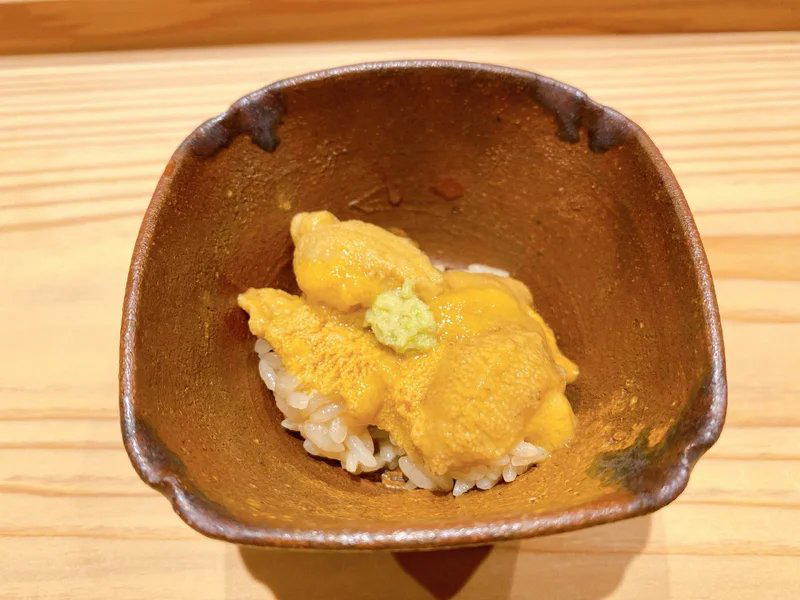
Kaiseki, at its most disciplined, is an argument about time. Each course marks a season, a moment, a fleeting ingredient at the precise point of readiness. In Japan's major cities, this tradition is overwhelmingly concentrated in Kyoto, where centuries of temple culture and imperial patronage shaped the form. What makes the kaiseki scene in Fukuoka worth paying attention to is a smaller, quieter cohort of counters that have absorbed those Kyoto standards and are now applying them inside a city with its own distinct ingredient culture — proximity to Genkai-nada seafood, Saga beef, and mountain vegetables from Kyushu's interior. Imoto, on a residential side street in Yakuin, operates squarely within that cohort. Its Tabelog listing describes the experience as "the changing seasons of Kyoto while in Fukuoka," a phrase that doubles as a precise positioning statement: Kyoto technique and aesthetic discipline, Fukuoka produce.
The Counter and the Setting
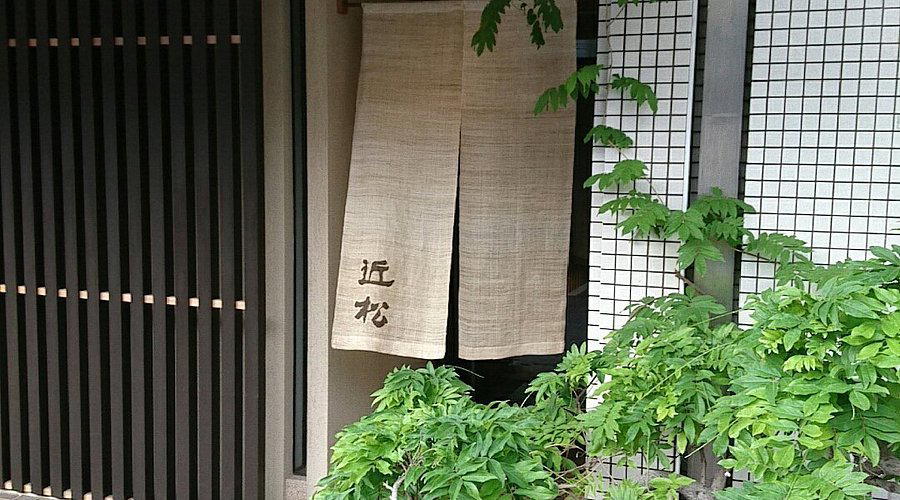
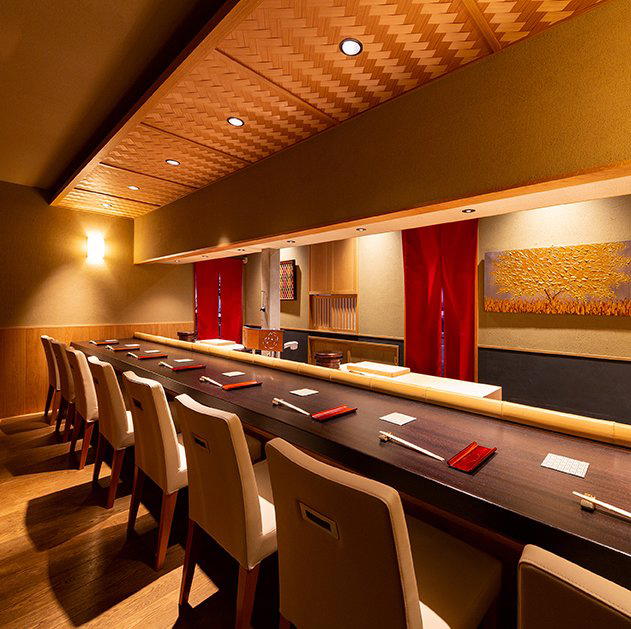
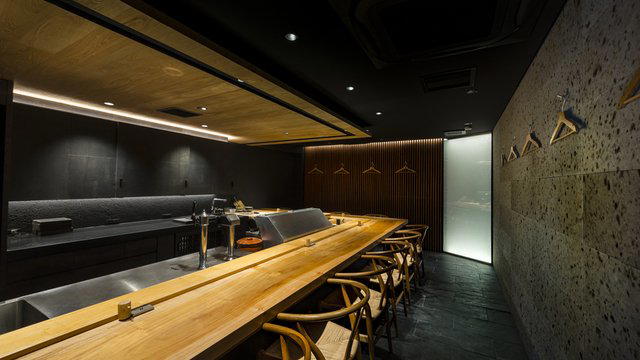
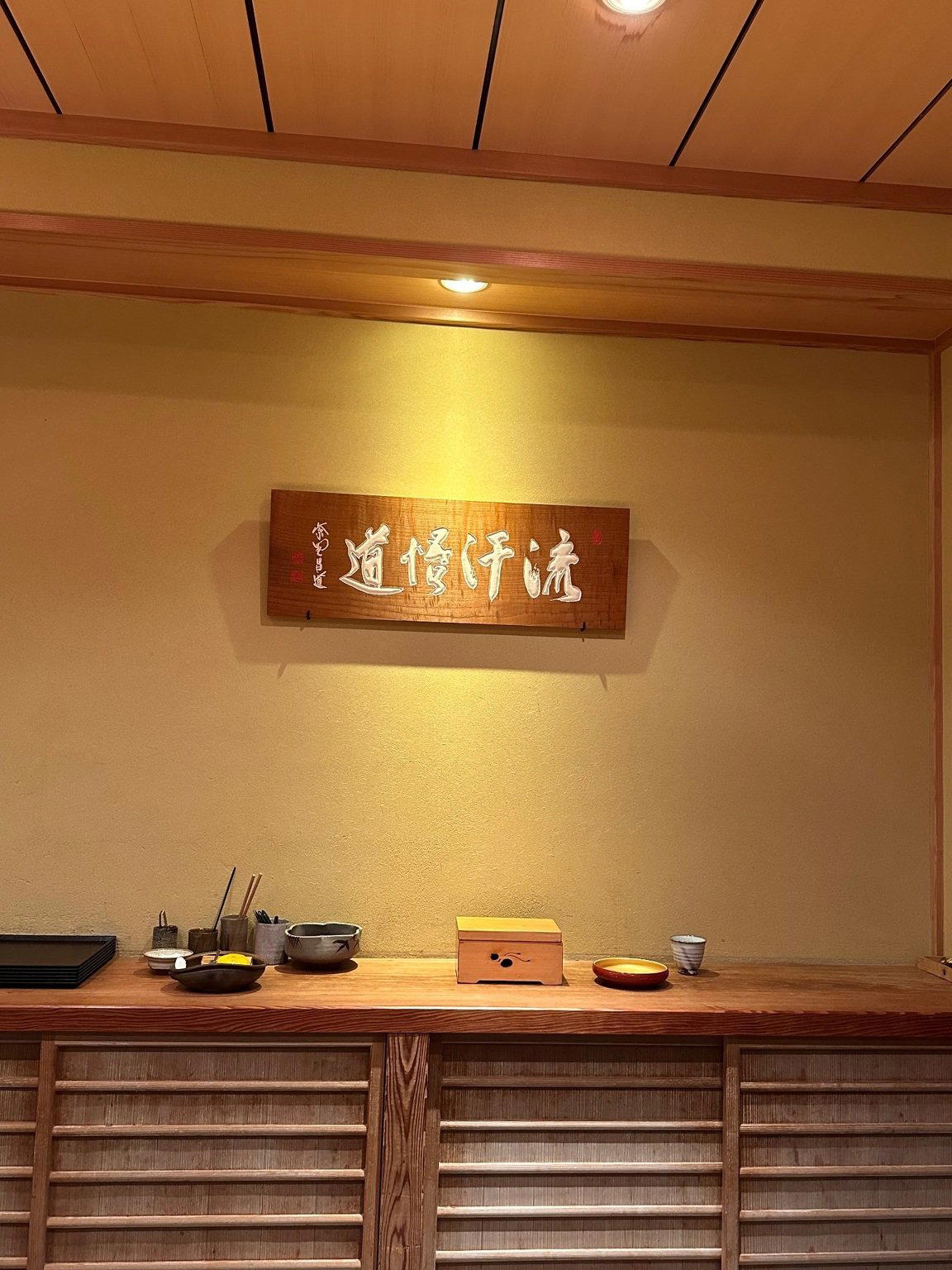
The room is ten seats, all counter. That number is not incidental. At a ten-seat kaiseki counter, the ratio of kitchen output to seated guests is roughly equivalent to a private dining arrangement at many Western restaurants; timing is synchronized, presentation is uniform, and there is no meaningful separation between the kitchen's pace and the guest's experience. Counters at this scale also require a different kind of attention from the diner — you are close enough to observe technique, and the chef is close enough to read the room. Yakuin, the district where Imoto sits, is one of Fukuoka's more residential-facing central neighborhoods, positioned between the denser commercial activity of Tenjin and the quieter streets approaching Minami Ward. The address, a low-rise building a four-minute walk from the Minamiyakuin bus stop and 381 meters from Yakuin Odori station, places it in an area where the dining scene skews local and considered rather than tourist-facing. That context shapes what to expect: no signs aimed at passing traffic, no concession to walk-in volume.
How Imoto Sits in Fukuoka's High-End Japanese Dining Scene
Fukuoka's fine dining scene is unusually competitive for a city of its size. The presence of venues like Goh (French), Bekk, and Chikamatsu (Sushi) means that diners choosing to spend at the JPY 40,000 level have several serious alternatives across different formats. In pure kaiseki terms, Imoto competes in a bracket where Kyoto-trained or Kyoto-adjacent counters have set the critical benchmark nationally. Venues like Ifuki in Kyoto, Gion Sasaki in Kyoto, and Kikunoi in Tokyo represent the tier against which national critics position kaiseki outside Kyoto itself. For a counter that opened in August 2015, that track record of recognition across eight consecutive Tabelog Award cycles is a meaningful signal about consistency. The Opinionated About Dining ranking, #301 in Japan for 2024, and Highly Recommended in 2023, provides a secondary critical reference point from a source independent of Tabelog's domestic reviewer base.
Elsewhere in EP Club's Japan coverage, the question of regional kaiseki versus Kyoto originals is a recurring theme. HAJIME in Osaka and akordu in Nara each represent how chefs operating outside Tokyo and Kyoto can build internationally recognized programs by connecting deeply to local ingredients while maintaining technical rigor. Imoto's positioning in Fukuoka follows a comparable logic, with the Kyushu ingredient base doing work that Kyoto-based kaiseki cannot replicate. See also Harutaka in Tokyo and 1000 in Yokohama for additional context on how counter-format fine dining operates across Japan's major cities, and 6 in Okinawa for a regional example further south.
Chef Tatsuya Imoto and the Tradition He Works Within
The kaiseki tradition places enormous emphasis on the chef as the continuous interpreter of seasonal change, not merely an executor of a fixed menu. In that sense, a kaiseki counter is always, at some level, structured around a single point of view, the chef's read on what the season requires. Tatsuya Imoto, whose name the restaurant carries, operates within this tradition at a counter that has maintained critical recognition since its opening year. The venue's Tabelog description references "emotion" as a quality of the space, a term that signals the Japanese hospitality concept of kokoro, the idea that technical mastery must be accompanied by a genuine investment in the guest's wellbeing. At this format and price level, that dual expectation, technical rigor and emotional attentiveness, is the baseline, not a differentiator. What keeps Imoto within the recognized tier over eight award cycles is consistency in meeting both.
Planning a Visit: What to Know Before You Book
The course menu is priced at JPY 40,000 per person, tax included, and runs at both lunch and dinner. Lunch runs from 12:00 to 15:00 with last entry at 13:00; dinner runs from 17:00 to 23:00 with last entry at 20:30. The restaurant operates seven days a week, including public holidays, with no fixed closing days. At a ten-seat counter with a Tabelog score of 4.17 and eight consecutive Bronze Award wins, availability at preferred times is not a given. Reservations can be made by phone or through Pocket Concierge and OMAKASE, both of which accept bookings 24 hours a day. The cancellation policy carries a 100% fee for cancellations made the day before or on the day of the reservation, standard at counters of this type in Japan, where a single no-show at a ten-seat room has an outsized operational impact. English menus are available, and the kitchen accommodates dietary restrictions including allergies, dislikes, religious requirements, and vegetarianism (with organic-ingredient alternatives offered for vegetarian guests). Credit cards are accepted across the major networks, VISA, Mastercard, JCB, AMEX, and Diners. Private rooms are not available, but the restaurant can be booked for exclusive private use. The sake selection is a particular focus, alongside shochu and wine.
For visitors building a Fukuoka itinerary around serious dining, Asago and Chiso Nakamura are adjacent reference points in the Japanese cuisine category. EP Club's wider city guides cover the full picture: restaurants, hotels, bars, wineries, and experiences.
Frequently asked questions
Who is the chef connected to Imoto?
The chef associated with Imoto is Tatsuya Imoto.
What's Imoto's location?
Imoto is located at 4 Chome-15-29 Yakuin, Chuo Ward, Fukuoka, 810-0022, Japan, Fukuoka.
What's the best thing to order at Imoto?
Imoto offers a single kaiseki course menu at JPY 40,000 per person, tax included — there is no à la carte selection. The course applies equally to lunch and dinner, so the decision is less about what to order and more about which seating suits your schedule. The kitchen accommodates dietary restrictions including allergies, dislikes, and vegetarian requirements, the latter using organic ingredients.
What kind of recognition has Imoto received?
Imoto has received recognition including: {"Year":"2026","Award Source":"Tabelog","Award Type":"The Tabelog Award","Award Group":"bronze","Award Group Rank":"133","Restaurant Name":"Imoto","Score":"4.17","Budget":"Dinner: JPY 40,000 - JPY 49,999; Lunch: JPY 40,000 - JPY 49,999","Bu….
How far ahead should I plan for Imoto?
Imoto holds just 10 counter seats and operates on a reservation-only basis, with a 100% cancellation fee for same-day or prior-day cancellations — both signals of a tightly managed book. Reservations can be made by phone or online through Pocket Concierge or OMAKASE around the clock. Given eight consecutive Tabelog Bronze awards from 2019 through 2026 and inclusion in the Tabelog Japanese Cuisine WEST Top 100 list, securing a table at least four to six weeks out is a reasonable minimum, with more lead time advised for weekend seats or specific seasonal windows.
Standing Among Peers
Comparable venues nearby, for context on price, style, and recognition.
| Venue | Cuisine | Price | Awards | Notes |
|---|---|---|---|---|
| ImotoThis venue — the venue you are viewing | Modern Kyoto Kaiseki | $200–300 | Tabelog Bronze #133 | Not listed |
| Chikamatsu | Edomae Sushi Omakase | $200–300 | La Liste Top Restaurants · Tabelog Gold #5 | Chūō |
| Tempura Tanaka | Tempura Omakase Counter | $100–150 | Tabelog 100 #96 | Chūō |
| Sushi Gyoten | 3-Star Michelin Edomae Omakase | Not listed | La Liste Top Restaurants · Tabelog Bronze #89 | Chūō |
| torila | Yakitori | Not listed | Tabelog Bronze #471 | Chūō |
| Takeuchi | Tempura Kaiseki | $50–100 | Tabelog Silver #138 | Nakagawa |
Recognition history
Dated appearances from independent guides and award organizations, with the underlying list record or original source where available.
Opinionated About Dining Top Restaurants in Japan Recommended
Opinionated About Dining
Tabelog Bronze #133
Tabelog
Full recognition history (6 entries)
Tabelog Bronze
Tabelog
Tabelog 100 #47 · No. 47
Tabelog · Tabelog 100 - Japanese cuisine - WEST - 2025
Opinionated About Dining Top Restaurants in Japan Ranked #301
Opinionated About Dining
Opinionated About Dining Top Restaurants in Japan Highly Recommended
Opinionated About Dining
Details
- Elegant
- Intimate
- Sophisticated
- Minimalist
- Special Occasion
- Date Night
- Chefs Counter
- Open Kitchen
- Sake Program
- Omakase
- Counter Dining
- Sake
- Vegetarian Friendly
Current opening hours
- Monday
- 12–11 PM
- Tuesday
- 12–11 PM
- Wednesday
- 12–11 PM
- Thursday
- 12–11 PM
- Friday
- 12–11 PM
- Saturday
- 12–11 PM
- Sunday
- 12–11 PM
Hours can change for holidays and private events. Last verified .
Refined, stylish, and minimalist space with counter seating overlooking the kitchen, creating a serene and relaxing atmosphere rich in seasonal emotion.