Tabelog 100 #93
Our verdict
A Hiroo address on Tokyo's French dining circuit, Shohei Shimano has tracked steadily upward on Opinionated About Dining's Japan rankings, from Highly Recommended in 2023 to #355 in 2024 and #437 in 2025. Chef Shohei Shimono runs a French kitchen in a residential pocket of Shibuya, operating at a remove from the Marunouchi and Ginza concentration of the city's top Western tables.

Pearl is the En Primeur Club membership app, where members save venues, book tables and use the concierge.
Hiroo and the Outer Ring of Tokyo French Dining
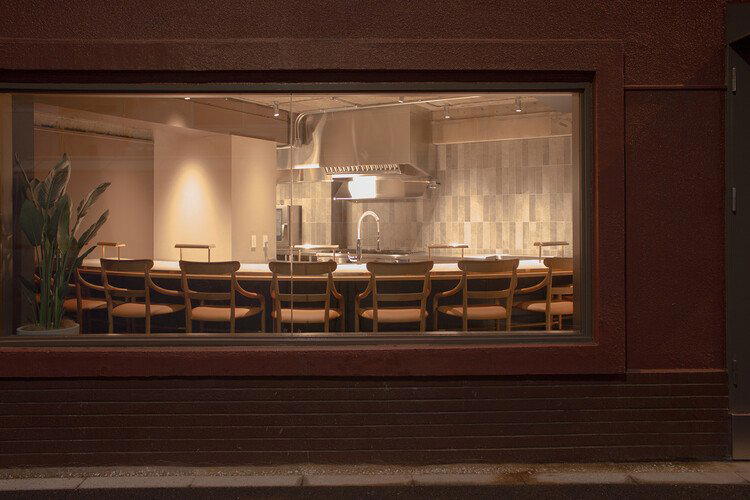
Tokyo's serious French restaurant circuit is often mapped through Ginza and Marunouchi, where addresses like Château Restaurant Joël Robuchon and ESqUISSE anchor the premium tier. But a parallel layer of French cooking has been quietly consolidating in the city's residential neighbourhoods, where lower overheads and a local clientele allow chefs to work with more specificity and less performance. Hiroo, a Shibuya ward pocket more associated with embassies and long-term foreign residents than with dining destination tourism, sits in that zone.
Shohei Shimano opened on a ground-floor unit of the SR Hiroo Building on 5-chome, a street address that signals neighbourhood restaurant rather than destination spectacle. That positioning has not prevented the kitchen from drawing critical attention: Opinionated About Dining, the crowd-sourced ranking system that aggregates opinion from a curated base of serious eaters across Japan, listed the restaurant as Highly Recommended in 2023, then placed it at #355 in its Japan rankings in 2024. The 2025 ranking came in at #437, a shift in absolute number but not necessarily in quality tier, given the system's expanding coverage of Japanese restaurants each year.
What French Cooking Looks Like When Sourcing Comes First
The broader shift in Tokyo's French cooking over the past decade has moved decisively away from the classical brigade model toward something more ingredient-led. Restaurants like L'Effervescence and Florilège helped establish a local expectation that high-end French menus in Japan would reflect Japanese seasonal produce as much as any classical French technique might.
That expectation has filtered down through the OAD-ranked tier. In kitchens operating at the level Shohei Shimano occupies, sourcing decisions carry editorial weight: which farms, which prefecture, which fishing cooperative a chef has built relationships with becomes part of the menu's identity. This is not incidental. Japan's producer network for premium ingredients, from Kyushu wagyu to Hokkaido dairy to carefully farmed vegetables out of Kyoto, gives French-trained chefs a sourcing infrastructure that their counterparts in Paris rarely have access to with comparable quality consistency.
For context on how ingredient geography operates across Japan's French restaurant circuit more broadly, the contrast between Tokyo-based tables and outlying restaurants is instructive. HAJIME in Osaka and akordu in Nara each draw on the agricultural abundance of the Kinki region; Goh in Fukuoka has direct access to Kyushu seafood and livestock. Tokyo kitchens work with the same national supply network but often through intermediaries, which places a premium on chef relationships with specific producers rather than geographic proximity.
Within Tokyo's French dining field, the competitive set for a restaurant ranked in OAD's top 500 for Japan occupies a distinct middle register. It sits above the neighbourhood bistro tier but below the Michelin two- and three-star French tables, several of which appear in Sézanne's cohort. This is the tier where critical recognition functions as a proxy for quality verification, particularly for visitors who lack the local knowledge to distinguish one Hiroo ground-floor restaurant from another without external reference.
For comparison across global French restaurant categories, the precision cooking tradition Shohei Shimano appears to operate within has international reference points: Hotel de Ville Crissier in Switzerland and Les Amis in Singapore both represent French technique applied to local contexts, which is the model Tokyo's strongest French kitchens have consistently followed.
The Hiroo Neighbourhood and What It Means for a Meal Here
Eating in Hiroo carries a different quality than a dinner in Ginza. The neighbourhood functions on a residential logic: streets are quieter after 9pm, the restaurant density is lower, and the experience of arriving by foot from Hiroo Station (around six minutes walk from the restaurant address on 5-chome) is unhurried. That physical context shapes the kind of meal likely on offer: more intimate, less oriented toward spectacle, and more dependent on the kitchen's own conviction.
For visitors planning a broader Tokyo eating schedule, Shohei Shimano fits cleanly as a contrast venue to the higher-profile French tables operating in central hotel and commercial districts. See our full Tokyo restaurants guide for a complete view of the field, and our full Tokyo hotels guide if you are planning accommodation around a Hiroo-anchored evening. The neighbourhood also connects logistically to Roppongi and Azabu-Juban, which have their own density of serious dining options worth stacking into a multi-night itinerary.
For those extending beyond Tokyo, Gion Sasaki in Kyoto, 1000 in Yokohama, and 6 in Okinawa each represent regional expressions of serious cooking that reward the itinerary decision to move beyond the capital. Tokyo's bar and wine scene is covered separately in our full Tokyo bars guide and our full Tokyo wineries guide; for broader cultural planning, our full Tokyo experiences guide covers the non-dining field.
Planning Your Visit
Reservations: Booking method not confirmed; approach via telephone or direct visit is the standard fallback for Hiroo restaurants without a listed online reservation system. Location: SR Hiroo Building 1F, 5-19-4 Hiroo, Shibuya, Tokyo, approximately six minutes on foot from Hiroo Station. Hours: Budget:Dress: No confirmed dress code; residential French restaurant context in Hiroo suggests smart-casual is appropriate. Note: Chef Shohei Shimono leads the kitchen; confirm current service details directly before visiting.
Frequently asked questions
Where is Shohei Shimano located?
Shohei Shimano is located at Japan, 〒150-0012 Tokyo, Shibuya, Hiroo, 5 Chome−19−4 SR広尾ビル 1F, Tokyo.
What cuisine category does Shohei Shimano fall under?
What's Shohei Shimano known for in terms of accolades?
Shohei Shimano has received recognition including: Opinionated About Dining Top Restaurants in Japan Ranked #437 (2025); Opinionated About Dining Top Restaurants in Japan Ranked #355 (2024); Opinionated About Dining Top Restaurants in Japan Highly Recommended (2023).
What should I order at Shohei Shimano?
The menu is not published online and changes with sourcing, which is characteristic of Tokyo French restaurants operating in the ingredient-first register that Shohei Shimano occupies. The kitchen's OAD ranking, #437 in Japan for 2025, up from #355 in 2024, reflects a focused, evolving approach rather than a fixed signature dish. The practical advice: book a full course and leave the selection to the kitchen, which is the standard format for restaurants in this tier.
Recognition, Side-by-Side
A quick peer check to anchor this venue’s price and recognition.
| Venue | Cuisine | Price | Awards | Notes |
|---|---|---|---|---|
| Shohei ShimanoThis venue (the venue you are viewing) | French-Japanese Fusion Tasting Menu | Not listed | Tabelog 100 #93 | Not listed |
| Harutaka | Edo-Style Omakase Sushi | $200–300 | 3 Michelin Stars · World's 50 Best #76 | Sushi |
| RyuGin | Modern Kaiseki | $500+ | 3 Michelin Stars · World's 50 Best #41 | Kaiseki, Japanese |
| L'Effervescence | Modern French with Japanese Influences | $200–300 | 3 Michelin Stars · World's 50 Best #69 | French |
| HOMMAGE | Modern French with Japanese Influences | $150–200 | 2 Michelin Stars · World's 50 Best #78 | Innovtive French, French |
| MAZ | Innovative Peruvian-Japanese Fusion | $150–200 | 2 Michelin Stars · World's 50 Best #28 | Innovative |
Recognition history
Dated appearances from independent guides and award organizations, with the underlying list record or original source where available.
Opinionated About Dining Top Restaurants in Japan Ranked #437
Opinionated About Dining
Tabelog 100 #93 · No. 93
Tabelog · Tabelog 100 - Innovative / Creative cuisine - 2025
Full recognition history (4 entries)
Opinionated About Dining Top Restaurants in Japan Ranked #355
Opinionated About Dining
Opinionated About Dining Top Restaurants in Japan Highly Recommended
Opinionated About Dining