Google: 4.8 · 272 reviews

An osteria in Rome's Prati Nord quarter where two fine-dining-trained chefs apply technical rigour to an entirely plant-based menu that changes monthly. Wooden tables, antique sideboards, and vintage porcelain set the tone: serious cooking delivered without ceremony. The pricing sits well below Rome's creative-cuisine tier, making it one of the more compelling propositions in the city's growing vegetable-forward scene.
 Discover on Pearl
Pearl is the En Primeur Club membership app — saves, bookings, and concierge access live there. Same editors, same standards.
A Living Room in Prati Nord, With Serious Cooking Inside
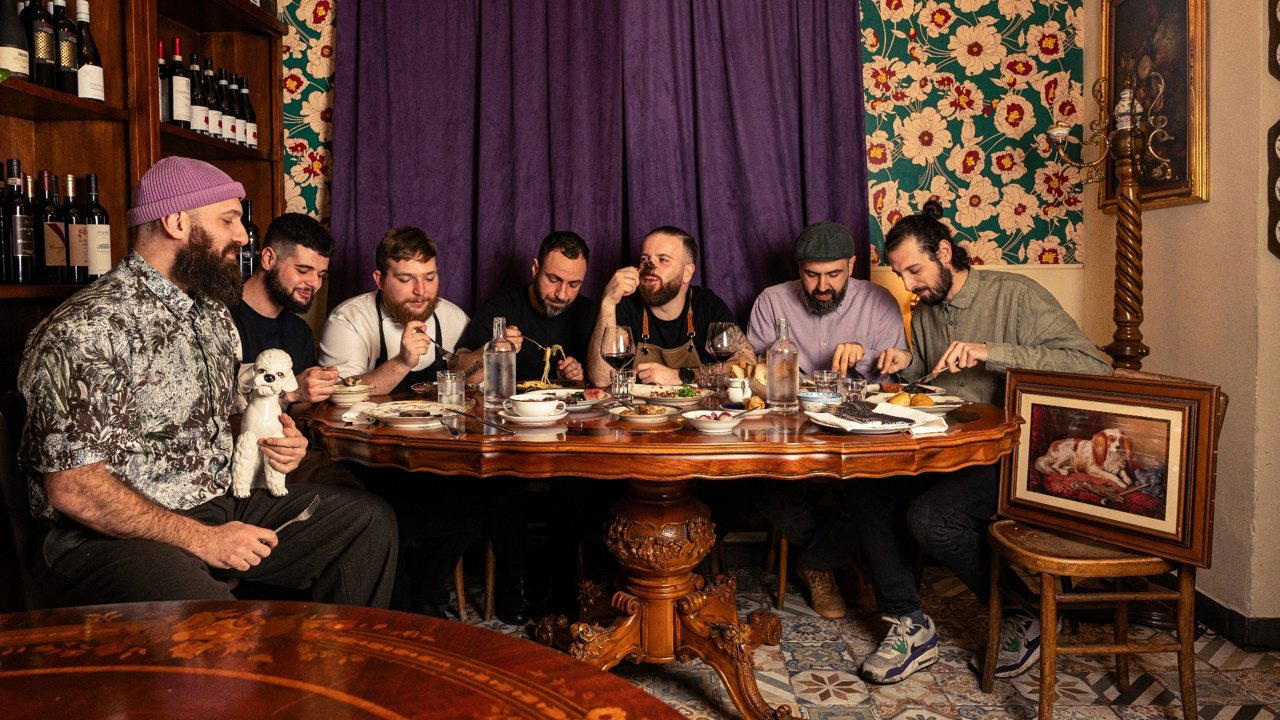
Via Conca d'Oro sits in the quieter residential stretch north of central Rome, a neighbourhood of apartment blocks and local bars that rarely appears in any conversation about the city's dining scene. That distance from the centro storico is partly what makes Riccioli d'Oro possible: the overheads of Parioli or Prati proper would make the pricing model unworkable, and the regulars who fill the room know exactly what they're coming for. The space itself sets the tone before a single dish arrives. Wooden tables, antique sideboards, vintage porcelain sets, and retro armchairs sourced from actual homes rather than a hospitality supplier give the dining room the feeling of a well-curated apartment. It is the kind of environment that tends to appear in cities where a younger generation of chefs is deliberately rejecting the visual vocabulary of fine dining without rejecting its technical standards.
Fine-Dining Roots, Osteria Prices
The context for Riccioli d'Oro sits in a broader pattern running through Italian creative cooking. At the upper end of Rome's restaurant tier, places like Il Pagliaccio and Enoteca La Torre price their menus against an international creative-cuisine peer set, while Acquolina and Achilli al Parlamento occupy distinct editorial niches of their own. The proposition at Riccioli d'Oro is structurally different: two chefs who trained inside fine dining have chosen to deploy that knowledge at a price point the neighbourhood can absorb. What results is a kind of technical cooking that the city rarely makes accessible — rigorous, inventive, and offered without a surcharge for the address or the ceremony. For a broader map of where this sits in the city's restaurant hierarchy, our full Rome restaurants guide covers the range from trattoria through to three-Michelin-star territory at La Pergola.
Local Ingredients, Techniques From Outside Italy
The editorial angle worth dwelling on at Riccioli d'Oro is how it positions within Italy's current conversation about plant-based cooking. Across the country's leading creative kitchens — from Osteria Francescana in Modena to Le Calandre in Rubano , vegetables have moved from supporting role to primary subject. What distinguishes the approach here is the combination of Italian seasonal produce with techniques that read as imports: pickling methods, charring protocols, fermentation principles that draw from a wider global toolkit rather than strictly from Italian tradition. This is not the nostalgic cucina povera revival that fills trattorias across Lazio. It is something closer to what happens when a chef trained in contemporary fine dining , where French, Nordic, and East Asian technique have long circulated freely , applies that accumulated knowledge to Italian seasonal material. Celery paired with pickled strawberries, basil, and citron is a dish that would be legible in a Nordic context; the specific ingredients are Roman. The charred cuore di bue tomato served with lentils is structurally simple but technically demanding, relying on precise fire control to achieve a flavour depth that the raw ingredient cannot supply on its own. The monthly menu rotation disciplines the kitchen to work with what is actually in season rather than what the concept demands year-round, a constraint that consistently produces more interesting cooking than static menus allow.
What the Menu Actually Signals
A monthly changing menu at this price point is an operational choice with real implications. It signals a kitchen that is confident enough not to need signature anchors and a customer base that returns often enough to make variety commercially viable. The pasta section is where the fine-dining training becomes most legible. Mancini spaghettoni , a pasta produced in the Marche by a mill with a reputation among Italy's more technically serious kitchens , paired with plums, samphire, and capers is a combination that asks the diner to recalibrate what pasta seasoning can do. The salt and acidity come from samphire and capers; the plum provides a sweetness that would usually come from cured meat in a Roman context. It is the kind of substitution that works only if the underlying technical execution is tight, and the fact that such combinations form the structure of the menu rather than its novelty items says something about the ambition of the kitchen. Elsewhere in the Italian creative scene, the intersection of global technique and local produce has been the story at places like Atelier Moessmer Norbert Niederkofler in Brunico and, further afield, at Enoteca Pinchiorri in Florence. Riccioli d'Oro operates at a different price register but shares the underlying orientation: produce specificity, technique rigour, and a refusal to treat Italian cooking as a closed system.
The Broader Vegetable-Forward Moment
Plant-centred tasting menus have split into two commercial tiers in most major European cities. The upper tier includes destination restaurants where the plant focus is itself the luxury signal, commanding prices that match or exceed meat-based competitors. The lower tier, historically, meant health-coded cafes with limited culinary depth. What is emerging in Rome , and Riccioli d'Oro is one of the cleaner examples of this , is a middle register: technically serious plant cooking at prices that reflect local economics rather than category premiums. This is a different trajectory from New York, where a restaurant like Le Bernardin commands its price through decades of institutional credibility, or New Orleans, where Emeril's operates in a cuisine tradition where plant-focused menus remain peripheral. In Rome, where seasonal vegetable cooking is structurally embedded in the local tradition, there is an audience already primed to take it seriously. The question Riccioli d'Oro answers is whether that audience exists outside the centro storico, in a neighbourhood where the dining options have historically been functional rather than destination-driven. The answer, based on the booking pattern the restaurant has established, appears to be yes. For those exploring the wider Rome scene beyond restaurants, our full Rome bars guide, our full Rome hotels guide, our full Rome wineries guide, and our full Rome experiences guide cover the rest of the city's premium offer. For comparison across Italy's creative registers, Enrico Bartolini in Milan and Dal Pescatore in Runate provide useful reference points for how technique and seasonality interact at different price levels.
Planning Your Visit
Riccioli d'Oro is located at Via Conca d'Oro, 38 in the 00141 postal zone of Rome, accessible by metro Line B to Conca d'Oro station. The monthly menu rotation means timing matters: visiting in autumn or late spring, when the Italian seasonal larder is at its widest, gives the kitchen the most to work with. Given the accessible pricing and the growing word-of-mouth around the restaurant, booking ahead is advisable rather than optional, particularly for weekend sittings. The room's residential scale means capacity is limited, and demand has outpaced walk-in availability.
Comparison Snapshot
Comparable options at a glance, pulled from our tracked venues.
| Venue | Cuisine | Price | Awards | Notes |
|---|---|---|---|---|
| Riccioli d’oro | Led by two chefs with a background in fine dining, Riccioli d’Oro was conceived… | This venue | ||
| Enoteca La Torre | Creative | €€€€ | Michelin 2 Star | Creative, €€€€ |
| Il Pagliaccio | Contemporary Italian, Creative | €€€€ | Michelin 2 Star | Contemporary Italian, Creative, €€€€ |
| Aroma | Modern Cuisine | €€€€ | Michelin 1 Star | Modern Cuisine, €€€€ |
| Idylio by Apreda | Modern Italian, Italian Contemporary | €€€€ | Michelin 1 Star | Modern Italian, Italian Contemporary, €€€€ |
| La Palta | Country cooking | €€€ | Michelin 1 Star | Country cooking, €€€ |
Continue exploring
More in Rome
Restaurants in Rome
Browse all →
Bars in Rome
Browse all →
Hotels in Rome
Browse all →
Wineries in Rome
Browse all →
At a Glance
- Cozy
- Elegant
- Intimate
- Classic
- Date Night
- Family
- Group Dining
- Celebration
- Open Kitchen
- Extensive Wine List
- Local Sourcing
Cozy and welcoming vintage-style interior resembling a family living room with wooden tables, wallpaper, and retro furnishings, creating a pampered and relaxed atmosphere.