One of Europe's oldest continuously operating cafés, Antico Caffè Greco has occupied Via dei Condotti 86 since 1760, making it a fixed point in Rome's cultural history rather than simply a place to drink coffee. Goethe, Keats, and Casanova were regulars. Today it operates as both a working café and a living archive of the grand European coffeehouse tradition.

Pearl is the En Primeur Club membership app — saves, bookings, and concierge access live there. Same editors, same standards.
- Address
- Via dei Condotti, 86, 00187 Roma RM, Italy
- Phone
- +39 06 679 1700
- Website
- anticocaffegreco.eu
- Directions
- Get directions
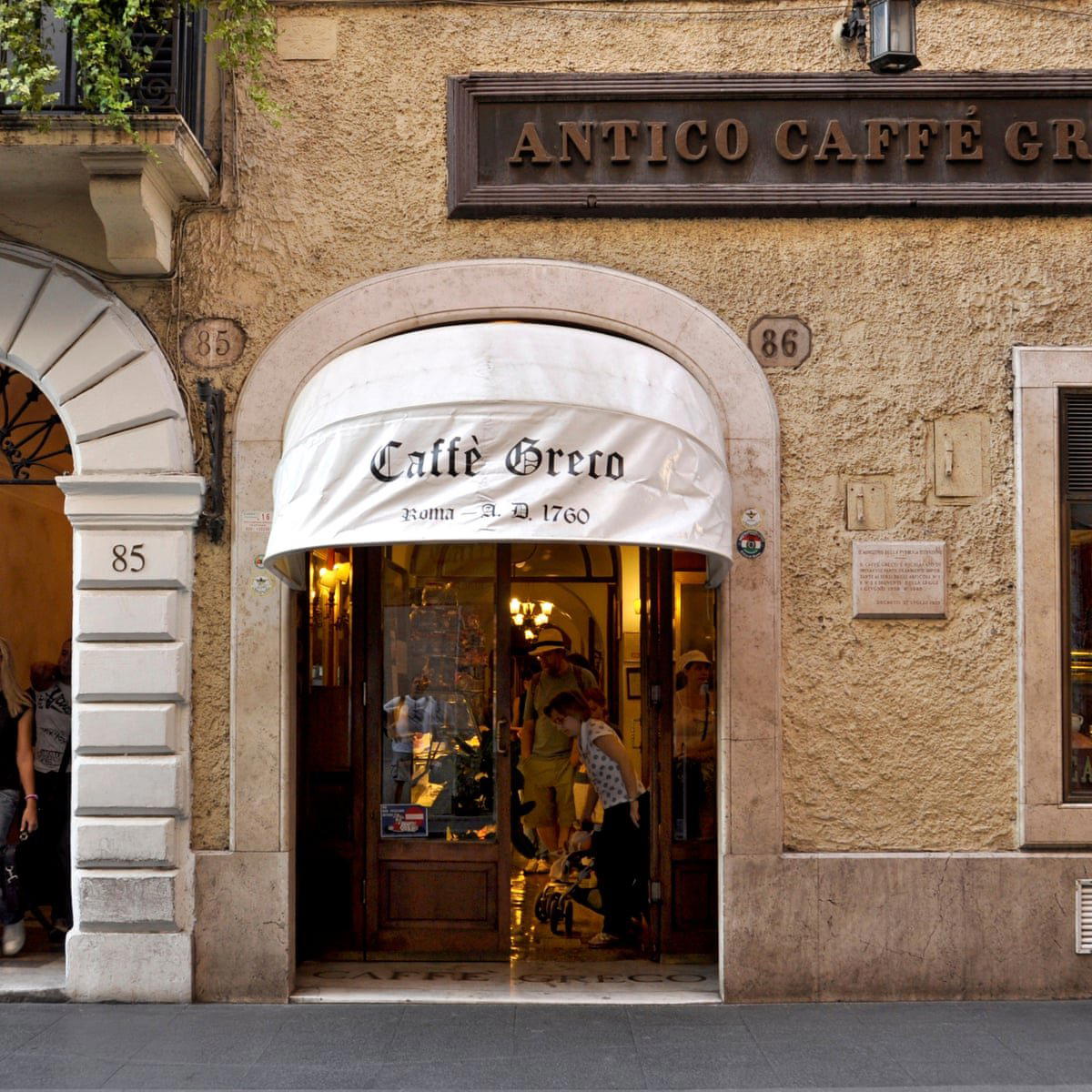
Via dei Condotti, 1760: Where Rome's Coffeehouse Tradition Began
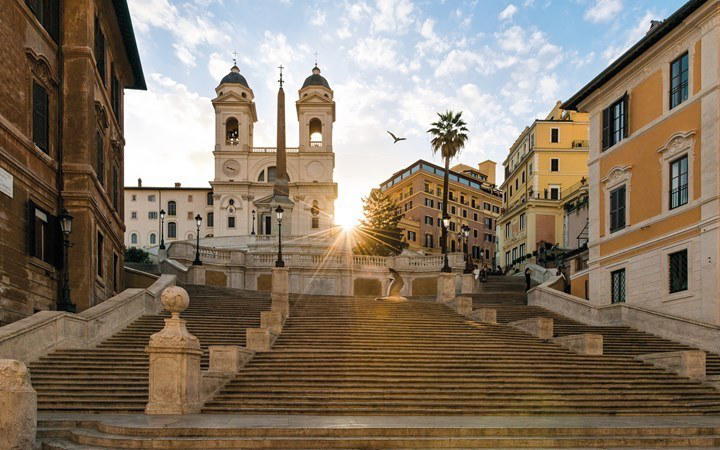
Walking down Via dei Condotti toward the Spanish Steps, the shopfronts belong to the twentieth century: Valentino, Bulgari, Cartier. Antico Caffè Greco, at number 86, belongs to another era entirely. The entrance is narrow, the rooms beyond it are low-lit and hung with portraits, and the wait staff move through the space in black-and-white livery that signals something quite deliberate about the relationship between this café and its own past. This is not nostalgia as décor. It is a working institution that has operated continuously since 1760, making it one of the oldest cafés in Italy and among the oldest in the world.
The European coffeehouse tradition that produced Greco was a specific cultural phenomenon: a space where writers, painters, composers, and political exiles could occupy a table for hours over a single espresso, conduct arguments, and do the intellectual work that required both proximity to others and a degree of anonymity. Vienna had its Café Central, Paris had Café de Flore, and Rome had Greco. What distinguishes Greco from many of its continental peers is that it has remained a functioning bar rather than converting itself into a museum or tourist attraction built around its legacy.
A Register of European Creative Life
The walls of Antico Caffè Greco carry over three hundred paintings and objets d'art, most of them either donated by or connected to the café's historical clientele. Goethe stopped in during his Italian journey in the 1780s. Keats was a regular in the years before his death in Rome in 1821. Casanova, Stendhal, Hans Christian Andersen, Franz Liszt, and Arthur Schopenhauer all appear in the documented record of visitors. Buffalo Bill reportedly took coffee here during a European tour. This is not a list constructed to impress; it is simply what happens when a café on a prominent street in the centre of Rome operates for two and a half centuries.
Significance of that roster lies less in the individual names than in what they collectively represent: the Grand Tour circuit of the eighteenth and nineteenth centuries passed through Rome, and Greco was one of its fixed coordinates. For northern European artists and writers making the obligatory pilgrimage south, the café functioned as a kind of informal embassy, a place where German, English, and French could be spoken and where news from elsewhere in Europe arrived with travellers. That geographic and cultural function shaped the café's identity in ways that persist in the atmosphere of the rooms today.
The Architecture of the Space
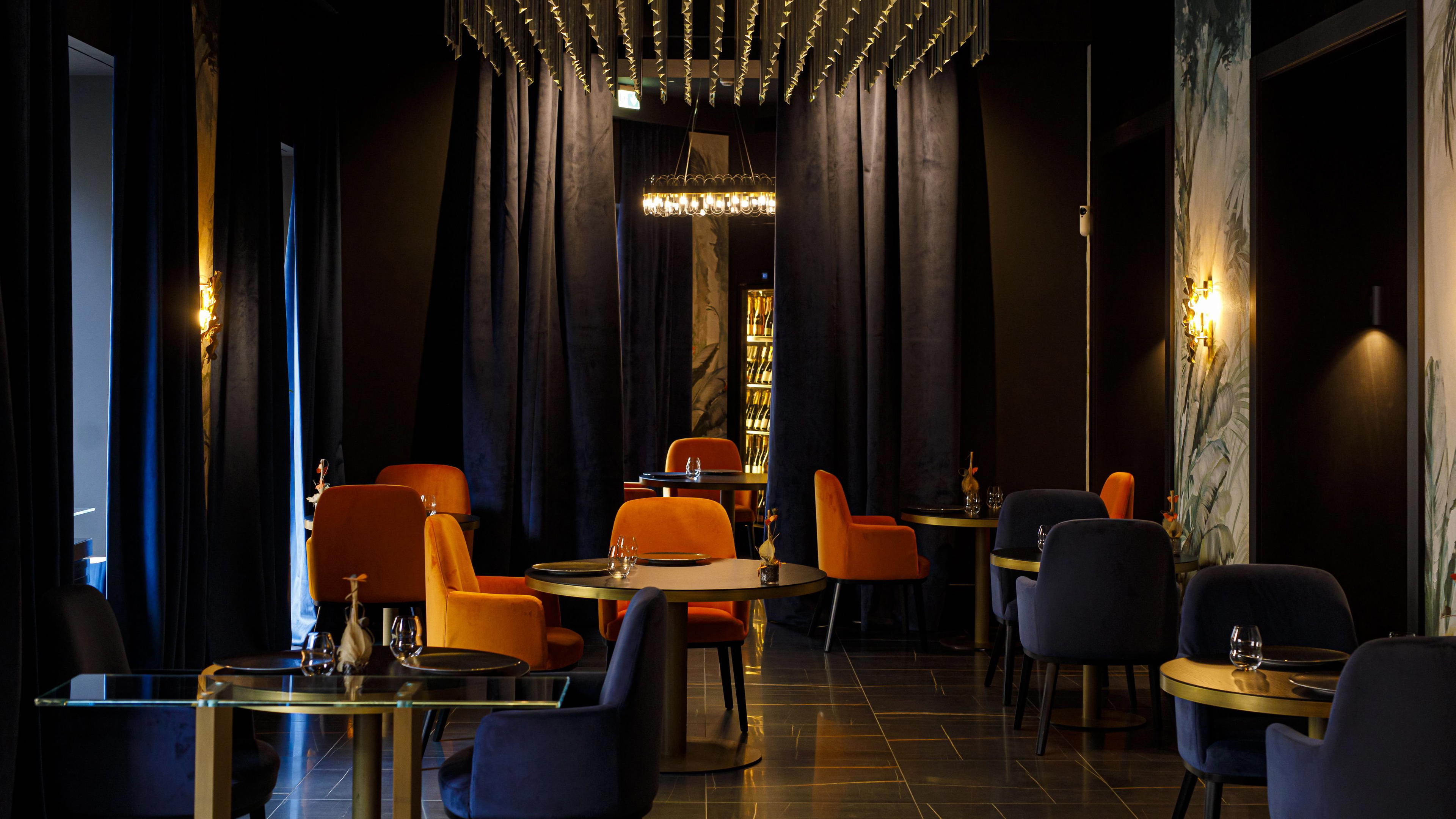
Interior runs deeper than the street frontage suggests. A sequence of small rooms connects front to back, each with velvet banquette seating, marble-topped tables, and walls covered from dado to ceiling with framed works. The density of the hanging is deliberate rather than chaotic: this is the accumulated record of a place that has been receiving gifts and dedications for over two centuries. Natural light is limited; the effect is closer to a private library or a palazzo's smaller reception rooms than to the airy café spaces that became fashionable in the twentieth century.
Among Rome's drinking establishments, Greco occupies a category of its own. The city's contemporary bar scene has moved decisively toward technical cocktail programs: Drink Kong operates at the high end of that format, while Jerry Thomas Speakeasy built its reputation on theatrical drinks culture, and Freni e Frizioni draws crowds to Trastevere with an aperitivo-forward model. Boeme represents a newer generation of focused, produce-led bar programs. Greco belongs to none of these categories. Its frame of reference is not the contemporary cocktail bar but the classical European caffè, a format that measures itself by longevity, architectural integrity, and the quality of its espresso rather than by menu innovation.
Coffee and the Question of Price
The café's pricing reflects its position on Via dei Condotti, one of Rome's most expensive retail streets, and its status as a historical monument. Prices for coffee consumed at a table are substantially higher than at a standard Roman bar counter, a fact that surprises visitors who arrive expecting the one-euro espresso that is otherwise a reliable feature of Roman café culture. This is not unique to Greco: the sit-down premium is standard across Rome's historic caffès and grand hotel bars, and at Greco it comes with the added context of sitting in rooms that have not changed structurally since the nineteenth century. The choice between bar and table affects cost, and visitors aware of that distinction can calibrate accordingly.
Italy's tradition of preserving historic caffès as working spaces rather than converting them to museums connects Greco to a small cohort of comparable institutions: Caffè Florian in Venice (founded 1720), Caffè Pedrocchi in Padua, and the grand caffès of Turin's arcaded centre. Across Italy, these spaces are understood as civic heritage, not merely commercial premises. Al Covino in Venice and Enoteca Historical Faccioli in Bologna carry different traditions but share the same underlying commitment to operating within the weight of a specific place's history. Further afield, the discipline of a long-established drinking institution appears in places as different as 1930 in Milan, Gucci Giardino in Florence, L'Antiquario in Naples, Lost & Found in Nicosia, and Bar Leather Apron in Honolulu.
Visiting in Practice
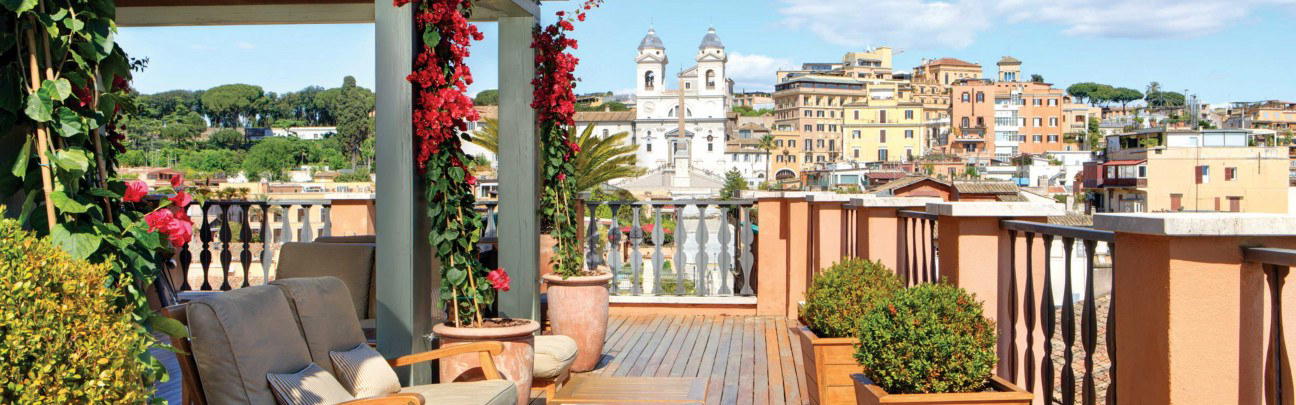
Antico Caffè Greco is located at Via dei Condotti 86, a short walk from the Spanish Steps and within easy reach of the Spagna metro station on Line A. The café is a fixture on a street that attracts high foot traffic throughout the day, particularly in late morning and mid-afternoon when the luxury shopping crowd and visitors to the Steps converge. Arriving early on weekday mornings reduces the crowd density and allows more time in the smaller rear rooms where the portrait collection is most concentrated. No reservation is required for coffee or a pastry at the bar; table service in the seated rooms follows standard café practice. For a broader survey of where to eat and drink across the city, the full Rome restaurants and bars guide covers the city's current scene across all categories and price points.
Budget and Context
| Venue | Price | Awards |
|---|---|---|
| Antico Caffè GrecoThis venue — the venue you are viewing | $20–30 | Not listed |
| Drink Kong | $50–100 | World's 50 Best #32 · Falstaff Bar - 96 Falstaff Points |
| Freni e Frizioni | $10–20 | World's 50 Best #31 · Falstaff Bar - 94 Falstaff Points |
| Jerry Thomas Speakeasy | Not listed | World's 50 Best #98 · Top 500 Bars Best Bars #174 |
| Salotto 42 | Not listed | World's 50 Best |
| Boeme | $10–20 | World's 50 Best #47 |

Details
- Elegant
- Classic
- Well Known
- Sophisticated
- Date Night
- After Work
- Special Occasion
- Casual Hangout
- Historic Building
- Design Destination
- Standalone
- Seated Bar
- Lounge Seating
- Private Rooms
- Classic Cocktails
- Conventional Wine
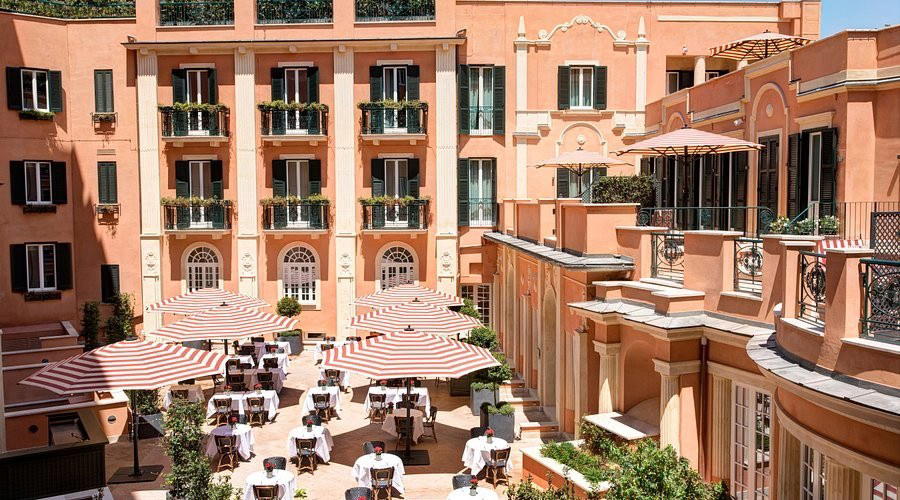
Refined historic charm with soft classical music, elegant decor featuring European art and sculptures, transporting guests to another era with multiple open-arched rooms.