
A Michelin-starred rooftop above the Colosseum, Aroma delivers Chef Giuseppe Di Iorio's modern Roman cooking across four tasting menus — including a vegetarian option — with views stretching from the ancient amphitheatre to the Vittoriano. The terrace is covered in winter, keeping the setting accessible year-round. Lunch and dinner services run on different days, making the meal choice a genuine strategic decision.
 Discover on Pearl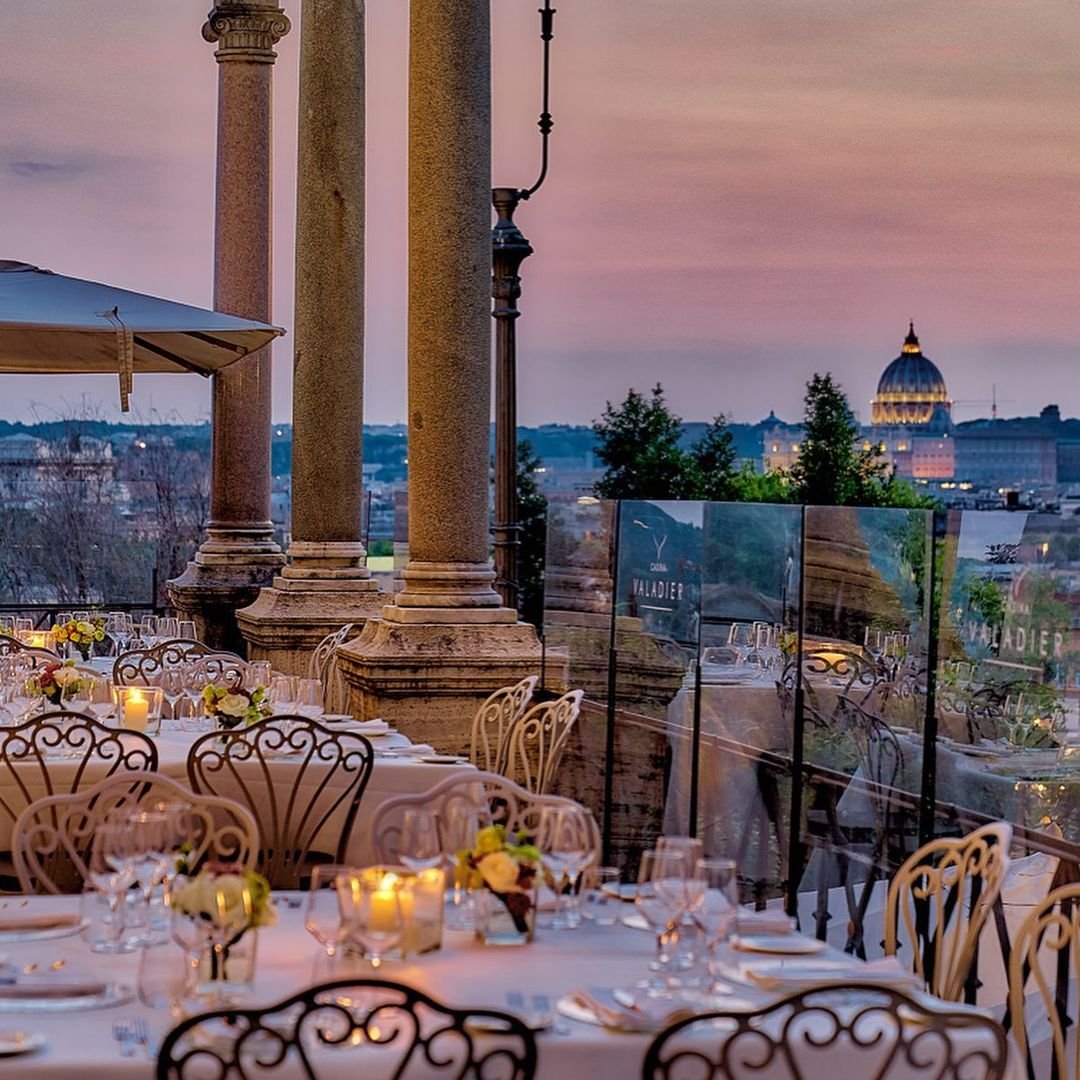
What it means to eat with the Colosseum at eye level
Rome's fine dining geography follows a logic that most cities can't replicate: here, the backdrop is archaeological. The city's highest-tier restaurants compete not just on cuisine but on proximity to monuments that have stood for two thousand years, and the rooftop terrace at Aroma, part of the Palazzo Manfredi on Via Labicana 125, positions itself at the sharpest end of that competition. From the covered terrace, the Colosseum sits directly ahead. The Domus Aurea lies to the right. A portion of the Vittoriano closes the sightline in the distance. No other Michelin-starred room in Rome deploys those three reference points from a single vantage.
That physical context matters because it shapes how the restaurant is actually used. Visitors who book for the view alone and receive competent cooking represent one type of experience; visitors who understand that Chef Giuseppe Di Iorio holds a Michelin star and builds menus across four structured tasting formats — including a dedicated vegetarian option — arrive with different expectations and leave with something closer to a complete assessment. Both things are true at once: the terrace is genuinely arresting, and the kitchen is operating at a level that justifies the price before you glance at the skyline.
The shortlist, unlocked.
Hard-to-book tables, cellar releases, and concierge-planned trips.
Get Exclusive Access →Lunch or dinner: a decision worth making deliberately
The lunch-versus-dinner question at Aroma is less obvious than it looks and more consequential than at most restaurants in the same bracket. The kitchen is open for lunch Wednesday through Sunday from 12:30 to 3:00 PM, while dinner runs every evening from 7:00 to 11:00 PM (Monday and Tuesday are dinner-only). That asymmetry already creates a two-tier audience: the weekday lunch crowd, which skews toward business and informed tourists with flexible schedules, and the evening crowd, which is larger, more international, and more likely to be booking specifically for the spectacle of the lit Colosseum after dark.
The case for lunch at this price point , Aroma sits at the €€€€ tier , is partly about light and partly about pace. Afternoon service on a clear Roman day delivers a quality of natural illumination that no dinner can match: the pale travertine of the Colosseum reads differently under midday sun than it does against the theatrical nighttime floodlighting. For guests whose primary interest is the food, lunch also tends to mean a less densely booked room, which translates to better pacing between courses and, typically, more attentive service. The covered terrace operates through winter, so seasonal closure is not a factor , but the angle of winter afternoon light against the stonework is its own argument for a cold-month lunch booking.
Dinner, by contrast, offers the Colosseum illuminated , a spectacle that Rome's tourist infrastructure has spent considerable effort curating and that the terrace at Aroma translates into a genuinely charged atmosphere. For a first visit, or for guests travelling with people for whom the food context is secondary, the evening service delivers more of what the location promises. For repeat visitors or those whose priority is Chef Di Iorio's cooking rather than the monument, the quieter rhythm of a weekday lunch is the stronger call.
The cooking: Roman foundations with structured modern options
Rome's position in Italy's fine dining hierarchy has historically been complicated. Cities like Milan, Florence, and Modena produce more starred addresses per square kilometre of serious gastronomic intention. The capital's restaurant culture leans heavily on trattoria tradition , cacio e pepe, coda alla vaccinara, the long lunch , and the serious modern kitchens that do exist, including La Pergola (Italian, Mediterranean Cuisine) at the three-star level, tend to operate within large hotel structures rather than as standalone venues. That context matters for reading what Aroma does.
Di Iorio's menus draw from classic Roman dishes, with additional reference points from Campania, and extend into more formally creative territory as the tasting formats progress. The four-menu structure , one of which is vegetarian , is a format common to the tier of Italian restaurants holding a single Michelin star while addressing a broad international audience. It allows a kitchen to run a coherent identity across very different types of diner: those who want the Roman register, those who want the more experimental options, and those for whom dietary requirements might otherwise foreclose the experience. Comparable single-star addresses in Rome, including Idylio by Apreda, use similar multi-format approaches for the same practical reasons.
The à-la-carte selection from within the tasting menus is a useful structural detail that separates Aroma from restaurants where the tasting format is strictly fixed. Guests who want the room and the view without committing to a full progression can compose from the same kitchen output in a more modular way, which broadens the accessible audience without diluting the kitchen's range.
Where Aroma sits in Rome's starred landscape
Rome currently supports a cluster of €€€€ modern Italian addresses around the Michelin single-star mark. Alongside Aroma, addresses such as Idylio by Apreda and Imàgo operate in broadly the same bracket: hotel-adjacent or hotel-embedded kitchens at the leading price tier, holding one star, with creative modern Italian cooking and strong physical settings. Imàgo, on the roof of the Hotel Hassler near the Spanish Steps, is the closest structural parallel , a terrace view, a hotel setting, starred cooking , though the two restaurants draw from different parts of the city's history and different culinary references.
For guests building a broader Rome itinerary around serious eating, the city's two-star addresses and the three-star La Pergola represent the upper end of the local range, while newer entrants to the creative register, including Acquolina (Creative) and Storie d'Amore, reflect a younger, less monument-anchored strand of contemporary Roman cooking. Aroma occupies a particular niche in that spectrum: it is the address where location and cooking arrive at roughly equal weight, which is not a criticism but a positioning.
Across Italy more broadly, the starred landscape at the modern cuisine level includes addresses with considerably longer critical pedigrees: Osteria Francescana in Modena, Le Calandre in Rubano, Enoteca Pinchiorri in Florence, and Enrico Bartolini in Milan among them. Within Rome itself, Aroma's Michelin recognition , held through the 2024 guide , places it in a credentialed position rather than simply a scenic one, even if its international profile remains shaped more by the view than the kitchen's reputation beyond the city.
Planning a visit: the practical details
Aroma is located at Via Labicana 125, within the Palazzo Manfredi, directly adjacent to the Colosseum. The address means central Rome logistics apply: the area is well connected by Metro B (Colosseo stop) but heavily trafficked, and driving to this part of the city on a weekend evening requires patience or the surrender of any parking ambition. Walking from the Monti neighbourhood or from the Imperial Fora area takes under ten minutes and is a preferable approach in most seasons.
Given the terrace's profile and the location's pull on both locals and visitors, booking well in advance is advisable , particularly for weekend dinners and the weekday lunch service, which draws a smaller but equally competitive reservation pool. The covered terrace runs through winter, meaning the full experience is available year-round; a cold, clear December lunch with a low sun on the Colosseum is a specific and particular kind of Rome afternoon that the room is designed to frame. Four tasting menus including one vegetarian option provide the structural choices; individual dishes can be selected across formats in an à-la-carte manner. Monday and Tuesday evenings are dinner-only, while Wednesday through Sunday offer both lunch (12:30 PM to 3:00 PM) and dinner (7:00 PM to 11:00 PM) services.
For guests planning a wider Rome eating itinerary, /gu.stà.re/ oltrecucina and Il Ristorante Alain Ducasse Roma cover different registers of the modern Rome dining scene. The full picture of where Aroma sits relative to its peers is leading read alongside our full Rome restaurants guide. For accommodation, bars, and what to do beyond the table, our Rome hotels guide, bars guide, and experiences guide cover the wider city. Travellers building an Italy-wide starred itinerary may also find Atelier Moessmer Norbert Niederkofler in Brunico and Dal Pescatore in Runate relevant points of comparison for modern Italian cooking at the highest levels, and for internationally minded diners tracking modern cuisine formats across borders, Frantzén in Stockholm and FZN by Björn Frantzén in Dubai sit in comparable creative territory. Rome's wine scene is documented in our Rome wineries guide.
What people recommend at Aroma
With a Google rating of 4.1 across 1,396 reviews, Aroma draws consistent feedback around its tasting menus and the vegetarian option, which is noted as more considered than the token plant-based additions common at comparable addresses. The Michelin star , confirmed in the 2024 guide , validates Di Iorio's cooking beyond the view, and repeat visitors tend to distinguish between the Roman-register dishes and the more experimental options within the menu structure, favouring different paths depending on prior knowledge of the kitchen. The covered terrace means the experience holds across seasons; first-time visitors frequently report that the winter service, with the Colosseum lit against a dark sky, delivers something that the summer terrace, competing with heat and ambient noise from the surrounding area, occasionally cannot match.
Via Labicana, 125, 00184 Roma RM, Italy
+39 06 9761 5109
Local Peer Set
A compact peer set to orient you in the local landscape.
| Venue | Cuisine | Price | Notes |
|---|---|---|---|
| Aroma | Modern Cuisine | €€€€ | This venue |
| La Pergola | Italian, Mediterranean Cuisine | €€€€ | Italian, Mediterranean Cuisine, €€€€ |
| Enoteca La Torre | Creative | €€€€ | Creative, €€€€ |
| Il Pagliaccio | Contemporary Italian, Creative | €€€€ | Contemporary Italian, Creative, €€€€ |
| Idylio by Apreda | Modern Italian, Italian Contemporary | €€€€ | Modern Italian, Italian Contemporary, €€€€ |
| Imàgo | Contemporary Italian, Italian Contemporary | €€€€ | Contemporary Italian, Italian Contemporary, €€€€ |
Need a table?
Our members enjoy priority alerts and concierge-led booking support for the world's most difficult tables.
Get Exclusive AccessThe shortlist, unlocked.
Hard-to-book tables, cellar releases, and concierge-planned trips.
Get Exclusive Access →