


Opened in June 2018 in Ginza's B1F restaurant corridor, Ren Mishina has held the Tabelog Bronze Award consecutively since 2022 and carries a Michelin star, placing it firmly among Tokyo's most recognised kaiseki counters. Chef Jun Mishina's ingredient-forward approach, seasonal fish, charcoal technique, and a deliberately spare aesthetic, runs through a 16-seat room split between counter and private dining. Dinner runs to around ¥50,000–¥59,999 per head.
 Discover on Pearl
Pearl is the En Primeur Club membership app — saves, bookings, and concierge access live there. Same editors, same standards.
- Address
- Japan, 〒104-0061 Tokyo, Chuo City, Ginza, 7 Chome−3−13 B1
- Phone
- +81 3-6265-0177
- Website
- ginza-ren.jp
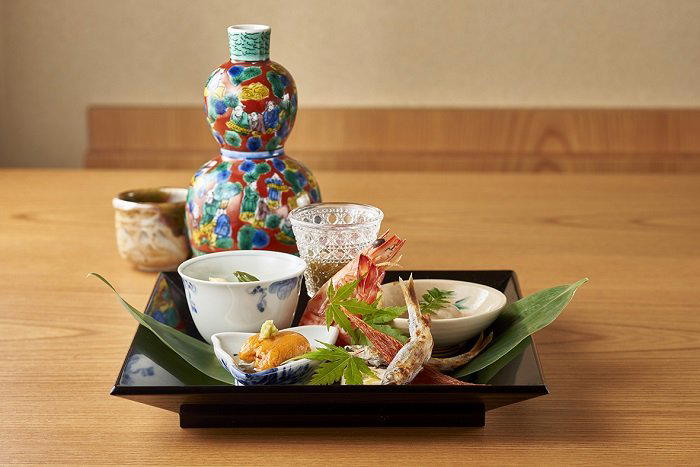
Six Years of Consistent Recognition in Ginza's Kaiseki Tier
Ren Mishina is a Michelin 1-star kaiseki restaurant in Ginza, Tokyo, led by Jun Mishina. The neighbourhood had spent decades accumulating serious Japanese cuisine houses, from long-established kappo rooms to the new generation of tasting-format counters that emerged in the 2010s. Its recognition includes a Michelin star, Tabelog Bronze awards from 2022 to 2026, and OAD Top 331 Japan. The Michelin recognition adds another critical framework to that record. In a district where reputation is easy to accumulate early and hard to maintain across years, that sustained double recognition places Ren Mishina in a small and consistent upper bracket of Ginza kaiseki.
For context on how that bracket works: Ginza's top-tier kaiseki and Japanese cuisine rooms now price at a level that competes directly with the city's most decorated sushi counters. At ¥50,000–¥59,999 per person at both lunch and dinner, Ren Mishina sits at the same price point as RyuGin and above mid-tier omakase formats. That pricing signals a specific guest expectation: a full seasonal sequence, careful ingredient sourcing, and a room that functions as a complete dining environment rather than a counter experience with incidental service. The 16-seat layout is configured to serve that expectation.
The Room, the Counter, and How the Experience Unfolds
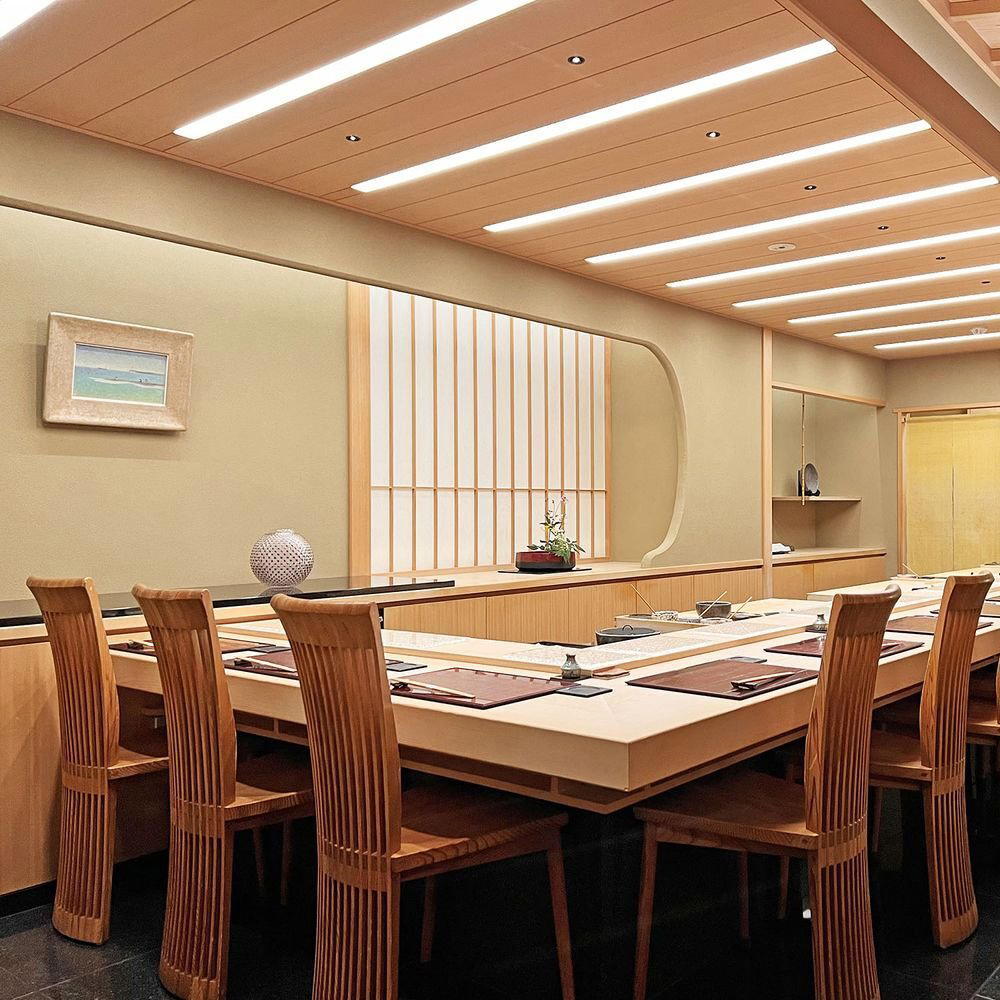
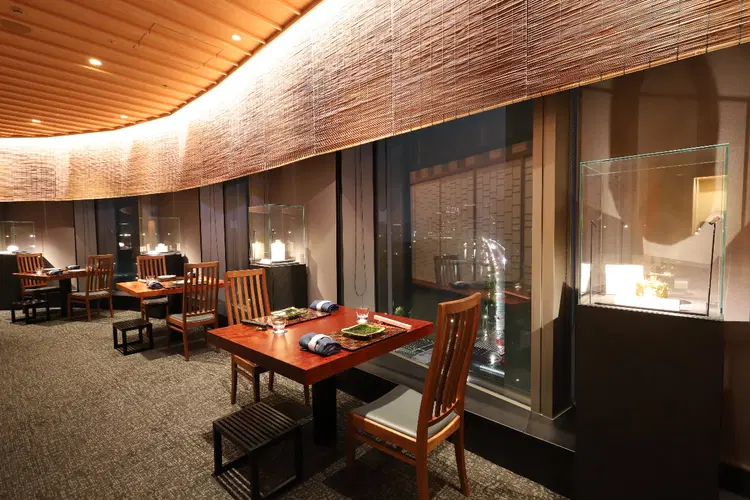
Kaiseki at this level in Tokyo has largely moved away from large formal dining rooms. The format that dominates the upper tier is the small counter with private room annexes: intimate enough to allow direct kitchen engagement, but with sufficient separation for groups who want enclosed space. Ren Mishina follows that model. The counter seats six and faces the kitchen directly; the private rooms extend the experience without replicating it, the pace is controlled, the service is floor-led, and the separation between counter and room creates two distinct but equally considered experiences within the same building.
The room's design reflects the chef's orientation. Indian-ink paintings of lotus flowers in seasonal progression line the counter wall, an art choice that functions as a quiet editorial statement. The lotus, in Japanese symbolic vocabulary, represents purity without affectation, which corresponds to the kitchen's own declared position: cooking that foregrounds ingredient integrity over technique display. In a Ginza room, that restraint is deliberate.
The Kitchen's Focus and What It Means for the Menu
Kaiseki's seasonal logic is not unique to any single restaurant, it is the structural logic of the form. What differentiates individual kaiseki rooms is how they interpret and weight that logic. Ren Mishina's kitchen places particular emphasis on fish, a preference noted formally in the venue's own category data, and on charcoal-based slow cooking as the primary heat technique for seasonal proteins. The progression through a year at this counter would move through bamboo shoots in spring, pike conger through summer, matsutake mushrooms into autumn, and puffer fish in winter, the canonical sequence of Japanese seasonal ingredients, handled through a slow-fire approach rather than the more interventionist technique favoured by some contemporary Japanese kitchens.
That orientation toward classical seasonal material handled with restraint places Ren Mishina in a particular competitive position relative to its Ginza peers. Compared to Ginza Kojyu or Ginza Shinohara, which also occupy the upper price tier in the same neighbourhood, the Ren Mishina kitchen leans toward a philosophy of reduction rather than elaboration. Kanda and Kohaku represent different expressions of the same kaiseki tradition across Tokyo's wider Japanese cuisine landscape, but Ren Mishina's sustained Tabelog recognition through multiple award cycles suggests its particular position within that tradition has found a stable and loyal audience.
Service Architecture: Counter, Sake, and the Room as a Whole
The editorial angle on Ren Mishina that is most worth examining is how the dining experience functions as a coordinated whole, not just as a sequence of courses, but as a collaboration between kitchen, beverage, and floor. The beverage list gives formal attention to sake and wine. That dual emphasis is characteristic of upper-tier Tokyo kaiseki rooms that have expanded their beverage programs in the past decade to serve an international guest base without abandoning the traditional pairing logic of Japanese spirits and cuisine.
BYO is also permitted, a policy that is comparatively rare at this price tier in Ginza and signals a service posture that prioritises the guest's comfort over a captive beverage margin. For guests with specific sake or wine allocations, that flexibility has practical value. The service also accommodates celebration formats and surprises, indicating that the floor team is organised to handle occasion dining with some degree of bespoke coordination.
The dress code is smart casual, with guests asked to avoid heavily scented cosmetics and perfume. That request, framed around the collective dining environment rather than aesthetic convention, is itself a service statement: the room is designed for sensory focus, and the front-of-house actively maintains the conditions for it.
Ren Mishina in the Wider Japanese Dining Network
Ginza is one node in a broader network of serious Japanese cuisine across the country. For readers building a Japan itinerary around kaiseki, Ren Mishina sits alongside Hyotei and Kikunoi Honten in Kyoto as examples of the tradition across multiple critical frameworks. Outside the traditional kaiseki centres, HAJIME in Osaka and Gion Sasaki in Kyoto represent adjacent but stylistically different expressions of serious Japanese cooking. For regional contrast, Goh in Fukuoka and akordu in Nara demonstrate how the country's fine dining geography extends well beyond Tokyo and Kyoto. 1000 in Yokohama and 6 in Okinawa mark the outer edges of that network.
Planning Your Visit
| Venue | Cuisine | Price (per head) | Seats | Key Recognition |
|---|---|---|---|---|
| Ren Mishina | Kaiseki | ¥50,000–¥59,999 | 16 (counter + private rooms) | Michelin 1 Star, Tabelog Bronze 2022 to 2026, OAD #331 |
| RyuGin | Kaiseki | ¥¥¥¥ | Counter + rooms | Michelin 3 Stars |
| Ginza Kojyu | Kaiseki | ¥¥¥¥ | Counter format | Michelin recognition |
| Ginza Shinohara | Kaiseki | ¥¥¥¥ | Counter format | Ginza tier |
Where It Fits
Comparable venues nearby, for context on price, style, and recognition.
| Venue | Cuisine | Price | Awards |
|---|---|---|---|
| Ren MishinaThis venue — the venue you are viewing | Kaiseki, Japanese | ¥¥¥¥ | Michelin 1 Star |
| Harutaka | Sushi | ¥¥¥¥ | Michelin 3 Star |
| RyuGin | Kaiseki, Japanese | ¥¥¥¥ | Michelin 3 Star |
| L'Effervescence | French | ¥¥¥¥ | Michelin 3 Star |
| HOMMAGE | Innovtive French, French | ¥¥¥¥ | Michelin 2 Star |
| MAZ | Innovative | ¥¥¥¥ | Michelin 2 Star |
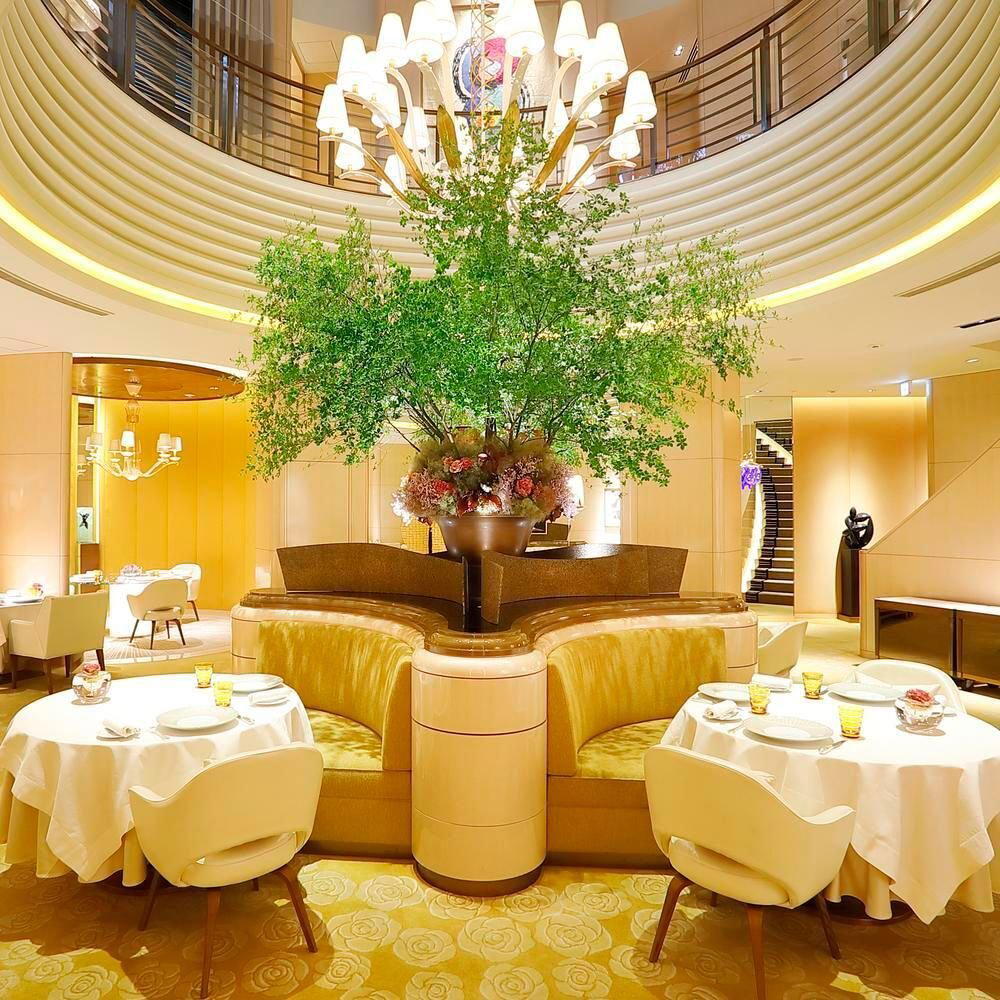
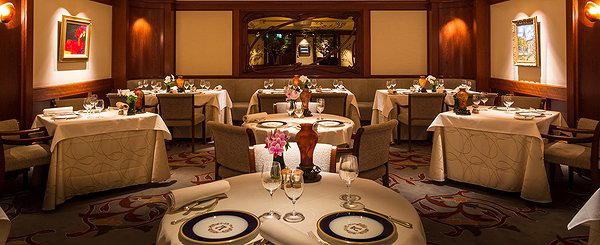



At a Glance
- Elegant
- Intimate
- Quiet
- Sophisticated
- Minimalist
- Special Occasion
- Date Night
- Chefs Counter
- Sake Program
Tranquil and calming with Indian-ink lotus paintings behind the counter, creating a pure and elegant atmosphere.