
Ramen Sugimoto gives Yokohama’s suburban ramen conversation a serious Aobadai address: small-format, no-reservation, ingredient-led bowls in the shio and shoyu register, with repeated Tabelog 100 recognition from 2021 through 2025. The appeal is not spectacle; it is the disciplined ramen counter as a local craft format, priced for everyday eating but judged against Kanagawa’s stronger noodle rooms.
Pearl is the En Primeur Club membership app — saves, bookings, and concierge access live there. Same editors, same standards.
- Address
- 神奈川県横浜市青葉区桜台26-1 第3アサキビル 1F
- Phone
- +81454799283
- Website
- tabelog.com
 Saves & bookings on Pearl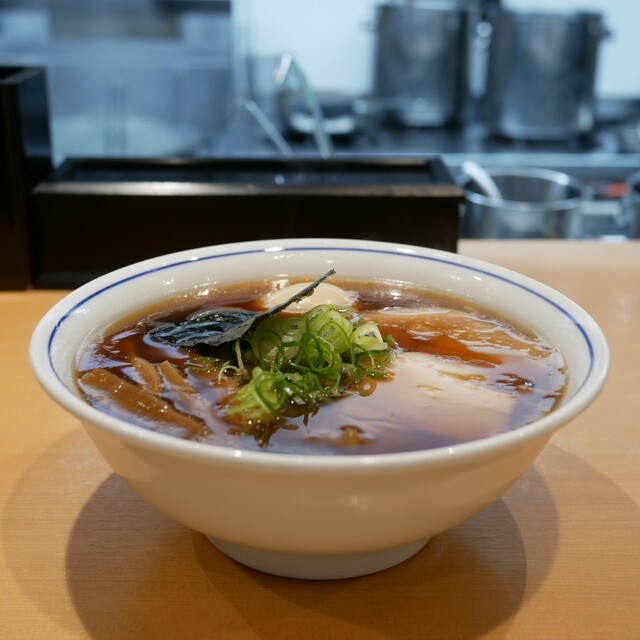
Approaching Aobadai, Yokohama’s ramen culture feels less like a station-front sprint than a neighbourhood habit: residential streets, purposeful regulars, and a small shop built on broth, tare, noodles, and timing. Ramen Sugimoto sits in that quieter context, outside the louder central-Yokohama circuit. The local rhythm favours repeat eating over destination theatrics, often making ramen technique easier to read.
Kanagawa ramen has long rewarded specificity. Yokohama carries a heavy pork-and-soy identity through ie-kei, while the wider prefecture also supports cleaner shio and shoyu houses where sourcing, extraction, and balance matter more than excess. The useful lens here is not novelty, but how a compact ramen shop uses a narrow format to compete in a prefecture with serious noodle depth.
Aobadai's quieter ramen tier, judged by broth discipline rather than spectacle
Ramen Sugimoto’s repeated selection for Tabelog’s Ramen EAST and Kanagawa Hyakumeiten lists from 2021 through 2025 places it among shops that earn attention through consistency, in a category where the margin between competent and memorable is thin. Tabelog lists a 3.82 score, and the 2025 Kanagawa ramen selection gives the restaurant a current trust signal without turning it into a trophy room. More important is what that recognition says about the local scene: Kanagawa’s ramen audience is fluent, and a shop does not hold attention across years on branding alone.
The ingredient story is clearest in the shop’s salt and soy sauce categories. Shio and shoyu bowls expose weakness quickly because the seasoning base has less room to hide behind weight. Here, stock components, aromatic oils, tare, and noodles determine whether the bowl reads as integrated or merely tidy. Ramen Sugimoto belongs to the Japanese ramen strand judged by restraint: clean structure, seasoning control, and noodles that carry the soup rather than fight it.
That restraint separates this address from Yokohama’s broader casual-food map, which can move from skewers at 1000 (Yakitori (Grilled chicken skewers)) to Chinese cooking at Aichun, curry at Ajowan, soup curry at Alpenjiro Honten, and budget-driven local staples such as Anzen Shokudo. Ramen sits differently: faster, more technical than it first appears, and unusually dependent on repeating the same narrow sequence service after service.
Why the small room changes the way the bowl is read
The room follows ramen’s practical logic: 16 seats, including six counter seats, one two-seat table, and two four-seat tables. The mix matters because ramen service is about turnover and proximity. Counter seats let diners watch the choreography; tables broaden the audience beyond solo eaters. The restaurant is family friendly, with school-age children and strollers accepted, not a throwaway detail in a genre often assumed to be counter-only and adult-paced.
The format does not chase ceremony. Reservations, private rooms, and private use are unavailable. In ramen terms, that is not a flaw but a signal: the shop operates in the public, queue-and-eat tradition. Average spend sits in the everyday ramen band, while the salt and soy sauce bowl is listed at 1,350 yen. That puts it above bare-bones lunch counters but below tasting-menu dining, precisely why serious ramen remains one of Japan’s great value categories.
Its relocation from Saginomiya adds useful context. Tokyo ramen reputations can travel, but they are tested differently in suburban Yokohama. Aobadai lacks the accidental foot traffic of a central terminal district, so repeat custom and destination intent matter more. The shop’s recognition after relocation therefore says more than a single opening-year surge would.
Yokohama casual comparisons are instructive. PUISSANCE and Curry Senmon Ten KEN occupy lower published budget bands, while Men Dokoro Akimoto shares the broad JPY 1,000 to JPY 1,999 range. Un Petit Paquet and Maeda Pan show another side of neighbourhood eating, where patisserie and bakery culture apply precision at a different daily price. The restaurant’s role is narrower: it asks diners to judge a single-bowl format with the seriousness usually reserved for longer meals.
How to place it within a Yokohama food day
This is not a long-evening restaurant. It suits a ramen-focused Aobadai stop, especially for diners who care about the difference between a broad-menu shop and one whose reputation rests on shio and shoyu fundamentals. The no-smoking policy and mixed seating make it more flexible than many small ramen counters, while the lack of parking points toward rail or bus planning rather than a car-led itinerary.
For a wider Yokohama stay, treat ramen as one point in the city’s food structure, not the whole story. The Our full Yokohama restaurants guide gives category context, while Our full Yokohama hotels guide, Our full Yokohama bars guide, Our full Yokohama wineries guide, and Our full Yokohama experiences guide help turn a noodle stop into a coherent itinerary.
Regional side trips sharpen the picture. Kamakura’s slower dining register appears at -Grilled beef Sukiyaki- KAMAKURA TANUKIAN 鎌倉 たぬき庵 in Kamakura, Tokyo’s dense casual scene can be seen through. 鮪と炭火焼き うお炭 秋葉原店 in Tokyo, and Kansai’s café register appears at.cafe in Osaka. Further afield.know in Kumamoto, (Shoku) Vietnam in Kawasaki, and [Curry Senmon Ten] Maruyama Kyoju. in Sapporo underline how Japan’s casual dining forms are often more regional than visitors expect. Across the Pacific, Jōdo Saké Bar in Los Angeles and Onigiri Time in Pasadena show how Japanese formats change once they leave domestic service culture.
The editorial case is simple: come for a precise expression of Kanagawa ramen culture, not theatre. A small Aobadai room, focused shio-and-shoyu identity, repeated Hyakumeiten selection, and everyday pricing make the restaurant a strong read on serious ramen outside the city-centre spotlight.
Snapshot
Comparable venues in the metro at similar price points.
| Venue | Cuisine | Price | Notes |
|---|---|---|---|
| Ramen SugimotoThis venue — the venue you are viewing | Traditional Japanese Ramen | $$ | Not listed |
| Kuri Yama | Japanese Tsukemen / Ramen | $$ | Kanagawa |
| Rock'n Three | Jidori Shoyu Ramen | $$ | Kōhoku |
| Bunmeidou Sakan Ru Cafe | Traditional Bunmeido kissaten & sweets café | $$ | Naka |
| Sumibi Yakiniku Horumon Urara | Charcoal-Grilled Yakiniku & Horumon | $$ | Aoba |
| Mendokoro Tatsunoki | Japanese Ramen | $ | Hodogaya |
Recognition history
Dated appearances from independent guides and award organizations, with the underlying list record or original source where available.
Tabelog 100 #64 · No. 64
Tabelog · Tabelog 100 - Ramen - KANAGAWA - 2025
Continue exploring
More in Yokohama
Restaurants in Yokohama
Browse all →


Bars in Yokohama
Browse all →




Hotels in Yokohama
Browse all →




Wineries in Yokohama
Browse all →
At a Glance
- Cozy
- Quiet
- Modern
- Solo
- Family
- Casual Hangout
- After Work
- Standalone
Small, clean, non‑smoking ramen shop with counter and a few tables, a simple modern interior and efficient service, suited to solo diners and families rather than lingering gatherings.