
Ajowan places Yokohama’s suburban curry culture in sharper focus: a Center-Kita address recognized in Tabelog Curry EAST 100 for 2023 and 2024, working in the Japanese-Indian curry lane rather than the hotel-spice or Tokyo tasting-menu register. Its appeal is contextual as much as culinary, a low-key curry room with enough recognition to pull serious eaters beyond the waterfront core.
Pearl is the En Primeur Club membership app — saves, bookings, and concierge access live there. Same editors, same standards.
- Address
- Japan, 〒224-0003 Kanagawa, Yokohama, Tsuzuki Ward, Nakagawachuo, 1 Chome−28−21 リヴウェル
- Phone
- +81 45-911-6563
- Website
- tabelog.com
 Saves & bookings on Pearl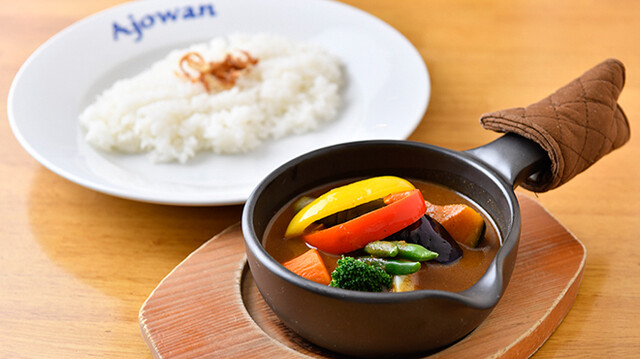
Center-Kita does not perform the Yokohama dining postcard. Its rhythm is residential: station-front planning, family traffic, practical storefronts, and routines that make curry weekly habit, not special-occasion dining. That matters. Yokohama’s familiar restaurant map clusters around Minato Mirai, Kannai, Chinatown, and old port-side quarters, but its curry culture is also built in commuter districts where spice, rice, value, and repeat custom matter more than ceremony.
Ajowan belongs to that second Yokohama: local, accessible, and category-specific. Recognition in Tabelog Curry EAST 100 in both 2023 and 2024 gives it a stronger signal than a typical neighborhood recommendation, especially in a field where Japan separates curry into overlapping traditions: yoshoku curry, Indian curry, soup curry, spice curry, and hybrid Japanese interpretations that rarely fit one imported frame. Read it not as luxury destination dining, but as a curry specialist with enough validation to merit a detour for readers interested in how Japanese cities absorb and rework spice cuisines.
Yokohama curry beyond the port-city clichés
Yokohama’s food identity is often reduced to Chinatown, ramen museums, and waterfront hotel dining. That misses a quieter strength: a dense middle tier of specialist rooms where single-category cooking is the point. Curry belongs there because Japan’s curry culture is not a borrowed cuisine frozen in place. It has been domesticated, regionalized, then re-opened to South Asian technique, cafe formats, and spice-shop precision. The result is a category where a modest bill can still carry serious craft.
Within Yokohama, Ajowan is more interesting than its price suggests. Categorized around curry and Indian curry, it sits between Japanese curry-house familiarity and a more spice-forward Indian register. For travelers, the distinction helps: this is not kaiseki pacing or sushi-counter scarcity, but a democratic format where repeatability and seasoning judgment decide reputation.
The Tabelog Curry EAST 100 selection is the main trust marker. Tabelog’s Hyakumeiten lists are category-based, and curry spans Tokyo and the broader eastern region rather than only the luxury circuit. A 2024 selection after 2023 places Ajowan in a competitive set defined by specialization, not spend. In Japan, some of the strongest eating happens in narrow formats: ramen counters, tonkatsu rooms, patisseries, yakitori shops, and curry houses that build loyalty through a few decisions repeated well.
For a broader Yokohama read, the contrast helps. 1000 (Yakitori (Grilled chicken skewers)) speaks to the city’s grilled-skewer lane, while Aichun and Arai Ya Bankokubashi ten show how older neighborhood cooking and meat-led comfort formats sit beside spice cooking rather than below it. Curry is not a fallback option; it is one of the city’s sharper everyday cuisines.
A specialist format, not a luxury performance
The appeal is structural. A 36-seat setup, with table, counter, and terrace seating, puts Ajowan in the small-restaurant band where turnover, family use, and regulars shape the experience more than pomp. That scale suits curry, which rewards concentration: base, spice balance, rice, heat, texture, and a kitchen’s ability to keep the line steady across lunch and dinner. In Japan, a curry restaurant with this recognition is often judged less by novelty than by whether its core offering survives repeat visits.
Ajowan’s practical personality also locates it within Yokohama dining culture. The restaurant is non-smoking, accepts cards and PayPay, offers takeout, allows pets on the terrace, and is set up for children, including babies, preschoolers, school-age children, strollers, and a kids menu. These are not decorative details; they separate it from the reservation-only counter culture that dominates international attention in Japan. It can serve serious curry without asking diners to adopt a formal script.
Comparison clarifies the point. SONJIN, another Yokohama name in the surrounding curry conversation, sits in a slightly higher dinner band while remaining relatively accessible. Ramen Kujira Ken Yokohama honten occupies the ramen side of the same value-driven specialist culture. Patisserie IKEDA, Sweets Garden Yuji Ajiki, and BASCULE show a parallel sweet-shop ecosystem where suburban Yokohama also rewards focused craft. The through-line is specialization at a scale locals can fold into ordinary life, not luxury.
Center-Kita is part of the argument, not a footnote. In a visitor itinerary, the station area will never compete visually with the harbor. For food, that can help: the district filters out aimless tourist drift and gives a clearer read on repeat demand. A curry specialist here must work for families, friends, solo diners, and takeout customers, not just list-chasing travelers.
How to place it in a Yokohama itinerary
The strongest reason to prioritize Ajowan is not rarity, but the chance to see Yokohama’s specialist dining outside the waterfront orbit, through a cuisine Japan has made deeply its own. Curry is one of the country’s great everyday adaptations: introduced through foreign channels, absorbed into home cooking and school lunches, then pushed by independent cooks toward spice clarity and regional variation. A recognized curry room in Tsuzuki Ward gives that history a contemporary, local expression.
For a wider food map, pair it with a day that avoids overloading on formal meals. Use curry as the anchor, then compare it against Yokohama’s other focused formats rather than fine dining. Alpenjiro Honten offers another curry reference point in the city, while Anzen Shokudo broadens the casual Japanese frame. Beyond Yokohama, compare regional specialization through (Shoku) Vietnam in Kawasaki, [Curry Senmon Ten] Maruyama Kyoju. in Sapporo. 鮪と炭火焼き うお炭 秋葉原店 in Tokyo.cafe in Osaka, and.know in Kumamoto.
International comparisons should be careful, but useful. Jōdo Saké Bar in Los Angeles and Onigiri Time in Pasadena show how Japanese formats travel outward; Ajowan shows the inverse, a foreign-rooted spice tradition absorbed into Japanese urban life until it becomes local. That exchange is the cultural point.
For the broader city edit, keep the curry stop in conversation with Our full Yokohama restaurants guide, then build the rest of the trip through Our full Yokohama hotels guide, Our full Yokohama bars guide, Our full Yokohama wineries guide, and Our full Yokohama experiences guide. A side trip to -Grilled beef Sukiyaki- KAMAKURA TANUKIAN 鎌倉 たぬき庵 in Kamakura moves the conversation toward coastal Kanagawa’s more traditional dining register.
The verdict is simple: this is a Yokohama curry address to read through category discipline, not spectacle. Its Tabelog Curry EAST 100 recognition supplies the evidence; the more interesting story is how a suburban curry room can explain the city better than another polished harbor-view meal.
Price and Positioning
Comparable venues in the metro at similar price points.
| Venue | Cuisine | Price | Notes |
|---|---|---|---|
| AjowanThis venue — the venue you are viewing | Not listed | $$ | Not listed |
| Marumasara | Naka, Spice Curry | $$ | Not listed |
| Spice Corner Benzie | Not listed | $$ | Nishi, South Indian & Nepalese Curry House |
| Bay & Leaf Yokohama | Not listed | $ | Totsuka, Japanese-style Indian curry house |
| Chrysler | Naka, Classic Cocktail Bar | $$ | Not listed |
| Yokohama Ramen Masagoya | Naka, Dining | Not listed | Not listed |
Recognition history
Dated appearances from independent guides and award organizations, with the underlying list record or original source where available.
Tabelog 100 #37 · No. 37
Tabelog · Tabelog 100 - Curry - EAST - 2024
Continue exploring
More in Yokohama
Restaurants in Yokohama
Browse all →


Bars in Yokohama
Browse all →




Hotels in Yokohama
Browse all →



Wineries in Yokohama
Browse all →
At a Glance
- Cozy
- Lively
- Modern
- Family
- Casual Hangout
- Group Dining
- Solo
- After Work
- Private Event
- Terrace
- Standalone
Current opening hours
- Monday
- 11 AM–2:30 PM, 5:30–9 PM
- Tuesday
- 11 AM–2:30 PM, 5:30–9 PM
- Wednesday
- Closed
- Thursday
- 11 AM–2:30 PM, 5:30–9 PM
- Friday
- 11 AM–2:30 PM, 5:30–9 PM
- Saturday
- 11 AM–2:30 PM, 5:30–9 PM
- Sunday
- 11 AM–2:30 PM, 5:30–9 PM
Hours can change for holidays and private events. Last verified .
Casual and cozy curry house with stylish yet unpretentious decor, the aroma of spices throughout, a mix of counter, table, and terrace seating, and a relaxed family-friendly atmosphere suited to everyday meals.