
Mendokoro Tatsunoki is an eight-seat counter ramen and tsukemen shop in Hodogaya Ward, recognised in Tabelog’s Ramen KANAGAWA 100 selection for 2024 and 2025. Its appeal sits in Yokohama’s everyday noodle culture rather than luxury dining: compact scale, counter service, no-reservation rhythm, and a price tier that keeps the focus on repeat local eating.
Pearl is the En Primeur Club membership app — saves, bookings, and concierge access live there. Same editors, same standards.
- Address
- 1 Chome-32-17 Tennocho, Hodogaya Ward, Yokohama, Kanagawa 240-0003, Japan
- Phone
- +81 90-2200-8431
- Website
- twitter.com
 Saves & bookings on Pearl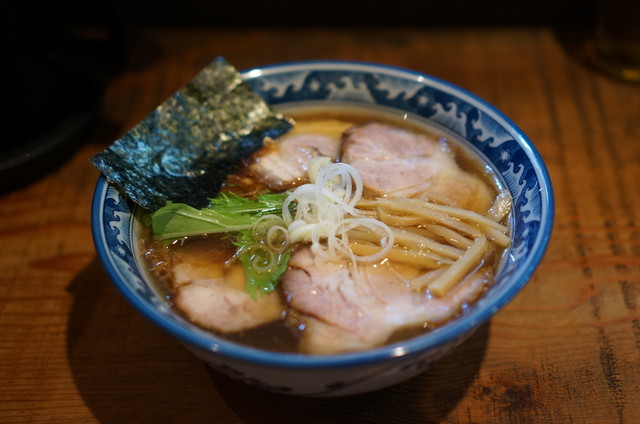
A serious suburban ramen counter in Yokohama rarely announces itself with ceremony. The signals are smaller: short frontage, house-restaurant scale, quick-turnover counter, and the understanding that Kanagawa noodle shops are judged less by décor than by how convincingly they belong to local routine. Mendokoro Tatsunoki fits that tradition. It is not part of the polished Minato Mirai image visitors often attach to Yokohama; it sits in Hodogaya Ward, where ramen is lunch, habit, and local benchmark.
That distinction matters. Yokohama’s ramen identity is shaped by proximity to Tokyo but not subordinate to it. The city has its own pull, from dense pork-and-soy Iekei culture to smaller shops spanning ramen and tsukemen. Within that field, recognition in Tabelog’s Ramen KANAGAWA 100 selection in both 2024 and 2025 is a useful signal: not a luxury badge, but placement inside a prefectural conversation where repeat diners, short service windows, and consistency carry weight.
Kanagawa ramen, seen through an eight-seat counter
Ramen in Japan rewards narrow specialization. A room can be modest, the meal brief, and the format familiar, yet the standard is severe because comparison is constant. Mendokoro Tatsunoki works in ramen and tsukemen, a pairing that matters in Kanagawa because dipping noodles demand different thinking about broth concentration, noodle texture, and pacing. Tsukemen is not simply ramen split into two bowls; it changes the meal’s structure, gives noodles more prominence, and asks the dipping soup to hold intensity through repeated contact.
The eight-seat, counter-only setup reinforces that discipline. This is proximity to the kitchen and fast assessment by regulars, not leisurely course progression. It sits closer to Yokohama’s democratic food culture than to destination tasting-menu dining. Limited seats turn service into a compact sequence: order, cook, eat, leave. The pleasure is not theatrical scarcity, but craft compressed into a small public room.
Context sharpens the reading. Oishi occupies a far higher Yokohama spend bracket, while PIZZERIA Speriamo! sits mid-to-premium. Yokohama Tonton, Sakurai Chuka Soba Ten, and Iekei Sohonzan Yoshimura Ya operate in the lower everyday price band where ramen and gyoza culture compete on frequency rather than occasion. Mendokoro Tatsunoki belongs to that logic: accessible meal, exacting judgment, and a reputation dependent on diners who can compare it with many bowls across the prefecture.
Why the format carries more weight than the room
Yokohama’s central image can be cosmopolitan, shaped by Chinatown, bayside hotels, and date-night restaurants. Hodogaya tells a more residential, transport-linked story. Here, a noodle shop need not perform the city for outsiders; it must satisfy people who return, notice drift, and punish inconsistency. Counter ramen is therefore a useful lens on local food culture: public, affordable, and unforgiving.
The Tabelog Ramen KANAGAWA 100 selection is relevant as a category credential, not a luxury badge. It shows evaluation within a ramen-specific field, not against French, sushi, or kaiseki standards. The 2024 and 2025 selections suggest continuity across more than one cycle, important in a genre where attention quickly shifts to new openings. The shop opened in 2006, giving it a longer operating arc than a social-media ramen queue might imply.
The lack of broad hospitality extras is part of the point. Counter seating, non-smoking service, no private rooms, and no private-use format keep the meal inside the ordinary grammar of Japanese noodle dining. Payment remains cash-only in practice; cards, electronic money, and QR code payments are not accepted. That is not cosmetic: it marks the shop as a local counter first and visitor-facing restaurant second. Travelers should frame it through cultural literacy, not luxury planning: arrive prepared for a concise meal, not a prolonged evening.
Yokohama’s broader dining range makes the contrast useful. A diner could build a day around yakitori at 1000 (Yakitori (Grilled chicken skewers)), local Chinese-rooted cooking at Aichun, spice-driven Japanese curry at Ajowan, or soup curry at Alpenjiro Honten. Nearby comparisons such as Anzen Shokudo show how much of Japan’s eating culture lives in specialised, low-friction formats rather than grand dining rooms.
How to read it within a Yokohama food itinerary
The restaurant is most compelling for travelers who understand ramen as a regional argument, not generic comfort food. Kanagawa’s noodle scene includes heavy, direct styles as well as cleaner or more focused interpretations, and the ramen-and-tsukemen category places this counter in a conversation about texture and concentration as much as soup. Treat the meal as a study in format: small room, narrow service model, specialist category, and recognition from a ramen-specific selection.
It also reminds diners that Yokohama rewards leaving the waterfront circuit. The city’s polished restaurants, hotels, bars, wineries, and experiences create one version of a stay; suburban counters create another. For broader planning, use Our full Yokohama restaurants guide, Our full Yokohama hotels guide, Our full Yokohama bars guide, Our full Yokohama wineries guide, and Our full Yokohama experiences guide to place the counter in a larger itinerary rather than treating it as an isolated stop.
Readers mapping Japanese casual dining beyond Yokohama can compare the same small-format seriousness across regions: sukiyaki at -Grilled beef Sukiyaki- KAMAKURA TANUKIAN 鎌倉 たぬき庵 in Kamakura, tuna and charcoal cooking at. 鮪と炭火焼き うお炭 秋葉原店 in Tokyo, café culture at.cafe in Osaka, contemporary regional dining at.know in Kumamoto, Vietnamese cooking at (Shoku) Vietnam in Kawasaki, curry specialization at [Curry Senmon Ten] Maruyama Kyoju. in Sapporo, sake-bar culture at Jōdo Saké Bar in Los Angeles, and onigiri as diaspora comfort food at Onigiri Time in Pasadena. The through-line is specialization: when the format is tight, small details carry the meal.
Cost Snapshot
Comparable venues in the metro at similar price points.
| Venue | Cuisine | Price | Notes |
|---|---|---|---|
| Mendokoro TatsunokiThis venue — the venue you are viewing | Hodogaya, Japanese Ramen | $ | Not listed |
| Susurimase nka | Kōnan, Ramen & Tsukemen Shop | $ | Not listed |
| Chuka Soba Takano | Not listed | $ | Kanagawa, Classic Japanese ramen (chuka soba) |
| Maeda Pan | Aoba, Japanese neighborhood bakery | $ | Not listed |
| Ramen Kan 2 Ya | Kōnan, Yokohama Ie-kei Ramen | $ | Not listed |
| Kawa no Saki no Ue | Kōnan, Japanese Ramen | $ | Not listed |
Recognition history
Dated appearances from independent guides and award organizations, with the underlying list record or original source where available.
Tabelog 100 #11 · No. 11
Tabelog · Tabelog 100 - Ramen - KANAGAWA - 2025












At a Glance
- Cozy
- Classic
- Solo
- Casual Hangout
- Family
- Standalone
- Street Scene
Current opening hours
- Monday
- Closed
- Tuesday
- Closed
- Wednesday
- 11 AM–3 PM
- Thursday
- 11 AM–3 PM
- Friday
- 11 AM–3 PM
- Saturday
- 11 AM–3 PM
- Sunday
- 11 AM–3 PM
Hours can change for holidays and private events. Last verified .
Casual, no-frills ramen shop atmosphere focused on a familiar neighborhood dining experience.