Our verdict
Queen Sheba Injera brings East African communal dining to Murray Street in central Hobart, occupying a niche that the city's restaurant scene rarely fills. In a city better known for fine-dining produce temples and European bistros, this is one of the few addresses where injera and shared wot dishes define the format. For travellers eating their way through Tasmania's capital, it represents a deliberate change of register.

Pearl is the En Primeur Club membership app — saves, bookings, and concierge access live there. Same editors, same standards.
- Address
- 112 Murray St, Hobart TAS 7000, Australia
- Phone
- +61422018890
- Hours
- Mon–Tue ClosedWed–Sun 11 AM–8:30 PM
- Website
- queenshebainjera.com.au
- Directions
- Get directions
Murray Street and the Gap in Hobart's Dining Map
Hobart's dining identity is built on a particular set of coordinates: provenance-driven produce, cool-climate wine, and a European bistro register that runs from Italian trattorias like Cugini Restaurant and Don Camillo Restaurant through to the farm-anchored tasting menus of places like Agrarian Kitchen. That axis accounts for most of what serious diners expect from the city. What it leaves almost entirely uncovered is communal African dining, which is where Queen Sheba Injera sits at 112 Murray St.
Murray Street runs through the commercial heart of the CBD, connecting the waterfront precinct to the retail blocks that most visitors cross daily. It is not a dining strip in the way Salamanca or North Hobart are, which means Queen Sheba operates slightly outside the neighbourhood circuits that food-focused visitors tend to follow. That positioning matters: the restaurant does not benefit from the foot traffic that flows past Aloft or the waterfront cluster, which makes it a more deliberate destination than a casual drop-in. For anyone eating across the city's full range, that deliberateness is the point.
The Format Ethiopian and Eritrean Dining Brings to the Table
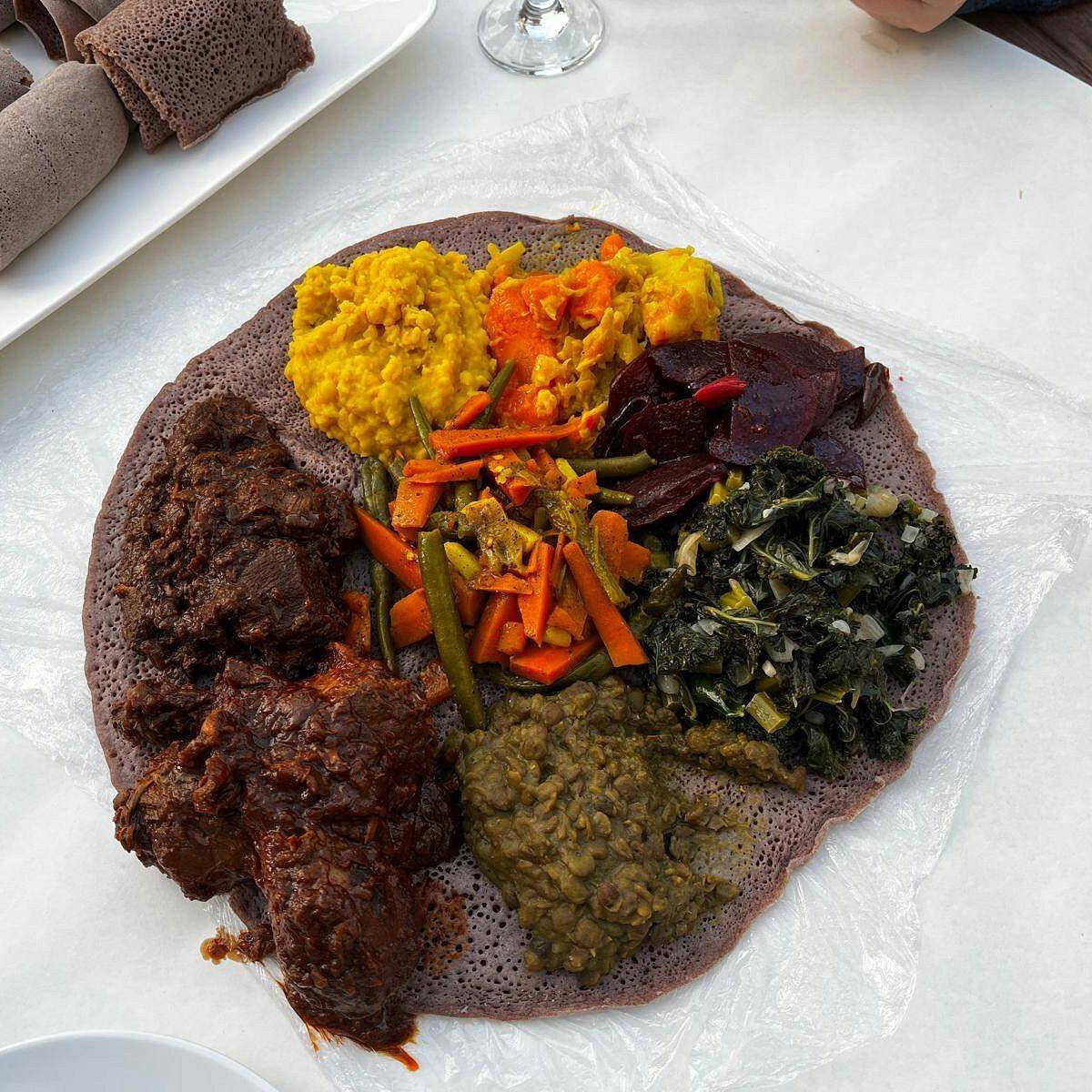
East African communal dining operates on a logic that most Australian restaurant formats do not share. The centrepiece is injera, a large fermented flatbread made from teff flour, which functions simultaneously as plate, utensil, and carbohydrate. Dishes arrive as wot, stew-like preparations that range from spiced lentils and chickpeas to slow-cooked meat in berbere, placed directly onto the injera for shared eating. The protocol is communal by design: a single platter for the table, torn and scooped by hand, with no individual plating.
This format has a longer history in Australian cities with larger East African diaspora communities, particularly Melbourne and Sydney. In those cities, Ethiopian restaurants occupy everything from strip-mall community spots to more considered dining rooms, as the cuisine has moved from diaspora staple to broader mainstream curiosity. In Hobart, which draws its dining character more from European and Asian immigration patterns than East African ones, that category has almost no representation, which gives Queen Sheba a functional exclusivity that has nothing to do with price or awards positioning.
Ethiopian cooking at this address has no direct local competitor to calibrate against, which means the cuisine itself does the contextual work that neighbourhood reputation would normally handle.
What the Address Tells You About the Experience
A restaurant at 112 Murray St occupies a zone of Hobart that is functional rather than atmospheric in the way that, say, the Salamanca Market precinct or the gasworks-era buildings of North Hobart communicate immediate character. The CBD block means the physical approach is urban and transactional: office buildings, streetside parking, the ordinary infrastructure of a working city centre. The experience is therefore one that the interior carries rather than one the neighbourhood delivers on arrival.
This is a pattern common to diaspora restaurants across Australian cities, from the Ethiopian and Eritrean rooms in Melbourne's inner suburbs to the South Asian specialists tucked into commercial strips in Sydney. The dining room is the destination, not the block. For diners accustomed to the waterfront drama that frames a meal at somewhere like Callington Mill Distillery at MACq 01 Hobart, this is a different kind of arrival. The scale is domestic, the format intimate, and the physical investment is in the table rather than the setting.
Where Queen Sheba Sits in the Hobart Dining Conversation
Hobart has developed a confident fine-dining tier over the past decade, visible in the recognition that restaurants across the Tasmanian scene have attracted nationally and internationally. That tier tends to cluster around produce-forward tasting menus and European technique, the same gravitational pull that places like Attica in Melbourne and Brae in Birregurra represent at the national level. Queen Sheba occupies a different bracket entirely, one that is not positioned against that fine-dining tier and does not seek to compete with it.
The relevant comparison is not to Hobart's award-decorated rooms but to the specialist diaspora restaurants that give any city's dining scene range beyond its headline tier. In that frame, Queen Sheba is closer in function to something like Jaani Street Food in Ballarat, which brings a distinct culinary tradition to a regional city where that tradition is otherwise absent, than to the high-end seafood or produce temples that attract most of the critical attention in its city. The value is in category coverage, not in competing for the same diners who book Rockpool in Sydney or Le Bernardin in New York City.
Hobart visitors who eat across the full spectrum rather than only at the fine-dining tier will find Queen Sheba fills a gap that nothing else in the city covers. That is a specific kind of recommendation, and an honest one.
Planning Your Visit
Queen Sheba Injera is located at 112 Murray Street in Hobart's CBD, within walking distance of the waterfront and the major accommodation blocks in the city centre. For travellers building a broader Hobart itinerary, our full Hobart restaurants guide maps the city's dining range across price points and cuisines, from the neighbourhood specialists of North Hobart to the waterfront cluster and the CBD addresses that sit between them.
Frequently asked questions
What's Queen Sheba Injera's location?
Queen Sheba Injera is located at 112 Murray St, Hobart TAS 7000, Australia, Hobart.
Is Queen Sheba Injera the only place in Hobart to eat Ethiopian food?
Based on Hobart's documented restaurant scene, East African cuisine has minimal representation across the city, placing Queen Sheba Injera at 112 Murray Street in a category with few, if any, direct equivalents. For visitors or locals specifically seeking injera-based communal dining in Tasmania, this address is the reference point.
What should I eat at Queen Sheba Injera?
The shared injera platter is the format around which everything else is built. Injera — a large fermented teff flatbread — acts as both plate and utensil, with wot stews arranged across it for communal eating. Rather than ordering individual dishes, most tables order a combination of wot preparations, typically a mix of meat and vegetable options, which is how East African dining at this address is intended to work.
How hard is it to get a table at Queen Sheba Injera?
Smaller specialist restaurants in Hobart's CBD tend to run at capacity on weekend evenings, and Queen Sheba occupies a format category with no direct competitors in the city. Calling ahead or checking the venue's current booking arrangements before visiting on a Friday or Saturday is advisable. Midweek visits to CBD addresses at 112 Murray St typically carry less timing risk.
What's Queen Sheba Injera best at?
The communal injera platter delivers something no other Hobart address currently does: the full East African shared-dining format, built around fermented teff bread and wot stew combinations eaten without cutlery. That structural difference from the European bistro register that dominates Hobart's dining scene is the clearest reason to make the trip to Murray Street.
Can Queen Sheba Injera handle vegetarian requests?
Ethiopian cuisine has a deep structural tradition of vegetarian cooking, rooted in Orthodox Christian fasting observances that historically eliminated meat and dairy from the diet on designated days. This means vegetable-based wot preparations are not an afterthought but a central part of the repertoire. Hobart diners looking for a vegetarian communal dining format with genuine culinary logic behind it will find Queen Sheba's menu well-suited to that requirement.
A Minimal comparable set
Comparable venues nearby, for context on price, style, and recognition.
| Venue | Cuisine | Price | Awards | Notes |
|---|---|---|---|---|
| Queen Sheba InjeraThis venue — the venue you are viewing | Authentic Ethiopian | $20–30 | Not listed | Not listed |
| Lost in Asia | Pan-Asian Share Plates | Not listed | Not listed | Hobart CBD, Pan-Asian Share Plates |
| The Astor Grill | Contemporary Australian Grill | $50–100 | Not listed | Hobart CBD, Contemporary Australian Grill |
| Landscape Restaurant & Grill | Tasmanian Steakhouse Grill | $50–100 | Not listed | Hobart waterfront, Tasmanian Steakhouse Grill |
| Don Camillo Restaurant | Classic Italian Trattoria | $30–50 | Not listed | Sandy Bay, Classic Italian Trattoria |
| Aloft | Modern Australasian Fine Dining | $100–150 | We're Smart World 2 Radishes | Hobart CBD, Modern Australasian Fine Dining |
Continue exploring
More in Hobart
Restaurants in Hobart
Browse all →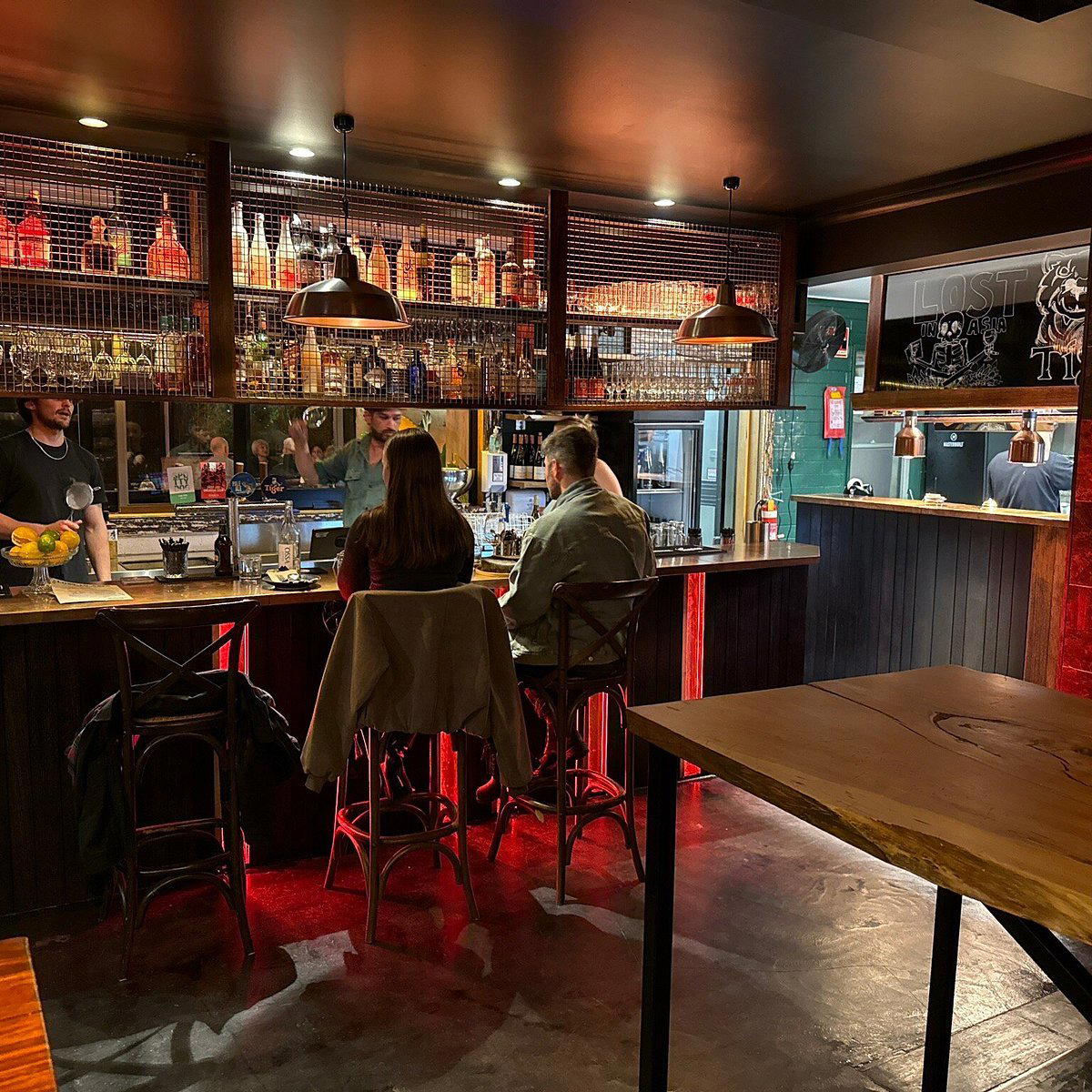
Bars in Hobart
Browse all →
Hotels in Hobart
Browse all →
Details
- Cozy
- Rustic
- Casual Hangout
- Family
- Local Sourcing
- A La Carte
- Vegetarian Friendly
- Vegan Options
Current opening hours
- Monday
- Closed
- Tuesday
- Closed
- Wednesday
- 11 AM–8:30 PM
- Thursday
- 11 AM–8:30 PM
- Friday
- 11 AM–8:30 PM
- Saturday
- 11 AM–8:30 PM
- Sunday
- 11 AM–8:30 PM
Hours can change for holidays and private events. Last verified .
Welcoming and energetic atmosphere with a focus on communal Ethiopian hospitality.