A Japanese-influenced wine bar on Liverpool Street, Scholé occupies a niche that few Hobart venues attempt: the convergence of live counter preparation, considered natural wine, and Japanese technique. The format rewards those who eat at the bar, where proximity to preparation is the point. In a city still building its fine-casual dining vocabulary, it reads as one of the more deliberate experiments on the current scene.
Pearl is the En Primeur Club membership app — saves, bookings, and concierge access live there. Same editors, same standards.
- Address
- 227 Liverpool St, Hobart TAS 7001, Australia
- Website
- schole.com.au
- Directions
- Get directions
 Saves & bookings on Pearl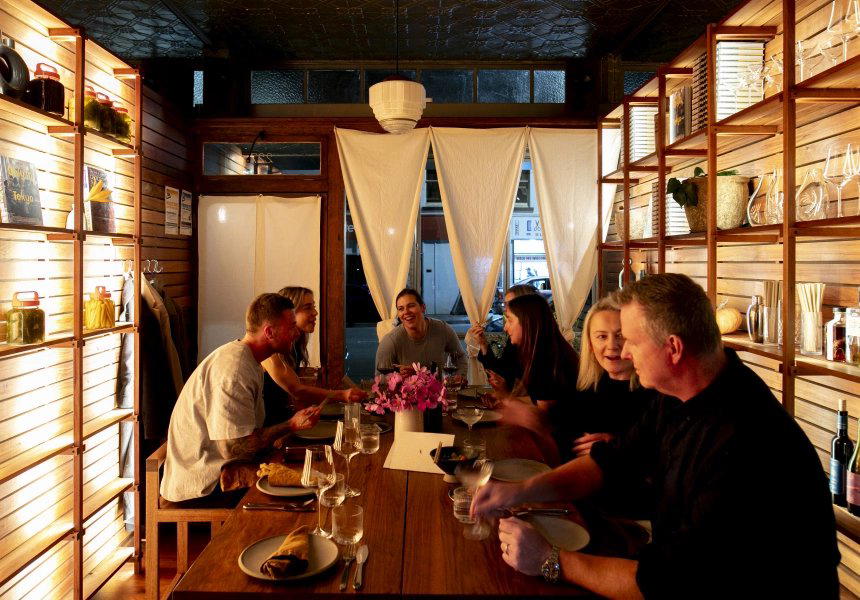
Counter Culture in the Deep South
Liverpool Street in Hobart runs through a part of the city that has absorbed much of Tasmania's recent dining ambition. The block between the CBD fringe and the Georgian residential grid has accumulated a loose cluster of venues with more considered formats than their modest shopfronts suggest. Scholé, at number 227, fits that pattern: from the street, it signals little. Inside, the premise becomes clearer. This is a restaurant where the counter is the architecture, Japanese technique supplies the kitchen logic, and the wine list does more work than most menus in the city.
The Japanese-influenced wine bar format has emerged in Australian cities as a distinct category, sitting between the European natural wine bar and the omakase counter. Cities like Melbourne and Sydney have developed this hybrid with some consistency, think of the way venues around Bar Carolina in South Yarra or the broader Newtown and Fitzroy bar scenes have absorbed Japanese snacking logic into otherwise wine-forward rooms. Hobart arriving at a version of this format reflects how far Tasmania's dining scene has shifted in roughly a decade, from a destination built around produce provenance to one capable of sustaining technically specific, format-driven venues.
The Performance at the Pass
The editorial angle that makes Scholé worth examining is the one that the Japanese-influenced format makes possible: preparation as spectacle, even at small scale. Counter dining in the Japanese tradition is not incidental to the experience, the counter is the room, and proximity to the cook is the reason to be there rather than at a table. This is a different premise from the European wine bar, where the glass is primary and the food is supplementary. At counters informed by Japanese working principles, the sequence of preparation, the precision of knife work, and the temperature management of service become visible and legible to the diner in ways that a closed kitchen simply cannot offer.
That performance logic places Scholé in a comparable set that extends well beyond Hobart's immediate scene. Venues like Atomix in New York City, which operates a rigidly counter-based tasting format, or the broader counter traditions visible at venues in the Kanesaka and Saito lineage in Tokyo, represent the high-formality end of this spectrum. The Australian version tends toward informality without sacrificing precision, a register closer to what Le Bernardin in New York City does with French technique in terms of maintaining technical discipline within a room that doesn't feel ceremonial. Scholé, operating in a smaller city with a different economic ceiling, occupies a modest position in that broader continuum, but the underlying logic is consistent.
Where Scholé Sits in the Hobart Scene
Hobart's dining scene has grown complex enough to sustain genuine specialism. The Agrarian Kitchen represents the farm-table end of the spectrum, where produce origin and paddock-to-plate narrative carry the room. Long-standing European-format restaurants like Don Camillo Restaurant and Cugini Restaurant anchor the city's older dining traditions. More recent arrivals like Aloft and the hospitality programming around venues like Callington Mill Distillery at MACq 01 Hobart reflect the influence of Tasmania's broader hospitality economy on the city's central venues.
Scholé occupies a different register from all of these. The Japanese-wine bar hybrid is not competing with the farm-table format or the long-established Italian dining room. Its competition is the kind of venue that has become increasingly prevalent in Melbourne's inner suburbs and Sydney's inner east: low-key in presentation, high in technical specificity, with a wine list that skews natural and a food program that rewards knowledge of Japanese technique. For Hobart, that represents a newer addition to the vocabulary. It also points to a trajectory that Australia's smaller capital cities have increasingly followed, where the influence of Melbourne and Sydney's bar and restaurant scenes arrives with a lag but arrives with growing fidelity to the original format logic.
The national context is worth noting. Australian venues like Attica in Melbourne and Brae in Birregurra have established that regional and produce-led dining can carry serious critical weight. Rockpool in Sydney built a case for technically precise, ingredient-focused cooking at scale. The Japanese-wine bar format sits in a different corner of this ecosystem: smaller, more personal, less dependent on the premium-produce narrative and more dependent on the specificity of what happens at the counter on a given night.
Planning a Visit
Scholé operates on Liverpool Street in central Hobart, within walking distance of the CBD and the waterfront precinct. The venue's format, counter-led, with a wine list as structuring logic, tends to attract a diner who arrives with specific intent rather than in transit. Booking ahead is essential. Small venues of this type in Australian cities, including comparable formats in Melbourne suburbs covered by venues like Barry Cafe in Northcote, routinely fill on weekends several weeks in advance. Hobart's visitor season peaks in the summer months, roughly November through March, when the population in the city's restaurant district increases substantially. Visiting outside that window, in autumn or early winter, typically offers more availability and, in venues with counter formats, a different atmosphere, fewer tourists, more regulars, and a room that functions more like a local dining institution than a destination tick.
Scholé works well as part of a multi-night stay, where it sits alongside rather than instead of the city's produce-led and long-form dining options.
Same-City Peers
Comparable venues nearby, for context on price, style, and recognition.
| Venue | Cuisine | Price | Notes |
|---|---|---|---|
| ScholéThis venue — the venue you are viewing | Japanese-inspired Tasmanian | $$$ | Not listed |
| The Astor Grill | Contemporary Australian Grill | $$$ | Hobart CBD |
| Cugini Restaurant | Authentic Italian Pizza and Pasta | $$ | Bellerive |
| Omotenashi Hobart | Japanese Kaiseki Omakase | $$$$ | Hobart CBD |
| Don Camillo Restaurant | Classic Italian Trattoria | $$$ | Sandy Bay |
| Analiese Gregory’s anti-restaurant | Intimate seasonal fusion by Analiese Gregory | $$$ | Hobart |
Continue exploring
More in Hobart
Restaurants in Hobart
Browse all →
Bars in Hobart
Browse all →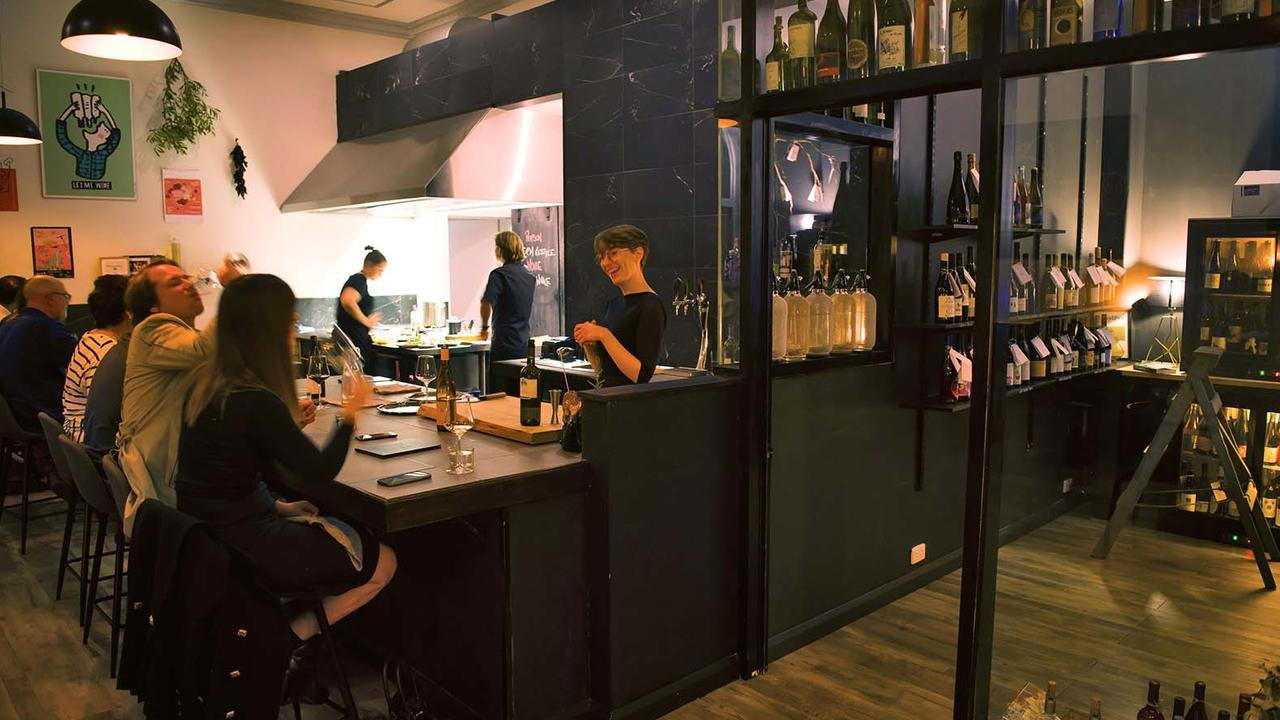
Hotels in Hobart
Browse all →

At a Glance
- Intimate
- Cozy
- Elegant
- Modern
- Date Night
- Special Occasion
- Open Kitchen
- Historic Building
- Extensive Wine List
- Sake Program
- Local Sourcing
Current opening hours
- Monday
- Closed
- Tuesday
- 4–8 PM
- Wednesday
- 5:30 PM–12 AM
- Thursday
- 5:30 PM–12 AM
- Friday
- 5:30 PM–12 AM
- Saturday
- 5:30 PM–12 AM
- Sunday
- Closed
Hours can change for holidays and private events. Last verified .
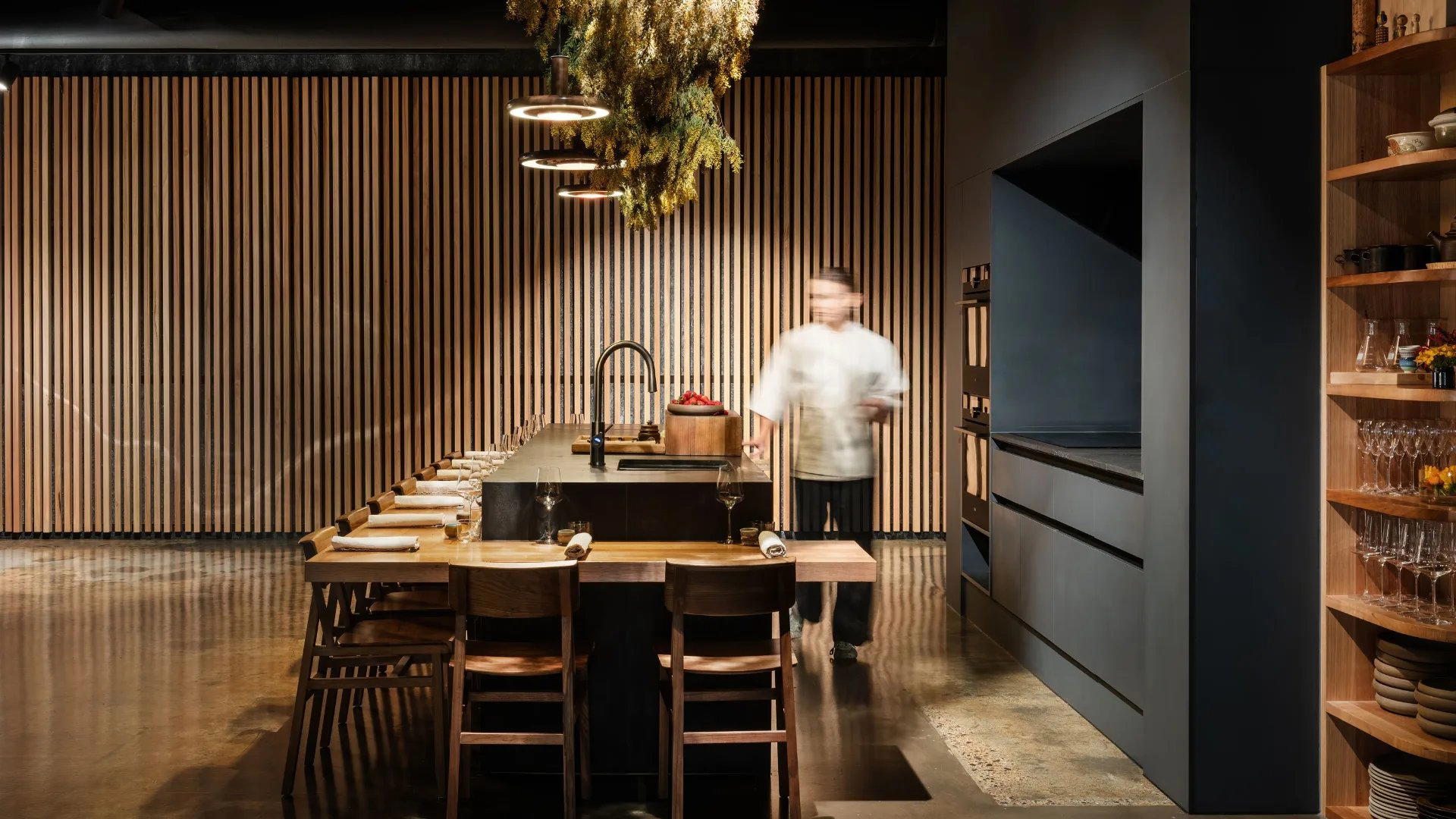
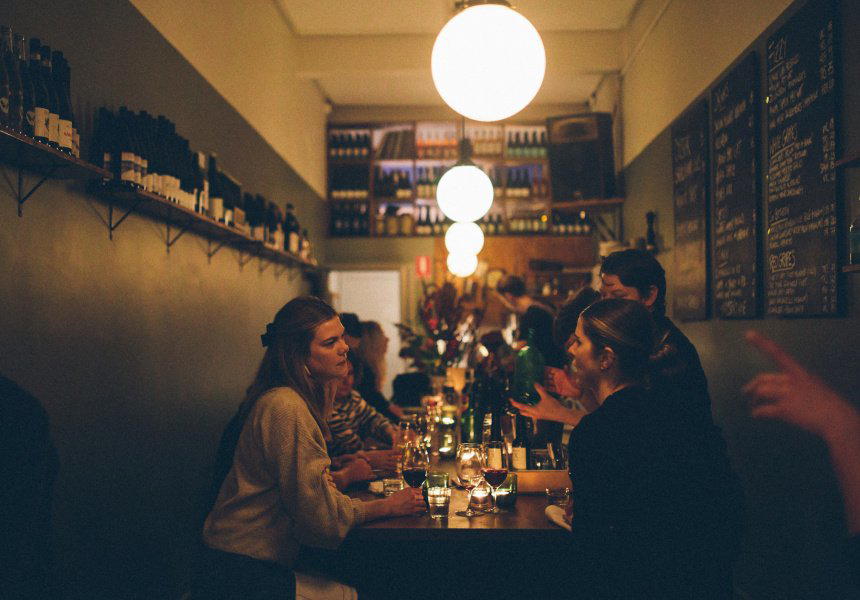
Cosy timber-wrapped interior with warm glow, communal table fostering community in a petite historic space.