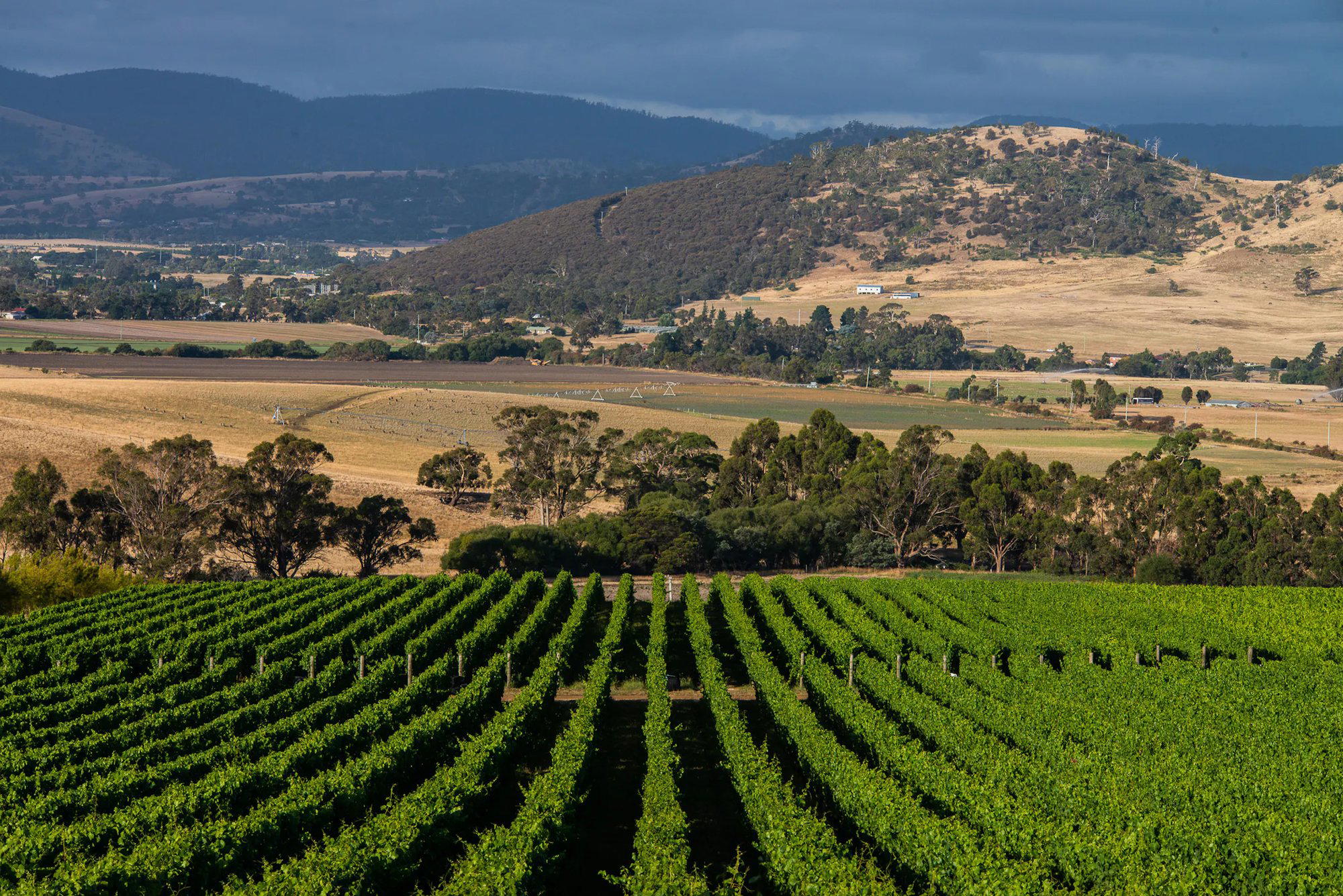
Stefano Lubiana operates from a working estate in Granton, on the Derwent Valley floor just north of Hobart, where cool-climate growing conditions shape a portfolio. The property sits within one of Australia's most compelling emerging wine regions, where latitude and river influence combine to produce wines of genuine restraint and structure.

Pearl is the En Primeur Club membership app — saves, bookings, and concierge access live there. Same editors, same standards.
- Address
- 60 Rowbottoms Rd, Granton TAS 7030
- Phone
- +61 434 821 118
- Website
- slw.com.au
- Directions
- Get directions
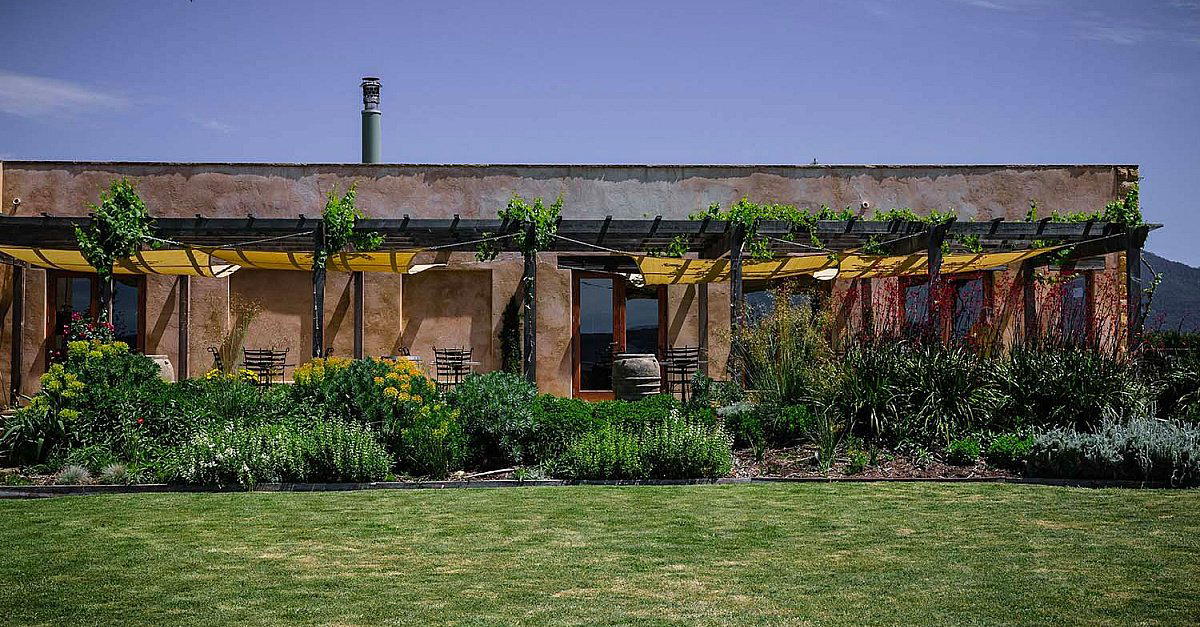
Where the Derwent Valley Sets the Terms
The drive north from Hobart along the Derwent Valley is an exercise in watching the land shift. The river widens, the hills flatten into terraced slopes, and the temperature drops in ways that matter to a vine. By the time you reach Granton, the conditions underfoot and overhead have already told you something about what to expect in the glass. This is cool-climate viticulture at a latitude that sits closer to Burgundy than to the Barossa, and the wines made here carry that geography openly.
Stefano Lubiana, addressed at 60 Rowbottoms Road, Granton TAS 7030, sits within this context as one of the Derwent Valley's reference-point producers. For readers planning a visit, the property is approximately 20 minutes north of Hobart's CBD, making it a logical anchor for a half-day excursion that connects the city's dining scene with the growing region that increasingly supplies it.
The Derwent Valley Argument
Tasmania's wine identity has sharpened considerably over the past two decades, moving from a regional curiosity to a reference point cited by sommeliers placing southern-hemisphere cool-climate bottles alongside their northern counterparts. The Derwent Valley sits within that shift as a sub-region with a distinct character: river-influence moderation, basalt and dolerite soils, and a harvest window that extends later than most of mainland Australia allows.
These conditions favour varieties that struggle in warmer climates. Pinot Noir develops structure without the jammy forward fruit that heat brings. Chardonnay retains acidity that most Australian examples have to work to achieve artificially. Sparkling base material, drawn from grapes harvested early for natural acidity, is a legitimate output here rather than a concession. In that context, Stefano Lubiana's positioning in Granton is not incidental geography — it is the central argument for the wines. Compare this with producers operating in warmer Australian regions: All Saints Estate in Rutherglen works with the heat to its own advantage in fortified styles, while Angove Family Winemakers in Renmark operates under an entirely different climatic logic. The Tasmanian model is structurally separate.
Across Australia, the producers who have built the most durable critical reputations tend to anchor their identity in a specific place rather than a specific technique. Henschke in the Eden Valley, Penfolds drawing on Barossa depth, and Bass Phillip in Gippsland translating a cool coastal Victorian site into Pinot — each case is a terroir argument made through consistent production over time.
Atmosphere and Approach on the Property
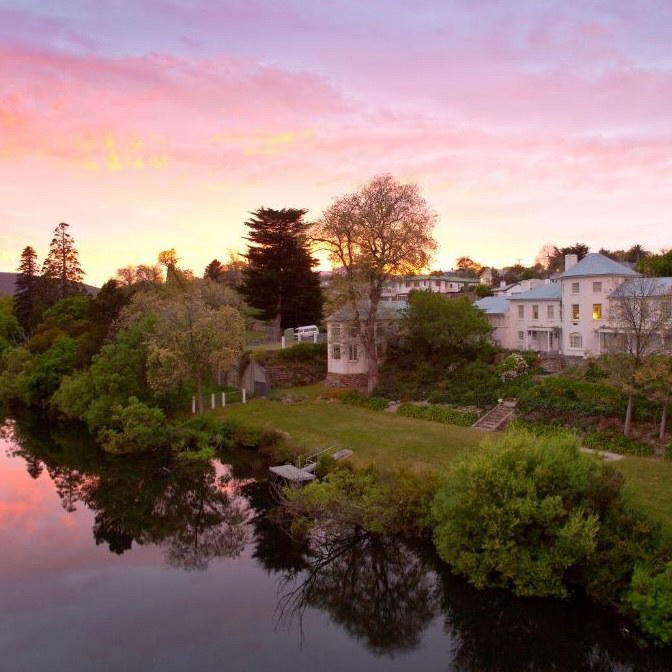
Estates at this level of recognition in the southern hemisphere tend to divide between those built for visitor throughput and those that function primarily as working properties where the visitor experience is shaped by that priority. The Granton setting, with its river-facing slopes and operational vineyard infrastructure, belongs to the latter category. The atmosphere is purposeful rather than theatrical: you are on a farm that makes wine, and the aesthetic follows from that fact rather than from a designed hospitality brief.
This is consistent with a broader pattern among serious cool-climate Australian producers. Leading's Wines in Great Western and Brokenwood in Hunter Valley both operate from properties where the production environment is visible and central to the visit rather than screened behind a purpose-built cellar door experience. At Stefano Lubiana, the Derwent Valley backdrop and the physical presence of the vines form the context for tasting, which aligns the sensory experience with the terroir argument the wines make.
Visitors should approach the property with that framing. This is not a drop-in destination suited to spontaneous visits. Contact ahead of time to confirm availability, given that working estate schedules do not always accommodate unannounced arrivals. The address at 60 Rowbottoms Road is well-signposted from the main valley road, and the site is accessible from Hobart without requiring a full-day commitment, though pairing it with other Derwent Valley stops extends the visit naturally.
What to Taste and Why It Matters
Prestige-tier ratings at this level indicate wines evaluated against an international cool-climate standard rather than a domestic-only frame of reference. For a Derwent Valley producer, that means the Pinot Noir, sparkling, and Chardonnay outputs are being assessed alongside peers from regions with established global profiles.
The practical implication for visitors is that the wines worth seeking out are those that most directly express the valley's character. In cool-climate Australian contexts, that typically means tasting across vintages where available, since the region's growing conditions introduce vintage variation that warmer regions absorb more quietly. A year with a longer, cooler ripening season will produce a structurally different wine from a year with early heat, and both are arguments the valley makes on its own terms.
Producers operating in warmer Australian conditions, including Brown Brothers in King Valley or Bird in Hand in Adelaide Hills, work with different tools. The Adelaide Hills comes closest to the cool-climate framework, but still operates at a different latitude and with different soil types.
Granton in the Wider Tasmanian Context
Granton functions as a gateway to the Derwent Valley wine corridor without having developed the visitor infrastructure of more established Australian wine destinations. There are no hotel clusters or established restaurant strips here. The visit is principally about the properties themselves. Hobart, twenty minutes south, provides accommodation and dining of genuine quality, including a restaurant scene that has tracked Tasmania's wine reputation upward over the past decade.
For context on the broader range of serious Australian and international production, properties including Blue Pyrenees Estate in Pyrenees and Archie Rose Distilling Co in Sydney represent the range of approaches Australian producers take to premium positioning. Distillers like Bundaberg Rum Distillery in Bundaberg and Aberlour in Aberlour operate in entirely separate categories, but the principle of place-rooted production recurs across all of them. At the premium end of Napa Valley production, estates like Accendo Cellars in St. Helena and Casella Family in Griffith illustrate how differently climate and scale interact with prestige positioning. Tasmania's model remains deliberately small in scale and geographically specific by comparison.
For planning purposes, our full Granton restaurants guide covers the dining options in and around the area, including Hobart connections for those building a longer itinerary around the Derwent Valley corridor.
Planning a Visit
In Context: Similar Options
Comparable venues nearby, for context on price, style, and recognition.
| Venue | Cuisine | Price | Awards | Notes |
|---|---|---|---|---|
| Stefano LubianaThis venue — the venue you are viewing | Pinot Noir, Chardonnay | Not listed | Not listed | Not listed |
| Tolpuddle Vineyard | Chardonnay, Pinot Noir | $50–100 | Falstaff Winery - Listed | Coal River Valley |
| Jansz Tasmania | pinot_noir, chardonnay | $20–30 | Falstaff Winery - Listed | Pipers River |
| Delamere Vineyards | Pinot Noir, Chardonnay | $20–30 | Not listed | Pipers Brook |
| McHenry Distillery | Tasman Peninsula | Not listed | Not listed | Port Arthur |
| Lark | Tasmania | $30–50 | Not listed | Pontville |
Continue exploring
More in Granton
Wineries in Granton
Browse all →

Bars in Granton
Browse all →
Restaurants in Granton
Browse all →
Details
- Scenic
- Rustic
- Elegant
- Intimate
- Wine Education
- Special Occasion
- Estate Grounds
- Garden
- Terrace
- Biodynamic
- Organic
- Vineyard
- Waterfront
- Garden
- Pinot Noir
- Chardonnay
- Riesling
- Sauvignon Blanc
- Pinot Gris
- Syrah
- Still Red
- Still White
- Sparkling
- Cellar Door
Tuscan-inspired Italian villa set amongst vines with river views, open fires, and relaxing garden patios.