Postkantoor
Postkantoor occupies a storied address on Hippolytusbuurt in central Delft, drawing a loyal local following that returns well beyond first curiosity. The setting, in a building with genuine historical character, frames a dining experience rooted in the rhythms of a city that moves at its own considered pace. For visitors and regulars alike, it represents the kind of place Delft does quietly well.
Pearl is the En Primeur Club membership app — saves, bookings, and concierge access live there. Same editors, same standards.
- Address
- Hippolytusbuurt 14, 2611 JB Delft, Netherlands
- Phone
- +31157503243
- Website
- postkantoordelft.nl
- Directions
- Get directions
 Saves & bookings on Pearl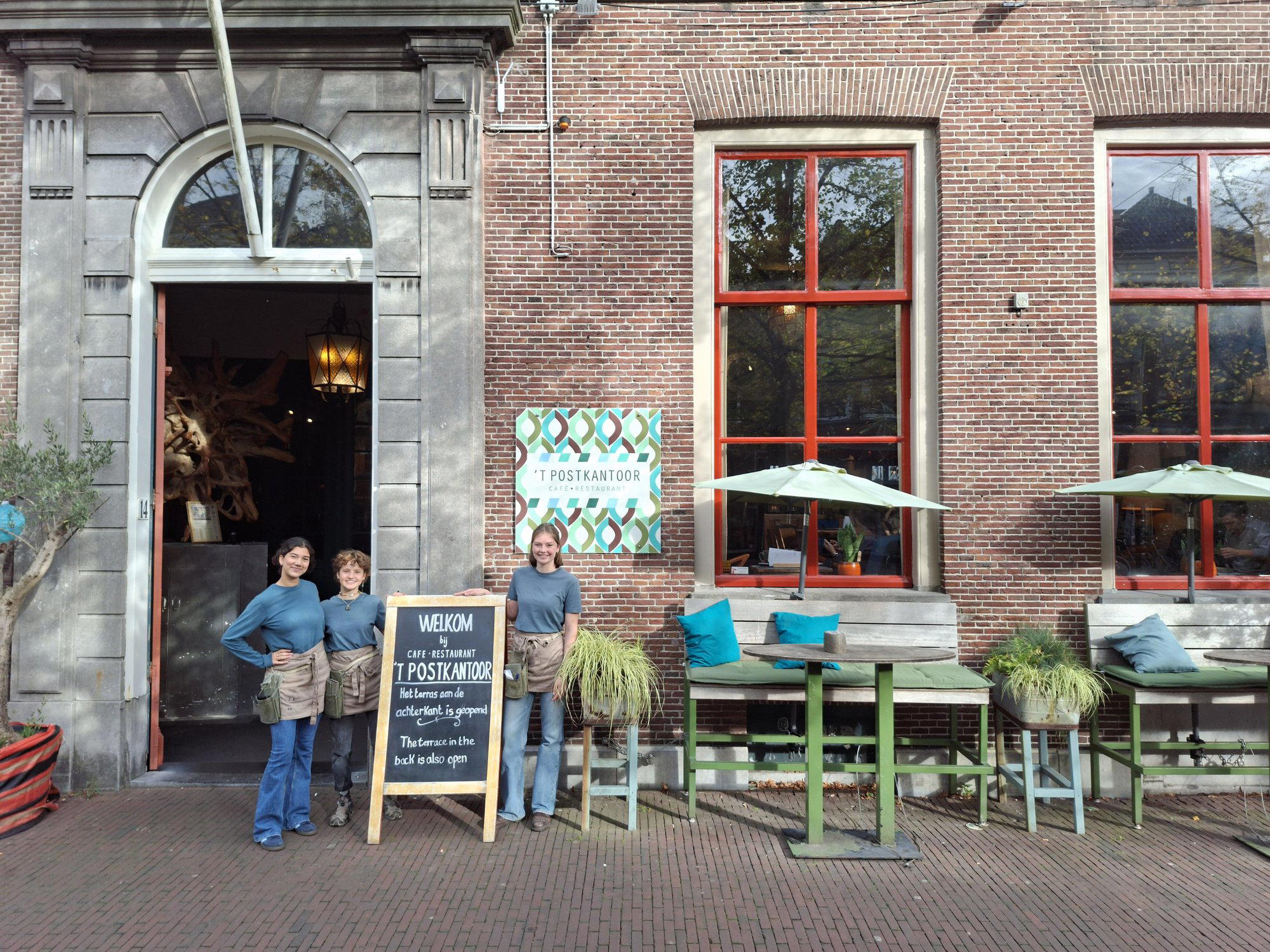
A Room That Earns Its Regulars
There is a particular kind of Delft establishment that locals rarely mention to visitors, not out of possessiveness, but because it has never needed promotion. Postkantoor, on Hippolytusbuurt 14, sits in this category. The address alone carries weight: Hippolytusbuurt runs through one of Delft's most architecturally layered stretches, where the canal city's pace slows and the buildings speak in Dutch Golden Age and civic vernacular rather than tourist-facing novelty. Arriving here, the scene reads less like a dining destination and more like a neighbourhood institution that happens to be open to anyone willing to find it.
Delft's dining scene has developed a dual character in recent years. On one side, the city's proximity to The Hague (roughly fifteen minutes by train) draws a professional and diplomatic crowd that expects polish without pretension. On the other, the Technical University's presence sustains a younger, more exploratory diner who is comfortable with less ceremony. The restaurants that survive across both audiences tend to be the ones with rooms that feel settled, staffed by people who recognise faces, and menus calibrated for return visits rather than one-off occasions. Postkantoor fits that pattern, operating from a building whose history as a postal facility gives it a civic solidity that newer openings cannot replicate.
What the Regulars Know
The clearest signal that a restaurant has earned genuine loyalty is what its habitual guests order without looking at the menu. At places like Postkantoor, that unwritten knowledge tends to accumulate around particular dishes, particular seats, and particular times of day. The broader pattern across Delft's mid-tier dining is that venues with historical premises tend to develop this loyalty faster: the physical environment provides continuity, and continuity breeds ritual. Guests who return to the same room over months and years develop a relationship with the space that is distinct from the transactional experience at high-turnover addresses.
In this context, Postkantoor draws comparisons to the kind of Dutch brown café-adjacent dining rooms that have outlasted successive waves of trend-driven openings. The Dutch hospitality tradition has always had more tolerance for the familiar than for the theatrical, and Delft, with its intact historic centre and relatively stable resident population, is one of the cities where that preference holds most firmly. Other restaurants in the city work with similar loyalty dynamics: Brasserie Monastere and Kruydt have built comparable followings through consistency and setting, while HUmmUS, Il Tartufo, and Kokam demonstrate how Delft's smaller operators build devoted audiences through specificity of offer rather than breadth of appeal.
Delft in the Dutch Dining Context
To understand what Postkantoor represents, it helps to map Delft's position in the wider Netherlands dining picture. The country's most recognised restaurants cluster in Amsterdam, with significant representation in Zwolle, where De Librije anchors the city's fine dining identity, and in smaller towns that have become destinations in their own right: 't Nonnetje in Harderwijk, Brut172 in Reijmerstok, and De Groene Lantaarn in Staphorst each illustrate the Dutch capacity to sustain serious cooking far from urban centres. Amsterdam's hotel dining, represented at the leading end by Ciel Bleu, and suburban operations like Aan de Poel in Amstelveen, De Bokkedoorns in Overveen, and De Lindehof in Nuenen, round out a national picture where geography rarely limits ambition. Giethoorn's De Lindenhof and Nijmegen's De Nieuwe Winkel confirm the pattern further.
Delft, by contrast, operates in a register that is less about destination dining and more about embedded neighbourhood value. The city's restaurants are not competing with Le Bernardin in New York or Atomix for international attention. They are competing for the loyalty of the couple who live ten minutes away by bicycle and who will return twelve times in a year if the room, the food, and the rhythm earn it. That is a harder test, in some ways, than earning a critical endorsement.
The Building as Context
The former post office format gives Postkantoor a spatial grammar that most restaurant interiors in Delft cannot match. Post offices were built to project civic confidence: high ceilings, considered proportions, materials that aged rather than deteriorated. When these spaces are converted for hospitality use, they tend to produce rooms with a presence that newer builds struggle to replicate. The Netherlands has several examples of successful institutional conversions across sectors, and the dining category has benefited particularly from buildings that were designed to receive the public at scale and with a degree of formality.
For returning guests, this physical environment provides a stability that contributes directly to the loyalty dynamic. A room that does not change becomes a reference point, and regulars develop a proprietary relationship with the details: the angle of light at a particular table, the acoustics in a specific corner, the way the space feels different on a winter evening versus a summer lunch. This is the invisible currency of an established dining room, and it is not transferable to a newer address regardless of kitchen quality.
Planning a Visit
Postkantoor's address on Hippolytusbuurt places it within easy walking distance of Delft's central market square and canal network, making it accessible on foot from most central accommodation. Delft is a compact city by Dutch standards, with the historic core easily covered in fifteen minutes at walking pace. Visitors arriving by train from Amsterdam or The Hague will find the address roughly ten to fifteen minutes from Delft Centraal on foot, following the canal routes that define the city's internal geography.
Reservations are recommended for visits.
Style and Standing
Comparable venues nearby, for context on price, style, and recognition.
| Venue | Cuisine | Price | Notes |
|---|---|---|---|
| PostkantoorThis venue — the venue you are viewing | French-Oriental Fusion with Dutch Influences | $$ | Not listed |
| Il Tartufo | Authentic Italian Osteria | $$ | Binnenstad |
| Wijnhaven | International Café & Gastropub | $$ | Binnenstad (City Center) |
| Lakila | Mediterranean Tapas | $$ | Vrouwenregt |
| VADERLOOS | Eclectic Global Fusion Bistro | $$ | historical centrum |
| Kokam | Authentic Vegetarian Indian | $$ | Vrouwenregt |
Continue exploring
More in Delft
Restaurants in Delft
Browse all →
Bars in Delft
Browse all →
Hotels in Delft
Browse all →
Wineries in Delft
Browse all →
At a Glance
- Cozy
- Historic
- Intimate
- Brunch
- Casual Hangout
- Historic Building
- Terrace
- Street Scene
Current opening hours
- Monday
- 9:30 AM–11:30 PM
- Tuesday
- 9:30 AM–11:30 PM
- Wednesday
- 9:30 AM–11:30 PM
- Thursday
- 9:30 AM–11:30 PM
- Friday
- 9:30 AM–12 AM
- Saturday
- 9:30 AM–12 AM
- Sunday
- 9:30 AM–11:30 PM
Hours can change for holidays and private events. Last verified .
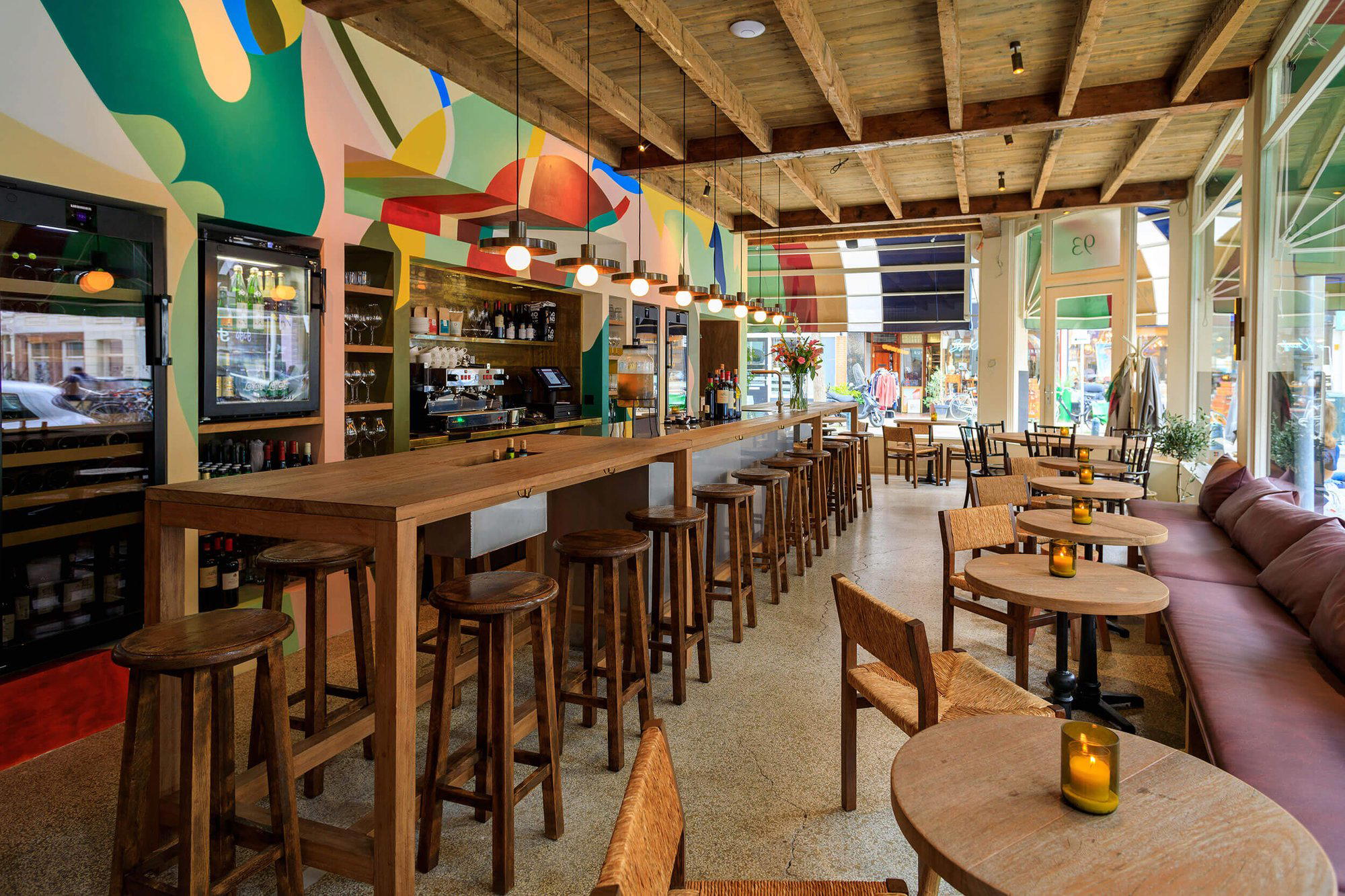
Cozy interior with open fireplace, beautiful historic decor, and charming canal-side terrace.