On Isidora Goyenechea in Las Condes, Pizzería Tiramisú occupies one of Santiago's more address-conscious dining corridors, where Italian-leaning kitchens compete for the loyalty of a neighbourhood that rewards consistency over novelty. The name alone signals the dual identity: pizza and the dessert that Italians treat as a point of honour, combined under one roof in eastern Santiago.
Pearl is the En Primeur Club membership app — saves, bookings, and concierge access live there. Same editors, same standards.
- Address
- Isidora Goyenechea 3141, 7550000 Las Condes, Región Metropolitana, Chile
- Phone
- +56 2 2519 4900
- Website
- tiramisu.cl
- Directions
- Get directions
 Saves & bookings on Pearl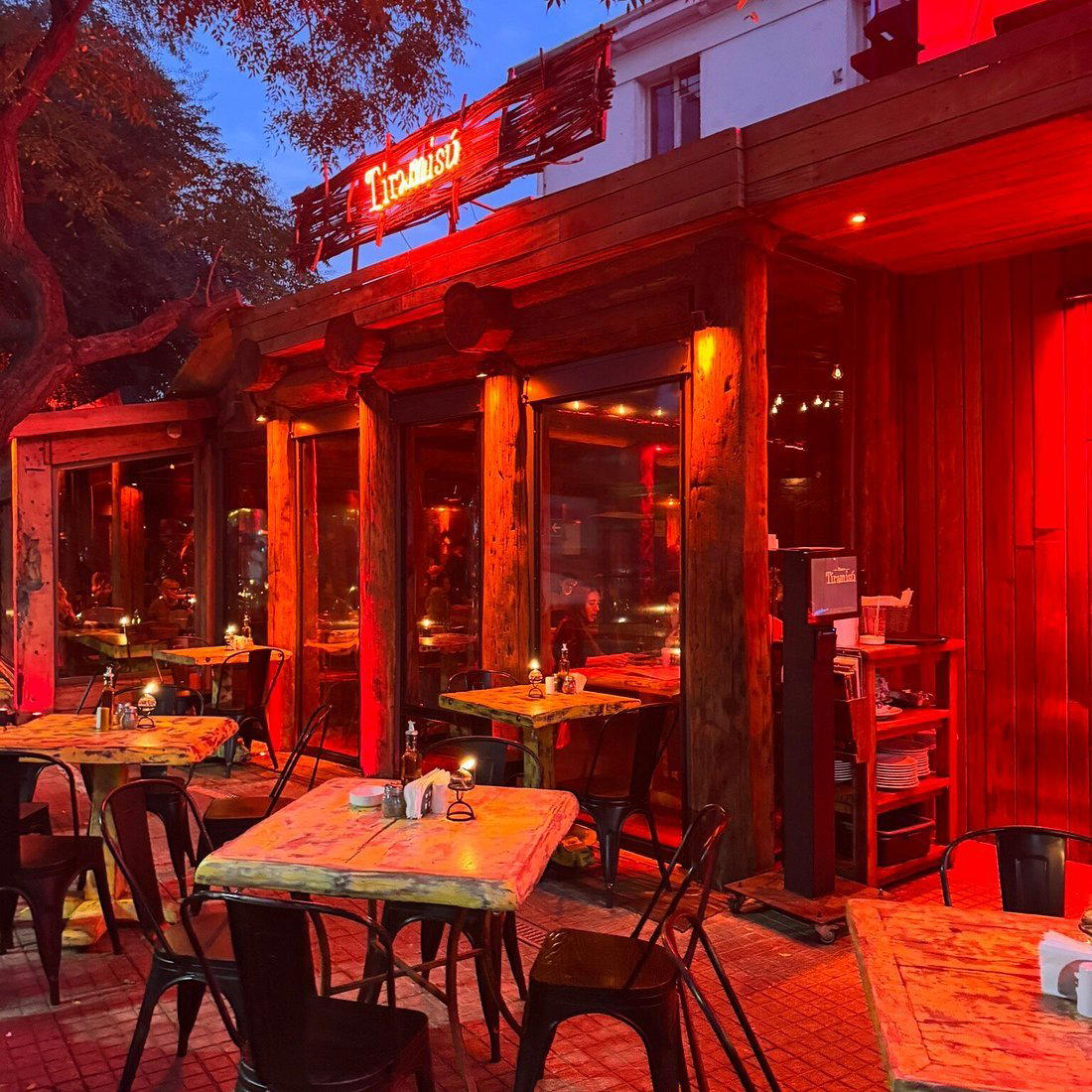
Las Condes and the Italian Question
In Santiago's eastern residential belt, the dining conversation tends to split between high-concept Chilean kitchens and the quieter, more persistent appeal of European comfort formats. Italian food sits firmly in the second camp. From Providencia through Vitacura and into Las Condes, Italian-leaning restaurants have held ground for decades against the rotating arrivals of tasting menus and fusion counters. The premise is always the same: a neighbourhood that eats out regularly, that values recognisable cooking, and that will return on a Tuesday with no occasion beyond appetite. Pizzería Tiramisú, on Isidora Goyenechea 3141, operates within that tradition.
Isidora Goyenechea is a useful address marker in Santiago. The street runs through the commercial and residential core of Las Condes, lined with office towers, apartment buildings, and the kind of restaurants that survive on repeat business rather than destination traffic. It is not the strip you visit once and photograph. It is where Santiago's professional class eats lunch on weekdays and dinner with family on Fridays. A pizzería on that street is not competing with Boragó or 99 Restaurante for a rarefied dining occasion. It is competing for the kind of habitual loyalty that is, commercially, far more durable.
The Physical Container
Italian casual dining in Santiago has historically drawn from two spatial templates: the cramped, warm trattoria model, where tables are close and the noise is part of the atmosphere, and the slightly more open, contemporary format that Latin American cities adapted from European originals during the 1990s and 2000s. Both models share certain design assumptions: warm light, surfaces that absorb rather than reflect (wood rather than glass, brick rather than marble), and a seating arrangement that prioritises the table as a social unit rather than the kitchen as spectacle.
Pizzería Tiramisú's position on a busy Las Condes street means its relationship with the exterior is a defining design variable. Street-facing restaurants in this part of Santiago often negotiate between pulling in passing foot traffic and creating enough interior enclosure to feel like a destination rather than a transit stop. The name above the door does significant work here. A pizzería named for its dessert is announcing a certain character before you arrive at the menu: informal in register, confident in repertoire, and not interested in reinventing anything. The interior, wherever it falls on the trattoria-to-contemporary spectrum, would need to support that reading.
For Santiago diners comparing options across the eastern zones, this spatial type contrasts sharply with the architectural ambition of places like Demencia or the deliberately spare rooms favoured by the city's newer fine-dining entrants. The Italian casual format makes a different bet: that comfort and familiarity in the physical environment lower the psychological cost of the meal, and that returning customers are worth more than first-timers impressed by a dramatic room.
What the Name Commits To
Naming a restaurant after both its savory and sweet anchors is a deliberate compression of the offer. In Italian restaurant culture, tiramisú carries specific weight. It is the dessert that every kitchen claims to do correctly and that regulars use as a quiet benchmark. A pizzería that puts it in the name is, in effect, promising that the dessert is not an afterthought. This is a meaningful signal in a city where Italian restaurants often treat dolci as a secondary consideration, cycling through imported options rather than making in-house.
The pizza half of the equation places the restaurant squarely in a competitive set that has grown considerably in Santiago over the past decade. Chilean cities, and particularly Santiago's wealthier eastern communes, have seen sustained investment in Neapolitan-style and Roman-style pizza formats, with wood-fired ovens and longer fermentation protocols becoming increasingly common talking points. How Pizzería Tiramisú positions within that evolution, whether it favours a thicker, more Chilean-adapted base or the lighter, leopard-spotted Neapolitan standard, is not something this description resolves. What is clear is that the address and the format together point toward a neighbourhood dining model rather than a pizza specialist destination.
For readers comparing Italian options across Santiago and the broader Chilean territory, the contrast is informative. Pasta e Vino Ristorante in Valparaíso operates in a different coastal register, while within Santiago itself, the Italian casual format sits in a different tier from the French-Chilean ambition of Ambrosia or the seafood focus of La Calma by Fredes.
Las Condes in Context
Understanding what Pizzería Tiramisú offers requires understanding what Las Condes is. It is not Santiago's bohemian quarter, which sits further west in Barrio Italia and Barrio Lastarria. It is not the fine-dining corridor of Vitacura. Las Condes is prosperous, functional, and residential, a commune where families live rather than tourists visit, and where the restaurant economy runs on school-night dinners and weekend family lunches rather than occasion dining. The restaurants that last in Las Condes tend to do so by being reliably present: open when you need them, consistent enough that you do not have to think about your choice.
That reliability bias shapes the entire design and service model of the Italian casual format in this zone. Menus tend toward breadth over depth, covering enough ground that a table of four with different preferences can each find their register. The physical space tends toward flexibility: enough tables to accommodate group bookings, but not so formal that couples feel stranded. It is a format tuned to the social rhythms of an upper-middle-class neighbourhood, and it is a format that Chilean diners in this part of the city have shown, consistently, that they value.
For those planning a broader Santiago itinerary, the eastern commune dining circuit also connects to destinations further afield. D.O. Restoran in Lo Barnechea and Peumayen in Providencia represent the more ambitious end of Santiago's dining range, while wine-focused experiences at Viña Concha y Toro in Pirque or Lapostolle Residence in Santa Cruz sit within a half-day's reach for visitors building a multi-stop Chilean itinerary. For full itinerary context, the EP Club Santiago restaurants guide covers the full range across neighbourhoods and price points.
Planning a Visit
Isidora Goyenechea is accessible from central Santiago by metro (the Tobalaba or El Golf stations on Line 1 cover the Las Condes corridor) and is well served by rideshare. The street is commercial enough that parking and access are rarely complications. For a neighbourhood restaurant of this type, the practical approach is to arrive expecting a relaxed, table-service format without the booking lead times of Santiago's high-demand fine-dining rooms. Walk-ins are the standard mode for Italian casual formats in this zone, though weekend dinner service at any well-regarded Las Condes restaurant benefits from a same-day call if your group is larger than four.
Readers exploring Chile beyond Santiago will find further EP Club coverage at Awasi Atacama in San Pedro de Atacama, andBeyond Vira Vira in Araucanía, CasaMolle in El Molle, Rosario in Rengo, and Aquí Jaime in Concon. For international reference points in comparable format categories, Le Bernardin in New York City and Lazy Bear in San Francisco represent the high end of their respective Western dining traditions.
Where It Fits
Comparable venues nearby, for context on price, style, and recognition.
| Venue | Cuisine | Price | Notes |
|---|---|---|---|
| Pizzería TiramisúThis venue — the venue you are viewing | Traditional Italian Pizza | $$ | Not listed |
| Mulato | Chilean Seafood & Seasonal Cuisine | $$ | Lastarria |
| Baco | French Bistro | $$ | Providencia |
| Korean Restaurant Sukine | Authentic Korean | $$ | Bellavista |
| Restaurant Japón | Traditional Japanese Sushi & Sashimi | $$ | San Francisco |
| Bocanáriz | Modern Chilean Wine Bar | $$$ | Lastarria |
Continue exploring
More in Santiago
Restaurants in Santiago
Browse all →
Bars in Santiago
Browse all →
Hotels in Santiago
Browse all →

At a Glance
- Lively
- Rustic
- Cozy
- Family
- Group Dining
- Casual Hangout
- Open Kitchen
- Beer Program
Current opening hours
- Monday
- 12:45–4 PM, 7 PM–12 AM
- Tuesday
- 12:45–4 PM, 7 PM–12 AM
- Wednesday
- 12:45–4 PM, 7 PM–12 AM
- Thursday
- 12:45–4 PM, 7 PM–12 AM
- Friday
- 12:45–4 PM, 7 PM–12 AM
- Saturday
- 12:45–4 PM, 7 PM–12 AM
- Sunday
- 12:45–4 PM, 7 PM–12 AM
Hours can change for holidays and private events. Last verified .
Bustling and always crowded atmosphere with friendly service and inviting rustic Italian charm.