


The Mandarin Oriental Hotel Group's first South American property occupies the Las Condes district of Santiago, where Andes views, a resort-style outdoor pool, and multiple dining rooms position it as a full-stay destination rather than just a place to sleep. Nikkei restaurant Matsuri, a renovated Club Lounge on the sixteenth floor, and ongoing spa works define the current offer. Google reviewers rate it 4.6 across more than 3,800 submissions.
 Discover on Pearl
Pearl is the En Primeur Club membership app — saves, bookings, and concierge access live there. Same editors, same standards.
- Address
- Presidente Kennedy Avenue #4601, 7560994 Santiago, Las Condes, Región Metropolitana
- Phone
- +56 2 2950 3088
- Website
- mandarinoriental.com
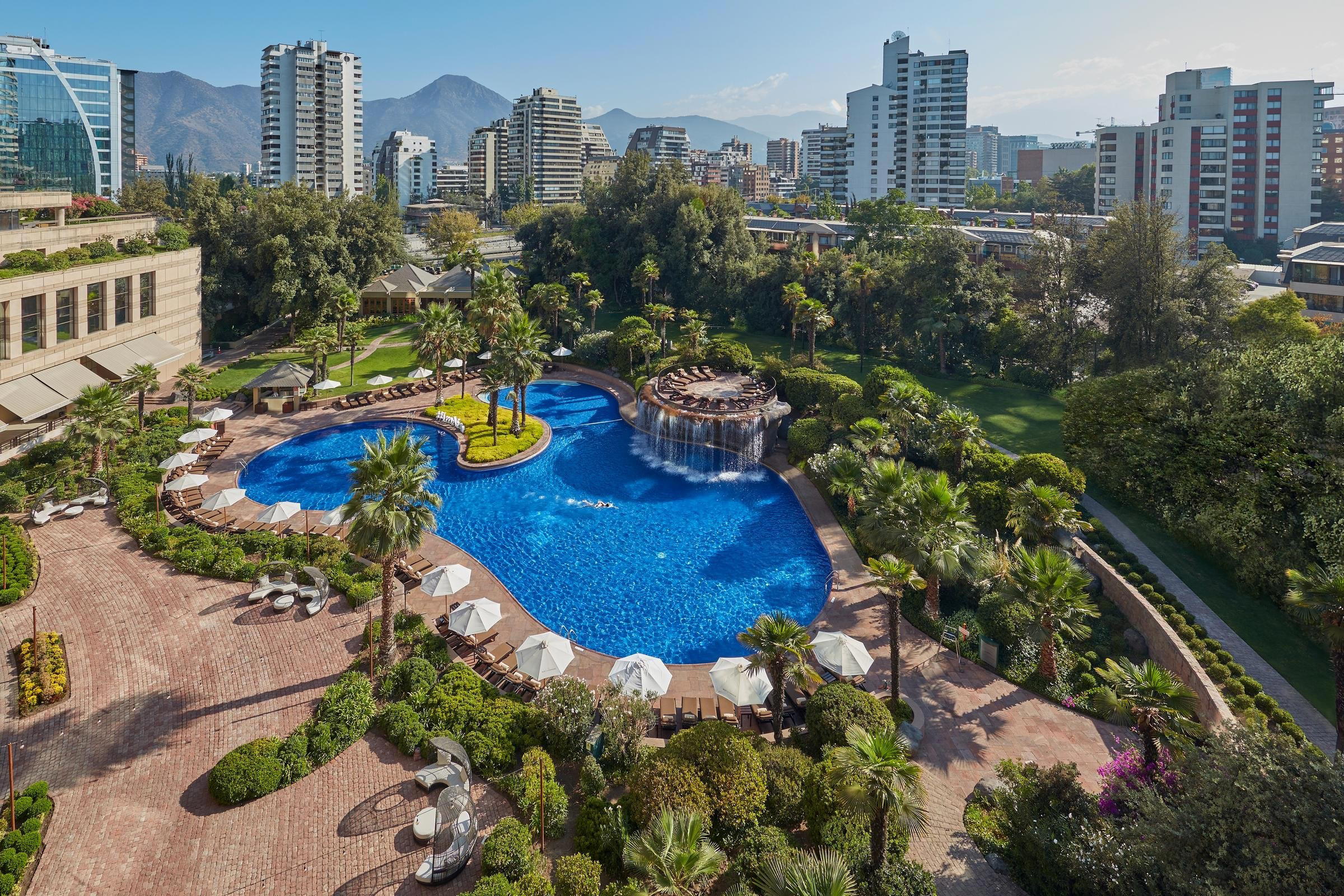
A Retreat Anchored in Las Condes
Santiago's upper-tier hotel market divides into two distinct camps: the design-led boutique properties concentrated around Lastarria and Bellavista, and the large-format luxury addresses that plant themselves in Las Condes, close to the financial district and the Santiago Metro's eastern corridor. Mandarin Oriental, Santiago belongs firmly to the latter group, operating as the hotel group's first South American property and setting its stall against the full-service model rather than the curated-small approach. Its position on Presidente Kennedy Avenue, one of Las Condes's principal arteries, puts it within reach of corporate Santiago while maintaining enough physical depth, garden space, and pool area to function as something closer to a city resort than a conventional tower hotel.
The outdoor pool is freeform rather than lap-pool functional, framed by tropical foliage and a waterfall feature that insulates the space visually from the surrounding street grid. Garden paths and manicured lawn areas extend the footprint further, offering a kind of alfresco quiet that is genuinely rare in a city neighbourhood as built-up as Las Condes. The lobby itself reinforces the retreat signal: a glass dome draws daylight down through the tower onto a multi-coloured glass centrepiece that anchors the ground-floor space, making arrival feel intentional rather than transactional.
Wellness in Progress: What the Spa Renovation Means Right Now
The spa and fitness areas are currently undergoing renovation, and travellers booking now should factor that into expectations. The hotel has put alternative arrangements in place: a temporary fitness area continues to operate, and relaxation treatments remain available in a designated alternative space during the closure. Direct contact through the spa team at MOSTG-SPA@mohg.com or by phone at +56 2 2950 3195 is the clearest route to understanding current availability before arrival.
For wellness-focused travellers, the timing calculus is direct: if spa access is the priority, check completion timelines before committing. If pool, garden, and treatment access in temporary form are acceptable, the rest of the property continues at full operation.
The Club Lounge and What the Sixteenth Floor Changes
The Club Lounge reopened in October 2023 following its own renovation, and its position on the sixteenth floor reframes the retreat logic of the stay. Andes views from that altitude are a different experience to the garden-level pool, and the lounge's redesign aimed for a balance of contemporary finish and comfort rather than the cool-minimalist register that defines some Club Lounge refits in the Mandarin Oriental portfolio. For guests who qualify for Club access, the lounge functions as a semi-private alternative to the main lobby, which in a hotel of this size and footfall has practical as well as atmospheric value.
Dining: Nikkei, Italian, and the Atrium Ritual
Latin American cities with strong Japanese immigration histories have produced a distinct cuisine category in Nikkei, and Santiago's version of that tradition has developed quietly alongside Lima's more internationally visible scene. At Matsuri, the hotel's Nikkei restaurant, Japanese-Peruvian chef Juan Ozaki works a menu that absorbs South American ingredients into Japanese formats: sushi rolls incorporating mashed sweet potato and cilantro, grilled octopus plated with fried local potatoes and Peruvian corn. This reflects a documented culinary lineage with specific geographic and immigrant roots.
Senso, the Italian restaurant, operates in a wood-panelled dining room with terrace access and covers the range from fresh pasta and risotto to grilled meats. The chimichurri accompaniment to steak is a detail worth noting: it acknowledges the Argentine influence on Santiago's red-meat culture without making a performance of it.
The Atrium Lobby Lounge handles afternoon tea, cocktails, and light bites across a space that reads as the hotel's social centre. Natural light through the glass dome makes the atrium work differently at different times of day, and the patio extension allows outdoor consumption when Santiago's weather cooperates. Afternoon tea is a consistent format across Mandarin Oriental properties globally; the Santiago version leans on the standard scone-macaron-finger sandwich structure while using the atrium setting to give it local character.
Rooms and the Current Design Direction
The recently renovated rooms have moved away from the warm-neutral palette common to earlier iterations of the property, adopting a scheme built around light woods, mossy greens, and chic grays. The shift reads as a response to a broader movement in luxury hotel interiors toward softer, nature-adjacent colour, and it works in the Las Condes context where the Andes are a recurring visual reference. Large picture windows make city views a feature rather than an afterthought. Suites with terraces sit on floors one through three by architectural design, a configuration that inverts the usual tower logic of assigning premium outdoor space to upper floors.
How It Positions Against Santiago's Hotel Tier
Santiago's luxury hotel market at the large-format end includes The Ritz-Carlton, Santiago and W Santiago as the most direct comparators. Each occupies a different register: the Ritz-Carlton leans into formal service tradition, the W into lifestyle branding, and the Mandarin Oriental into the brand's established identity around service depth and wellness programming. The current spa closure temporarily narrows that distinction, but the dining breadth, pool infrastructure, and Club Lounge access keep the overall offer in the upper bracket.
Travellers who want smaller-scale or design-focused alternatives in Santiago can cross-reference properties like The Singular Santiago, Hotel Magnolia, The Aubrey, Casa Bueras Boutique - Hotel en Lastarria, Hotel Boutique Le Reve Hotel, Ismael Hotel, or Debaines Hotel Santiago. For full-service with resort infrastructure, the Mandarin Oriental is the relevant benchmark. Google's 4.6 rating across more than 3,800 reviews points to consistent delivery rather than polarised reception, which for a property of this size and through-traffic volume is a meaningful signal.
For travellers using Santiago as a base before continuing south, the wider Chile network includes stays such as Ecocamp Patagonia in Torres del Paine, Explora Torres del Paine, Explora Patagonia National Park, Awasi Atacama, andBeyond Vira Vira in Pucon, Noi Puma Lodge, Puyuhuapi Lodge & Spa, Futangue Hotel & Spa, Clos Apalta Residence, CasaMolle, Explora Rapa Nui, and Palacio Astoreca Hotel in Valparaiso.
Planning Your Stay
The hotel sits at Presidente Kennedy Avenue 4601 in Las Condes, well-connected to the Tobalaba and El Golf Metro stations. The property is pet-friendly, operates 24-hour room service, and has meeting room capacity, making it functional for both leisure and business-adjacent travel.
Recognition, Side-by-Side
Comparable venues nearby, for context on price, style, and recognition.
| Venue | Cuisine | Price | Awards | Notes |
|---|---|---|---|---|
| Mandarin Oriental, SantiagoThis venue — the venue you are viewing | Modern luxury hotel with lush gardens and oasis-style pool | $$$$ | 5-Star | |
| W Santiago | Modern luxury boutique hotel with daring design and vibrant color palette. | $$$$ | 5-Star | El Golf |
| Luciano K | Contemporary classic with lively bohemian character, blending 1920s art deco heritage with modern luxury in Santiago's cultural Lastarria neighborhood. | $$$ | 4-Star | Lastarria |
| Valle Nevado | Exclusive luxury ski hotel | $$$$ | 5-Star | Valle Nevado |
| Hyatt Centric Las Condes Santiago | Modern urban boutique with local Chilean design elements | $$$$ | 5-Star | Las Condes |
| The Aubrey | Restored historic mansion blending classic comfort with contemporary luxury | $$$$ | 4-Star | Bellavista |
Continue exploring
More in Santiago
Hotels in Santiago
Browse all →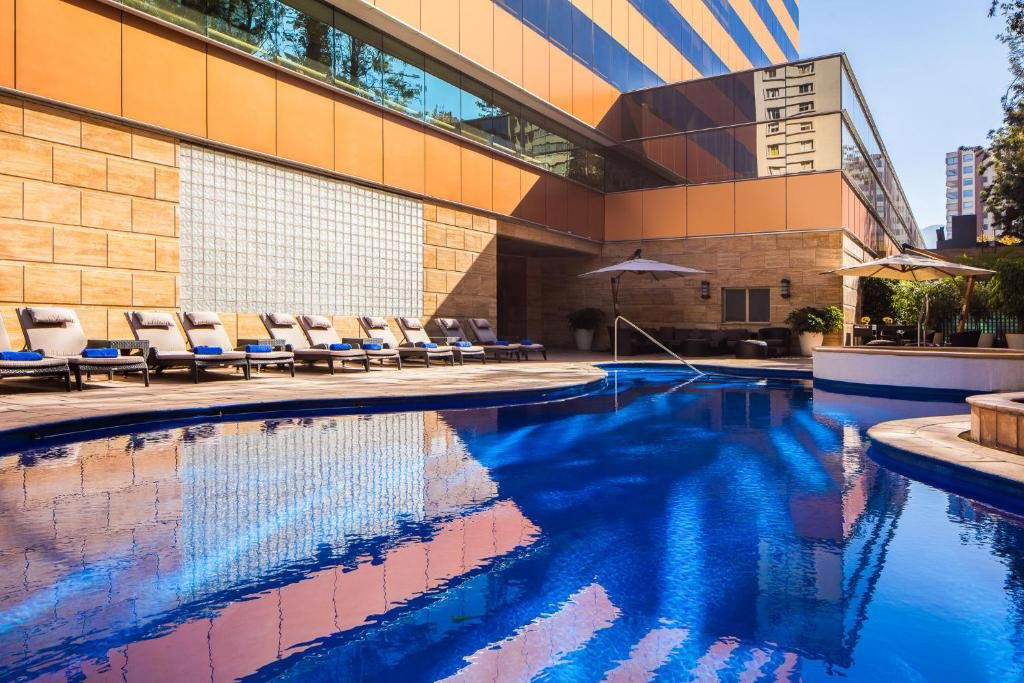
Bars in Santiago
Browse all →

Restaurants in Santiago
Browse all →
At a Glance
- Elegant
- Sophisticated
- Opulent
- Romantic Getaway
- Business Trip
- Honeymoon
- Rooftop Pool
- Panoramic View
- Garden
- Terrace
- Pool
- Spa
- Fitness Center
- Room Service
- Concierge
- Business Center
- Valet Parking
- Ev Charging
- Skyline
- Mountain
- Garden
Elegant and relaxing with spacious layouts, soundproofed rooms, and peaceful garden and pool surroundings.