
Where the Field Meets the French Kitchen Izumi Ward sits at Yokohama's southwestern edge, a residential quarter removed from the port-facing tourist corridors and the high-density dining blocks of Kannai and Minatomirai. Restaurants out here...
Pearl is the En Primeur Club membership app — saves, bookings, and concierge access live there. Same editors, same standards.
- Address
- 5-2 Yayoidai, Izumi Ward, Yokohama, Kanagawa 245-0008, Japan
- Phone
- +81 45-443-5876
- Website
- petaledesakura.com
 Saves & bookings on Pearl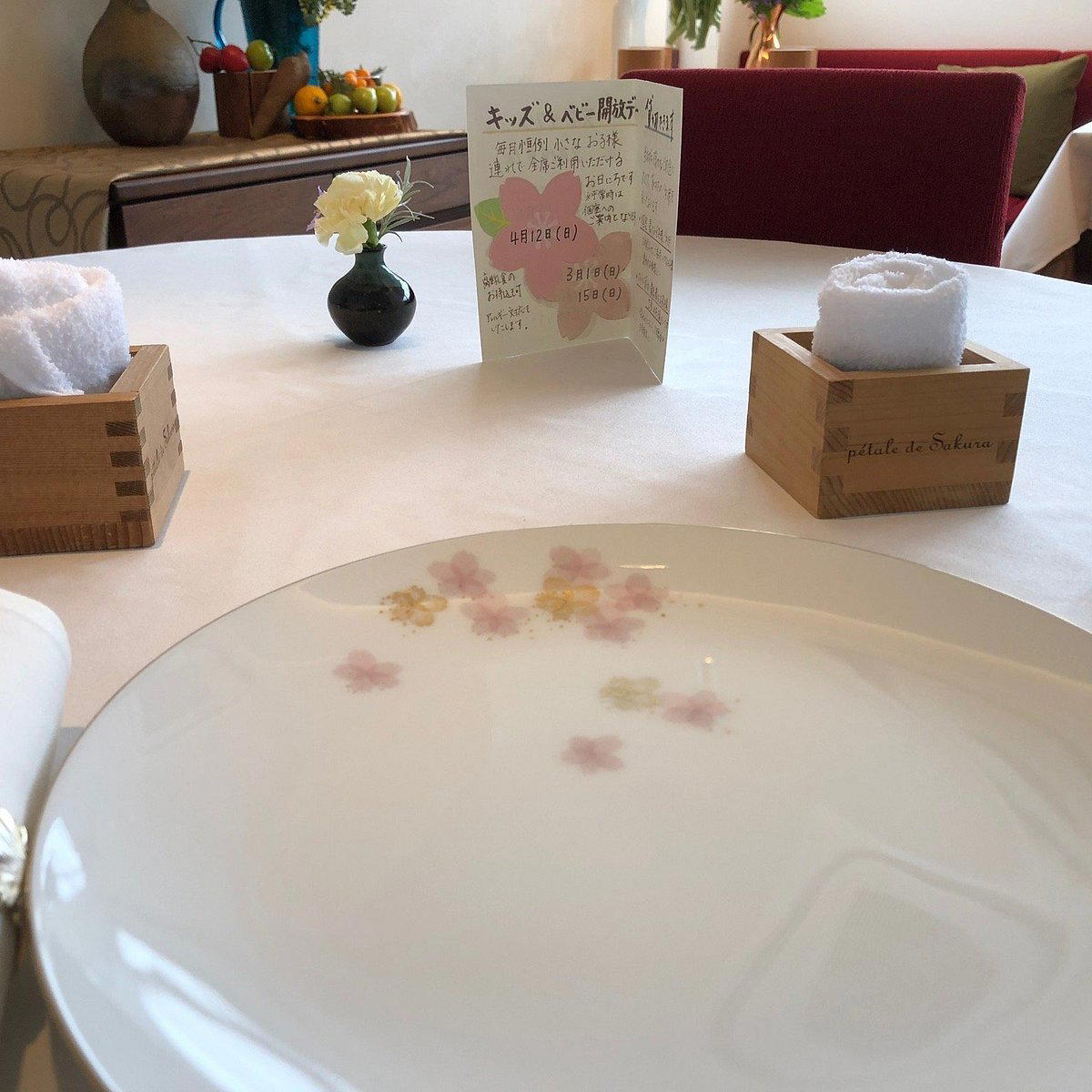
Where the Field Meets the French Kitchen
Izumi Ward sits at Yokohama's southwestern edge, a residential quarter removed from the port-facing tourist corridors and the high-density dining blocks of Kannai and Minatomirai. Restaurants out here serve local households rather than transit crowds, which shapes both the pricing logic and the sourcing ambitions of the places that survive. Petale De Sakura, addressed at 5-2 Yayoidai, occupies that quieter register: a neighbourhood restaurant with a cooking philosophy that sets it apart from the sushi-and-izakaya mainstream that defines much of Yokohama's dining scene at street level.
The Logic of "Vegetables from the Field in the Moment"
The phrase that frames the kitchen's approach is direct: "vegetables from the field in the moment." In practical terms, this positions the restaurant inside a specific and growing current in Japanese French cuisine, one that treats proximity to growers not as a branding exercise but as a structural constraint on what gets cooked and when. The growers themselves carry weight here. Chef Hideyuki Namba's explicit respect for producers is central to the menu. What arrives in the kitchen determines what goes on the plate, rather than the other way around.
This sourcing-led approach connects Petale De Sakura to a broader movement across Japan's mid-sized cities, where chefs trained in European kitchens have returned to work with domestic agricultural networks rather than importing produce or standardising menus across seasons. The dynamic is different from Tokyo's high-volume restaurant economy, where supplier relationships can become formalised and almost industrial. In a neighbourhood restaurant of this type, the chef-grower relationship tends to be more direct and the menu more responsive to short-cycle agricultural rhythms.
French Training, Japanese Produce
Chef Namba's education spans multiple French kitchens, a breadth of training that shows in how the restaurant positions vegetables at this stage of its development: contributing to dishes rather than carrying them solo. The classical French structure gives the menu a compositional logic, a way of building flavour through technique, reduction, and plating discipline, while the Japanese sourcing orientation pulls the ingredient selection toward domestic seasonal produce.
This combination places Petale De Sakura in a recognisable niche within Japan's French restaurant tier. Compare it to places like HAJIME in Osaka, where the vegetable-forward approach has reached a fully resolved, internationally recognised form, or akordu in Nara, which frames its ingredient sourcing through a different cultural lens. The restaurant is at an earlier point in that arc. The vegetables are not yet the lead, but the sourcing approach is clear. That is the reason for the 1 Radish designation.
What the 1 Radish Award Signals
The Radish designation marks restaurants where vegetable cookery shows meaningful intent and execution. The 1 Radish awarded to the restaurant reflects a specific editorial judgement: the kitchen has the technical competence and the supply-chain thinking to do serious work with vegetables, and the award functions as a prompt for that development rather than a certificate of arrival. This distinction matters. You are eating at a French-trained kitchen where produce matters more than the genre average, and where that emphasis may sharpen over time.
For reference, the French-Japanese hybrid format at this level sits in a different competitive set from Yokohama's sushi counters. Nakajo and Omino Kamiyacho represent the city's more traditional Japanese fine dining track, while 1000 (yakitori, JPY 15,000 to 19,999) and Yoda (tonkatsu, JPY 8,000 to 9,999) occupy the mid-range Japanese specialist tier. The restaurant's positioning is separate from all of these: it is the Franco-Japanese produce-led room in a city where that category is thin.
The Broader Context: French Cooking and Japanese Agriculture
The tension between classical French technique and Japanese ingredient philosophy has produced some of the country's most discussed cooking over the past two decades. Restaurants like Gion Sasaki in Kyoto and Goh in Fukuoka have each resolved that tension in distinct ways, drawing on regional produce networks to give European technique a locational identity. Further afield, Bleston Court Yukawatan in Nagano operates within a mountain agricultural context that makes ingredient sourcing unavoidably central. Even internationally, the conversation about sourcing as culinary philosophy has shaped rooms like Le Bernardin in New York City, where the relationship between technique and raw material has always been the operative question.
The restaurant participates in this conversation at a neighbourhood scale, which is not a limitation so much as a specific position. The restaurant is not competing for international attention. It is cooking for a local constituency with produce from growers the chef knows personally, using a technical framework absorbed across multiple French kitchens. That is a coherent and defensible approach to running a restaurant.
Planning Your Visit
The restaurant is located at 5-2 Yayoidai in Izumi Ward, which places it at some distance from central Yokohama transport hubs. Visitors arriving from Tokyo should factor in travel time beyond the standard Minato Mirai or Kannai stop. Reservations are recommended. The menu may change with the season. Given the 1 Radish designation and the kitchen's trajectory, this is a restaurant worth tracking rather than treating as a fixed offering.
For additional reference points in Japan's Franco-Japanese category, Harutaka in Tokyo and Ribatei in Yokohama offer useful comparisons across different format and price registers.
Comparison Snapshot
Comparable venues nearby, for context on price, style, and recognition.
| Venue | Cuisine | Price | Notes |
|---|---|---|---|
| Petale De SakuraThis venue — the venue you are viewing | Local Vegetable French | $$$ | Not listed |
| PUISSANCE | French patisserie & cake shop | $$ | Aoba |
| Berg no Shigatsu Honten | Japanese patisserie & dessert shop | $$ | Aoba |
| Del Mar COMEDOR Y TERRAZA | Seafood-focused Spanish marisquería with waterfront terrace | $$$ | Naka |
| Kasei Rou Honten | Traditional Beijing-style Chinese banquet restaurant | $$$ | Naka |
| Yoda | Modern Tonkatsu | $$$ | Naka |
Recognition history
Dated appearances from independent guides and award organizations, with the underlying list record or original source where available.
We're Smart World 1 Radish
We're Smart World












At a Glance
- Elegant
- Cozy
- Intimate
- Sophisticated
- Date Night
- Special Occasion
- Family
- Business Dinner
- Open Kitchen
- Sake Program
- Local Sourcing
Current opening hours
- Monday
- Closed
- Tuesday
- 11:30 AM–3 PM, 6–10 PM
- Wednesday
- 11:30 AM–3 PM, 6–10 PM
- Thursday
- 11:30 AM–3 PM, 6–10 PM
- Friday
- 11:30 AM–3 PM, 6–10 PM
- Saturday
- 11:30 AM–3 PM, 6–10 PM
- Sunday
- 11:30 AM–3 PM, 6–10 PM
Hours can change for holidays and private events. Last verified .
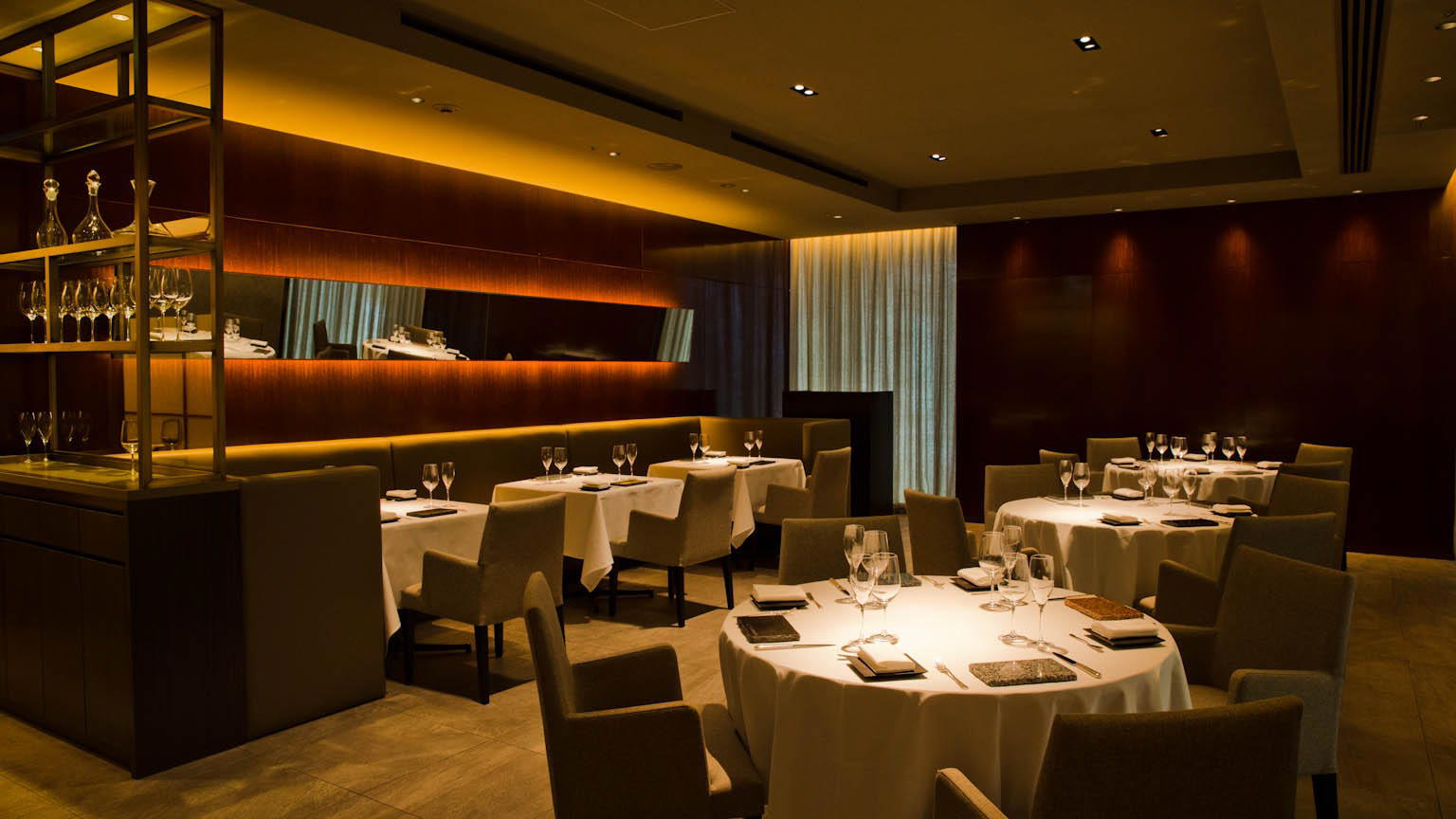
Cozy and clean interior with large windows offering cherry blossom tree views, relaxed yet sophisticated atmosphere with careful attention to table settings and plating.