Our verdict
In Okusawa, one of Setagaya's quieter residential pockets, 日本酒と和風中華OZ occupies an interesting position at the crossroads of Japanese sake culture and Wa-fu Chuka, the distinctly Japanese interpretation of Chinese cooking. The combination is less common than it sounds, and the Setagaya address places it outside Tokyo's usual dining circuits, making it a reference point for those tracking the city's neighbourhood-level dining evolution.

Pearl is the En Primeur Club membership app, where members save venues, book tables and use the concierge.
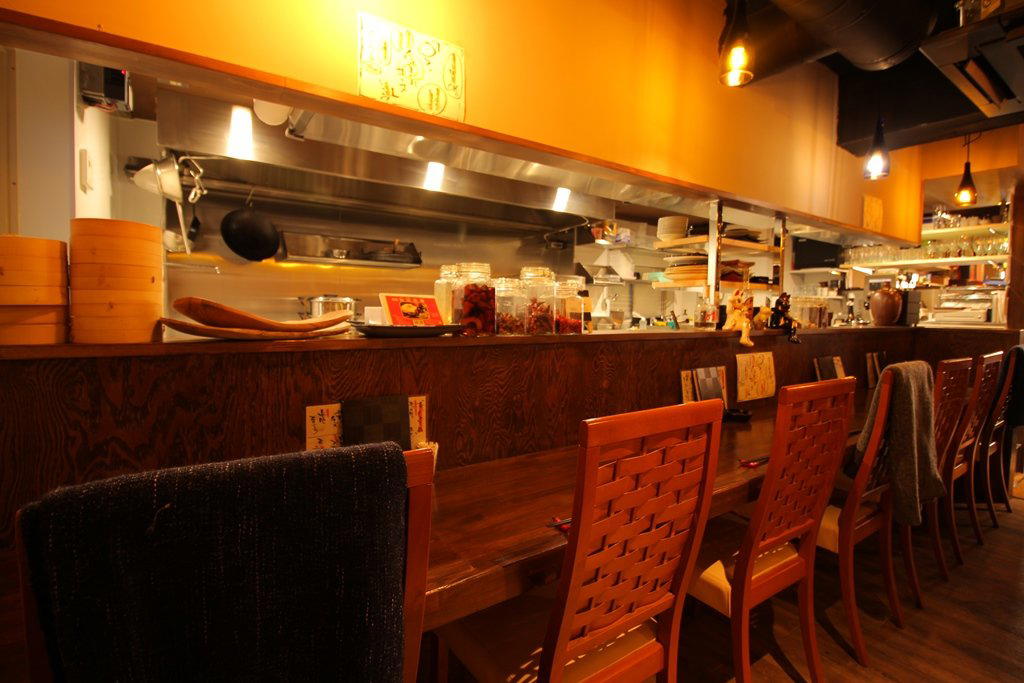
Where Sake Culture Meets Wa-Fu Chuka: The Okusawa Context
Tokyo's most discussed restaurants tend to cluster in Ginza, Minami-Aoyama, or Nishi-Azabu, where high rents and concentrated foot traffic sustain the omakase counters and French-Japanese hybrids that draw international attention. Venues like Harutaka, L'Effervescence, and Sézanne sit at the premium end of that geography. But Tokyo's residential wards tell a different story. Setagaya, the most populous of Tokyo's special wards, supports a dining culture built around neighbourhood regulars rather than destination seekers, and Okusawa, a sub-district within it, sits quietly on the Den-en-toshi Line, largely invisible to the tourist circuit.
It is in this context that 日本酒と和風中華OZ makes the most sense as a dining proposition. The name itself is a programme: nihonshu (sake) paired with Wa-fu Chuka, literally Japanese-style Chinese cooking. That compound identity points to a specific culinary tradition that is worth understanding before you arrive.
Wa-Fu Chuka: A Culinary Category With Its Own Logic
Wa-fu Chuka is not fusion in the contemporary sense. It is a category with a century-long history in Japan, where Chinese culinary techniques and ingredients were absorbed and gradually domesticated until the results read as distinctly Japanese in temperament, even when the underlying dish is nominally Chinese in origin. Ramen is the most globally familiar example, but the category also encompasses dishes like ankake chahan (fried rice with thick sauce), tenshinhan (crab omelette on rice), and various forms of light, refined Chinese-influenced cooking that have little equivalent in mainland Chinese cuisine.
What makes the pairing with nihonshu particularly coherent is flavour architecture. Where Cantonese food often calls for lighter wines or tea, and Sichuan food's heat complicates most pairings, Wa-fu Chuka typically operates in a register of umami depth, gentle sweetness, and clean savoury finish. These are precisely the flavour registers where sake performs leading, especially junmai and junmai daiginjo styles, which carry the grain's natural character without the volatility of distilled spirit or the tannin interference of red wine.
This pairing tradition has been explored more formally at kaiseki-adjacent venues, but neighbourhood-level restaurants that build their entire identity around it remain less common. For a broader view of how Japan's regional restaurant scenes develop distinct culinary characters, the contrast between venues like Gion Sasaki in Kyoto and HAJIME in Osaka shows how dramatically the same national tradition can diverge when given different urban contexts.
The Editorial Angle: Sake as the Structuring Principle
Restaurants that foreground sake rather than wine operate under a different curatorial logic. Wine-focused programmes tend to organize around region and producer, with a sommelier functioning as geographic guide. Sake programmes in serious Japanese restaurants organize more often around rice variety, polishing ratio, and brewery style, categories that require a different kind of fluency from whoever is building the list. The name of this venue, 日本酒と和風中華OZ, places sake ahead of the food category in the title, which suggests the drinks programme is not an afterthought but a structuring principle.
That emphasis aligns with a broader shift in how serious Tokyo restaurants are treating sake. At the ¥¥¥¥ tier, venues like RyuGin have long integrated sake pairings with kaiseki progressions in ways that demand brewery-level knowledge from their beverage teams. The more interesting development in recent years has been the trickle-down of that curatorial seriousness into mid-tier neighbourhood operations, where smaller, less commercially driven sake selections can actually showcase breweries that larger restaurants cannot access in sufficient volume.
Japan's regional brewery scene supplies some of its most compelling context here. Venues across the country, from Nanao to Sapporo, each navigate local brewery relationships that reflect regional rice, water, and fermentation traditions. A neighbourhood sake specialist in Tokyo functions somewhat differently, drawing on national brewery access rather than hyper-local proximity, but the same principle applies: the depth of the list depends on the relationships and knowledge of whoever built it.
Setagaya's Dining Position in Tokyo's Wider Map
Understanding where Okusawa sits in Tokyo's restaurant geography requires some calibration. This is not a neighbourhood where destination restaurants typically open. The draw is local density, lower overheads, and a clientele that prioritizes repeat value over occasion dining. That resident-first dynamic often produces more honest cooking than venues shaped by the theatre demands of the tourist circuit.
The address, 5 Chome-1-14 Okusawa, Setagaya City, places the restaurant in a residential grid that most Tokyo visitors do not reach. The nearest stations on the Den-en-toshi Line connect Okusawa to Shibuya in under fifteen minutes, so the neighbourhood is accessible without being conveniently central. This is relevant logistical intelligence: dinner here requires intent rather than impulse, which tends to self-select for an engaged dining room.
For those building a Tokyo itinerary that extends beyond the central circuit, the Setagaya direction also opens access to other areas of the city that rarely appear in conventional guides. The contrast between that approach and the more internationalized dining of central Tokyo is similar to how Crony represents a different register of ambition within the same city. See our full Tokyo restaurants guide for a broader map of how the city's dining divides by neighbourhood character.
Placing OZ in a National Drinking Context
Japan's prefecture-level sake production creates significant variation in style that a thoughtful list can exploit. Niigata breweries produce clean, dry ginjo styles well suited to lighter Wa-fu Chuka preparations. Yamagata and Akita offer richer junmai profiles that hold up to deeper umami. Hiroshima's soft-water breweries produce a softer, rounder style. A sake programme built around Wa-fu Chuka has logical reason to range across these traditions in a way that food-wine pairings in French or Italian contexts rarely demand such geographic breadth from a single cuisine category.
Beyond Japan's borders, the pairing logic at a venue like this connects to broader conversations happening in cities with serious sake programmes. At Atomix in New York City, Korean fine dining has demonstrated how Asian fermented-grain beverages can be integrated into a serious drinks programme without conceding ground to wine as the default prestige format. The parallel is instructive: the most thoughtful versions of these programmes treat local grain spirits and ferments as primary references, not supplementary options.
Japan's own regional restaurant traditions provide further context. From the formal kaiseki structure at Goh in Fukuoka to more informal neighbourhood formats at venues like Bistro Ange in Toyohashi and Birdland in Sakai, the country's dining culture accommodates a spectrum of formality and price point, with sake running as a common thread across all of them.
Planning Your Visit
Okusawa is accessible from Shibuya via the Den-en-toshi Line, typically under fifteen minutes by train. Venues at this neighbourhood level in Tokyo frequently operate without online reservation systems, and the experience is often better for the lack of pre-booking infrastructure. The address is 5 Chome-1-14 Okusawa, Setagaya City, Tokyo 158-0083.
Frequently asked questions
Where do I go for 日本酒と和風中華OZ?
日本酒と和風中華OZ is located at 5 Chome-1-14 Okusawa, Setagaya City, Tokyo 158-0083, Japan, Tokyo.
Why does sake work as a pairing with Wa-fu Chuka at OZ in Tokyo?
Wa-fu Chuka's flavour profile, soy-based sauces, umami-forward broths, and lighter preparations adapted for Japanese palates, aligns naturally with nihonshu's rice-derived savoriness and lower acidity compared to wine. OZ in Okusawa structures its offering around this logic, making sake the organising principle rather than an afterthought on a wine-led list. It's a pairing tradition with genuine culinary grounding, and one that remains underexplored at the neighbourhood restaurant level across Tokyo.
What's the must-try dish at 日本酒と和風中華OZ?
OZ's menu is built around Wa-fu Chuka, the Japanese interpretation of Chinese cooking that has developed its own distinct identity over a century of local adaptation. That framework typically means dishes where Chinese technique meets Japanese ingredient sensibility, a combination the kitchen uses as the basis for its sake pairings. Without a published menu, the category itself is the signal: this is the right address if Wa-fu Chuka is what you're seeking in Setagaya.
How hard is it to get a table at 日本酒と和風中華OZ?
OZ sits in Okusawa, a residential Setagaya pocket that operates well outside the booking pressure of Ginza or Nishi-Azabu. Neighbourhood restaurants at this address don't typically face the three-month wait lists that define Tokyo's high-profile counters. Calling ahead is sensible given the small scale implied by the format, but this is not a venue where demand routinely outpaces supply on a nightly basis.
Style and Standing
Comparable venues nearby, for context on price, style, and recognition.
| Venue | Cuisine | Price | Awards | Notes |
|---|---|---|---|---|
| 日本酒と和風中華OZThis venue (the venue you are viewing) | Japanese Sake and Japanese-Style Chinese | $50–100 | Not listed | Not listed |
| hide mode | Creative French-Influenced Fusion | $30–50 | Tabelog 100 #49 | Bunkyō |
| SPICE Cafe | Creative spice-focused curry cafe | $20–30 | Tabelog 100 #21 | Sumida |
| Restaurant Quinbell | French–Italian yoshoku with seasonal fish and a famous beef fillet cutlet sandwich | $20–30 | Tabelog 100 #78 | Sumida |
| Tantantei | Classic Tokyo Shina Soba & Wonton Ramen | $10–20 | Tabelog 100 #84 | Hamadayama |
| Yamacho (黒うどん 山長) | Black Udon (Kuro Udon) | $10–20 | Not listed | Harajuku |