
Michelin Plate
Our verdict
A Michelin Plate-recognised kaiseki counter in Fukushima, Osaka, Otsuki follows the seasonal arc of Japanese ingredients with unusual discipline: early-harvest produce arrives in its plainest form, while the same ingredient reappears at season's end in more inventive preparations. That structural rhythm, rooted in chef Masakazu Nishiguchi's reading of the calendar, positions Otsuki among the mid-tier Japanese dining options worth knowing in a city that takes seasonality seriously.

Pearl is the En Primeur Club membership app, where members save venues, book tables and use the concierge.
The menu
What to order
- Otsuki ramen
- Fugu roe
- Crab cream spring roll
Fukushima's Quiet Register
The residential fringe of Fukushima Ward sits at a remove from the neon density of Namba and the department-store dining floors of Umeda. Streets here are narrower, the foot traffic more local, and the ground-floor restaurants more likely to serve regulars than tourists. It is the kind of neighbourhood where a small Japanese counter can operate on its own terms, without competing for visibility against the city's larger spectacle. Otsuki occupies a first-floor space on Fukushima 1-chome, a quiet address that matches the register of the cooking inside it.
Osaka's mid-range Japanese dining tier is more contested than it might appear from outside. At the ¥¥¥¥ end, French-influenced innovators like Hajime and La Cime, along with Fujiya 1935, occupy a bracket defined by technical ambition and international reference. At ¥¥¥, the competition includes kaiseki stalwarts such as Kashiwaya Osaka Senriyama, as well as focused Japanese counters across the city. Otsuki sits within this ¥¥¥ group, holding two consecutive Michelin Plate recognitions (2024 and 2025), which places it in the band of restaurants the Guide considers worth a visit without yet awarding a star. In a city with Osaka's density of Japanese dining, that distinction is not incidental.
Seasonality as Structure, Not Sentiment
The editorial angle that makes kaiseki meaningful, and what separates disciplined practitioners from those who deploy seasonal language as marketing shorthand, is the question of how a kitchen actually handles the arc of a season rather than simply announcing the arrival of its early produce. In many restaurants, seasonal ingredients appear at peak and disappear cleanly. The more demanding approach tracks the same ingredient across its full lifespan, changing technique as the ingredient changes character.
At Otsuki, chef Masakazu Nishiguchi applies exactly this logic. The Michelin commentary on the restaurant, one of the few substantive public records of its approach, is specific on this point: first-of-harvest ingredients arrive in plain preparations that favour honest expression over technical display. Bamboo shoots, to use the example the Guide provides, debut as simmered bamboo shoots. As the season progresses toward its close, the same ingredient returns in more worked preparations, appearing as a Japanese-pepper-and-soy sauce steak or in a bowl of stew. The technique shifts; the ingredient anchors the narrative. This is not creativity applied as decoration. It is creativity held back, then released at the point where an ingredient's rawer qualities have given way to something more accommodating of intervention.
That structural approach connects to a broader tradition in Japanese cooking where restraint at the beginning of a season is understood as respect for the ingredient's peak, and where the later, more permissive preparations acknowledge that the same ingredient, past its first flush, benefits from the kind of reworking that would have obscured it earlier. Practitioners in Kyoto's kaiseki tradition have long operated on this calendar logic. The fact that Nishiguchi applies it in a Fukushima counter rather than a Gion machiya suggests the discipline travels beyond the most formal presentation contexts. For comparison, Gion Sasaki in Kyoto and Harutaka in Tokyo represent how the same seasonal attentiveness operates in different city registers and price brackets.
Local Ingredients, the Technique Behind Them
Osaka occupies a particular position in the geography of Japanese ingredients. The city sits within reach of Kyoto's vegetable farms, the seafood markets of Osaka Bay, and the mountain produce that comes down from Nara and Wakayama. The phrase kuidaore, the idea of eating oneself into ruin in Osaka, refers less to abundance as spectacle and more to the city's long history of treating ingredients as the point rather than as vehicles for technical showmanship. That tradition gives a restaurant like Otsuki a usable context: the kitchen's preference for honest early-season expression is less an idiosyncratic philosophy than an alignment with what Osaka's ingredient culture has always rewarded.
What distinguishes Nishiguchi's approach is the moment he chooses to apply technique. The restraint at the season's opening is not asceticism. It is a deliberate withholding that makes the later creative turn legible. A bamboo shoot steak seasoned with Japanese pepper and soy reads differently, and more informatively, when you have already encountered the same shoot as a simmered preparation earlier in the season. The technique is not grafted onto the ingredient; it is timed to the ingredient's own trajectory.
This intersection of local produce and calibrated technique places Otsuki in a category that has become increasingly coherent in Japan's mid-tier dining scene. Restaurants like Miyamoto and Oimatsu Hisano in Osaka, or further afield, akordu in Nara and Goh in Fukuoka, each navigate some version of the same tension between local ingredient identity and the desire to apply a more personal or technically inflected approach. The question is always at what point technique serves the ingredient and at what point it substitutes for it.
Where Otsuki Sits in the Osaka Dining Picture
For visitors building a multi-meal Osaka itinerary, the ¥¥¥ Japanese tier involves meaningful choices. The Michelin Plate designation at Otsuki signals a kitchen with consistent execution and a defined point of view, without the booking difficulty or price point of the city's starred tables. Restaurants at this level in Osaka, including Tenjimbashi Aoki and Yugen, each carry a different emphasis: some lean toward classical kaiseki formality, others toward a more contemporary Japanese idiom. Otsuki's distinction is its explicit seasonal arc, the way the menu changes not just with the calendar but within a single season's run.
Tokyo comparisons are instructive here. Myojaku and Azabu Kadowaki represent how similar ingredient-forward Japanese cooking operates in the capital's more expensive and more internationally scrutinised market. The cooking tradition is shared; the price pressure and visibility are different. Osaka's version of this category allows for restaurants that operate with equivalent seriousness at a lower threshold of drama, which is arguably the city's structural advantage in this segment. 1000 in Yokohama and 6 in Okinawa extend the picture further, showing how the same attentiveness to Japanese ingredients plays out across different regional contexts.
Planning Your Visit
Otsuki is located at 1 Chome-2-4 Fukushima, Fukushima Ward, Osaka. The Fukushima area is accessible from central Osaka by train, and the immediate neighbourhood has a residential density that makes it an easy extension of an Umeda-anchored day. Given the small scale typical of counters at this level and the Michelin recognition, advance reservation is advisable.
| Venue | Cuisine | Price | Award Level |
|---|---|---|---|
| Otsuki | Japanese / Kaiseki | ¥¥¥ | Michelin Plate 2024, 2025 |
| Kashiwaya Osaka Senriyama | Japanese | ¥¥¥ | Michelin recognised |
| Hajime | French / Innovative | ¥¥¥¥ | Higher bracket |
| La Cime | French | ¥¥¥¥ | Higher bracket |
| Fujiya 1935 | Innovative | ¥¥¥¥ | Higher bracket |
For broader Osaka planning, see our full Osaka restaurants guide, our full Osaka hotels guide, our full Osaka bars guide, our full Osaka wineries guide, and our full Osaka experiences guide.
What Should I Eat at Otsuki?
The menu at Otsuki follows the seasonal arc of Japanese ingredients, with preparations shifting in technique as each ingredient moves through its season. The Michelin commentary specifically identifies bamboo shoots as an example of this approach: early in the season they arrive as simmered preparations that favour the ingredient's natural character; later, they reappear in more constructed dishes such as a Japanese-pepper-and-soy sauce steak or stew. The broader implication is that visiting at different points in the culinary calendar will produce meaningfully different menus, and that the kitchen's creativity is held in reserve for the later stages of each season rather than front-loaded for first impressions. Otsuki holds the Michelin Plate award for both 2024 and 2025, with chef Masakazu Nishiguchi credited in the Guide's commentary for the kitchen's seasonal discipline and creative restraint.
Frequently asked questions
What should I eat at Otsuki?
The menu tracks the seasonal arc of each ingredient from first harvest to final appearance. Bamboo shoots, for example, open the season as simmered preparations emphasising inherent flavour, then reappear near season's end in Japanese-pepper-and-soy sauce steak or stew, a deliberate shift in technique that chef Masakazu Nishiguchi applies across the menu. Ordering broadly across the course gives the clearest picture of how the kitchen treats a single ingredient at different stages of ripeness.
What should I budget for a meal at Otsuki?
Pricing at Otsuki is listed as ¥¥¥.
What's Otsuki's location?
Otsuki is located at Japan, 〒553-0003 Osaka, Fukushima Ward, Fukushima, 1 Chome−2−4 1F, Osaka.
Comparable Spots
A quick peer list to put this venue’s basics in context.
| Venue | Cuisine | Price | Awards | Notes |
|---|---|---|---|---|
| OtsukiThis venue (the venue you are viewing) | Modern Japanese Washoku | $150–200 | Michelin Plate | Not listed |
| HAJIME | Avant-Garde Japanese Fine Dining | $300–500 | 3 Michelin Stars · World's 50 Best #83 | French, Innovative |
| La Cime | Modern French with Japanese Ingredients | $150–200 | 2 Michelin Stars · World's 50 Best #13 | French |
| Kashiwaya Osaka Senriyama | Seasonal Kaiseki Omakase | $200–300 | 3 Michelin Stars · La Liste Top Restaurants | Japanese |
| Taian | Traditional Japanese Kaiseki Omakase | $150–200 | 3 Michelin Stars · La Liste Top Restaurants | Kaiseki, Japanese |
| Fujiya 1935 | Modern Japanese with European influences | $100–150 | 2 Michelin Stars · La Liste Top Restaurants | Innovative |
Recognition history
Dated appearances from independent guides and award organizations, with the underlying list record or original source where available.
Michelin Plate
Michelin
Full recognition history (3 entries)
Michelin Plate
Michelin
Michelin Plate
Michelin
Continue exploring
More in Osaka
Restaurants in Osaka
All restaurants in Osaka →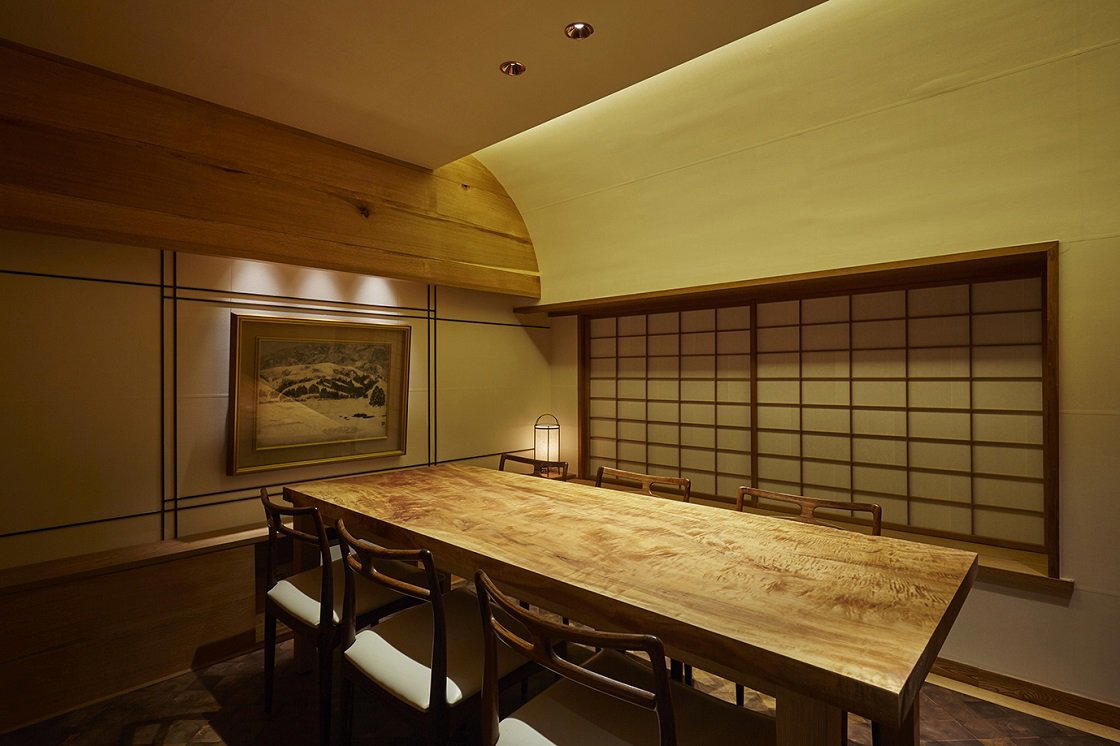


Bars in Osaka
All bars in Osaka →


Hotels in Osaka
All hotels in Osaka →


Wineries in Osaka
Browse all →
Details
- Intimate
- Elegant
- Cozy
- Sophisticated
- Date Night
- Special Occasion
- Solo
- Chefs Counter
- Open Kitchen
- Sake Program
- Omakase
- Counter Dining
- Sake
Current opening hours
- Monday
- Closed
- Tuesday
- 5 PM–12 AM
- Wednesday
- 5 PM–12 AM
- Thursday
- 5 PM–12 AM
- Friday
- 5 PM–12 AM
- Saturday
- 5 PM–12 AM
- Sunday
- 5 PM–12 AM
Hours can change for holidays and private events. Hours as of .
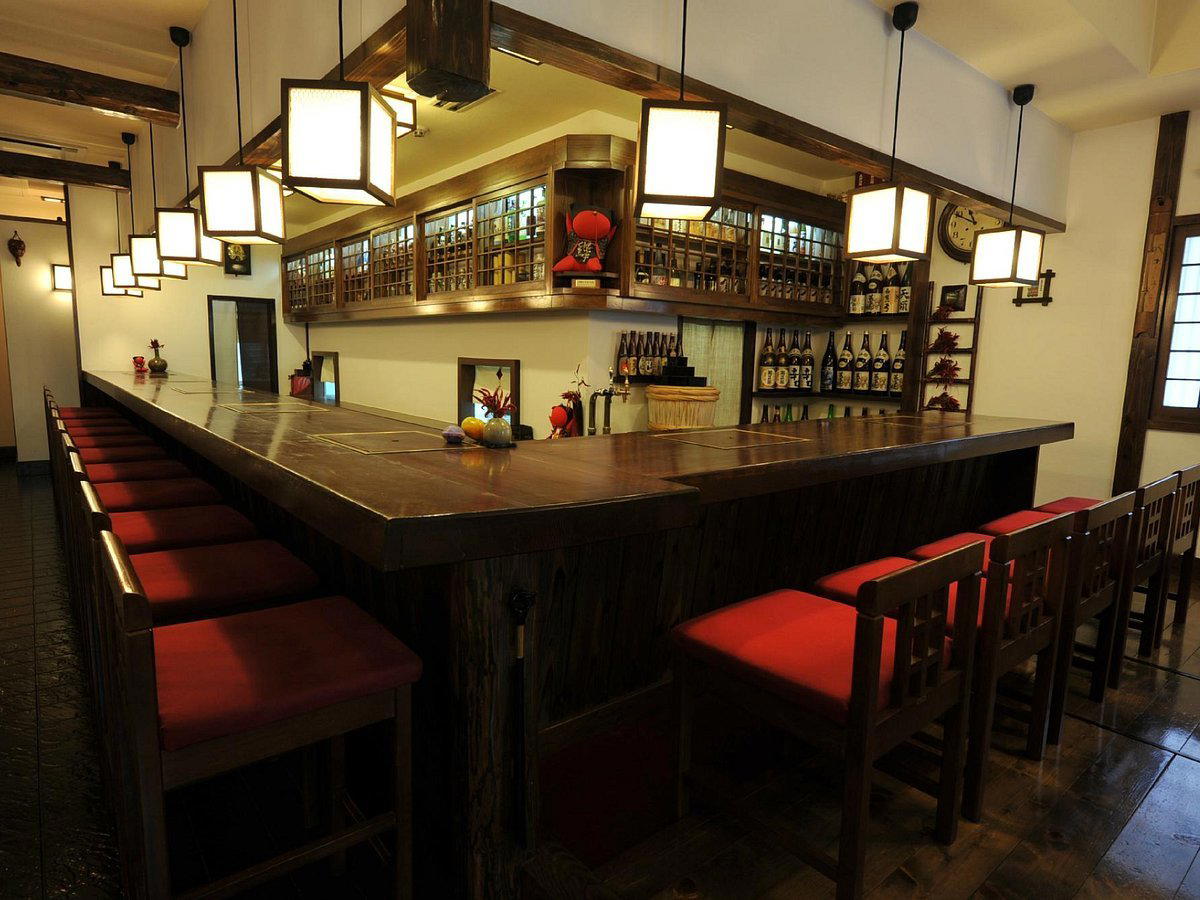
Warm interior with gentle lighting, natural textures, and a relaxing atmosphere balancing sophistication and comfort.