
A Kitashinchi basement counter where Osaka's street-food staple gets a luxury overhaul. Kushiage skewers here run from chateaubriand and foie gras to kombu with herring roe, sea urchin, and caviar, all coated in powder-fine breadcrumbs and fried in cottonseed oil. Michelin Plate recognition in both 2024 and 2025 marks it as a reliable address in a category the city takes seriously.
Pearl is the En Primeur Club membership app — saves, bookings, and concierge access live there. Same editors, same standards.
- Address
- Japan, 〒530-0003 Osaka, Kita Ward, Dojima, 1 Chome−3−16 メリーセンタービル B1
- Phone
- +81 6-6344-0400
- Website
- kitchen-dan.jp
- Directions
- Get directions
 Saves & bookings on Pearl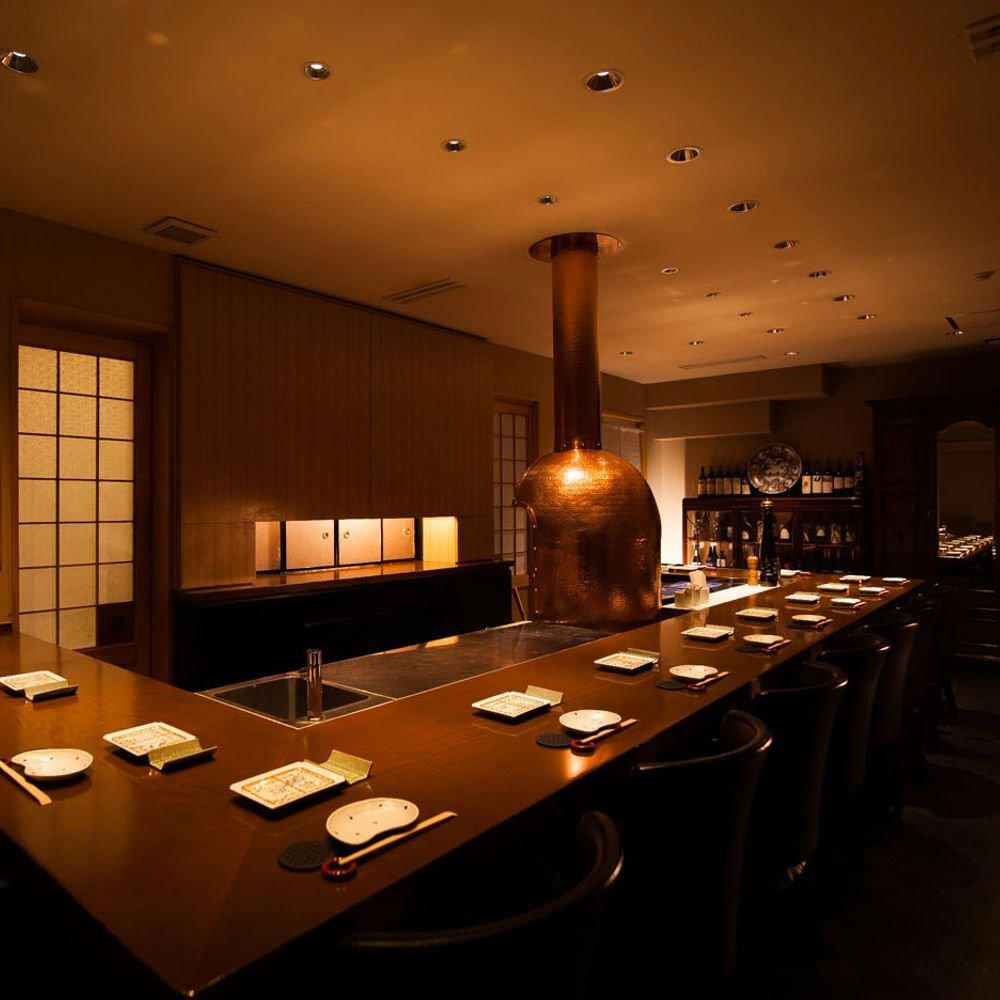
Below Street Level in Kitashinchi: Where Kushiage Meets Luxury Ingredients
The basement entrance on Dojima in Osaka's Kitashinchi district is exactly the kind of address that rewards pre-planning. Kitashinchi, the dense grid of bars, kaiseki rooms, and counter restaurants that sits just north of the river, operates at a different register from the tourist-facing streets of Dotonbori or Shinsaibashi. The clientele here skews local and professional; the restaurants skew small. Walking into Kitashinchi Kushikatsu Bon means descending into a room calibrated for a specific kind of evening: focused, unhurried, and organized around the deep-fryer in ways that would have been unthinkable at a kushikatsu counter a generation ago.
Kushiage, the broader Osaka tradition of skewering ingredients, coating them in breadcrumbs, and frying them in oil, has a democratic reputation the city is proud of. The Shinsekai district built its identity on it: cheap, fast, communal, served from counters with shared dipping sauce and a strict no-double-dipping rule enforced by hand-painted signs. What has happened in Kitashinchi over the past decade is something different: the format has been retained while the ingredient logic has been inverted entirely. The breadcrumb coating is now the delivery mechanism for premium proteins rather than the point itself.
The Menu Argument: Luxury Proteins Through a Frying Tradition
Bon's Michelin Plate recognition in 2024 and 2025 is instructive. The Plate, distinct from stars, signals consistent cooking quality and a kitchen worth knowing about, without necessarily implying the formal architecture of a multi-star kaiseki. At Bon, the recognition reflects a focused proposition: the kitchen takes chateaubriand, foie gras, and a combination the menu describes as 'pregnant kombu' (kombu kelp with Pacific herring roe attached) served with sea urchin and caviar, and subjects all of it to the same powder-fine breadcrumb coat and cottonseed oil bath that defines the format at every price point.
The cottonseed oil choice is deliberate. Among frying oils, cottonseed runs lighter in flavour interference than sesame or corn-based alternatives, which matters considerably when the ingredient inside the crust is a premium cut or a delicate shellfish. The powder-fine breadcrumb standard similarly prioritizes crust transparency over structural drama, the point is to arrive at a light, barely-there shell rather than a thick coating that competes with what it encases. These are technical decisions that align Bon's method with the broader Osaka preference for restraint at the frying stage and intensity at the ingredient stage.
Kombu and herring roe combination with sea urchin and caviar is the menu item that most clearly telegraphs where this kitchen sits conceptually. Each element is a recognized luxury in Japanese food culture independently; combining them inside a kushiage skewer is a deliberate reframing of what the format can carry. Within Osaka's wider ¥¥¥ tier, which includes kaiseki addresses like Rokkakutei and kushiage specialists like kushiage 010 and Kushikatsu Gojoya, Bon occupies the luxury-ingredient corner of what is already a mid-to-upper price tier.
Planning the Visit: What You Need to Know Before You Go
Editorial angle on Bon is, in practical terms, a booking story. The Kitashinchi restaurant cluster operates with small seat counts almost universally; basement counter formats in this neighbourhood rarely exceed twenty covers, and many run fewer. Demand at a Michelin-recognised address in a business-entertainment district with high repeat patronage from corporate clientele means the path of least resistance is planning significantly in advance. Walk-in availability at dinner is possible but cannot be counted on, particularly mid-week when the area draws heavy expense-account traffic.
Address, Merrysenta Building B1, 1-3-16 Dojima, Kita Ward, is reachable on foot from Kitashinchi Station (about two minutes) or from Osaka Station (roughly ten minutes on foot through the Umeda underpass network). Kitashinchi's nighttime geography concentrates activity on narrow streets between Tosabori-dori and Nakanoshima; the Merrysenta Building sits in this corridor. First-time visitors should confirm the entrance, which is basement-level, before arriving, since Kitashinchi's blocks are densely built and individual buildings can be easy to pass.
Price tier is ¥¥¥, comparable to the kaiseki and French-influenced restaurants that make up much of Kitashinchi's serious dining scene, though the format skews more convivial than the formal courses at, for example, HAJIME or La Cime, both of which anchor the city's highest tier. At Bon, the ¥¥¥ positioning reflects ingredient cost and Kitashinchi rents more than any shift toward formal dining theatre.
Google's 4.5-star aggregate across 244 reviews is notably stable for a specialist counter in this price range. Review consistency at this volume points to a kitchen delivering on its premise reliably, which in a kushiage context means consistent fry temperature, properly rested premium proteins, and enough course pacing to keep the eating pleasant rather than relentless.
For context on how the format travels across Japanese cities, Ahbon in Kyoto takes a quieter, more traditional line on kushiage, while Hidden Kitchen in Hong Kong shows how the broader category has moved across borders. Within Kansai, the high-end kaiseki conversation extends to Gion Sasaki in Kyoto and akordu in Nara, while Japan's wider premium counter circuit includes Harutaka in Tokyo, Goh in Fukuoka, 1000 in Yokohama, and 6 in Okinawa.
Booking and Cost Snapshot
Comparable venues nearby, for context on price, style, and recognition.
| Venue | Cuisine | Price | Awards | Notes |
|---|---|---|---|---|
| Kitashinchi Kushikatsu BonThis venue — the venue you are viewing | Kita, Michelin Kushikatsu Omakase | $$$ | Michelin Plate | Not listed |
| Shokudo Tanoshi | Not listed | $$$ | Michelin Plate | Chūō, Modern Japanese Izakaya with Fusion Elements |
| Sushidokoro Kurosugi Shinkan | Kita, Edomae Sushi | $$$ | Michelin Plate | Not listed |
| Konishi | Kita, Kappo | $$$ | Michelin Plate | Not listed |
| Shunzen Kiraku | Chūō, Naniwa Kappo | $$$ | Michelin Plate | Not listed |
| Sushi Kyomachibori Sato | Nishi, Edomae Omakase Sushi | $$$ | Michelin Plate | Not listed |
Recognition history
Dated appearances from independent guides and award organizations, with the underlying list record or original source where available.
Michelin Plate
Michelin
Michelin Plate
Michelin
Michelin Plate
Michelin
Continue exploring
More in Osaka
Restaurants in Osaka
Browse all →




Bars in Osaka
Browse all →


Hotels in Osaka
Browse all →




Wineries in Osaka
Browse all →
At a Glance
- Sophisticated
- Cozy
- Intimate
- Elegant
- Date Night
- Business Dinner
- Special Occasion
- Chefs Counter
- Open Kitchen
- Sake Program
Current opening hours
- Monday
- 5–11 PM
- Tuesday
- 5–11 PM
- Wednesday
- 5–11 PM
- Thursday
- 5–11 PM
- Friday
- 5–11 PM
- Saturday
- 5–11 PM
- Sunday
- 5–11 PM
Hours can change for holidays and private events. Last verified .
Cozy and sophisticated basement setting with dark lighting, European-style interiors, and L-shaped counter for watching chefs fry skewers.