
A Michelin-starred Japanese counter in Nishitenma, Oryori Yamada channels distinctly Osakan sensibilities through a menu built on Naniwa's traditional vegetables, sashimi accented with deep-fried onions and grated daikon, and a closing sequence of three rice preparations served with free refills. The ¥¥¥¥ format draws regulars who return for cooking that is technically precise without abandoning the generous, convivial spirit the city is known for.
Pearl is the En Primeur Club membership app — saves, bookings, and concierge access live there. Same editors, same standards.
- Address
- Japan, 〒530-0047 Osaka, Kita Ward, Nishitenma, 4 Chome−7−7 サン・システム西天満ガストロプラザ 4階
- Phone
- +81 80-4013-9336
- Directions
- Get directions
 Saves & bookings on Pearl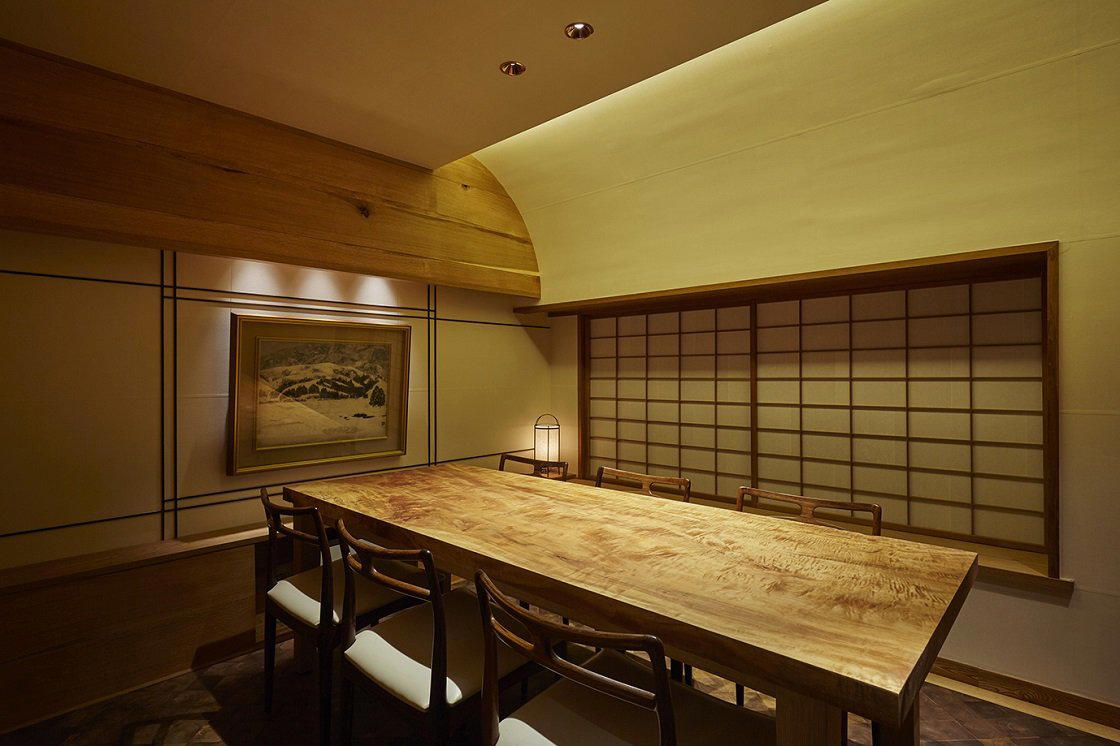
A Fourth-Floor Room and the Logic of Return
Oryori Yamada is a Michelin-starred Japanese kappo omakase restaurant in Osaka's Nishitenma district. Nishitenma occupies an interesting position in Osaka's dining map. The neighbourhood sits between the legal district and the Nakazakicho gallery quarter, which means it attracts a lunch crowd of professionals and an evening crowd of people who chose it deliberately rather than stumbled in. Oryori Yamada is on the fourth floor of the San System Nishitenma Gastro Plaza building on Chome 4-7-7, a vertical food complex that concentrates several restaurants under one roof. That format is common enough in Osaka, where prime ground-floor street frontage is expensive and chefs often trade a prominent facade for a dedicated room with fewer distractions. Arriving by elevator rather than walking through a front door recalibrates expectations: the experience becomes more private, more deliberate.
For the kind of Japanese cooking Yamada practises, that sense of arrival matters. The meal that follows is not designed for first impressions alone. Its structure rewards people who come back, who know, for instance, that the closing rice sequence is not a formality but among the more considered parts of the menu.
Where This Sits in Osaka's Japanese Dining Tier
Osaka's Michelin universe spreads across price points and formats more diversely than Tokyo's, partly because the city's food culture has historically prized accessibility alongside refinement. At the ¥¥¥¥ tier, the comparison set includes French-influenced tasting menus like HAJIME and La Cime, and innovative formats like Fujiya 1935, all drawing international attention and commanding prices that position them against destinations rather than neighbourhoods. Within Japanese cuisine specifically at that price point, the comparable set is smaller. Kashiwaya Osaka Senriyama and Tenjimbashi Aoki both operate in the broader kaiseki and traditional Japanese register, though at ¥¥¥ rather than ¥¥¥¥. Miyamoto and Oimatsu Hisano round out the field of Japanese-focused counters worth considering alongside Yamada in this part of the city.
Yamada's Michelin one-star recognition places it in a category where the guide's language is revealing. The citation specifically calls out ingenuity in menu construction, not restraint, not purity, not simplicity. That word signals something about the cooking's character: this is a kitchen that makes choices, not one that defaults to formula. A low review count at a ¥¥¥¥ venue usually means a smaller room and a clientele that does not post much, both of which tend to correlate with a certain type of serious, recurring diner.
The Menu Structure and What It Signals to Regulars
Japanese counter dining in the traditional register typically organises itself around a progression that moves from raw through cooked to rice, with the rice course functioning as a kind of landing. Yamada's version of this sequence is more deliberate than most. The meal closes with three rice preparations: white rice with accompaniments, pickled fish on rice, and a seasonal mixed rice. That trio is not standard practice even in accomplished kaiseki-adjacent kitchens. Offering three variations with free refills repositions the rice course from a polite conclusion into something guests are expected to engage with seriously, and, the format implies, to want more of.
For regulars, that ending becomes a reference point. The seasonal mixed rice shifts with what is available, so returning in different months means encountering a different closing. The pickled fish on rice (closer in spirit to the Osaka tradition of hako-zushi and pickled mackerel preparations than to anything Tokyo-centric) anchors the sequence in local idiom. It is the kind of dish that people mention when explaining why they book again.
The earlier parts of the menu follow a similar logic of familiar forms reworked with specific choices. Sashimi arrives with deep-fried onions and coarsely grated daikon rather than the standard wasabi-and-soy convention. That garnish combination changes the textural and aromatic context of the fish without obscuring it, a move that reads as an opinion about how sashimi should be eaten, not a novelty for its own sake. Fish preparations are sauced with mushroom and vegetable reductions, which places them in a cooking tradition that draws flavour depth from the land rather than leaning exclusively on dashi.
Naniwa Vegetables and the City's Culinary Identity
The Michelin citation's reference to Naniwa's traditional vegetables is significant context. Naniwa is the historical name for Osaka, and the vegetables associated with it, including Naniwa negi (a local long onion variety), Moriguchi daikon, and other cultivars that had largely disappeared from commercial farming, represent a strand of culinary regionalism that chefs across the city have worked to revive over the past two decades. A kitchen that gravitates toward these ingredients is making a statement about where it locates itself in that conversation.
This is a meaningful differentiator within the ¥¥¥¥ Japanese dining tier in Osaka. Several of the city's highest-profile fine dining venues, including the French and innovative kitchens, draw on local produce as a general principle; fewer make Naniwa's specific agricultural heritage the spine of the menu. For regulars with a long enough relationship with the restaurant, watching which vegetables appear across seasons becomes a way of tracking both the market and the kitchen's priorities simultaneously. Comparable attention to hyperlocal Japanese ingredient traditions can be found at Yugen, though in a different format and register.
How Yamada Compares to Japanese Counters Nationally
The style of cooking at Yamada, individual technique applied to regional ingredients, structured around a progression that ends with rice, has parallels at Michelin-recognised Japanese counters in other cities. Gion Sasaki in Kyoto operates at a different scale and price point but shares the instinct to build menus around seasonal specificity rather than set-piece luxury ingredients. Harutaka in Tokyo and Azabu Kadowaki represent the Tokyo equivalent of serious, technique-led Japanese cooking that earns loyalty through consistency rather than spectacle. Myojaku in Tokyo adds further context on how this style of counter positions itself in Japan's broader dining hierarchy. Further afield, Goh in Fukuoka, akordu in Nara, 1000 in Yokohama, and 6 in Okinawa each represent their own regional approach to serious Japanese cooking at a similar level of intent.
What distinguishes Yamada within this national frame is the specificity of its Osakan identity. The combination of Naniwa vegetables, the pronounced generosity of the rice-course format, and the choice to accent sashimi with deep-fried onions rather than deferring to Tokyo conventions all suggest a kitchen that has decided its city is the correct reference point, not the national standard.
Planning a Visit
Oryori Yamada sits at the ¥¥¥¥ price point, with an estimated spend of about $200 per person.
| Venue | Cuisine | Price Tier | Recognition | Format |
|---|---|---|---|---|
| Oryori Yamada | Japanese | ¥¥¥¥ | Michelin 1 Star (2024) | Counter, set menu with rice sequence |
| Kashiwaya Osaka Senriyama | Japanese | ¥¥¥ | Michelin recognised | Kaiseki |
| Tenjimbashi Aoki | Japanese | ¥¥¥ | Michelin recognised | Japanese counter |
| Yugen | Japanese | ¥¥¥¥ | Michelin recognised | Counter |
The address is 4 Chome-7-7 Nishitenma, Kita Ward, Osaka, fourth floor of the San System Nishitenma Gastro Plaza. Nishitenma is accessible from Minami-Morimachi or Osaka Temmangu stations, both within walking distance.
Cuisine Lens
Comparable venues nearby, for context on price, style, and recognition.
| Venue | Cuisine | Price | Awards | Notes |
|---|---|---|---|---|
| Oryori YamadaThis venue — the venue you are viewing | Japanese Kappo Omakase | $$$$ | Michelin 1 Star | Not listed |
| Ajikitcho Horieten | Traditional Kaiseki | $$$$ | Michelin 1 Star | Nishi |
| Nishitemma Nakamura | Seasonal Kaiseki with Western Influences | $$$$ | Michelin 1 Star | Kita |
| Sushi Hoshiyama | Edomae-Style Omakase Sushi | $$$$ | Michelin 1 Star | Kita |
| Nishino | Traditional Japanese Kaiseki | $$$$ | Michelin 1 Star | Nishi |
| Ono | Awaji Island Kaiseki | $$$$ | Michelin 1 Star | Kita |
Recognition history
Dated appearances from independent guides and award organizations, with the underlying list record or original source where available.
Michelin 1 Star
Michelin
Michelin 1 Star
Michelin
Continue exploring
More in Osaka
Restaurants in Osaka
Browse all →




Bars in Osaka
Browse all →




Hotels in Osaka
Browse all →




Wineries in Osaka
Browse all →
At a Glance
- Elegant
- Sophisticated
- Intimate
- Date Night
- Business Dinner
- Special Occasion
- Chefs Counter
- Private Dining
- Open Kitchen
- Sake Program
Current opening hours
- Monday
- 6–10:30 PM
- Tuesday
- 6–10:30 PM
- Wednesday
- 6–10:30 PM
- Thursday
- 6–10:30 PM
- Friday
- 6–10:30 PM
- Saturday
- 6–10:30 PM
- Sunday
- Closed
Hours can change for holidays and private events. Last verified .
Dynamic counter with open kitchen or tranquil private room, intimate and memorable atmosphere.