Our verdict
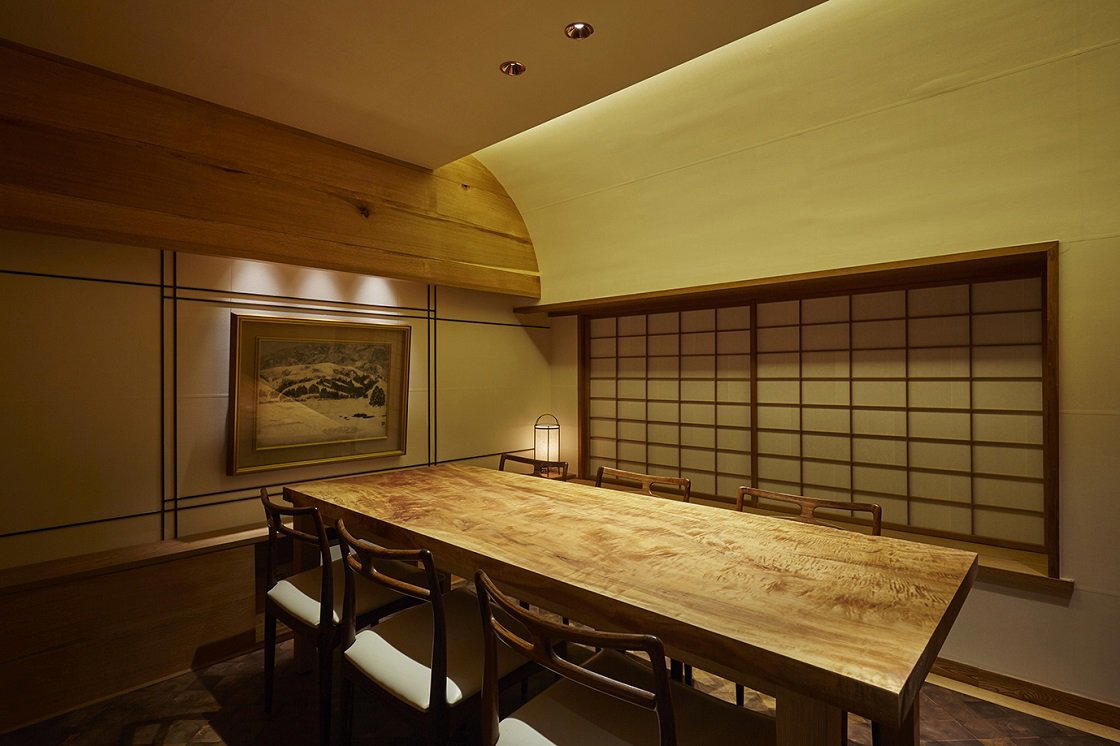
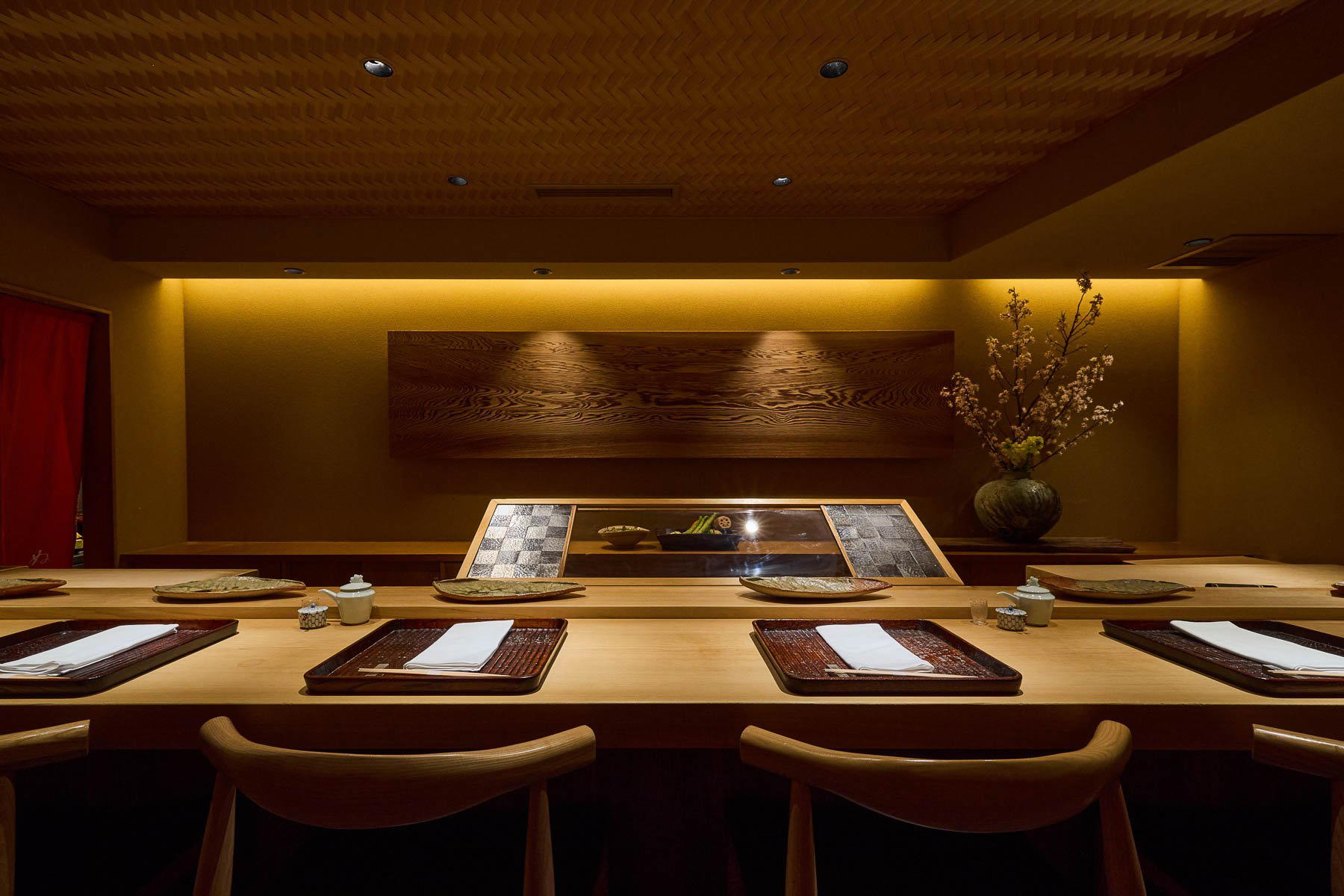
Onjiki occupies a mid-floor address in Kobe's Chuo Ward, where the city's kaiseki and ingredient-led dining tradition runs quietly parallel to its more celebrated beef and sushi counters. The restaurant sits in Nakayamatedori, a district that rewards those who look beyond the waterfront, positioning it within a neighborhood known for restrained, produce-focused cooking rather than spectacle.

Pearl is the En Primeur Club membership app — saves, bookings, and concierge access live there. Same editors, same standards.
- Address
- Japan, 〒650-0004 Hyogo, Kobe, Chuo Ward, Nakayamatedori, 2 Chome−15−13 サンシャイン山手1 階 102号
- Phone
- +81782712111
- Hours
- Mon–Sat 12–2 PM, 6–10 PMSun Closed
- Website
- onjiki.com
- Directions
- Get directions
Kobe's Quieter Culinary Register
Kobe's dining reputation tends to be defined by two things: its domestically produced beef and its port-city access to imported ingredients that made it an early adopter of Western cooking techniques. Both are true, and both can obscure a third strand that runs through the city's restaurant culture — the kind of ingredient-led, seasonally anchored cooking that doesn't announce itself loudly. Onjiki operates within that register, located in Chuo Ward's Nakayamatedori, a neighborhood that sits inland from the waterfront energy of the Kitano district and functions as a quieter residential-commercial corridor where restaurants earn their following through consistency rather than foot traffic.
The address — a mid-floor position in a building on a residential stretch of Nakayamatedori's second block, follows a pattern common to serious Japanese restaurants that want a degree of separation from street-level tourism. Kobe has several counterparts at this level: Fushin operates in a similar register of deliberate restraint, and Ash Restaurant draws a different crowd by leaning toward contemporary technique. Onjiki sits between those poles, within a city where ingredient sourcing is not a marketing angle but a structural feature of how restaurants here have historically competed.
What Kobe's Ingredient Geography Makes Possible
The Kansai region's agricultural and maritime geography is one of the more consequential facts about dining in this part of Japan. Kobe's position at the intersection of Osaka Bay and the Rokko Mountain foothills means that producers from the Awaji Island shores, the Tanba highlands, and the broader Hyogo prefecture are within close logistical reach. Awaji onions, harvested in spring and considered among the most prized alliums grown in Japan, move through Kobe's supply chain in ways they don't in cities further from the source. Tanba black soybeans, Tanba chestnuts in autumn, and wild mountain vegetables from the Rokko range all represent a regional pantry that restaurants in the city can draw on without the procurement difficulty faced by kitchens in Tokyo or Sapporo.
This is the context in which ingredient sourcing becomes a meaningful editorial frame for Onjiki rather than a generic claim. Restaurants in the Nakayamatedori corridor, as in Kobe's more established dining pockets, tend to compete on the tightness of their producer relationships and the seasonal discipline of their menus rather than on formal innovation or international name recognition. The comparison set here is not the celebrated kaiseki counters of Kyoto such as Gion Sasaki, but rather the mid-tier of Kobe's own serious restaurants, where a kitchen's credibility rests on what arrives through the back door and how precisely it is timed to the calendar.
Autumn and the Seasonal Argument for Timing Your Visit
The case for visiting ingredient-led restaurants in the Kansai region during autumn is direct: October through December brings the convergence of Tanba chestnut and matsutake mushroom season, the first Sanin coast crab, and the cooling temperatures that shift the region's cooking from lighter summer preparations toward richer, more layered formats. In Kobe specifically, this is also when the city's beef culture intersects most visibly with seasonal produce, the combination of marbled local beef and autumn vegetables represents the city's most distinctive contribution to Japanese cooking in the colder months.
For those planning a broader Kansai itinerary, Onjiki's Nakayamatedori address fits logically into a trip that might also include HAJIME in Osaka for a very different, technically ambitious approach to the region's produce, or akordu in Nara for a European lens on similar local ingredients. The contrast is instructive: Kobe's version of ingredient-led cooking tends to be less conceptually declared than Osaka's fine dining avant-garde and less historically weighted than Kyoto's kaiseki formalism.
Placing Onjiki in Kobe's Competitive Set
Kobe's restaurant scene is often discussed through the lens of its most internationally visible institutions. Aragawa, with its decades-long reputation for Tajima beef prepared over a binchotan charcoal grill, represents the city's highest-profile export. Ca Sento brings a Spanish format to local ingredients, and fuxing draws from Chinese culinary structure. These represent the city's formal diversity, Kobe's port history created an openness to non-Japanese cooking formats that is genuinely distinct from Kyoto or Nara.
Onjiki sits in a different quadrant of this map: not internationally formatted, not defined by a single premium protein, and not positioned at the trophy-dining price tier. Its Nakayamatedori location places it closer to the neighborhood-restaurant tier that serves Kobe's local professional class than to the destination-dining tier that attracts visitors from Tokyo or abroad. This is a meaningful distinction in a city where the gap between local favorite and international destination can be significant. For context on the wider range of what Kobe's dining scene offers, our full Kobe restaurants guide maps the city's different tiers and formats in detail.
Peer restaurants in Japan that share a comparable approach to regional sourcing and restrained format, without occupying the same formal price tier as Michelin three-star kaiseki, include 一本木 長嶋制 in Nanao, which operates with a similar commitment to hyper-local Hokuriku ingredients, and 湖畔荘 in Takashima, where proximity to Lake Biwa defines the menu in a comparable way. The pattern, a restaurant deriving its identity from geographic proximity to specific producers rather than from chef celebrity or formal awards, is a durable one in Japanese regional dining.
Planning a Visit
Onjiki's address in the Sanshine Yamate building on Nakayamatedori's second block places it within walking distance of Shin-Kobe Station, which sits on the Sanyo Shinkansen line and connects to Osaka in under 20 minutes. This makes the restaurant accessible as a dinner destination for those staying in Osaka and day-tripping to Kobe, a route that has become standard for visitors covering the Kansai region efficiently. The Chuo Ward location is also reachable by subway from Sannomiya Station, Kobe's central interchange.
This applies particularly during peak autumn months, when demand for produce-focused restaurants in the Kansai region tends to outpace availability at smaller neighborhood venues.
For those building a broader Japan itinerary around ingredient-led dining, restaurants worth considering in parallel include Harutaka in Tokyo for a contrasting approach to Japanese seafood-led precision, Goh in Fukuoka for Kyushu's distinct regional pantry, and 夕打山乃 in Sapporo for the northernmost expression of Japan's seasonal sourcing tradition. Internationally, the underlying logic of proximity-to-producer cooking has parallels at Le Bernardin in New York City in the seafood-sourcing discipline sense, and at Atomix in New York City in the way Korean regional ingredients are framed within a fine-dining context.
Frequently asked questions
How do I find Onjiki?
Onjiki is located at Japan, 〒650-0004 Hyogo, Kobe, Chuo Ward, Nakayamatedori, 2 Chome−15−13 サンシャイン山手1 階 102号, Kobe.
Is Onjiki worth visiting during autumn compared to other Kobe restaurants?
Onjiki's location in Kobe's Chuo Ward on Nakayamatedori positions it within a district that draws diners seeking ingredient-led cooking over high-profile brand names. Autumn — specifically October through December — is when the Kansai region's convergence of seafood, mountain vegetables, and harvest produce makes seasonal Japanese menus most rewarding. For a kitchen oriented around what the region's geography provides, that seasonal window carries more weight here than at restaurants built around a fixed signature product like Kobe beef.
What dish is Onjiki famous for?
Onjiki's menu is shaped by Kansai's seasonal produce and Kobe's port-city access to both domestic and imported ingredients, so no single dish defines the kitchen across all seasons. The cooking follows what the region's agricultural and maritime supply makes available, which shifts meaningfully between autumn and the leaner winter months. Visitors planning around October through December will find the menu at its most ingredient-diverse.
Do I need a reservation for Onjiki?
Ingredient-led restaurants of this type in Kobe's Chuo Ward tend to operate at limited capacity, and walk-in availability is rarely reliable. Onjiki's address in the Sanshine Yamate building on Nakayamatedori places it close to Shin-Kobe Station, which makes it a viable dinner destination for visitors arriving by Shinkansen, adding to demand. Securing a booking in advance is advisable, particularly for autumn visits when seasonal menus draw the most attention.
What has Onjiki built its reputation on?
Onjiki operates within Kobe's quieter culinary register, away from the internationally visible institutions that typically define the city's dining profile. Its standing rests on a kitchen approach tied closely to Kansai's ingredient geography — the same productive agricultural and coastal zone that supplies some of western Japan's most respected tables. That positioning, ingredient-first rather than prestige-first, has given it a distinct identity within a competitive local set that includes Aragawa and other long-established names.
Can Onjiki accommodate dietary restrictions?
Japanese seasonal restaurants of this format typically build menus around a fixed ingredient progression, which can limit flexibility. Contacting the restaurant directly before booking is the practical step for any dietary requirements, particularly for menus structured around Kansai's autumn harvest.
City Peers
Comparable venues nearby, for context on price, style, and recognition.
| Venue | Cuisine | Price | Awards | Notes |
|---|---|---|---|---|
| OnjikiThis venue — the venue you are viewing | Authentic Japanese Kaiseki | Not listed | Not listed | Not listed |
| Kobe Beef TANRYU | Kobe Beef Teppanyaki | $150–200 | Tabelog Bronze #454 | Chūō |
| Teppanyaki Kokoro | Luxury Kobe Beef Teppanyaki | $100–150 | Tabelog 100 #41 | Chūō |
| KOBE BEEF EiKiChi | Kobe Beef Teppanyaki | $100–150 | Not listed | Chūō |
| Tsuki Usagi | Halal Kobe Beef Japanese | $200–300 | Not listed | Chūō |
| Aburi Niku Kobo Wakkoqu Kitano Sakamoto Ten | Kobe beef teppanyaki steakhouse | $100–150 | Tabelog 100 #62 | Chūō |