1 Michelin Star · Tabelog 100 #41
Our verdict
A kappo-trained Kyoto chef brings intellectual curiosity to the city's vegetable-and-dashi tradition at this Nakagyo Ward address. The menu moves between warm and cold preparations, with clay-pot rice and quietly elaborate side dishes anchoring a meal that sits closer to the kappo register than formal kaiseki. Reservations are strongly advised.

Pearl is the En Primeur Club membership app, where members save venues, book tables and use the concierge.
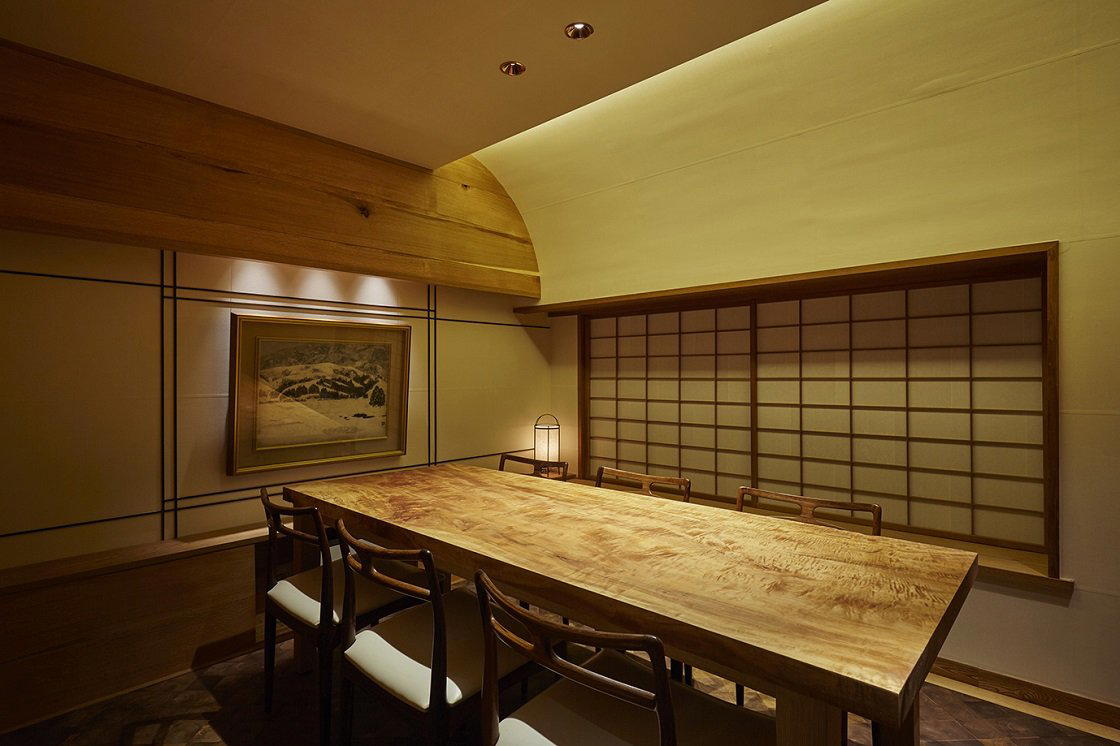
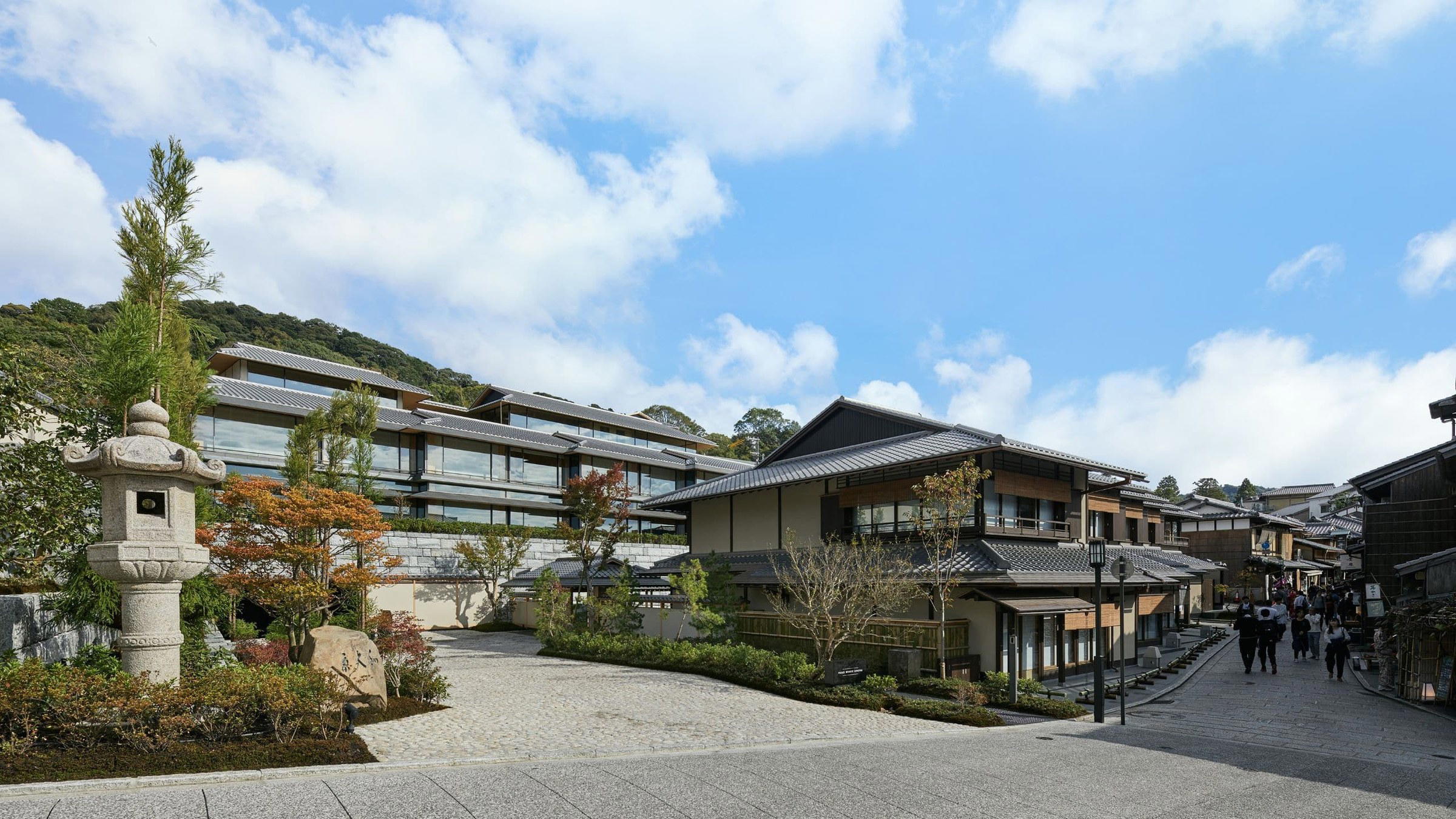
Nakagyo Ward sits at the geographic and cultural centre of Kyoto, the neighbourhood where the city's merchant history and its temple-district formality meet somewhere in the middle. The restaurants that define this ward tend to operate in the space between rigidly ceremonial kaiseki and the looser, counter-led kappo format, a tension that has produced some of Kyoto's most interesting cooking over the past two decades. Ogawa, at an address just inside that ward at 515 Anenishinotoincho, occupies precisely that middle register.
Kappo, Kaiseki, and the Kyoto Cooking Tradition
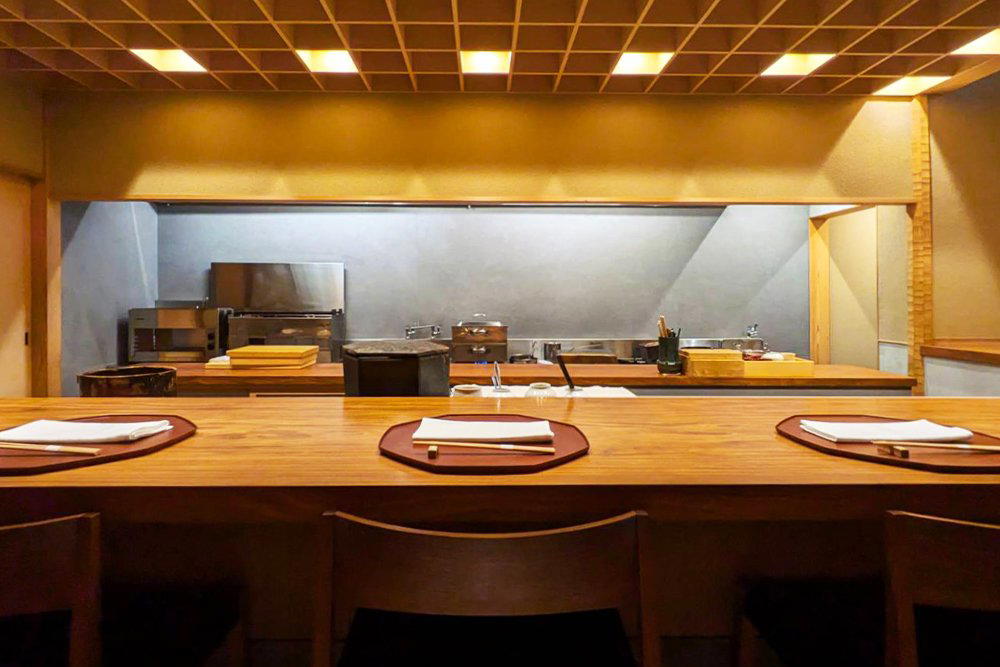
Understanding what Ogawa does requires a brief account of what kappo actually means in Japanese culinary terms. Where kaiseki, as practiced at addresses like Kikunoi Honten, Hyotei, or Mizai, follows a codified progression with fixed seasonal logic, kappo trades some of that ceremony for directness. The chef cooks in view, the pacing is more conversational, and the menu can pivot toward what interests the cook on a given day. It is an older format in some respects, predating the formal kaiseki sequence, and in Kyoto it carries its own cultural weight.
Kyoto cuisine itself, known in Japanese as kyo-ryori, rests on two structural pillars: dashi and vegetables. The city's landlocked geography historically made fresh seafood scarce, which pushed the tradition toward exceptional vegetable cookery and toward dashi made from kombu and dried fish as the primary flavour carrier. That constraint produced a cuisine of unusual refinement, where a boiled turnip or a slice of tofu can carry the full weight of a course if the stock is properly made. The cooking at Ogawa works within this framework.
What the Menu Reflects
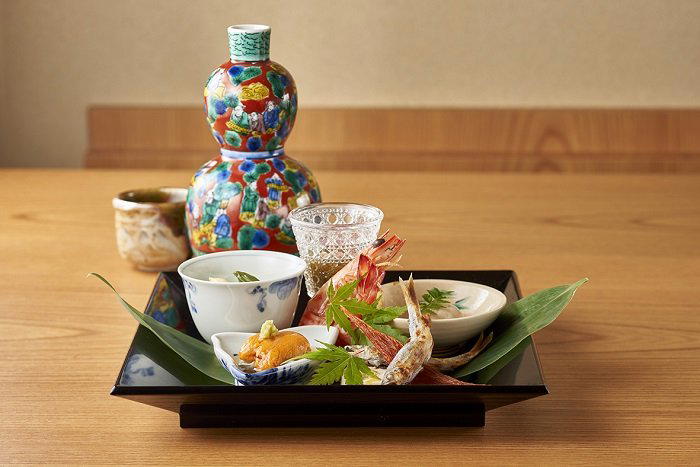
The kitchen's approach here centres on Kyoto's vegetable-and-dashi register, with technique applied not to complicate but to reveal. Side dishes of boiled vegetables and ground soup, served both cold and warm across the same meal, demonstrate a specific kind of skill: knowing when a preparation should be chilled to concentrate its flavour and when warmth is required to open it. This is not a distinction that appears on Western menus with any regularity, and it is one of the clearer markers of a kitchen that has absorbed the kyo-ryori tradition rather than merely referencing it.
The progression moves toward rice cooked in clay pots, a method that produces a crust at the base of the pot, the okoge, considered the most desirable part of the serving. Alongside this come items that speak to Kyoto's preserved-food culture: tsukudani (preserves simmered in sweetened soy sauce), dried mullet roe, and peppered crepe. These are not garnishes or afterthoughts. They are the accumulated condiment vocabulary of a city that developed elaborate preservation techniques partly because fresh produce arrived on seasonal cycles and partly because the aesthetic of the dried or fermented ingredient carries its own prestige in this culinary tradition.
Comparable depth in the preservation and side-dish register appears at Isshisoden Nakamura and, in a different format, at Gion Sasaki, though both of those addresses operate at the higher price points of full kaiseki service. Ogawa's positioning within the kappo format suggests a somewhat different price register, one that may be more accessible without being less serious about the underlying cuisine.
The Intellectual Disposition of the Kitchen
The chef's formation spans two distinct institutional types: a ryotei, where formal Japanese service codes and precision cooking are instilled, and a kappo, where the interaction between cook and diner becomes part of the experience itself. That dual training produced a particular orientation toward hospitality, an interest in the occasion as much as the food, and a view that the meal's value lies in what it leaves behind in memory rather than in technical accumulation for its own sake. This is a recognisable position within Japanese culinary philosophy, and it shapes kitchens that tend to cook with a degree of ingenuity rather than formula.
The same broad disposition toward memory and occasion shows up in how other serious Japanese kitchens think about their work. Harutaka in Tokyo and HAJIME in Osaka each represent versions of this philosophy applied to different formats and ingredient traditions. Further afield, akordu in Nara and Goh in Fukuoka show how the occasion-centred approach has spread through Japan's regional fine dining circuit. Even beyond Japan, the same logic appears in kitchens as different as Le Bernardin in New York City and Atomix in New York City, where the structure of the meal is designed to produce something that outlasts the evening.
Where This Sits in Kyoto's Dining Order
Kyoto's restaurant scene at the serious end has stratified considerably over the past decade. Michelin-starred kaiseki addresses now occupy a tier that can require bookings months in advance and budgets that match three-star equivalents in European cities. Below that tier, but not inferior in culinary intent, sits a range of kappo addresses, chef-counter restaurants, and smaller dining rooms that work within the same ingredient traditions but with less ceremony and, often, with more direct engagement between kitchen and table.
Ogawa belongs in that second tier by format, though the seriousness of the cooking, particularly in its treatment of dashi, its vegetable preparations, and its preservation-focused accompaniments, places it in alignment with Kyoto's deeper culinary logic rather than at the periphery of it. For readers building a Kyoto itinerary that extends beyond the obvious Michelin addresses, this is the kind of address that repays attention.
For broader context on the city's dining scene, see our full Kyoto restaurants guide. For accommodation, bars, and cultural experiences to pair with a Kyoto visit, the Kyoto hotels guide, Kyoto bars guide, and Kyoto experiences guide cover the relevant ground. Those exploring Japan's wider restaurant circuit will also find useful reference points in 1000 in Yokohama and 6 in Okinawa. The Kyoto wineries guide is worth consulting for those interested in sake producers and the wine options that now accompany serious Kyoto meals.
Planning Your Visit
Ogawa is located at 515 Anenishinotoincho in Nakagyo Ward, Kyoto. The address is centrally positioned relative to the city's transit network, making it reachable from most of Kyoto's accommodation zones without significant difficulty. Kappo-format restaurants in Kyoto at this level of seriousness typically require advance reservation, and walk-in availability should not be assumed.
Quick reference: Ogawa, 515 Anenishinotoincho, Nakagyo Ward, Kyoto. Kappo format. Kyoto vegetable-and-dashi cuisine with clay-pot rice and preservation-focused accompaniments. Advance reservation advised; confirm booking directly.
Frequently asked questions
Where do I go for Ogawa?
Ogawa is located at 515 Anenishinotoincho, Nakagyo Ward, Kyoto, 604-8273, Japan, Kyoto.
Does Ogawa have a Michelin star or similar recognition?
Ogawa has received recognition including: After learning the basics at a ryotei, the chef worked at a kappo, where he discovered how to make dining fun. What he finds compelling about being a chef, he says, is that while the food itself is consumed at once and disappears, the occas….
What should I eat at Ogawa?
The kitchen is anchored in Kyoto's dashi-and-vegetable register. Signature items include boiled vegetables, ground soup served both cold and warm, rice cooked in clay pots, preserves simmered in sweetened soy sauce, dried mullet roe, and peppered crepe. These are not complex preparations for their own sake, the cooking uses technique to clarify rather than embellish.
Do I need a reservation for Ogawa?
Kappo counters in Nakagyo Ward operating at this level of intentionality typically require advance booking, often through an intermediary or direct contact. No public booking link or phone number is listed for Ogawa, so approaching via a hotel concierge or specialist reservation service is the practical route.
What is Ogawa known for?
Ogawa is known for a kappo format that prioritises Kyoto cuisine rich in dashi and vegetables, with the chef drawing on training across both a formal ryotei and a kappo setting. The cooking philosophy, as the chef describes it, treats the occasion itself as the lasting element, the food is consumed, but the meal remains. Clay-pot rice and precisely calibrated side dishes are the defining through-line.
Is Ogawa good for vegetarians?
Kyoto's culinary tradition has a stronger vegetable focus than most Japanese regional cuisines, and Ogawa's menu centres on seasonal produce and dashi-based preparations. That said, items such as dried mullet roe appear on the counter, indicating this is not a vegetarian-specific format. Guests with dietary requirements should confirm directly before booking.
Booking and Cost Snapshot
| Venue | Cuisine | Price | Awards | Notes |
|---|---|---|---|---|
| OgawaThis venue (the venue you are viewing) | Kyoto Kaiseki Omakase | $200–300 | 1 Michelin Star · Tabelog 100 #41 | Not listed |
| Gion Sasaki | Modern Kaiseki | $300–500 | 3 Michelin Stars · La Liste Top Restaurants | Kaiseki, Japanese |
| cenci | Innovative Italian-Japanese Fusion | $100–150 | 1 Michelin Star · World's 50 Best #76 | Italian |
| Ifuki | Sumibi Kappo Kaiseki | $200–300 | 2 Michelin Stars · La Liste Top Restaurants | Kaiseki |
| Kyokaiseki Kichisen | Kyoto Kaiseki | $200–300 | 2 Michelin Stars · La Liste Top Restaurants | Japanese |
| Kyo Seika | Modern Chinese Fine Dining | $150–200 | 1 Michelin Star · Tabelog Bronze #216 | Chinese |
Recognition history
Dated appearances from independent guides and award organizations, with the underlying list record or original source where available.
Michelin 1 Star
Michelin
Tabelog 100 #41 · No. 41
Tabelog · Tabelog 100 - Soba - WEST - 2025