Nakakooriten Kakigori brings one of Japan's most discipline-driven shaved-ice traditions to Wakayama, a city better known for ramen and coastal produce than dessert culture. In a prefecture where slow food and regional identity run deep, a specialist kakigori counter reads as a deliberate counterpoint to the area's heavier dining canon, precise, seasonal, and worth tracking down.

Pearl is the En Primeur Club membership app — saves, bookings, and concierge access live there. Same editors, same standards.
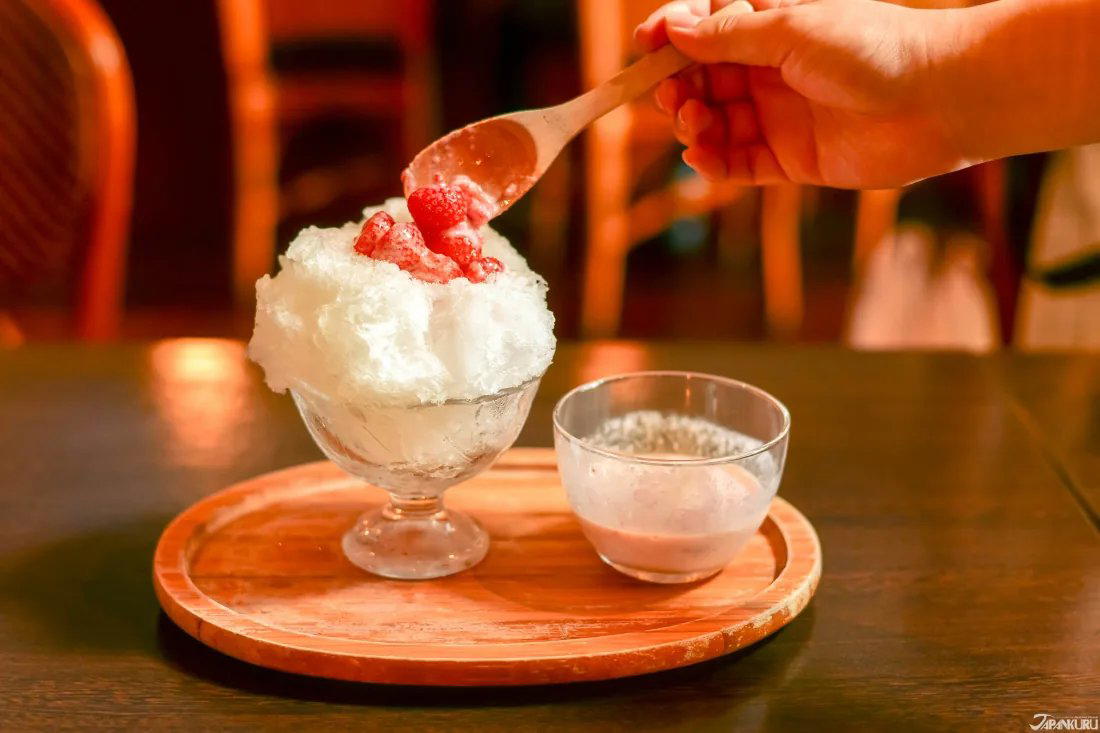
Where Wakayama's Slower Rhythms Meet a Precise Dessert Tradition
Wakayama is not a city that announces itself. Positioned between Osaka's commercial density and the pilgrimage corridors of the Kii Peninsula, it sits in a middle distance that most visitors cross rather than settle into. That geographic positioning has shaped a food culture defined less by spectacle and more by specificity: the soy-heavy broth of its ramen, the Pacific seafood pulled from Kishu waters, the persimmon and mandarin harvests that mark the agricultural calendar. Into this context, a specialist kakigori counter reads as something of an anomaly, and anomalies in food cities with this much regional confidence are usually worth attention.
Nakakooriten Kakigori operates within that tension. Kakigori as a category spans a wide spectrum in contemporary Japan, from convenience-store bags of flavoured ice to technically exacting counters where the shaving equipment, ice density, and syrup preparation are treated with the same seriousness applied to a kaiseki kitchen. Nakakooriten Kakigori is a Japanese kakigori counter in Wakayama. Its menu is built around shaved ice, and at about US$5 per person it sits at an accessible price point.
Kakigori in Japan: A Format With Serious Depth
The renewed seriousness around kakigori in Japan is not a recent trend manufactured by social media alone. The format has deep roots as a summer staple, historically tied to the ice trade that made chilled goods available before mechanical refrigeration, but its contemporary revival has moved it into year-round specialty territory. Premium kakigori counters now appear in urban centers from Tokyo to Fukuoka, drawing the same kind of reservation-hungry attention that omakase sushi counters generated a decade earlier.
What separates the serious operators from the seasonal novelty shops is ice quality and texture control. The shaving technique determines whether the result is coarse and crystalline or fine enough to absorb syrup slowly, creating layered flavour as the ice melts. Syrups at the upper tier of the category are made in-house from fruit reductions, seasonal infusions, or regional produce, rather than poured from commercial bottles. In Wakayama, where locally grown umeboshi, mandarin, and persimmon give any fruit-driven food program obvious raw material to work with, the ingredient proximity is a structural advantage, though translating proximity into execution is a separate discipline entirely.
For comparison within the Kinki region, the standard for serious, produce-led cooking at different price points is set by venues like Gion Sasaki in Kyoto and akordu in Nara, both of which demonstrate how regional ingredient stories become coherent on a plate when the kitchen has genuine commitment to sourcing. Kakigori at its most considered works on the same logic: the bowl is a vehicle for a place's produce, compressed into a single cold format.
Wakayama's Dining Scene and Where a Kakigori Counter Fits
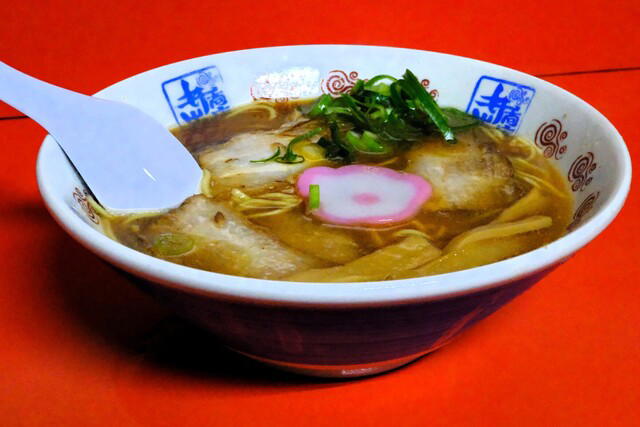
Wakayama's food identity is anchored overwhelmingly in its ramen culture. The city's distinct soy-and-pork broth style, with its characteristic thin noodles and thick shoyu base, has a regional following that extends well beyond the prefecture. Counters like Ideshouten Ramen and Chuka Soba Hayami represent a tradition that takes ramen not as casual street food but as something worth serious study. Noodles Dining Tsukinoya extends that noodle culture further, while Hotel de Yoshino represents the city's more formal French-influenced dining register. Ichijoin adds further depth to a city that rewards careful itinerary construction.
A dessert specialist in this environment occupies a clearly defined niche. Kakigori is not competing with ramen for the same dining occasion, it typically functions as an afternoon destination or a post-meal close, making it a complementary stop rather than an alternative. For visitors building a full day in Wakayama, the sequencing matters: ramen at lunch, afternoon kakigori, and an evening meal that draws on the prefecture's coastal produce or one of its more formal kitchens. That itinerary logic is part of why a place like Nakakooriten Kakigori can exist and develop a following in a city whose primary culinary identity is so firmly elsewhere.
The broader Kansai and western Japan dining map, which includes destinations like HAJIME in Osaka and Goh in Fukuoka, reflects a regional appetite for precisely executed single-discipline formats. Kakigori at its most serious belongs to that same impulse, specialization over breadth, depth over variety. A dedicated kakigori counter asks the visitor to slow down, which is, in a sense, exactly what Wakayama as a city asks of anyone who stays long enough to notice what it does well.
Planning a Visit
Wakayama is accessible from Osaka via the JR Kinokuniya Line, a journey of roughly an hour, making it a workable day trip from the larger city. For visitors already building an itinerary through the Kii Peninsula or the pilgrimage routes toward Koyasan, Wakayama city functions as a useful base with enough concentrated dining interest to justify overnighting.
Harutaka in Tokyo to regional specialists including venues in Nanao, Sapporo, and Takashima, as well as Nishikawa Machi and Birdland in Sakai. For those arriving from or connecting through New York, the EP Club also covers formal dining at Le Bernardin and Atomix.
A Lean Comparison
Comparable venues nearby, for context on price, style, and recognition.
| Venue | Cuisine | Price | Notes |
|---|---|---|---|
| Nakakooriten KakigoriThis venue — the venue you are viewing | Not listed | $ | Not listed |
| Yamatame Shokudo | Not listed | $ | central Wakayama, Traditional Wakayama Ramen & Shokudo |
| こってり和歌山らーめん 清乃 | Wakayama City Center, Wakayama Ramen | $ | Not listed |
| Tonkatsu So Fujimaru | Not listed | $ | Wakayama (central business district), Casual Tonkatsu & Yoshoku |
| Chuka Soba Hayami | Shingu, Traditional Wakayama Ramen | $ | Not listed |
| Takehara | Katsuura, Traditional Tuna Specialist | $$ | Not listed |
Continue exploring
More in Wakayama
Restaurants in Wakayama
Browse all →
Bars in Wakayama
Browse all →
Hotels in Wakayama
Browse all →
At a Glance
- Casual Hangout
- Standalone