Muromachi Sunaba is one of Tokyo's oldest soba houses, operating from Akasaka with a lineage that traces back centuries through the Sunaba tradition. The space itself carries the weight of that history, a restrained interior that positions it apart from the city's newer, showier dining formats. For anyone mapping Tokyo's washoku continuum, it belongs near the beginning of the conversation.
 Request Booking on Pearl
Pearl is the En Primeur Club membership app — saves, bookings, and concierge access live there. Same editors, same standards.
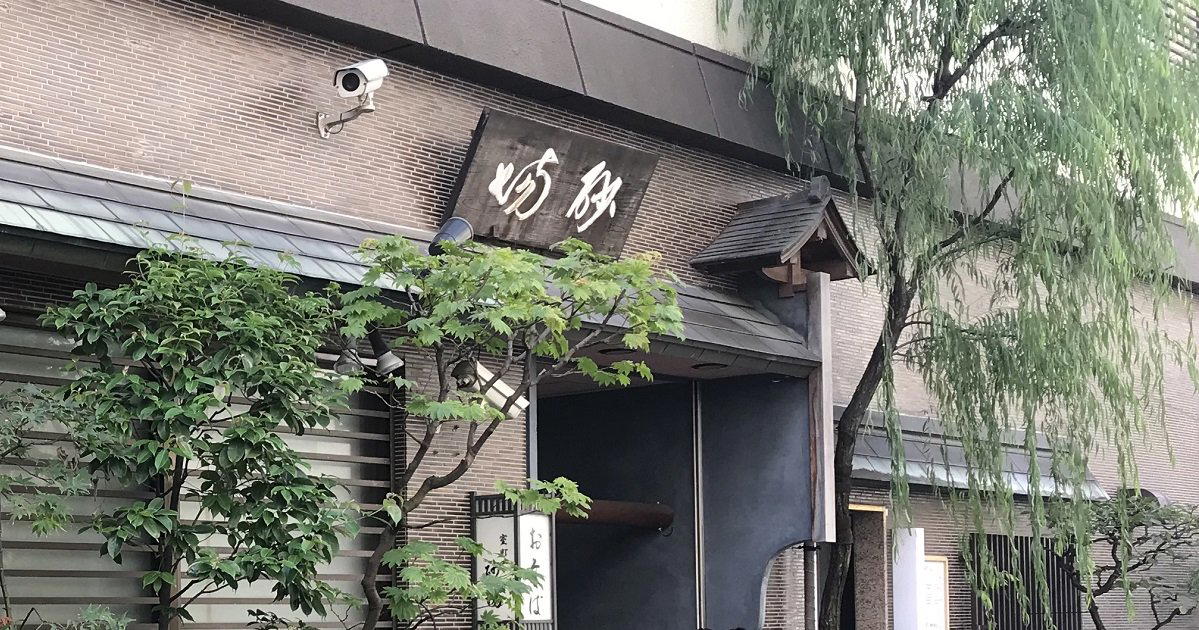
The Room Before the Noodles
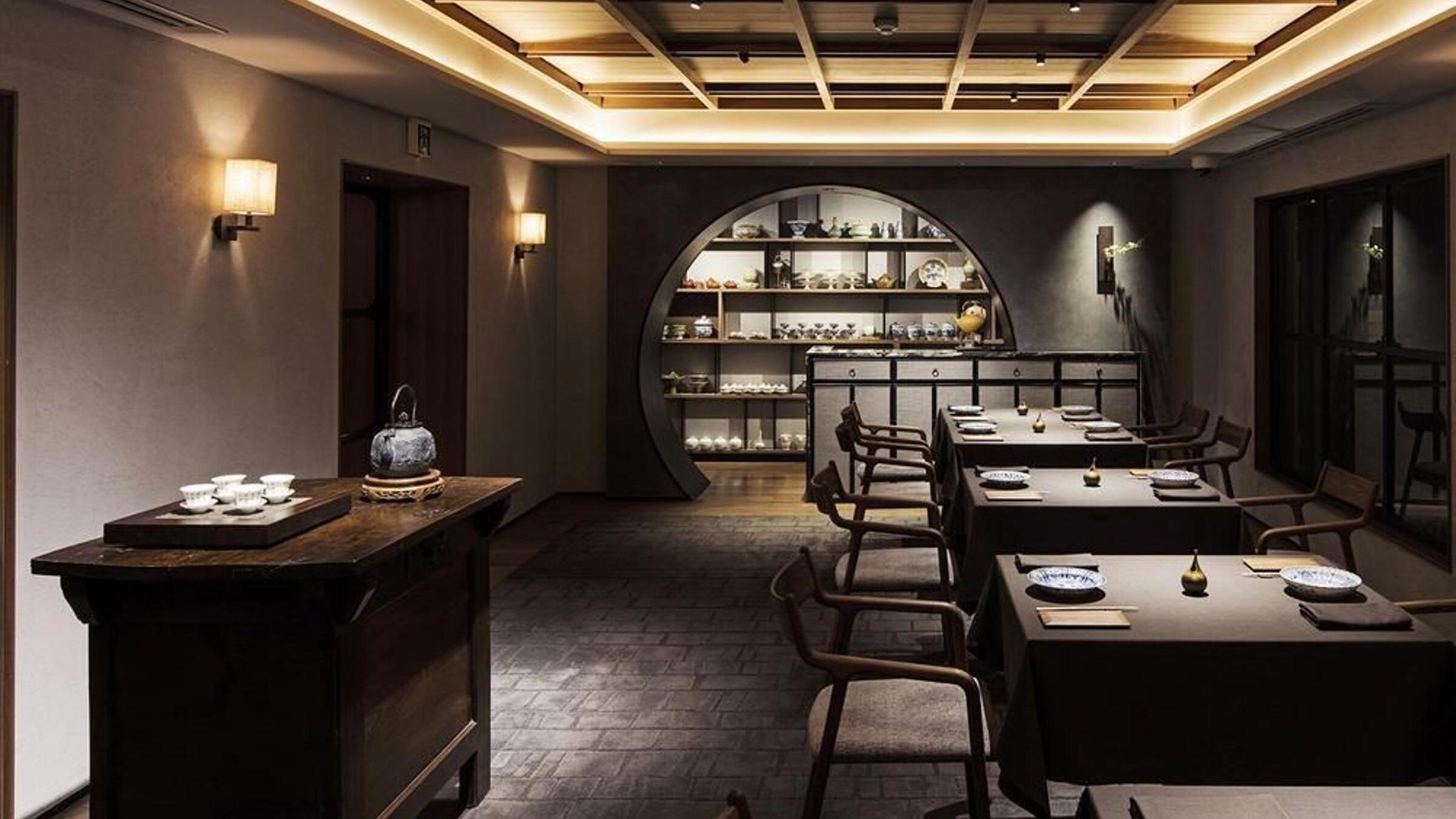
There are interiors in Tokyo that announce themselves through noise and visual complexity, and there are those that operate in deliberate contrast to that mode. Muromachi Sunaba, a traditional Edo-style soba restaurant in Akasaka, Tokyo, belongs firmly to the second category. The space reads as an argument about what a dining room should do: reduce distraction, foreground material honesty, and let the food carry the full weight of the experience. Exposed wood, muted surfaces, and a proportional restraint that feels calibrated rather than accidental. In a city where new openings frequently treat interior design as a competitive arena, this kind of architectural quietness functions almost as a positioning statement.
Sunaba is one of Tokyo's long-established soba house lineages, and the Muromachi branch carries that inherited identity into a neighbourhood more commonly associated with political lunches and corporate dining. Akasaka's restaurant stock skews formal and international; a traditional soba counter in this context holds a different kind of cultural authority than it would in, say, Kanda or Asakusa, where the category has higher ambient density. Here, it operates as something closer to an institution in miniature.
What Soba Means in This Context
Japanese soba culture has a longer critical history than its reputation outside Japan suggests. The category splits broadly between kake-style houses serving hot noodles in dashi broth, and establishments where cold seiro soba, served on a bamboo tray with dipping tsuyu, is the primary expression of craft. The distinction matters because the latter format exposes the noodle directly, with no broth to mediate texture or buckwheat flavour. It is, in that sense, the more unforgiving format, and the one through which serious soba houses have historically been assessed.
Tokyo's soba tradition, sometimes grouped under the edo-style banner, tends toward noodles with a higher wheat-to-buckwheat ratio than the more intense juwari (100% buckwheat) styles found elsewhere in Japan. The result is a smoother, slightly more elastic noodle that suits the city's dipping-style service. Muromachi Sunaba works within that tradition rather than departing from it, which places it in a specific comparable set: establishments where fidelity to regional form is the craft, not a limitation of ambition.
For readers who approach Japanese dining through the lens of kaiseki or contemporary omakase, the frame shifts here. RyuGin and Harutaka operate in categories defined by elaboration, sequencing, and seasonal rotation. A soba house like Sunaba operates through reduction: fewer variables, higher stakes per element. The comparison that makes the most sense is not across cuisine categories but across approaches to mastery.
The Interior as a Functional Object
Muromachi Sunaba's interior design is not decorative in the way that newer Tokyo openings tend to be. The space is built to function efficiently for a format in which the dining rhythm is relatively quick, soba is not a three-hour proposition, while still creating an environment that slows the customer down enough to notice what they are eating. That balance is harder to achieve than it appears. Restaurants that skew too austere lose the warmth that makes a meal feel like an event. Those that layer on visual complexity distract from the food itself.
Traditional Japanese joinery, sliding screens, and low-key material palettes have long been the default toolkit for soba houses operating at this register. What distinguishes the more considered examples is proportion: the relationship between ceiling height, table spacing, and the amount of natural or diffused light in the room. A well-proportioned soba interior makes the act of eating feel deliberate without making it feel ceremonial. It is a different kind of seriousness than you encounter at, say, Sézanne or L'Effervescence, where the room is designed to frame a long, multi-course arc. Here, the room is designed to frame a single bowl, or two, consumed with full attention.
Placing Sunaba in Tokyo's Dining Conversation
Tokyo rewards visitors who understand that its dining culture is not a single register. The city's Michelin-heavy, internationally covered tier, Crony, RyuGin, Sézanne, represents one end of a very long spectrum. The other end, equally serious and considerably older, includes the soba houses, tempura counters, and unagi specialists that have been refining their formats for generations. Muromachi Sunaba sits in this latter tradition, and the case for including it in a Tokyo itinerary is not nostalgia. It is an understanding that craft expressed through reduction is as demanding as craft expressed through elaboration.
Akasaka's geography adds a layer of practical context. The area is well-connected by metro and sits in a part of the city that sees high volumes of business dining, which means lunch service at establishments like Sunaba tends to draw a mix of neighbourhood regulars and purposeful visitors. Dinner operates at a different pace. Across Japan's broader dining map, the tradition of washoku simplicity surfaces at different scales: Gion Sasaki in Kyoto addresses it through kaiseki, HAJIME in Osaka through a more architectural lens, and akordu in Nara through cross-cultural juxtaposition. Sunaba's version is narrower and older than any of those, and that narrowness is the point.
For those building a broader Japan itinerary, the culinary logic extends beyond Tokyo. Goh in Fukuoka, 一本木 名川製 in Nanao, and 古往今来之 in Sapporo each represent regional traditions with their own internal logic. Tokyo's soba lineage is one chapter in that wider map.
Planning Your Visit
Muromachi Sunaba is located at 赤坂6-3-5, Minato-ku, Tokyo 107-0052. Akasaka is served by the Tokyo Metro Chiyoda Line and the Marunouchi/Ginza Line interchange at Akasaka-mitsuke, placing the neighbourhood within easy reach of central Tokyo. Reservations are recommended.
| Venue | Category | Price Range | Format |
|---|---|---|---|
| Harutaka | Sushi | ¥¥¥¥ | Omakase counter |
| RyuGin | Kaiseki | ¥¥¥¥ | Multi-course tasting |
| Sézanne | French | ¥¥¥¥ | Multi-course tasting |
| L'Effervescence | French | ¥¥¥¥ | Multi-course tasting |
| Crony | Innovative / French | ¥¥¥¥ | Counter / tasting |
Cuisine Context
Comparable venues nearby, for context on price, style, and recognition.
| Venue | Cuisine | Price | Awards | Notes |
|---|---|---|---|---|
| Muromachi Sunaba (室町砂場)This venue — the venue you are viewing | Traditional Edo-style Soba | $$ | , | |
| IkkoAn | Traditional Japanese Wagashi | $$ | , | Bunkyō |
| Ramen MAIKAGURA | Modern Tori Paitan Ramen | $$ | , | Setagaya |
| Umatama Ya | Omurice-focused Yoshoku (Japanese-style Western) counter | $$ | , | Chiyoda |
| 六雁 | japanese | , | Chūō | |
| Tantantei | Old-School Chuka Soba | $$ | , | Hamadayama |






At a Glance
- Classic
- Historic
- Cozy
- Business Dinner
- Casual Hangout
- Historic Building
- Sake Program
Calm traditional Japanese atmosphere with tatami rooms and Meiji-era ambience.