
MUNI ALAIN DUCASSE holds a Michelin star (2024) and brings classical French technique to Nakagyo Ward, Kyoto, at the ¥¥¥¥ price tier. The restaurant sits within the broader movement of European fine dining adapting to Japan's seasonal and ingredient-led philosophy, placing it alongside Kyoto's most demanding tables rather than its tourist-facing French bistros. Advance reservations are strongly recommended at this level.
Pearl is the En Primeur Club membership app — saves, bookings, and concierge access live there. Same editors, same standards.
- Address
- 176-3 Zaimokucho, Nakagyo Ward, Kyoto, 604-8017, Japan
- Phone
- +81 75-754-8554
- Website
- instagram.com
- Directions
- Get directions
 Saves & bookings on Pearl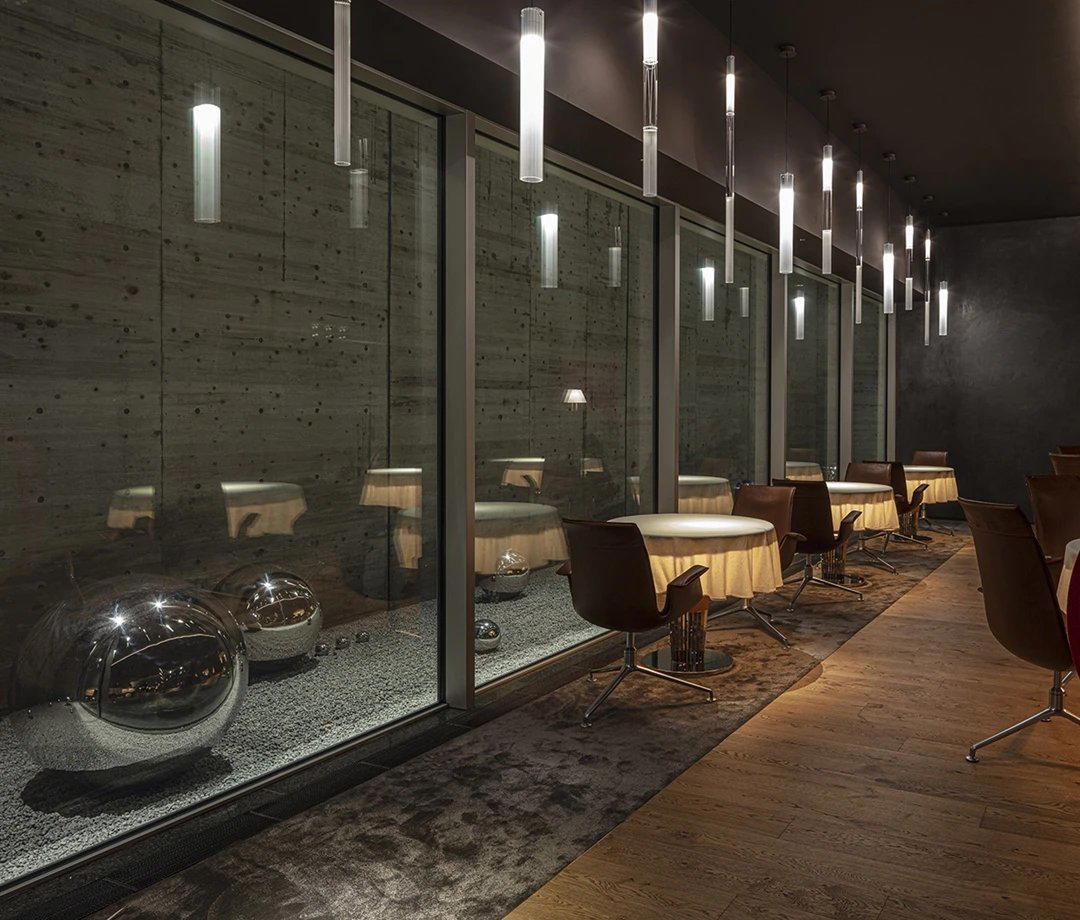
Where Classical French Technique Meets Kyoto's Seasonal Logic
Nakagyo Ward occupies the central belt of Kyoto, a district where machiya townhouses press against quiet commercial streets and the density of serious dining is higher than most visitors expect. It is not the postcard Kyoto of Higashiyama temple paths, but it rewards the traveller who reads a city by its restaurants rather than its landmarks. MUNI ALAIN DUCASSE sits at 176-3 Zaimokucho within this ward, and the address alone signals something about the venue's intentions: this is French fine dining that has chosen to root itself in a working residential and commercial neighbourhood rather than inside a hotel lobby or beside a garden gate.
The Alain Ducasse name carries specific weight in this context. Ducasse's restaurants across Paris, Monaco, and Tokyo have long occupied the upper tier of classical French technique, and the Kyoto outpost inherited that lineage. What makes MUNI particularly instructive as a case study is the tension it embodies: French cuisine in its most rigorous form, applied in a city whose own dining culture is especially ingredient-obsessed in the world. Kyoto's kaiseki tradition does not improvise; it tracks the season with calendar-like precision. French haute cuisine, for all its technique, arrives in that city as a guest tradition and must negotiate its terms.
The New French Question: Technique, Restraint, and Where Kyoto Fits
The phrase "New French" has been applied loosely over three decades, from the plate-painting excess of nouvelle cuisine to the austere minimalism of contemporary Parisian dining. In Japan, the conversation takes a different shape. French cooking arrived in Japan during the Meiji period as a prestige import and has since developed a local variant that draws on Japanese ingredient discipline while preserving the architecture of classical French technique: stocks, reductions, precise protein cookery, structured dessert courses.
MUNI Alain Ducasse earns its Michelin star (2024) within that tradition, which means the Michelin inspectors assessed it as executing at a level where precision, coherence, and ingredient quality align with international standards. In Kyoto, that assessment carries additional complexity, because the city's own dining standards, set by kaiseki houses like Kyokaiseki Kichisen at the same ¥¥¥¥ tier, are themselves among the more exacting benchmarks in Japanese cuisine. A French restaurant earning recognition in this environment has demonstrated that it can hold its ground on ingredient sourcing and seasonal responsiveness, not merely on technique.
The tension between classical rigour and modern adaptation is not decorative at this level. It shapes menu construction decisions: whether to use Japanese produce within French frameworks, how to handle umami-forward ingredients that do not map cleanly onto French flavour logic, and how to pace a tasting menu for a dining culture that prizes silence and restraint as much as flavour intensity. Restaurants that succeed in this space, Sézanne, French in Tokyo being one visible recent example at the three-star level, tend to do so by developing a genuine dialogue between the two traditions rather than imposing one on the other.
Kyoto's French Dining Tier: Where MUNI Sits Among Peers
Kyoto supports a small but serious French dining cohort, and MUNI Alain Ducasse operates at its upper level. The ¥¥¥¥ price designation places it alongside the city's leading kaiseki addresses rather than with mid-tier European bistros. Within the French category specifically, it shares that bracket with Hiramatsu Kodaiji, a restaurant within the Hiramatsu group that has similarly pursued a French-Japanese synthesis at high price points.
Further down the price tier, La Biographie··· and la bûche occupy the French category at different positions, while Droit and anpeiji represent adjacent European fine dining sensibilities in the city. For travellers assembling a multi-night Kyoto itinerary, these restaurants form a coherent tier to consider alongside the kaiseki canon, different in idiom but comparable in seriousness.
Across Japan's broader French dining scene, the comparison set extends to HAJIME in Osaka, which holds three Michelin stars and represents particularly ambitious French-Japanese synthesis in the Kansai region, and to akordu in Nara, which operates a more restrained European format in the adjacent ancient capital. For travellers building a regional dining itinerary around western Japan, MUNI in Kyoto fits logically into a sequence that includes Osaka's leading tables. The Shinkansen connects Kyoto and Osaka in under fifteen minutes, making a multi-city evening itinerary practical.
The City Context: Dining in Nakagyo Ward
Kyoto's dining geography is not random. The high concentration of serious restaurants in Nakagyo and the adjacent Shimogyo wards reflects proximity to both the city's wholesale food infrastructure and its professional hospitality labour pool. This is not a neighbourhood that positions itself for tourists; it positions itself for the people who run Kyoto's hospitality industry and for the domestic travellers who come specifically to eat.
That context matters for how the restaurant functions in practice. At the ¥¥¥¥ tier in a city with this dining density, the clientele is informed and comparative. The restaurant does not operate in a vacuum of expectations; it operates in a city where the guest at the next table may have dined at the kaiseki equivalent the previous evening. That pressure is productive. It is one reason why foreign restaurant concepts that succeed in Kyoto tend to sharpen their product considerably from their home-market versions.
Planning Your Visit
| Venue | Category | Price Tier | Awards | Location |
|---|---|---|---|---|
| The restaurant | French | ¥¥¥¥ | Michelin 1 Star (2024) | Nakagyo Ward, Kyoto |
| Hiramatsu Kodaiji | French | ¥¥¥¥ | , | Higashiyama, Kyoto |
| Gion Sasaki | Kaiseki | ¥¥¥¥ | , | Gion, Kyoto |
| Ifuki | Kaiseki | ¥¥¥¥ | , | Kyoto |
| HAJIME | French | ¥¥¥¥ | Michelin 3 Stars | Osaka |
Cost and Credentials
Comparable venues nearby, for context on price, style, and recognition.
| Venue | Cuisine | Price | Awards | Notes |
|---|---|---|---|---|
| MUNI ALAIN DUCASSEThis venue — the venue you are viewing | French | $$$$ | Michelin 1 Star | Not listed |
| Nijo Minami | Nakagyō, Michelin-Starred Kyoto Kaiseki | $$$$ | Michelin 1 Star | Not listed |
| Gion Fukushi | Higashiyama, Kyoto Kaiseki | $$$$ | Michelin 1 Star | Not listed |
| Honke Tankuma Honten | Shimogyō, Traditional Kyoto Kaiseki | $$$$ | Michelin 1 Star | Not listed |
| Bini | Nakagyō, Modern Italian | $$$$ | Michelin 1 Star | Not listed |
| Nijojo Furuta | Not listed | $$$$ | Michelin 1 Star | Nakagyō, Michelin 1-Star Kyoto Kaiseki |
Recognition history
Dated appearances from independent guides and award organizations, with the underlying list record or original source where available.
Michelin 1 Star
Michelin
Continue exploring
More in Kyoto
Restaurants in Kyoto
Browse all →
Bars in Kyoto
Browse all →
Hotels in Kyoto
Browse all →
Wineries in Kyoto
Browse all →
At a Glance
- Elegant
- Sophisticated
- Intimate
- Modern
- Special Occasion
- Date Night
- Business Dinner
- Hotel Restaurant
- Private Dining
- Extensive Wine List
- Sommelier Led
- Local Sourcing
- Street Scene
Current opening hours
- Monday
- Closed
- Tuesday
- 5:30–10 PM
- Wednesday
- 11:30 AM–2 PM, 5:30–10 PM
- Thursday
- 11:30 AM–2 PM, 5:30–10 PM
- Friday
- 11:30 AM–2 PM, 5:30–10 PM
- Saturday
- 11:30 AM–2 PM, 5:30–10 PM
- Sunday
- 11:30 AM–2 PM, 5:30–10 PM
Hours can change for holidays and private events. Last verified .
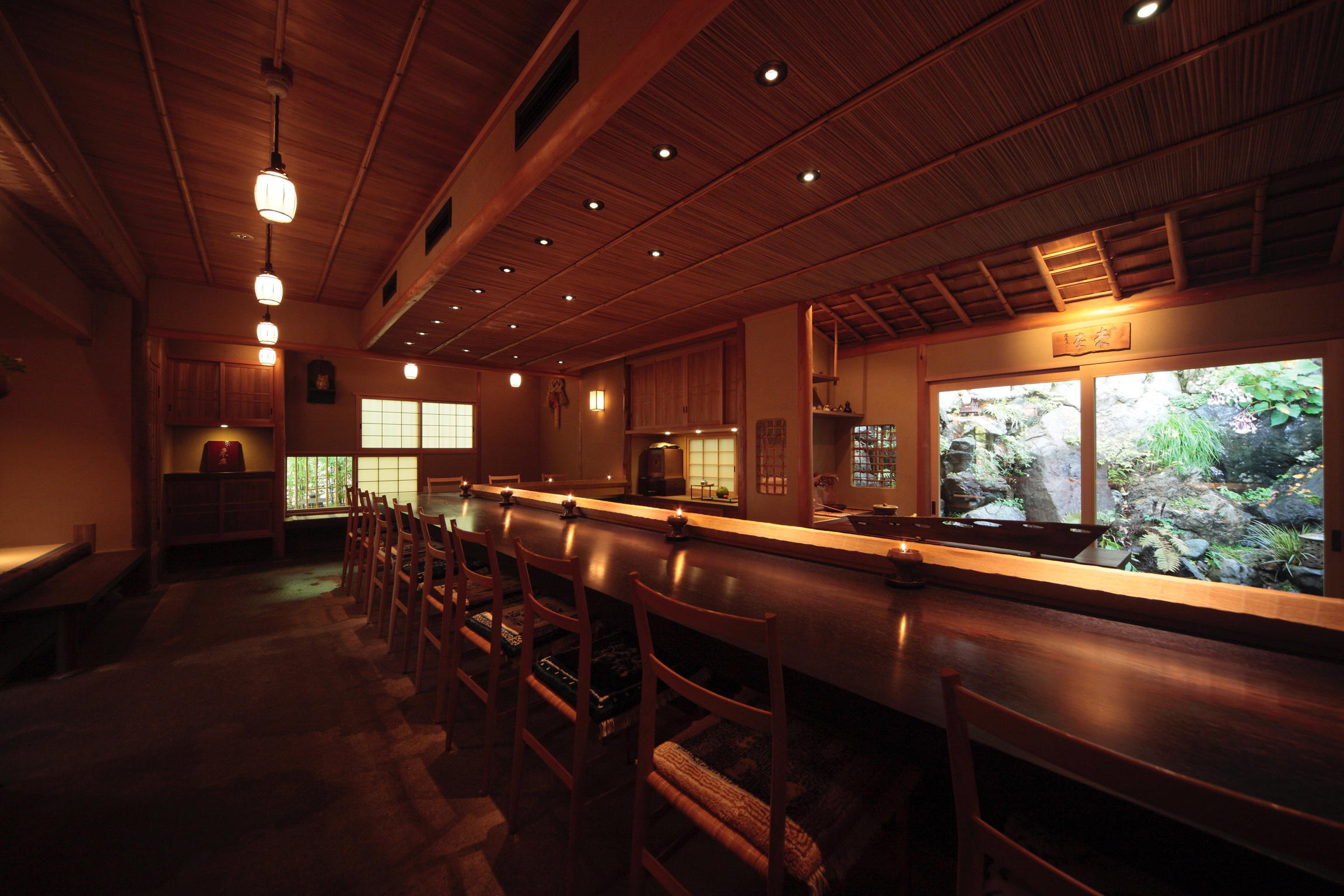
Luxurious and quiet with sophisticated interiors overlooking a rock garden; lounge offers dramatic views of Katsura River and Togetsukyo Bridge.